Swiss lavishly decorated 18 Carat gold and enamel watch Circa 1830


- Kenmerk
- AD9783
- Diameter
- 47 mm
- Estimate
- € 7.500 - 12.500
- Price sold
- € 9.350
Gold cylinder watch by Courvoisier & Comp.
–
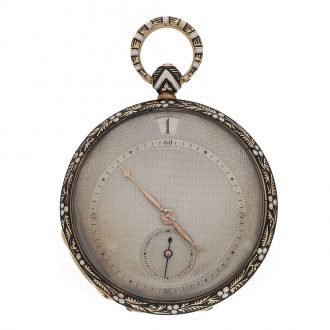
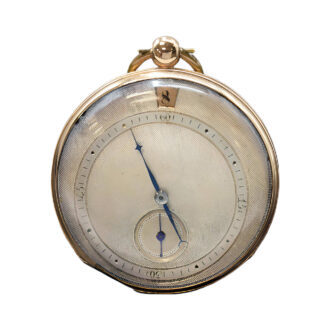
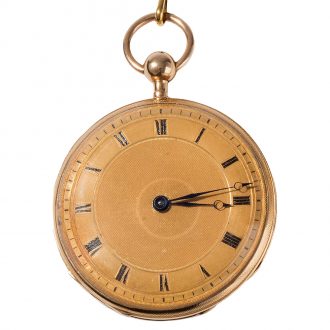
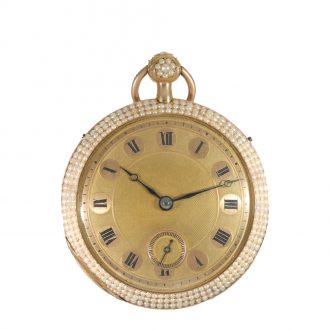
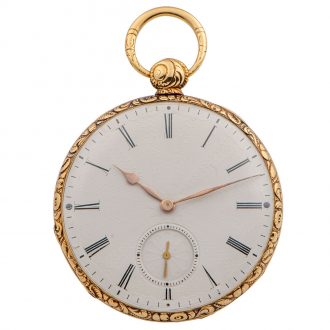
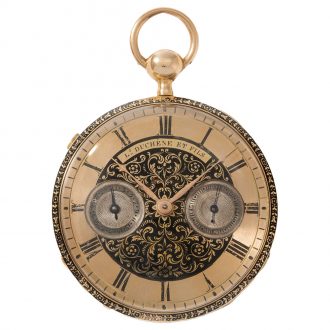
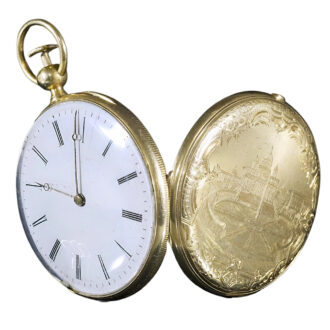
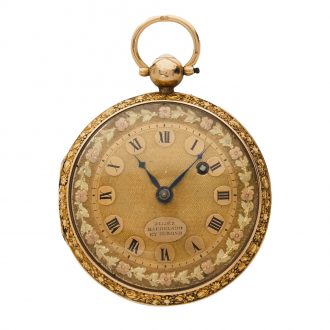
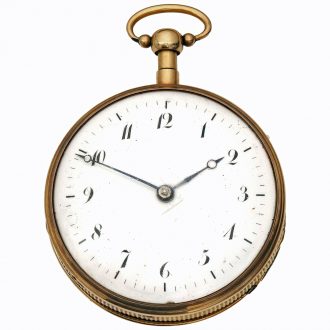
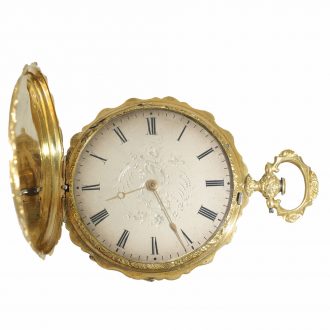
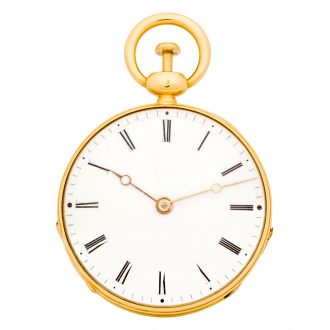
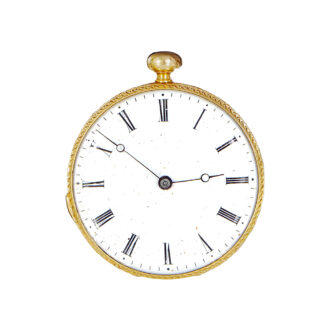
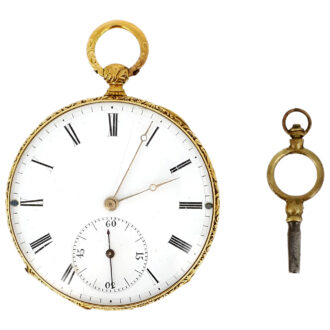
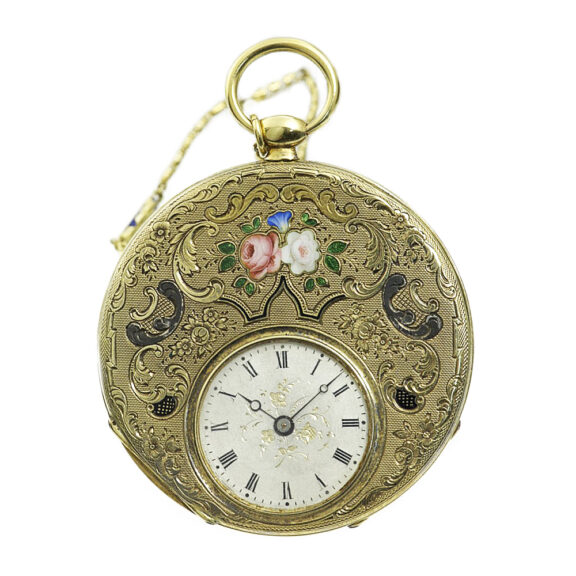
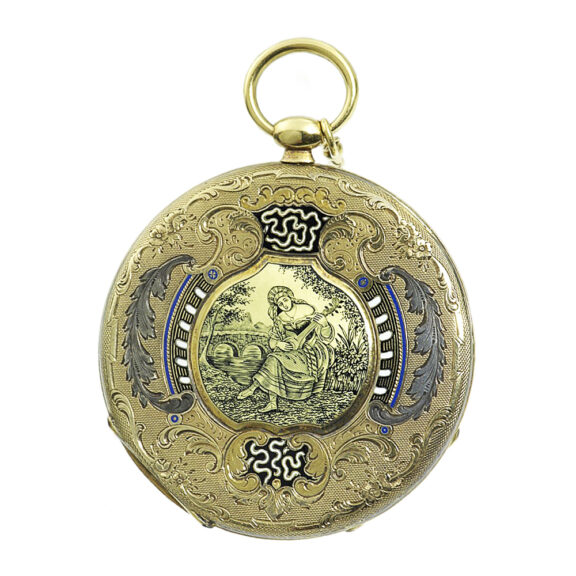
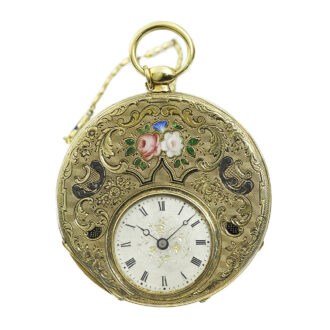
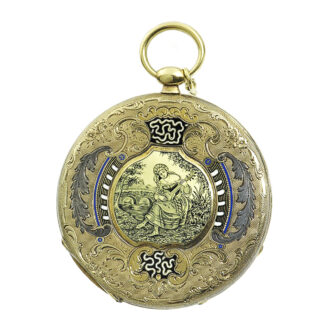
A very fine, rare Swiss 18 Carat and enamel cylinder pocket watch with an ultra flat Bagnolet calibre in a lavishly decorated case, circa 1830.
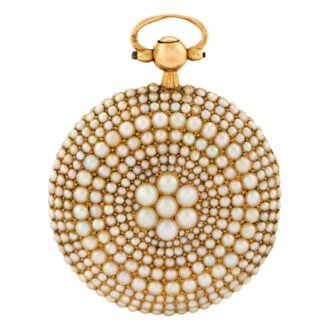
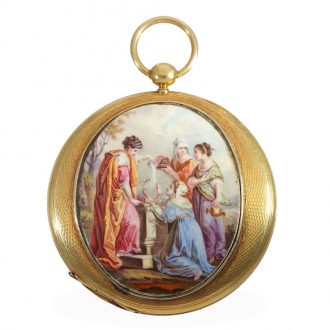
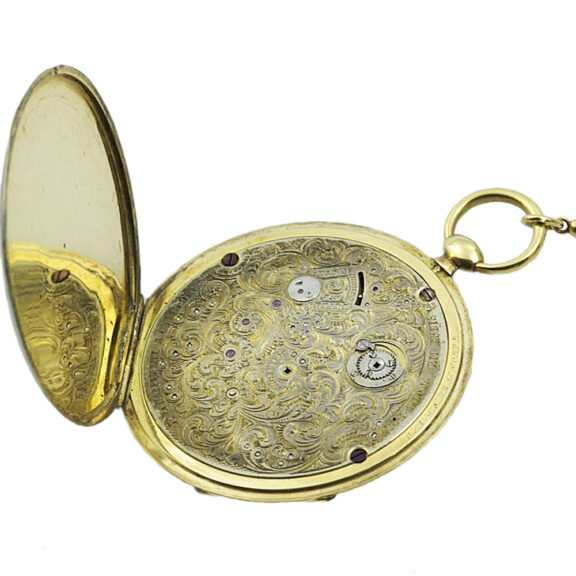
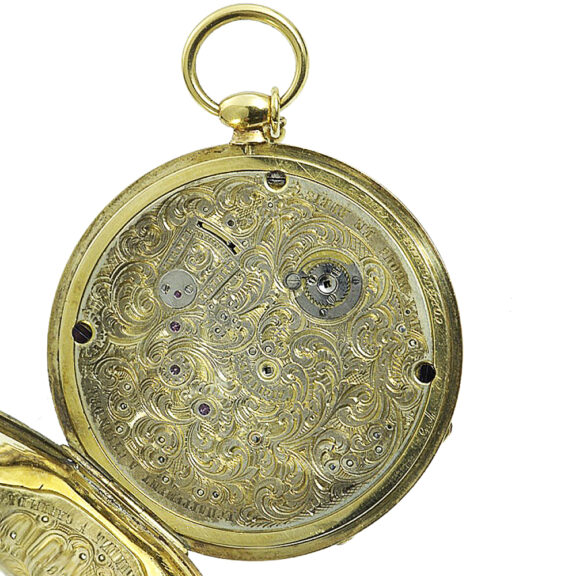
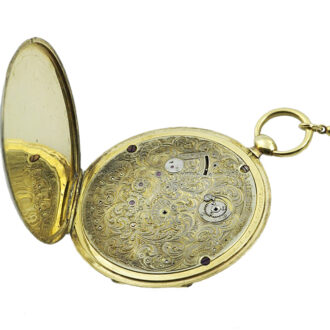
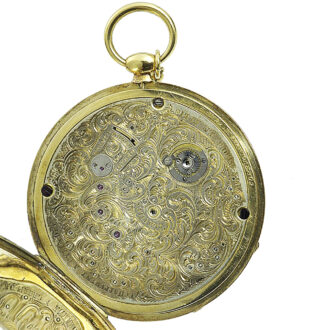
The case is chased and ornamented with floral engraving on both sides, the back shows an opaque enamel cartouche with an etching style painting of a young woman in a traditional costume playing the lute. The eccentric silvered dial on the front is decorated with flowers, above a small opaque and translucent enamelled bouquet. Full plate movement, key wind, cylinder escapement and a three arm brass balance.
–
Diameter: 47 mm
–
Weight: 41 g
–
Signed: Courvoisier & Comp La Chaux-de-Fonds
–
In the Bagnolet caliber, the movement is inverted and the train is reversed. The idea was to make a very thin watch by reducing the thickness of the bridges and the dial and eliminating the cuvette. Philippe Samuel Meylan is credited with the invention of the Bagnolet calibre.
–
Courvoisier & Comp. Brothers Henri-Louis and Philippe Auguste Courvoisier traded from 1842 on under the name “Courvoisier Frères”. When more brothers joined the partnership in 1882, they changed the company name to “Courvoisier Fils”. Specializing in high quality watches, they were commissioned by the city of La Chaux-de-Fonds to create a watch for the Prussian King William IV. At the time, this ultra flat watch was supposedly the thinnest in the world. The tourbillon movement invented by the Swiss Paul Loichot (which he turned in the case so that it would be visible face sided) was patented for the Courvoisier brothers on July 4th, 1905, under the number 19062 and the name “Mobilis”.
Signed: Courvoisier & Comp La Chaux-de-Fonds
Share this page: