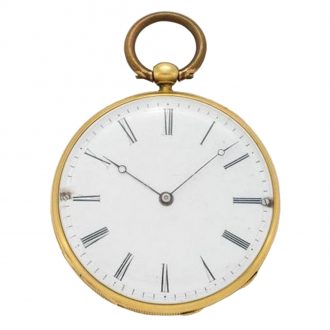
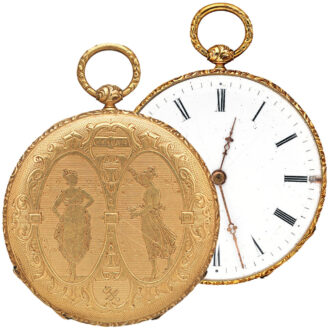
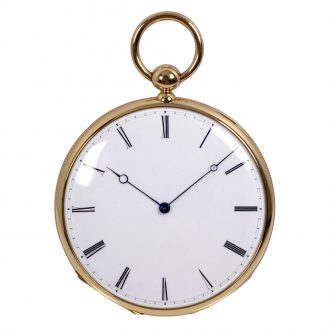
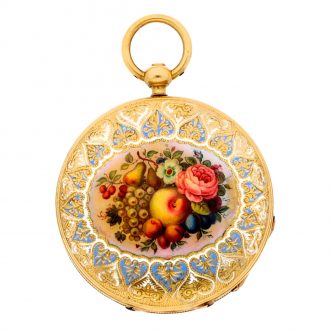
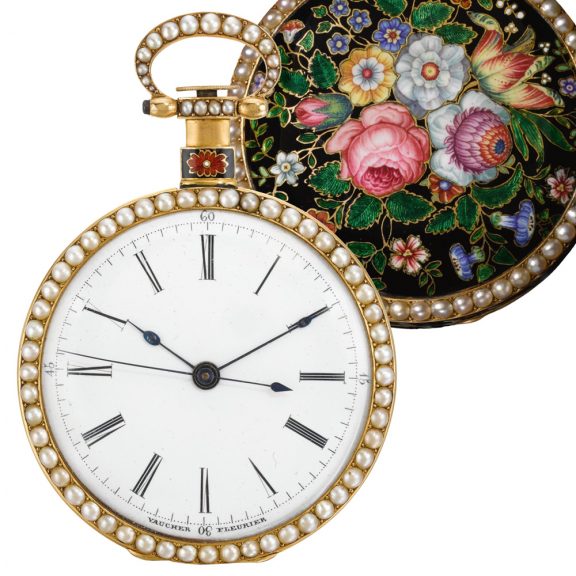
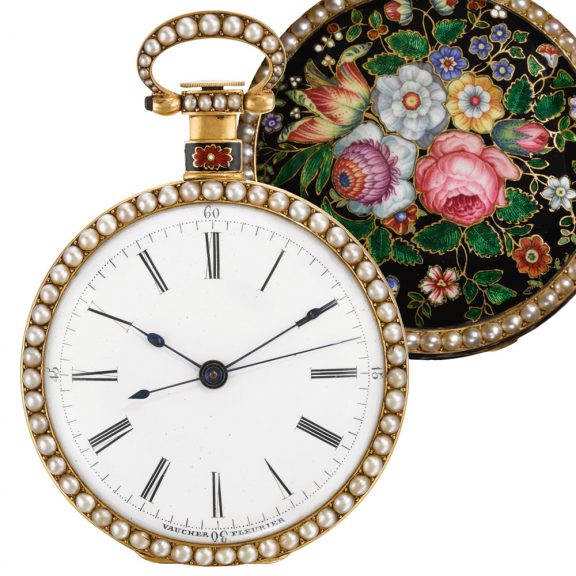
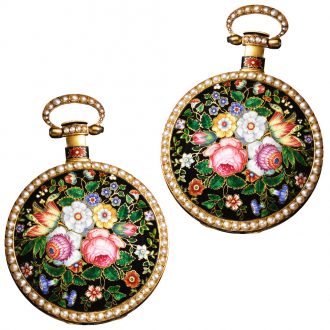
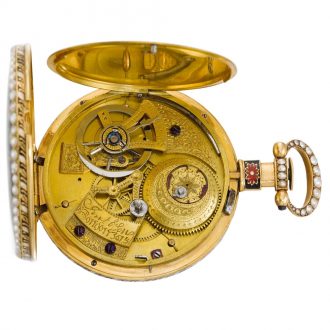
Swiss gold mirror image pair of duplex watches Circa 1845
- Kenmerk
- AS1819
- Diameter
- 53 mm
- Estimate
- € 75.000 - 150.000
- Price sold
- € 128.900
Gold, enamel, and pearl-set duplex watches by Vaucher
–
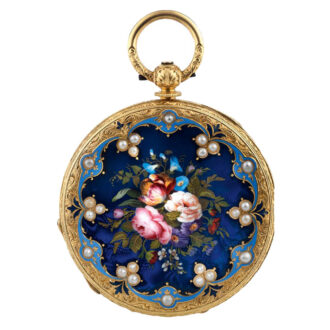
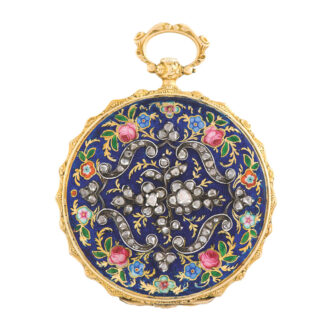
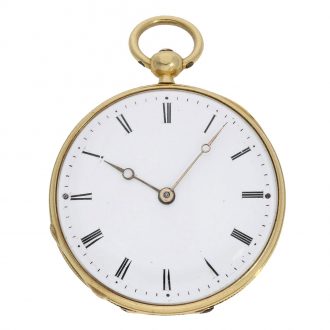
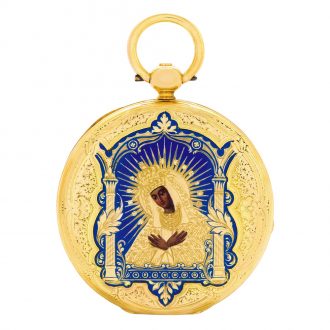
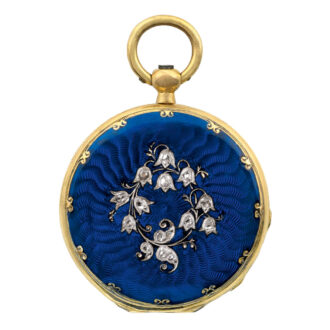
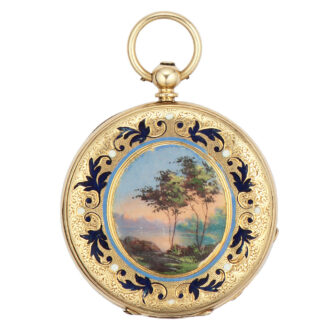
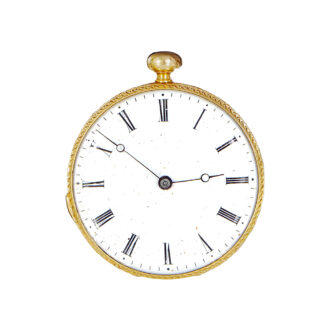
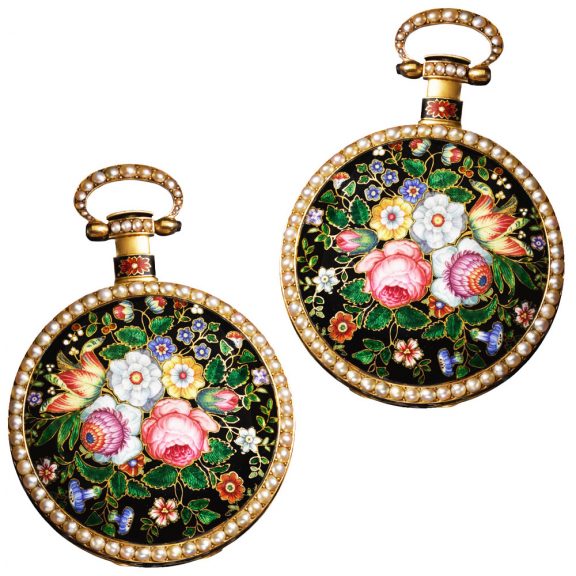
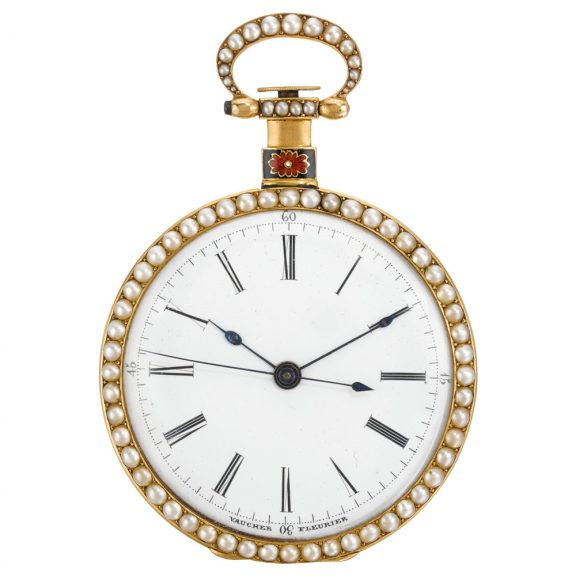
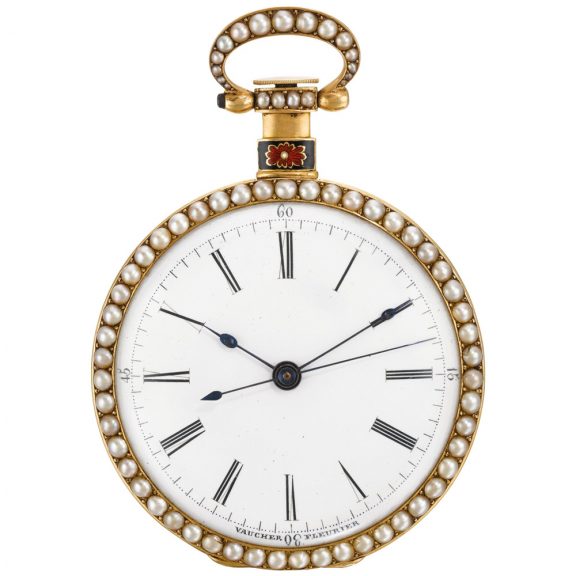
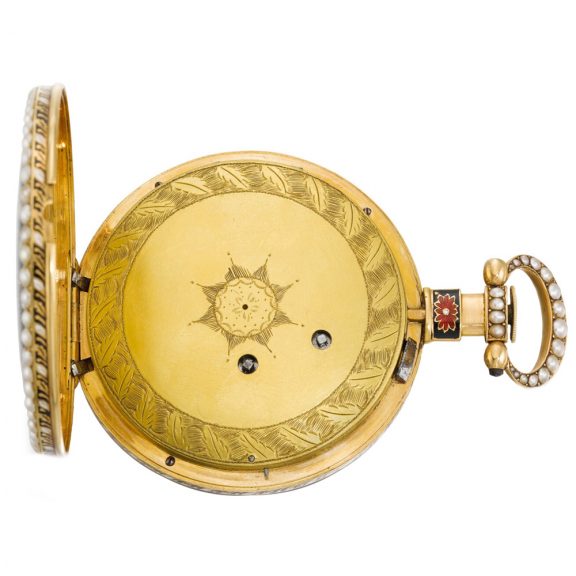
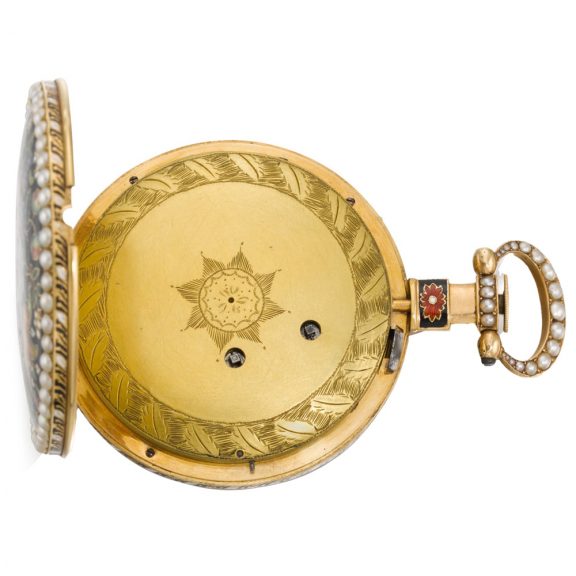
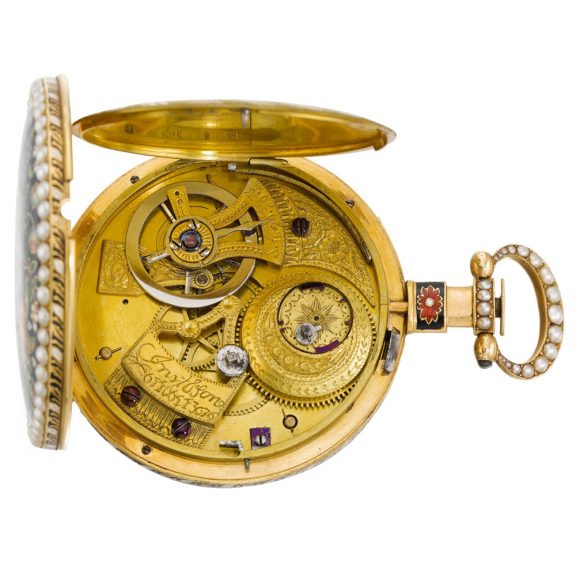
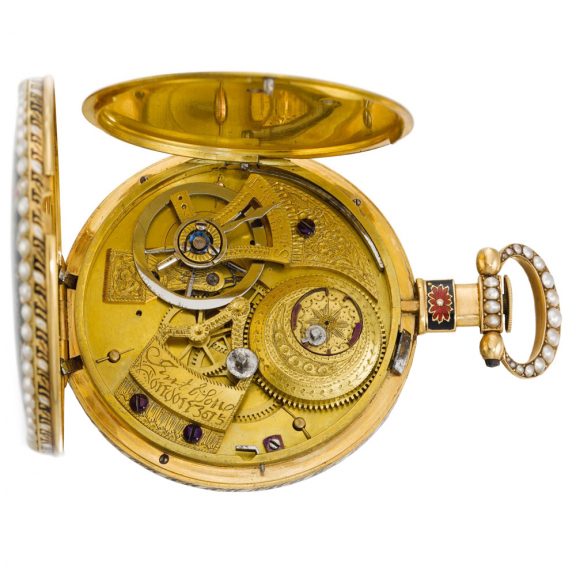
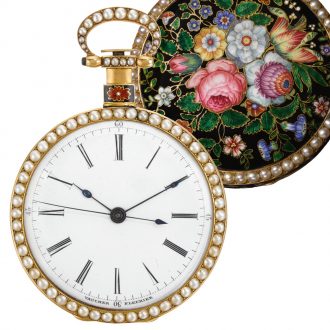
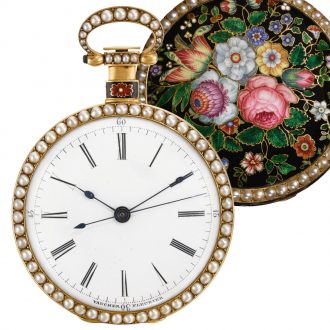
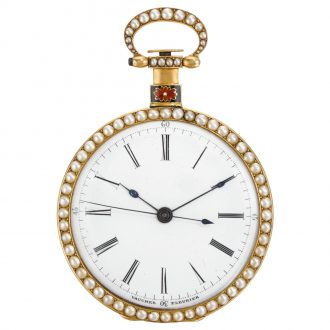
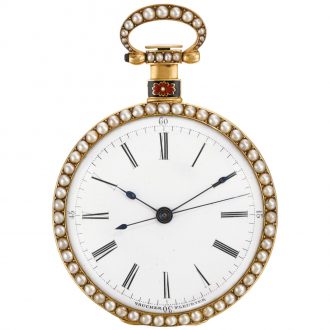
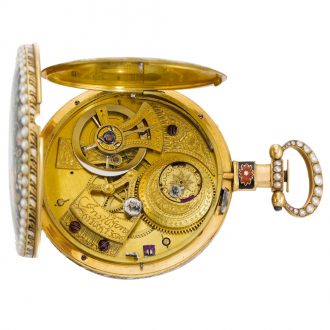
A fine Swiss complementary pair of consecutively numbered gold, enamel, and pearl-set duplex watches with mirror image floral bouquets, made for the Chinese market, circa 1845. These watches feature gilded Chinese calibres, intricately engraved with floral and foliage motifs on a stippled background. Each watch includes a decorated hanging barrel, skeletonized balance cock, and central bridge, as well as a Chinese duplex escapement and a five-arm polished steel flat balance. The central bridges in each engravedJnt [sic] & Son, London and numbered consecutively 3615 & 3616. The white enamel dials showcase Roman numerals, blued steel hands, and centre seconds, along with an outer ring for minutes/seconds and Arabic quarter 15-minute divisions. Signed Vaucher, Fleurier.
–
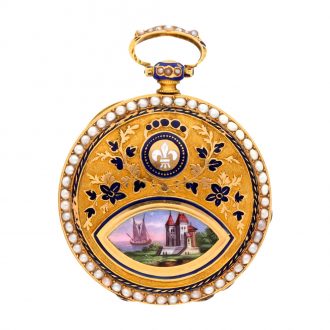
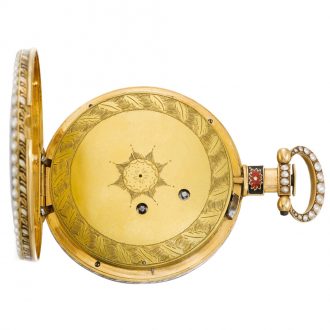
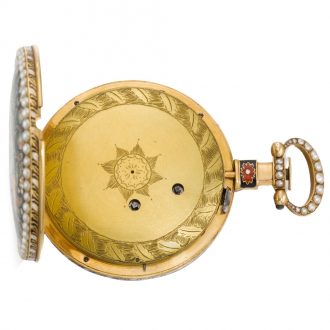
The gold cases have polychrome enamel-painted bouquets on the backs, complemented by translucent green enamel leaves. The bezels and bow are split-pearl-set, and the band and pendant are adorned with geometric opaque black and white champlevé enamel. The pushers release the case back to reveal the gilded cuvettes, which are intricately engraved with stylized foliate borders and central rosettes, as well as apertures for winding and hand-setting.
–
Diameters: 52.5 mm
–
Signed: Vaucher, Fleurier
–
Both movements are currently operational, but it is recommended that they be cleaned and overhauled. The movements bear the signature “JNT & Sun, London,” which was added at a time when The Vaucher Brothers had just established their business in Canton. It is possible that they included the London signature to enhance the appeal of the watches, considering their company was still in its early stages. At first glance, the signature could be mistaken for that of a well-known supplier for the Chinese market. The dials appear to be in good overall condition, although there is a buildup of dust between the crystals and dials. The cases show some light scratches to the enamel, a few scratches, and minor losses at the edges of the panels.
–
The Vaucher family’s initial venture into exporting watches to China began with Charles-Henri Vaucher. In March 1838, Louis Bovet mentioned in a letter to his uncle that Vaucher had sent a quantity of watches, including those decorated with enamel, to Canton. It appears that the Bovets became Charles-Henri’s representatives in Canton, but his business endeavour was not successful. In January 1839, Louis Bovet returned some unsold watches to Vaucher, and it seems that Charles-Henri did not continue his export business. In 1843, another branch of the Vaucher family, consisting of brothers Alfred (1817-1880), Édouard (1819-1847), and James-Henri (1824-1871), established a business in Canton where they sold high-quality watches in styles that were fashionable in China. These brothers, operating under the name Vaucher Frères, were the sons of Georges-Alfred Vaucher (d. 1840), who headed a watchmaking business in Fleurier. Later, the brothers were joined by their siblings Fritz (1827–1913) and Albert (1833–1888).
–
Édouard, the second eldest brother, tragically met his end in 1847 while travelling from Canton to Whampoa with watches valued at 40,000 Francs. It was alleged that he was killed by pirates, leading to suspicions that one of his servants had tipped off the perpetrators. In addition to their watch trade, Vaucher Frères also exported tea, porcelain, and lacquered goods back to Switzerland. The Taiping Revolution had a significant negative impact on Vaucher Frères, ultimately leading to the firm’s closure in 1866.
Signed: Vaucher Fleurier
Share this page: