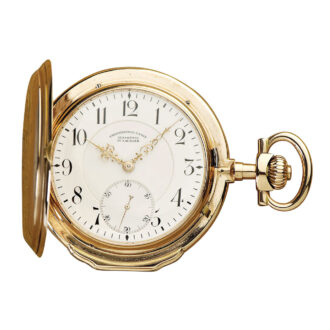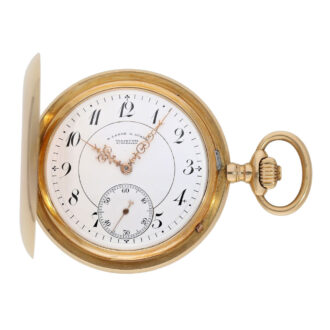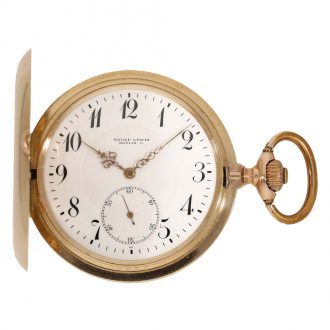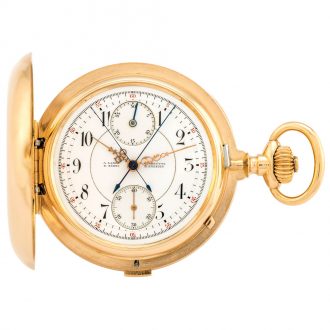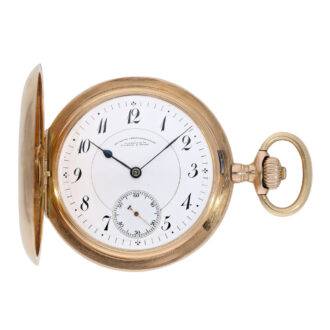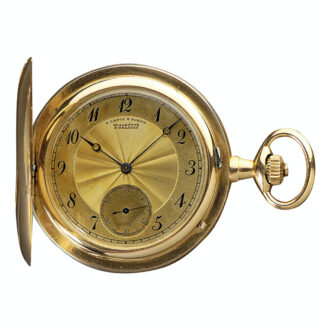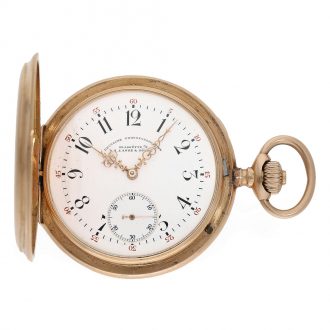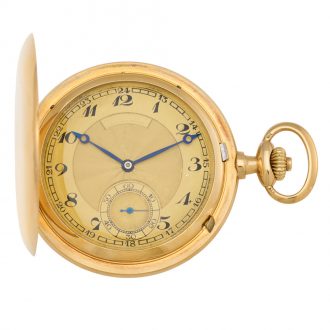
German grande/petite sonnerie striking clock watch Circa 1905
- Kenmerk
- TA1313
- Diameter
- 60 mm
- Estimate
- € 350.000 - 600.000
- Price sold
- € 479.350
A. Lange & Söhne with Grande and Petite Sonnerie and Minute Repeater
–
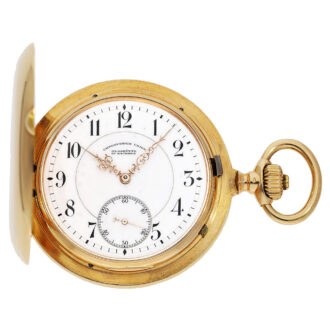
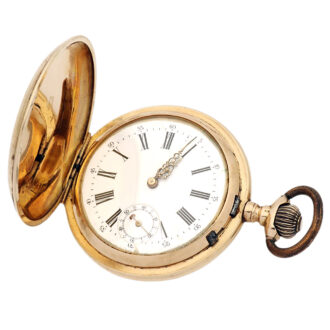
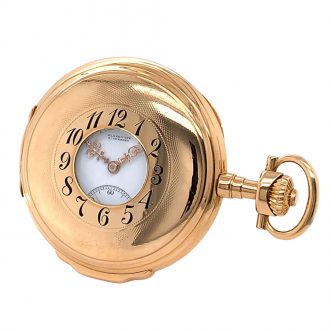
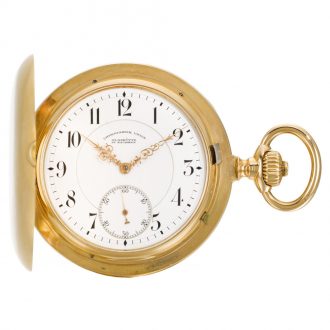
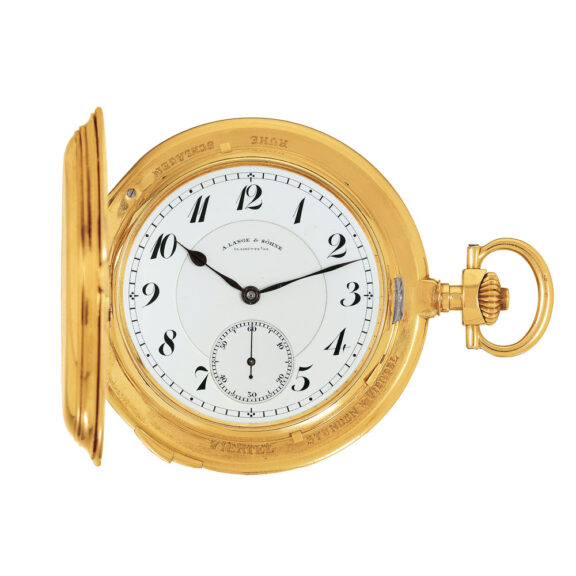
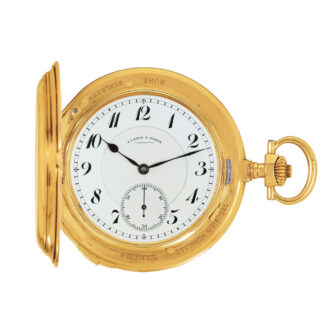
This is a very fine and important large 18K gold hunting-case clock watch, made in Germany around 1905. It strikes the hours and quarters automatically, in either grande or petite sonnerie, and it also repeats the time to the minute on demand. It is one of only four watches of this type made between 1883 and 1934, and it comes with the Extract from the Archives.
–
Provenance
The watch was sold in 1925 to Otto Pohland of Chemnitz for 4,000 Marks. On December 24, 1934, it was resold to Adolf Lunser of Berlin for 2,760 Marks.
–
Case
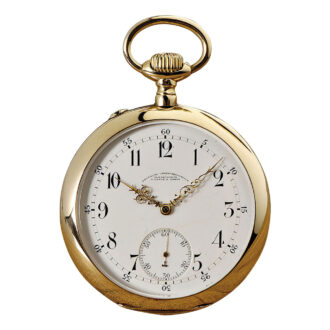
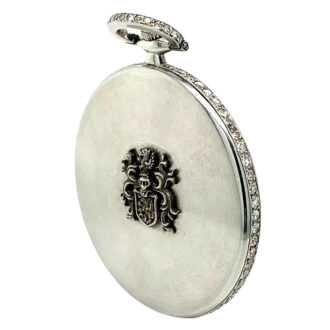
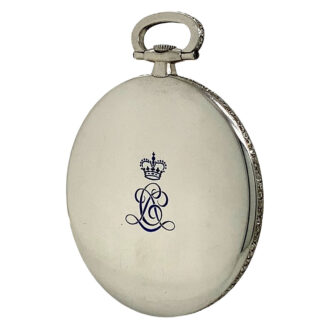
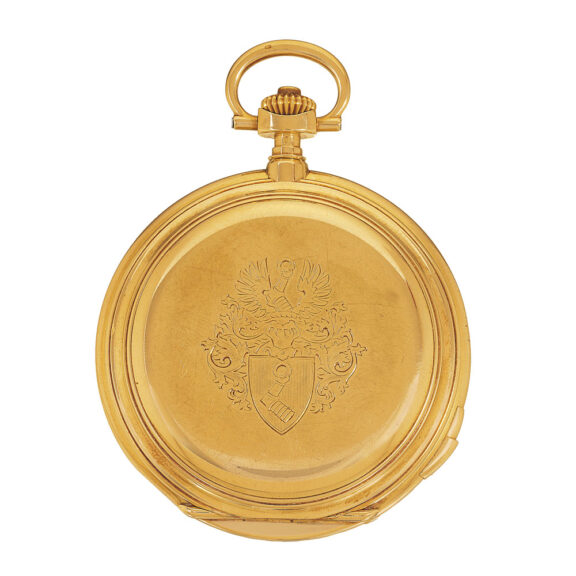
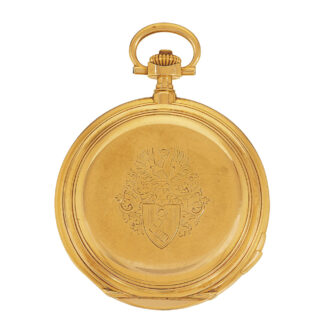
A coat of arms is engraved on the front cover. Inside is the dedication “In Herzlicher Freundschaft zum Weihnachtsfest, 1934” (“In warm friendship, for Christmas 1934”). Levers in the bezel turn the striking on or off and switch between grande and petite sonnerie. The inner cuvette is hinged gold.
–
Dial
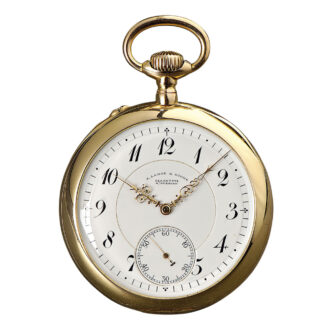
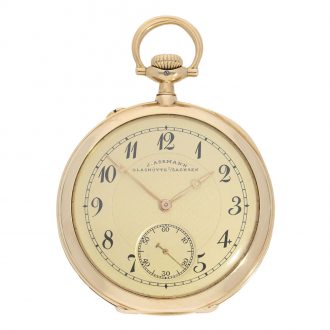
The three-piece white enamel dial has Breguet numerals, an outer minute track and a small seconds dial. The spade hands are black steel.
–
Movement
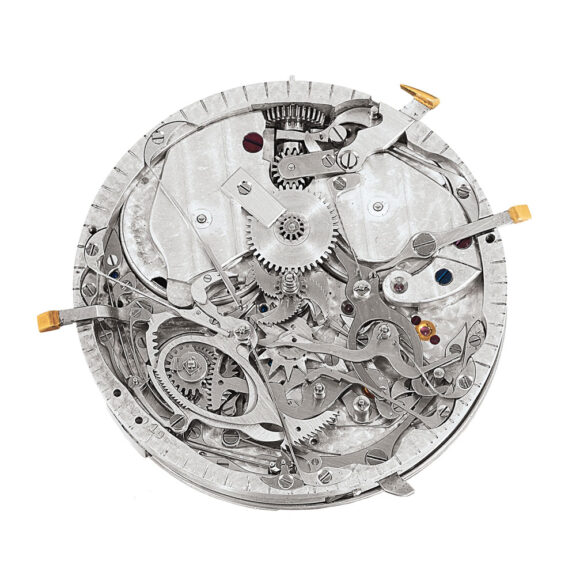
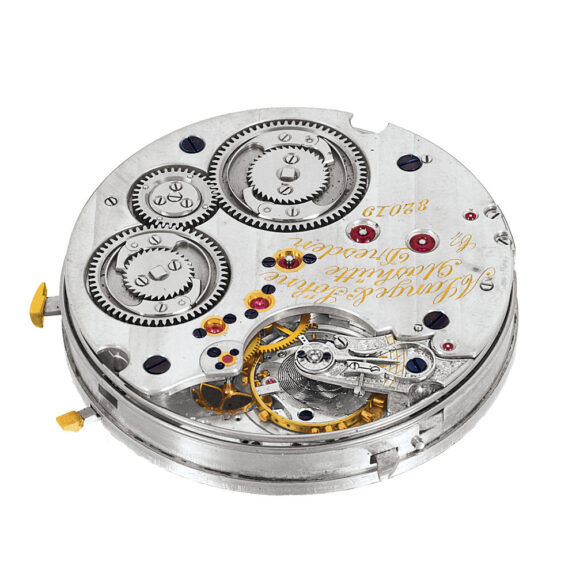
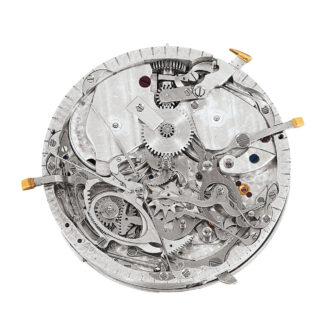
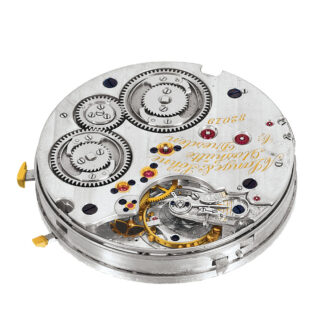
The movement is first quality, rhodium-plated and finished with Geneva stripes. It has 21 jewels and two trains, one for timekeeping and one for striking, which are wound together. The going train has screwed gold chatons and a straight-line lever escapement with a gold escape wheel and pallet fork. It also has a Lange-cut bimetallic compensation balance with gold screws around the rim, a blued steel Breguet balance spring, a diamond endstone and a micrometer regulator. The watch strikes and repeats on gongs, and a slide on the side of the case sets off the repeater.
–
The dial, case and movement are all signed.
–
Diameter: 60 mm
–
Signed: A. Lange & Söhne Glashütte, I/SA, B/Dresden
–
While the watch is striking the hours or quarters by itself, the repeater is locked. As usual, a slide on the side of the case sets it off. Unlike most repeaters, though, the slide only releases the mechanism and doesn’t wind it. The power comes from the striking train’s mainspring, which holds enough energy for the repeater to run several times. One winding crown winds both the timekeeping and the striking: you turn it one way for the movement and the other way for the strike.
–
The company’s records show that Lange & Söhne made only four watches with grande and petite sonnerie striking and minute repeating. This seems to be the only known example in a Louis XV case. It sold for 4,000 Marks in 1925, which made it the most expensive watch of its kind and one of the most expensive Lange watches ever made. In 1934 Lange sold it again, to Adolf Lunser, a Berlin firm that officially supplied the German government.
Signed: A. Lange & Söhne Glashütte, I/SA, B/Dresden
Share this page: