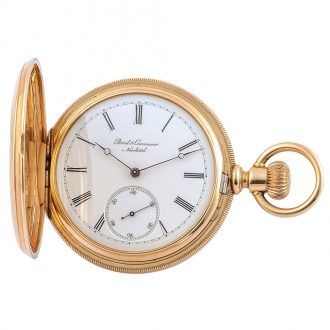
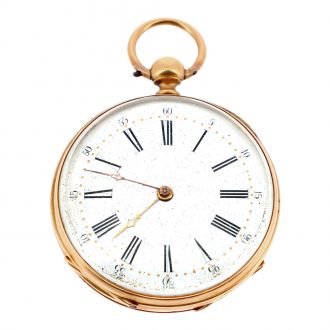
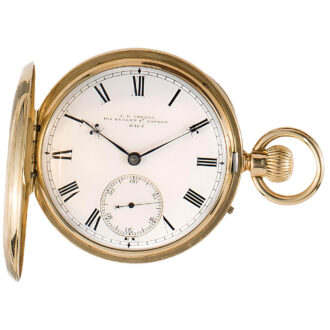
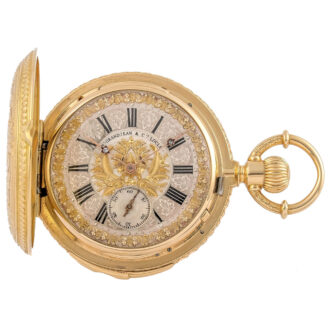
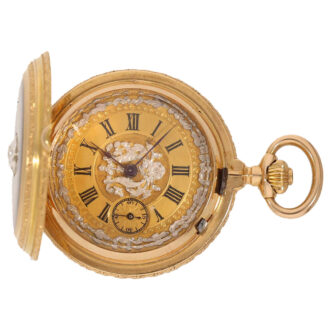
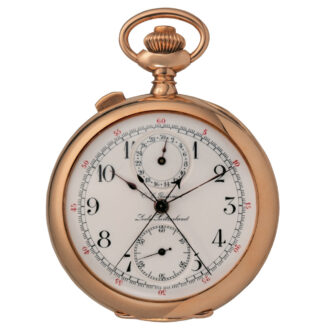
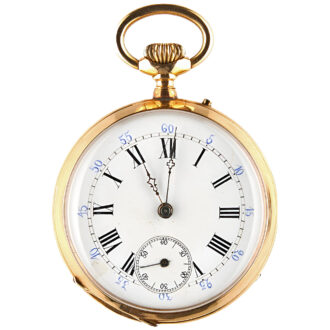
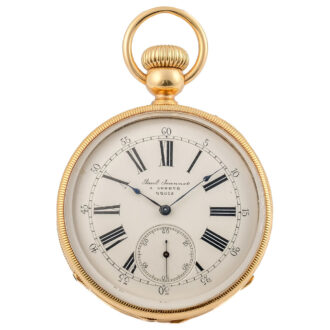
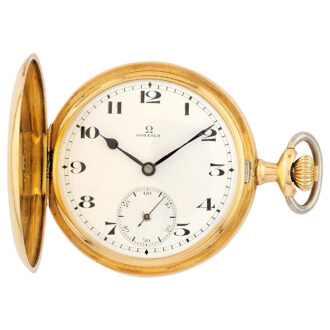
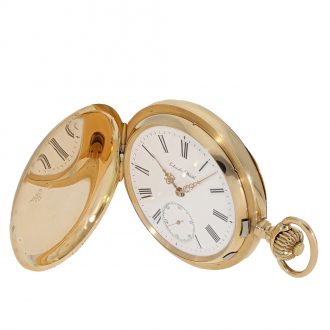
Swiss full hunter watch with chronometer escapement Circa 1880
- Kenmerk
- HC0741
- Diameter
- 57 mm
- Estimate
- € 3.000 - 5.500
- Price sold
- € 3.800
Pink gold engine turned pocket watch
–
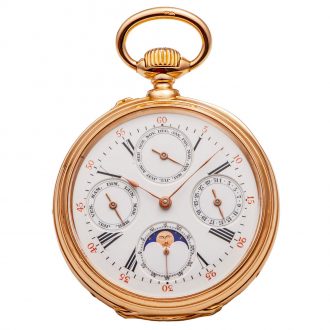
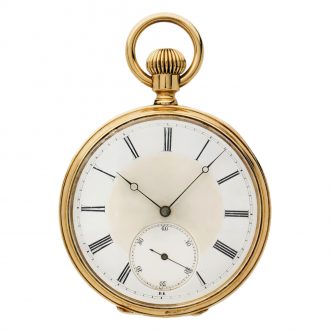
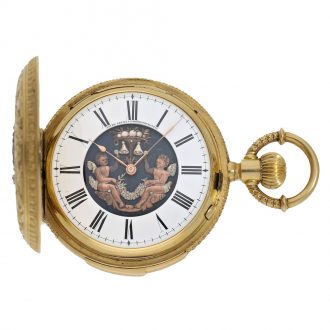
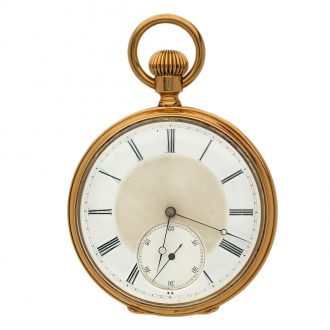
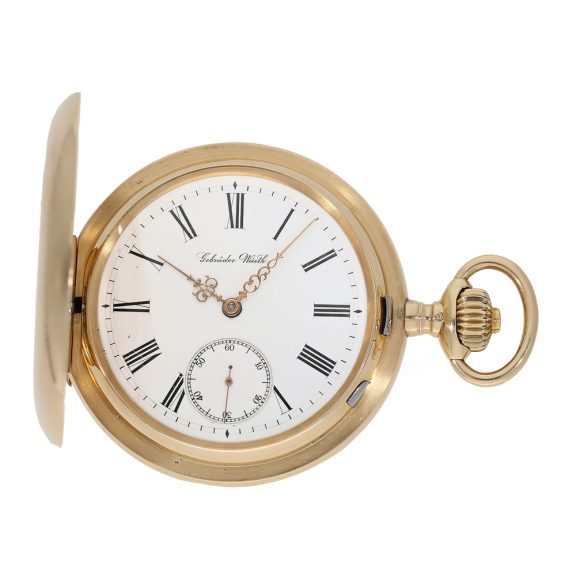
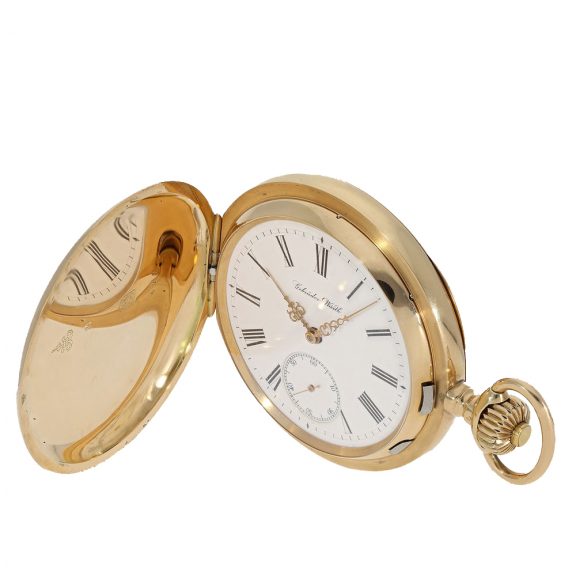
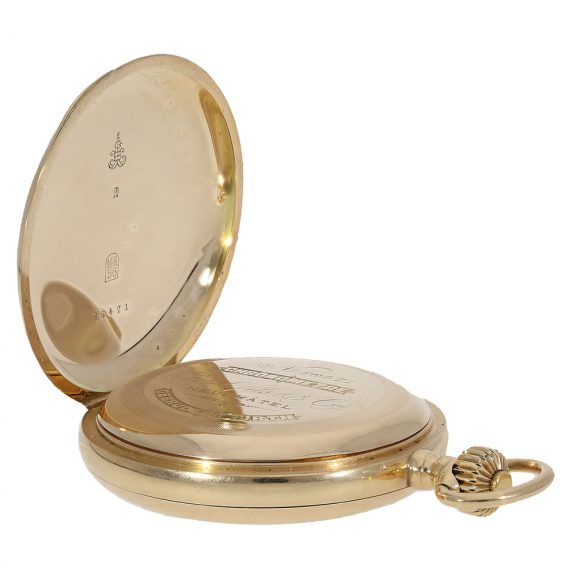
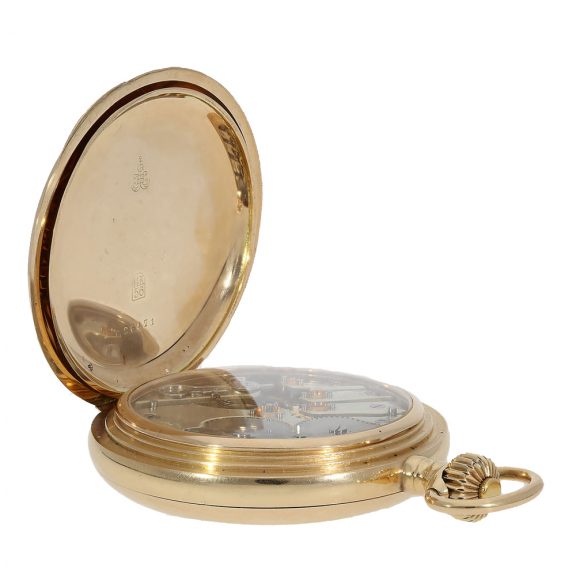
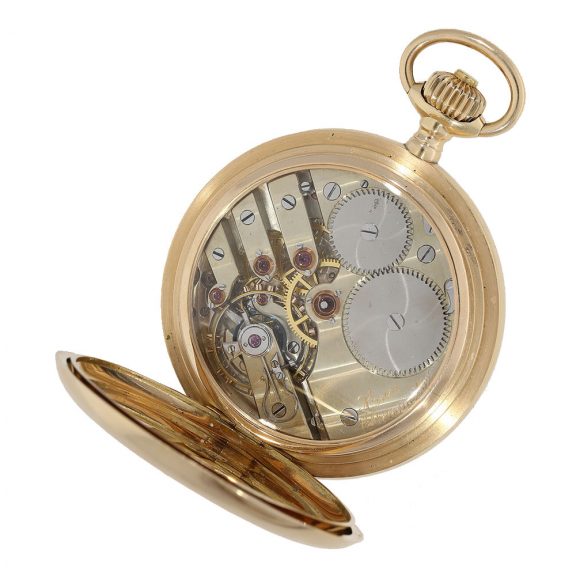
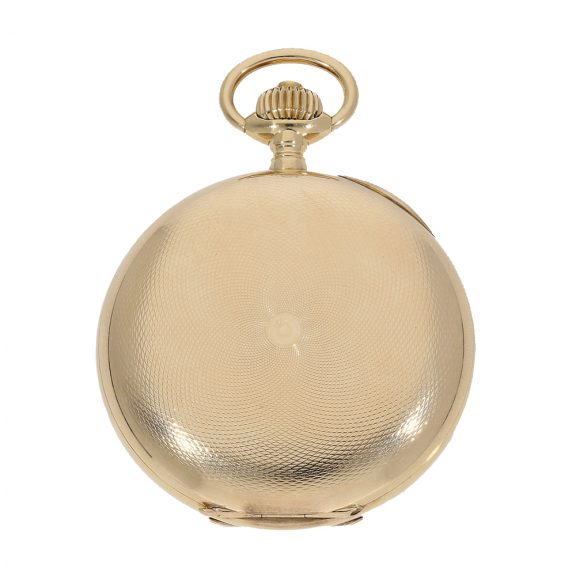
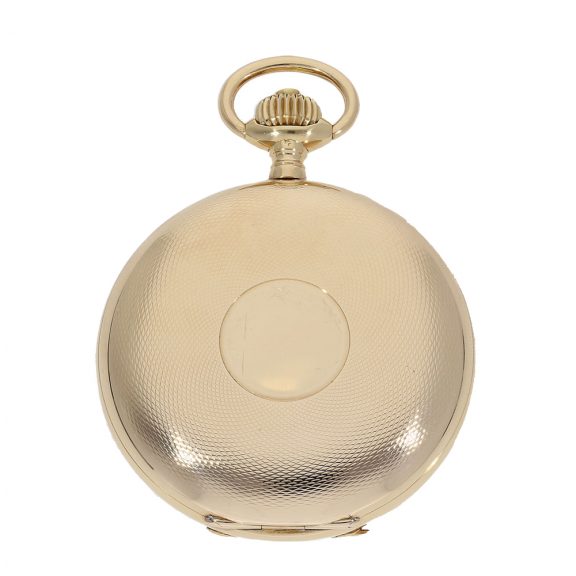
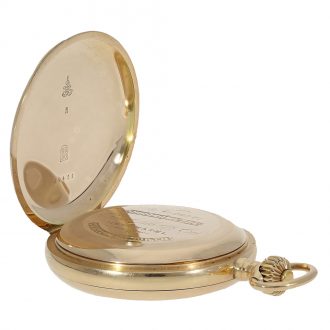
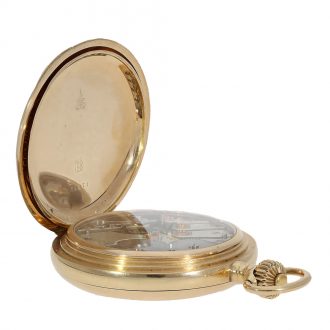
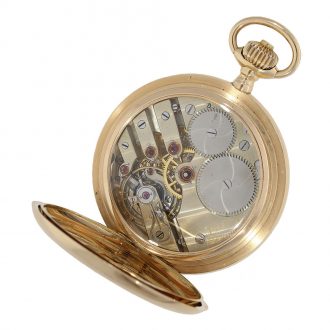
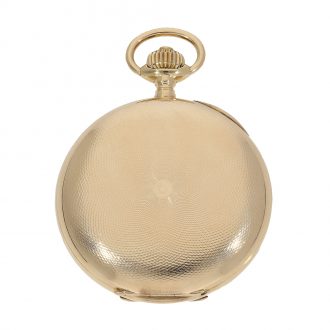
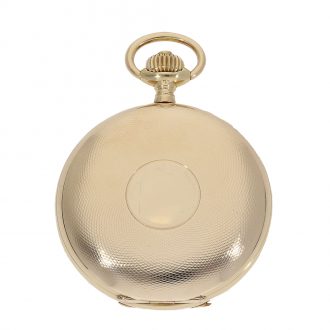
A heavy numbered 14 carat gold full hunter cased watch with chronometer escapement, made by Borel Fils in Neuchatel, Switzerland, circa 1880. The full hunter case of this watch was crafted from 14 Carat pink gold, is engine turned on both sides and has a case punch from Borel Fils and G. Borel-Huguenin. The white enamel dial has black Roman hour numerals, a subsidiary seconds dial with black Arabic numerals and pink gold hands. The numbered and inscribed “Chronometre” movement was made by the Würth Brothers is glazed, has top quality Swiss pivoted detent chronometer escapement, Geneva striping, a fine adjusting device, gold chatons and a helical hairspring.
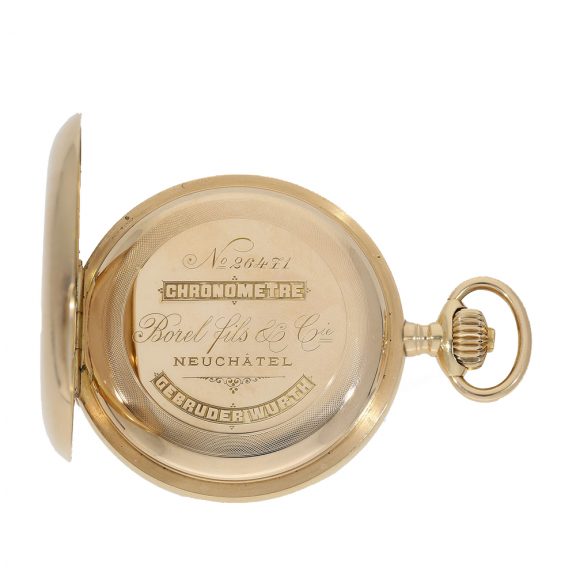
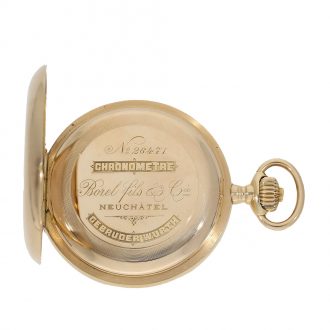
The cuvette is signed numbered and inscribed “Chronometre Gebrüder Würth”.
–
Diameter: 57 mm
–
Weight: 138 g
–
Signed: Borel fils & Cie, Neuchatel (cuvette) and Gebüder Würth (dial)
–
Borel Fils & Cie
The Borel Fils & Cie watch company was established in 1856 in Neuchâtel, Switzerland by watchmaker Jules Borel. In 1859, along with his brother in law, Paul Courvoisier, Borel established the Borel-Courvoisier watch company. They won several awards in the late 19th century including first place in the 1866 Neuchâtel Observatory timing accuracy competition. In 1898, Jules’ son, Ernest Borel, took over the company and he formally changed the name to Ernest Borel & Cie the following year. Ernest Borel was the head of the company until 1936, when his son, Jean-Louis Borel, succeeded him as manager. In 1975, the company was bought by the firm Aubry Frère S.A. It was sold to a Hong Kong based company in 1989.
–
Gebüder Würth, a family of watchmakers
Gebrüder Würth was a family of watchmakers based in the Black Forest region of Germany operating from 1868 to 1974. The brothers, Johann and Jakob Würth, were known for their high quality timepieces. They produced a wide variety of watches, including pocket watches, clocks, and marine chronometers. Their pocket watch movements were known for their accuracy and reliability. The movements were typically made of brass and steel, and they were often decorated with intricate engravings. The watches were also known for their long power reserves, which could last for up to 30 hours on a single winding. Gebrüder Würth watches are often marked with the company’s name and logo. The logo typically consists of a stylized “W” within a circle. The watches may also be marked with the movement number, which can be used to date the watch.
Signed: Borel fils & Cie, Neuchatel (cuvette) and Gebüder Würth (dial)
Share this page: