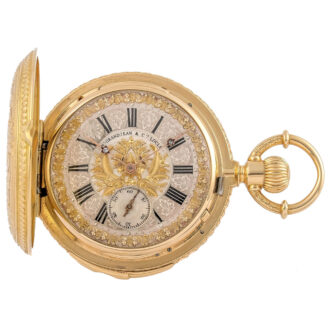
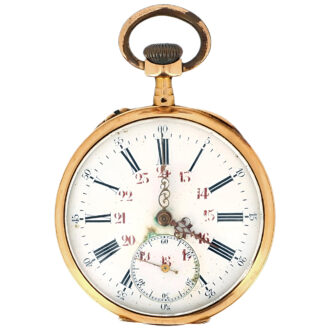
Swiss hunting cased watch with matching chatelaine Circa 1880
- Kenmerk
- AS1854
- Diameter
- 41 mm
- Estimate
- € 6.000 - 12.000
- Price sold
- € 10.550
Gold and enamel watch by Moulinié & Legrandroy
–
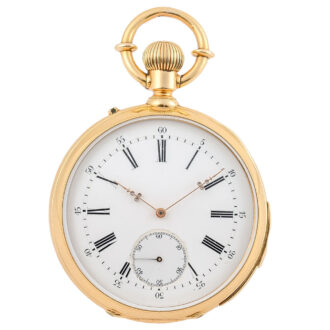
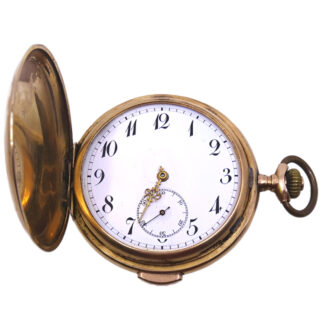
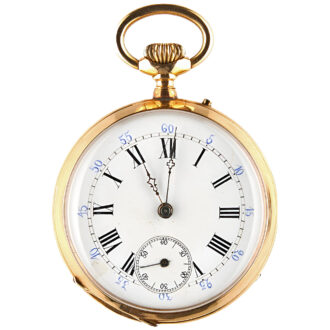
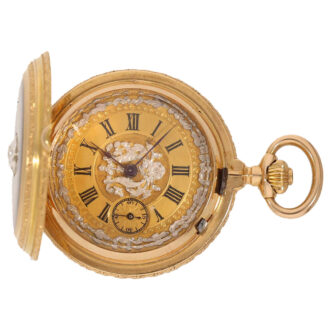
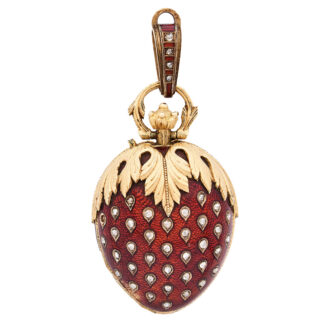
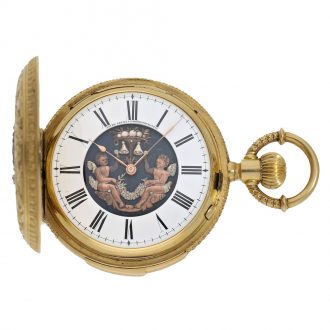
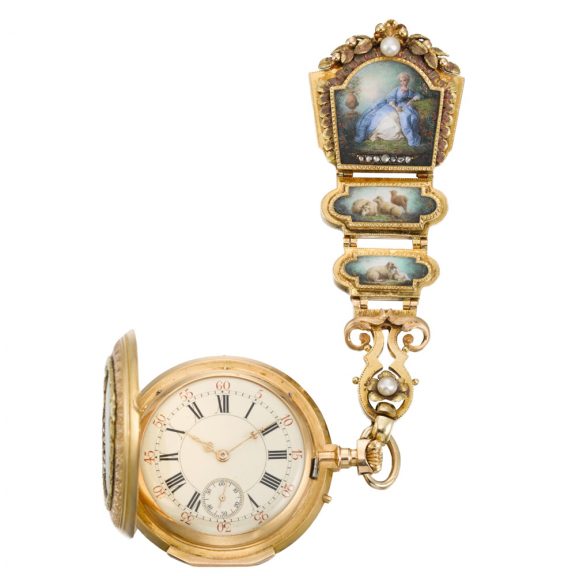
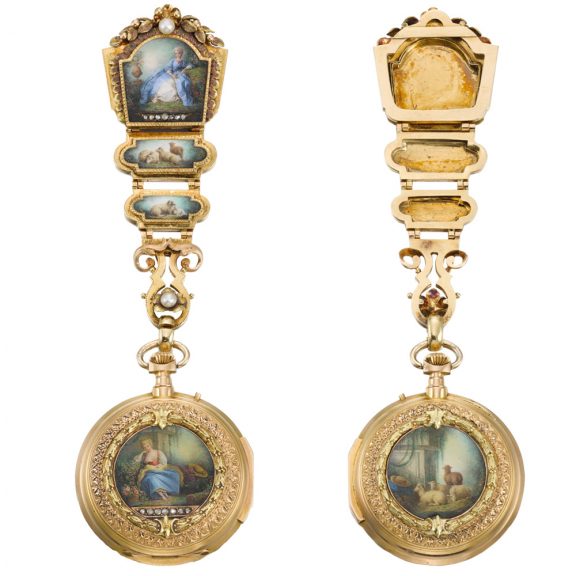
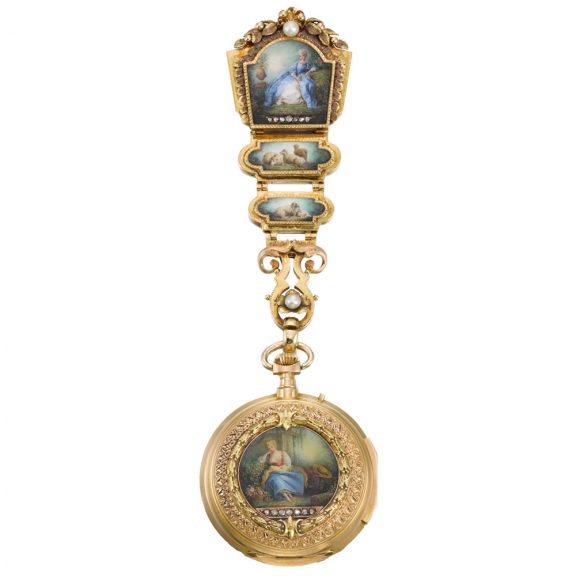
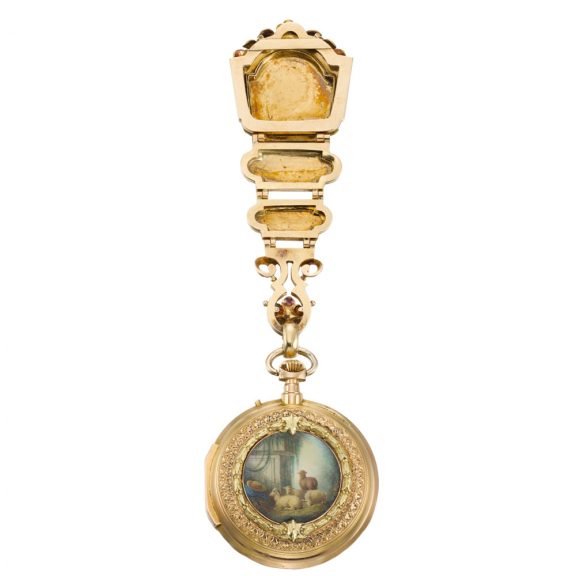
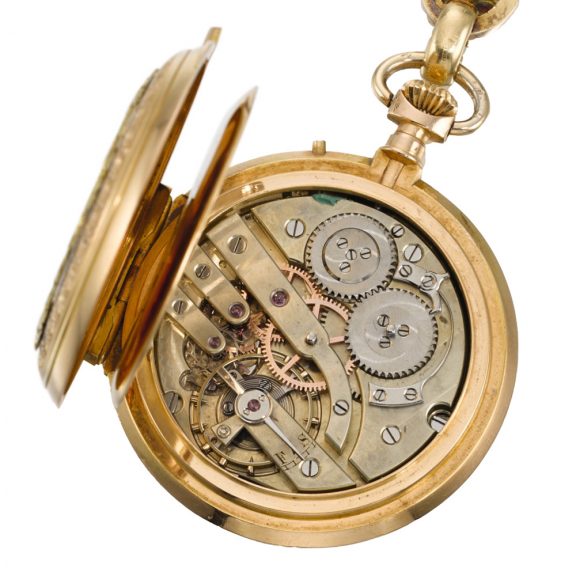
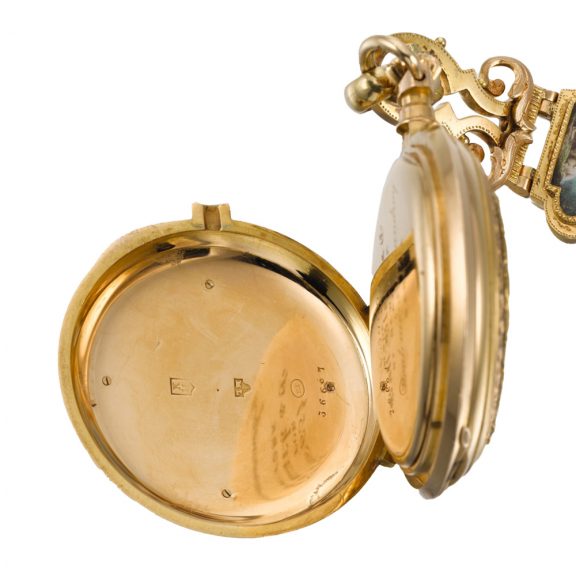
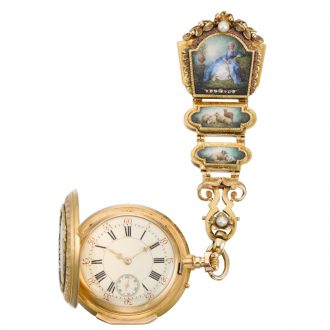
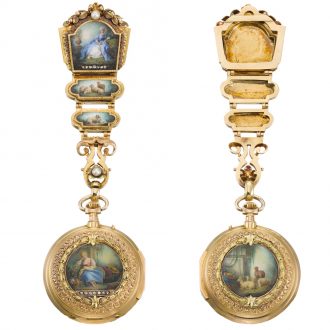
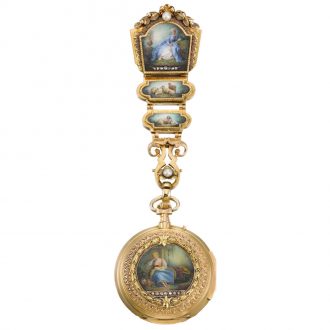
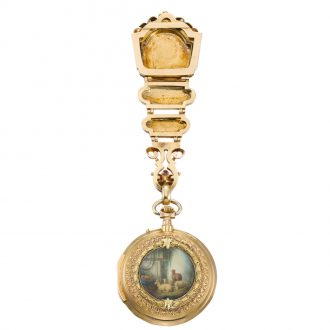
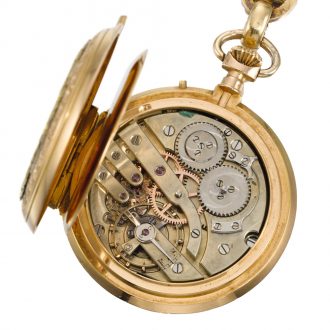
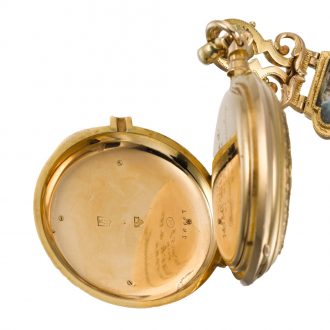
A Swiss gold and enamel hunting cased watch with matching chatelaine depicting a shepherdess and her flock, circa 1880. Retailed by Ball, Black, and Co., New York. The watch has a damascened nickel movement with lever escapement and wolf’s tooth winding. It features a bimetallic compensation balance. The off white enamel dial has Roman numerals, an outer minute ring with red Arabic numerals, and a subsidiary seconds dial.
–
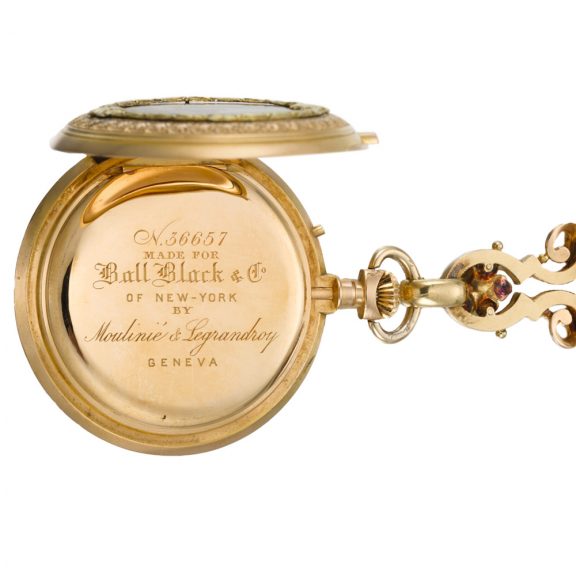
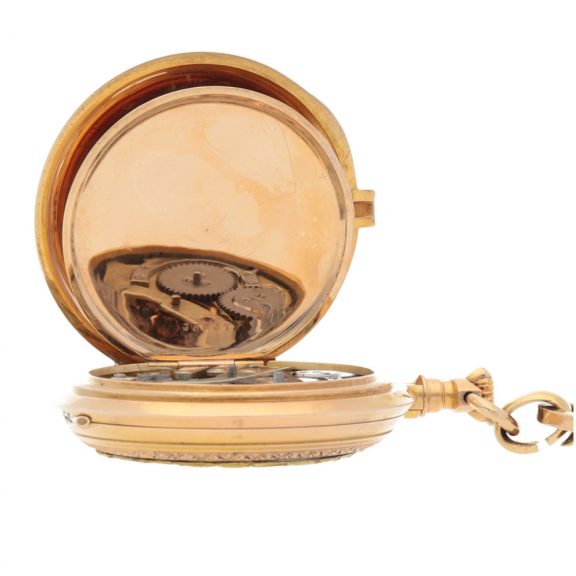
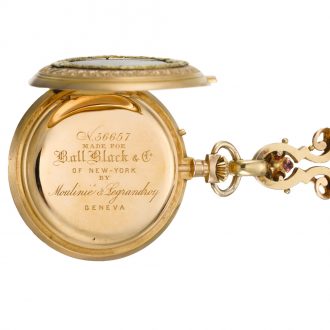
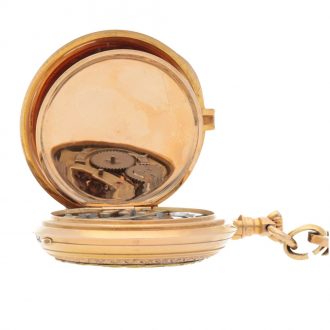
The gold case is adorned with enamel panels, with one side depicting a shepherdess and the other her flock. The scenes are surrounded by chased and engraved pink and green gold wreath form borders, with the shepherdess scene featuring a row of rose-cut diamonds beneath, polished gold cuvette, case back with maker’s mark ML beneath a bee and signed and numbered Made for Ball, Black & Co. of New York by Moulinié & Legrandroy, Geneva, No. 36657, case back numbered 36657, front cover numbered 7. The chatelaine accompanying the watch comprises three polychrome enamel painted panels, with the main panel showing the shepherdess in a landscape setting and surrounded by varicolour mounts centred with a pearl, as well as a row of rose cut diamonds beneath the shepherdess.
–
Diameter: 41 mm
–
Length overall: 135 mm
–
Signed: Moulinié & Legrandroy, Geneva
–
The movement is operational, but some tarnishing on the plates suggests that it may benefit from a service. The dial is off white with a light beige tone and has a hairline crack running from the edge between 4 and 5 o’clock towards the centre. The case features enamel painted scenes with repairs in soft enamel, and there is some rubbing on exposed surfaces. The case back is stamped 18k. The chatelaine panels appear to be in good overall condition, with some light scratches.
–
Moulinié and Legrandroy
The name Moulinié can be traced back to a company called Moulinié & Bautte, which began by manufacturing cases for pocket watches for Jean-Francois Bautte in Geneva during the late 18th century. By 1804, the company, then known as Moulinier, Bautte, and Cie, had started producing watches. It gained a reputation for high quality timepieces from 1808 to 1821. In 1826, the partners went their separate ways: Bautte formed Bautte & Moynier, while Moulinié formed Moulinié Aine & Cie., later becoming Moulinié Frères & Cie after 1840. The company exhibited under the name Moulinie & Legrandroy at the World Exhibition in London in 1862, where it received a medal. The name underwent further changes over the years, becoming J.W. Legrandroy & Fils and Le Grand Roy & Fils twenty years later.
Signed: Moulinié & Legrandroy, Geneva
Share this page: