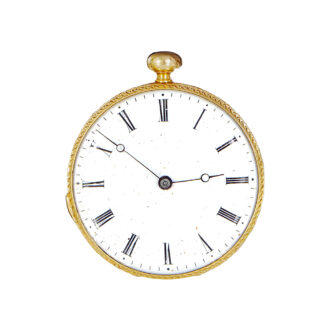
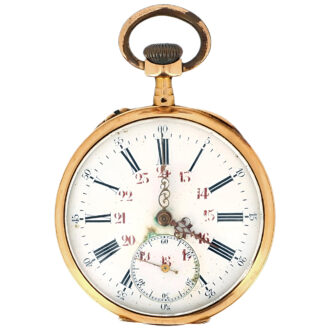
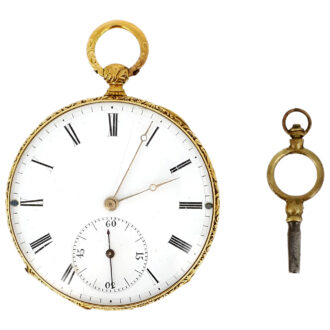
Swiss gold and enamel repeating lever chronograph Circa 1880
- Kenmerk
- AD0669
- Diameter
- 54 mm
- Estimate
- € 12.500 - 20.000
- Price sold
- -
Gold minute repeating chronograph by Henry Moser
–
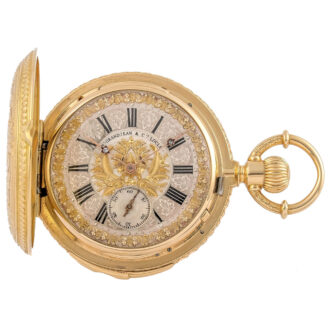
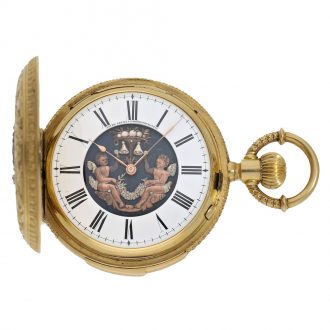
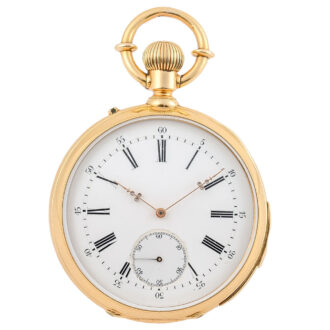
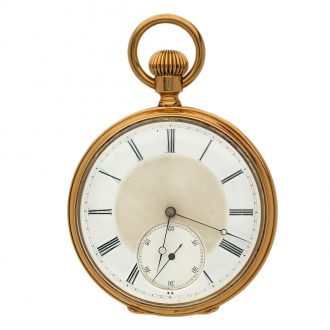
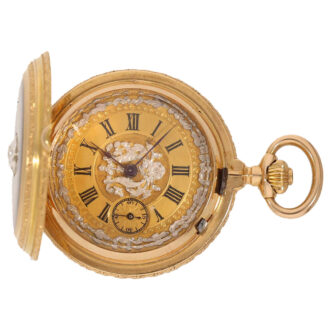
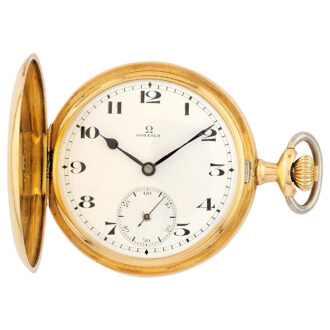
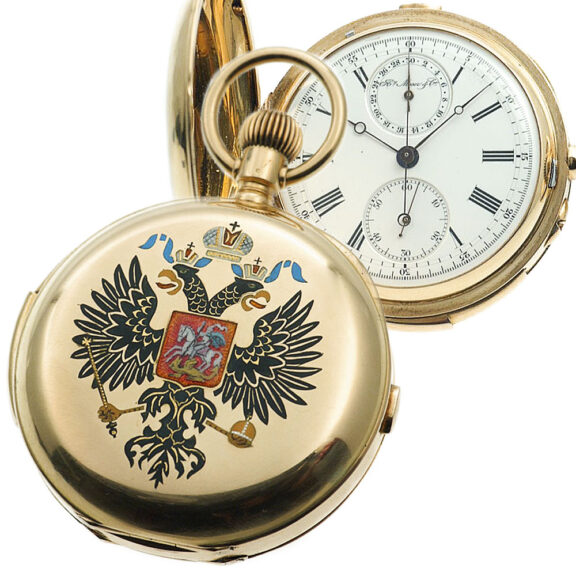
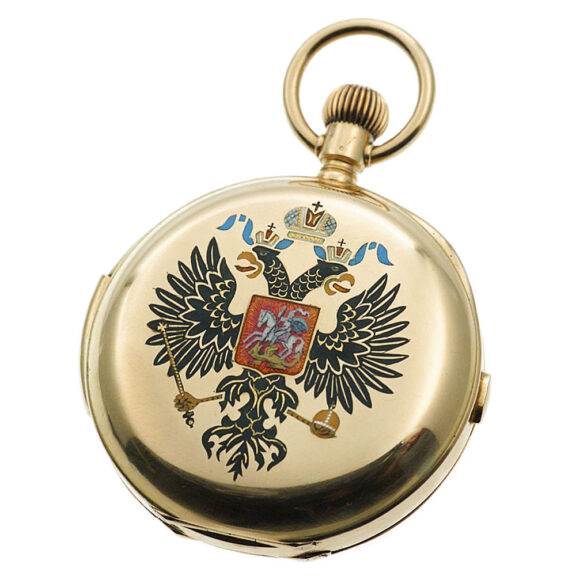
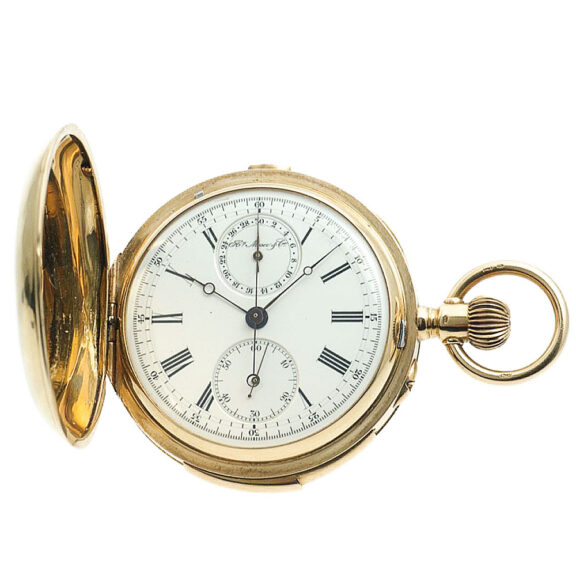
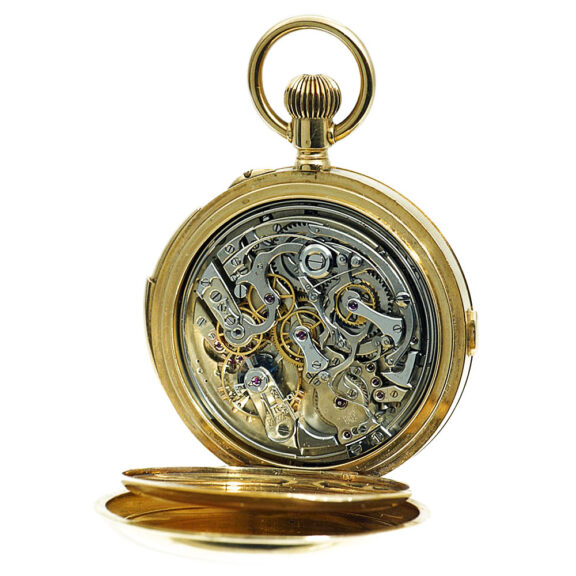
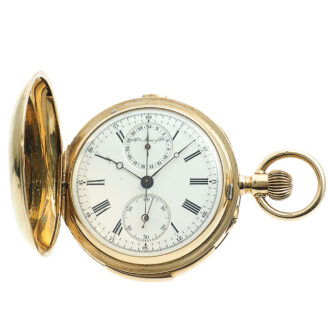
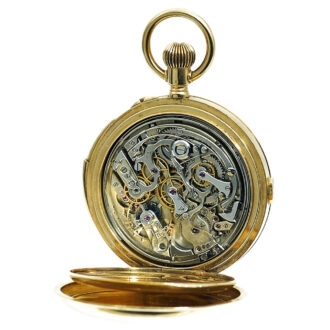
A large and heavy Swiss 18K gold and enamel hunting cased minute repeating chronograph pocket watch with a 30-minute counter, circa 1880.
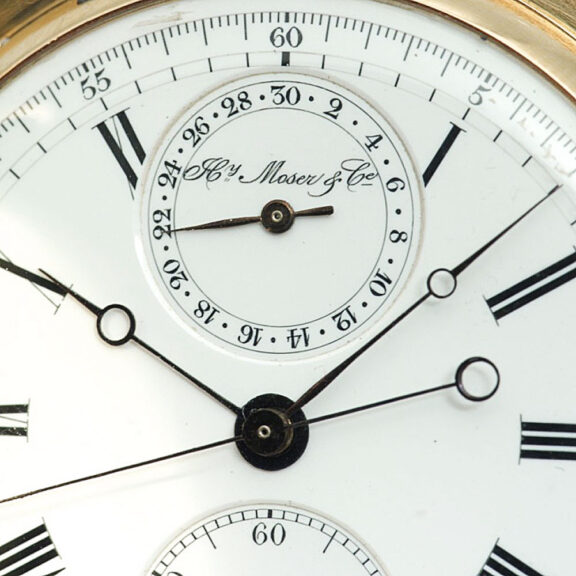
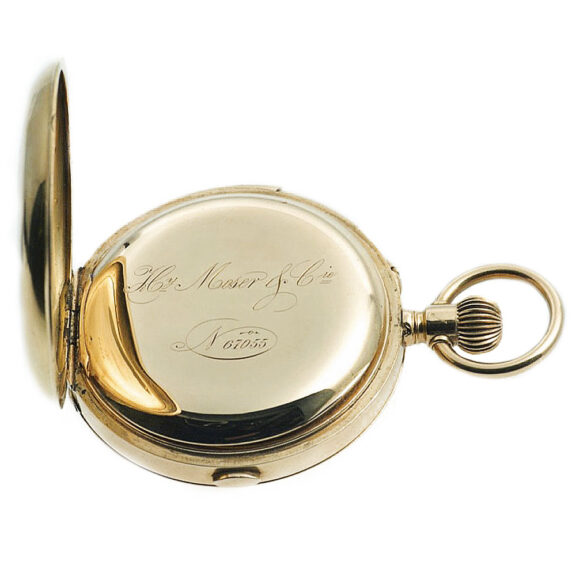
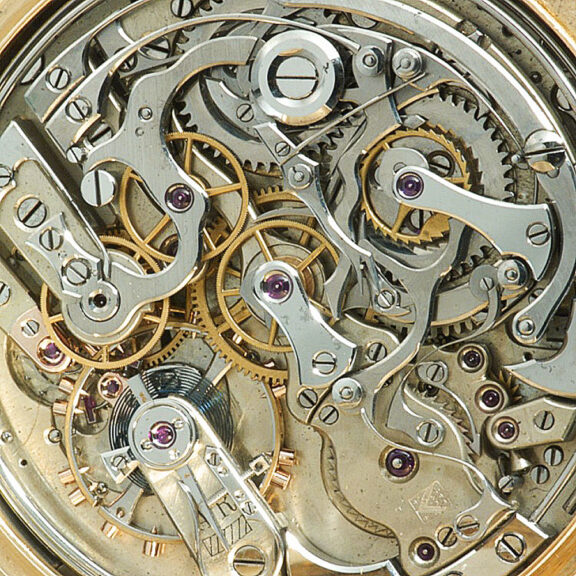
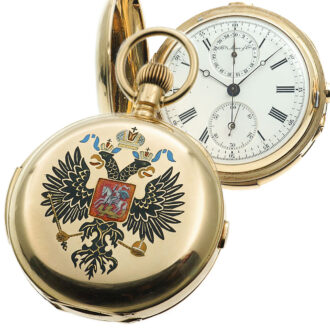
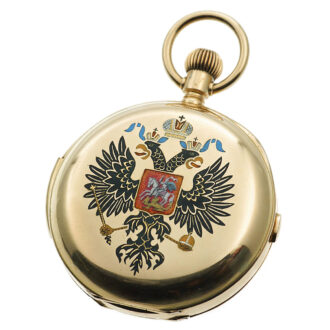
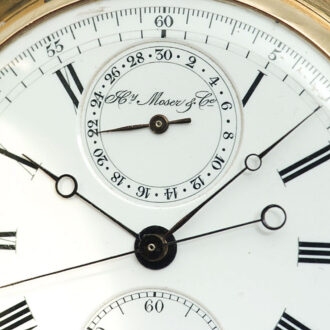
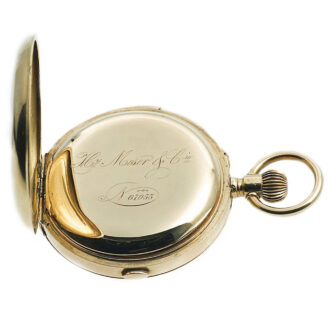
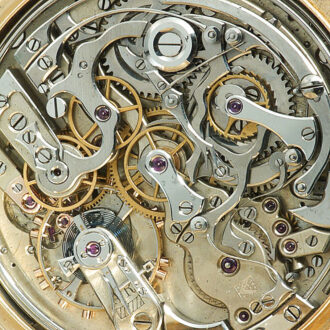
Polished case with polychrome enamel coat of arms of the Russian tsar. White enamel dial with radial Roman hours, outer minutes track with Arabic five-minute numerals, subsidiary dial for the seconds, 30-minute counter, centre chronograph hand and Breguet hands. Bridge movement, two hammers, two gongs, screw compensation balance. Dial signed, cuvette signed and numbered.
–
Diameter: 54 mm
–
Weight: 145 g
–
Signed: Hy Moser & Cie
–
Moser & Cie. Coming from a family whose watchmaking roots went back as far as the early 18th century, Henry Moser managed to successfully re-establish the family name as the legendary ‘Russian Swiss’ brand. Johann Heinrich Moser, the founder of H. Moser & Cie, was born in 1805 and learned his craft from his father, to further develop his skills, he went to work in Le Locle, Switzerland in 1824. He returned to his home town Schaffhausen in 1826 with the intention to set up his own business, but his request was rejected by the municipal council and the position of the watchmaker to the town was given to someone else. Driven by a vision, Heinrich decided to take his business to tsarist Russia, which offered an excellent workforce and a promising trading base for watches at the time.
–
After several employed positions as a watchmaker, Heinrich founded the company Henry Moser & Cie in St. Petersburg in 1828 strategically changing his name to sound English. He opened a watch factory in Le Locle in 1829, also under the name Henry Moser & Cie. His first branch in Moscow opened in 1831 and Henry Moser & Cie became supplier to the Tsar and the Russian Army. Moser even extended his sales to Japan, China, Persia and Turkestan, as well as Siberia and Kamchatka. In 1845, the Moser companies in Russia employed around fifty people. Watches by the Henry Moser & Cie company which bear the coat of arms of the Tsar frequently come on the market, however, watches with complications are much rarer.
–
Tsar Ivan the Terrible had the tsarist coat of arms modified in that he ordered a plate with the official arms of the city of Moscow to be added to the breast of the double-headed eagle: a horse rider slaying a dragon, presumably Saint George. Over the years the Romanovs then made many more modifications to the coat of arms, the eagle’s wings were proudly spread out, the talons received powerful claws to hold the symbols of power, the sceptre and the orb. There are several interpretations of the significance of the three crowns, one of them is that they symbolize the Holy Trinity: Father, Son and the Holy Spirit.
Signed: Hy Moser & Cie
Share this page: