Important Swiss gold lever for the Russian market Circa 1910
- Kenmerk
- DB0889
- Diameter
- 53 mm
- Estimate
- € 12.500 - 25.000
- Price sold
- € 31.300
Gold minute repeater with seconde morte by Louis Audemars
–
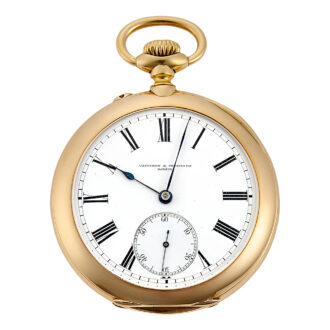
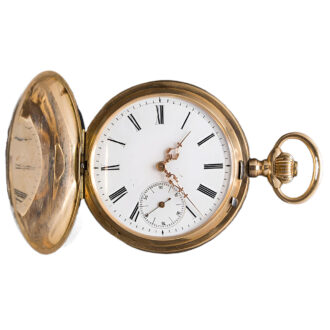
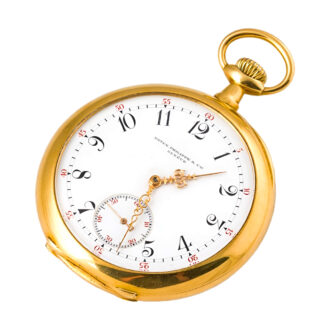
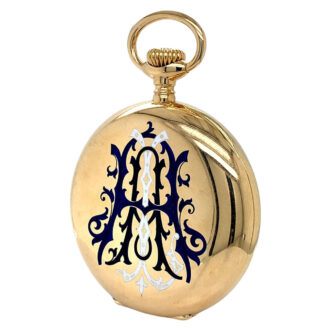
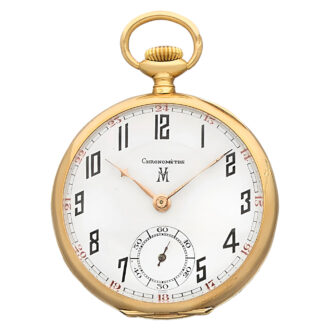
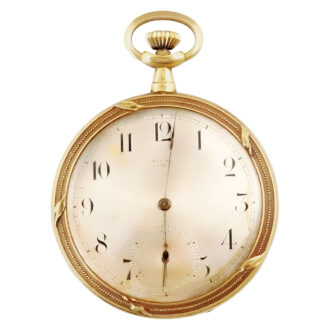
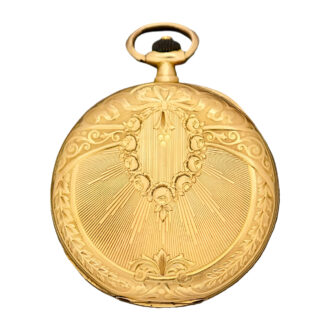
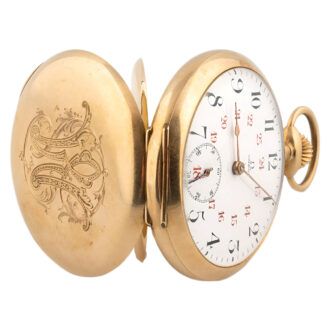
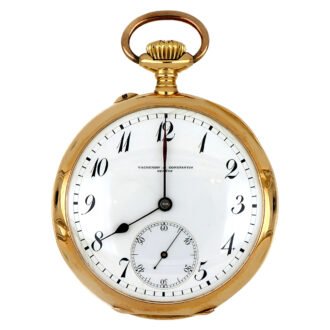
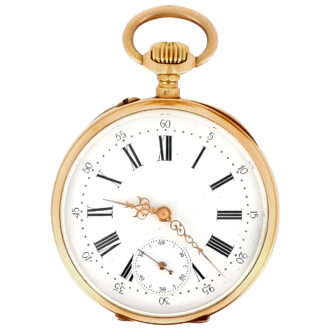
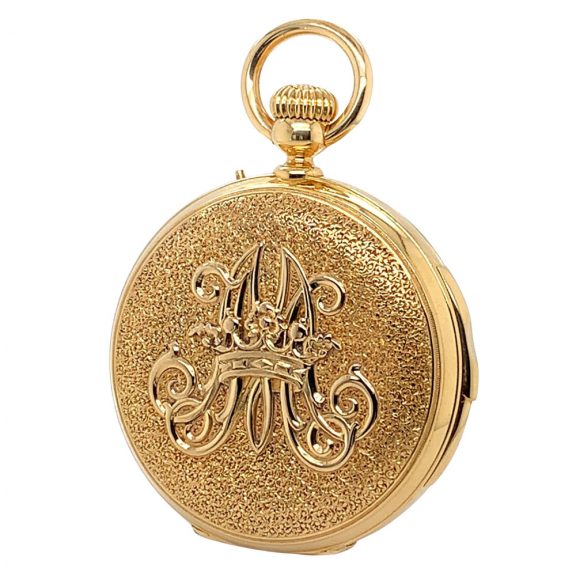
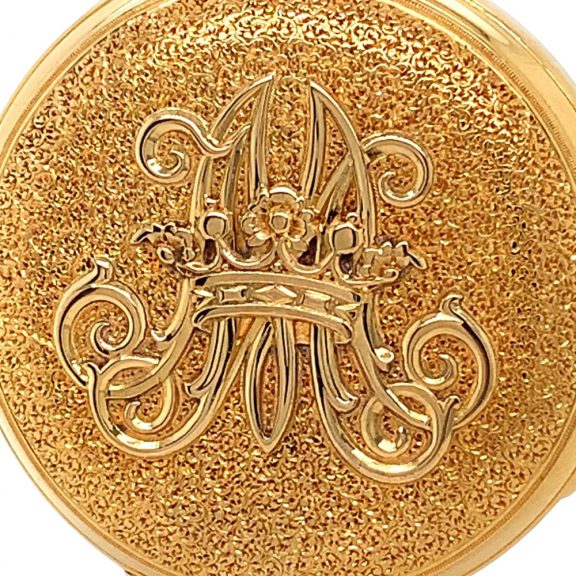
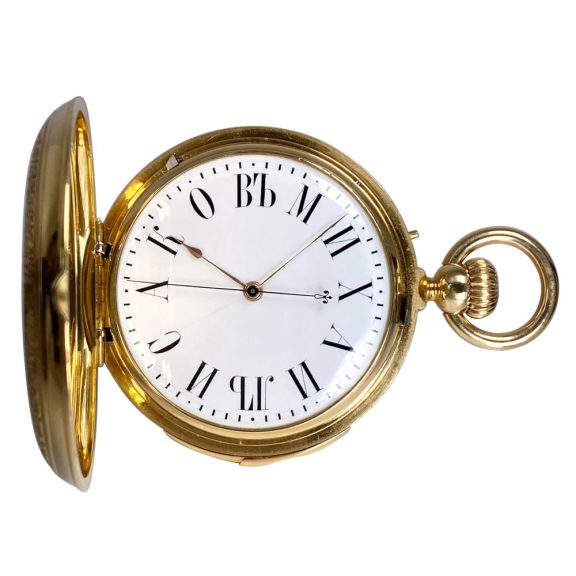
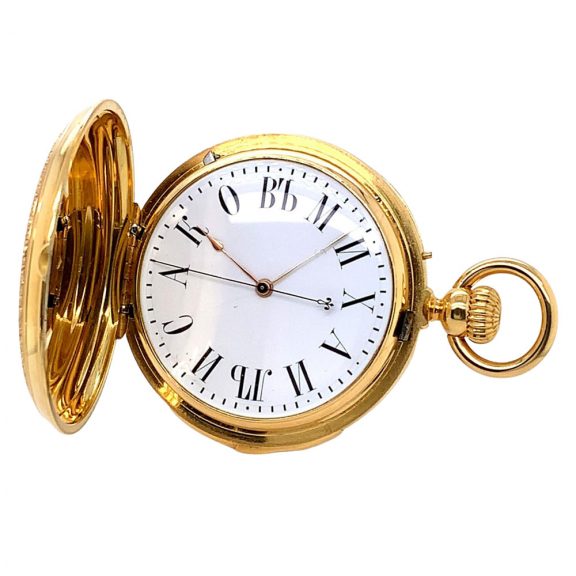
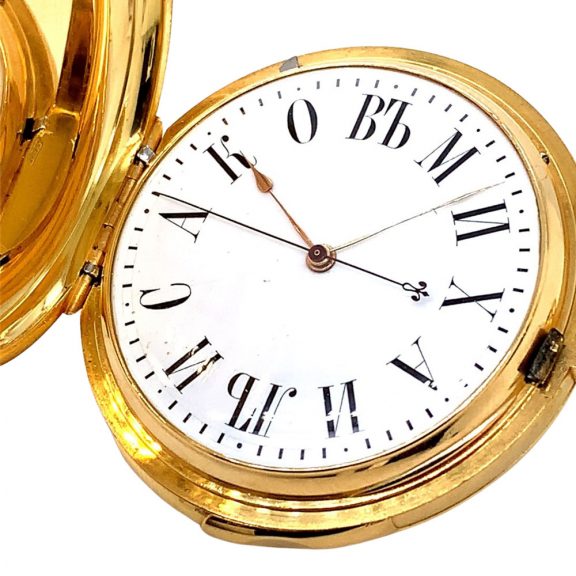
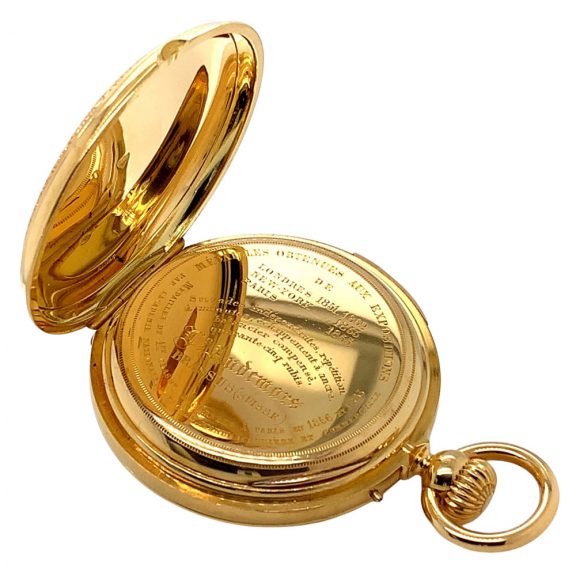
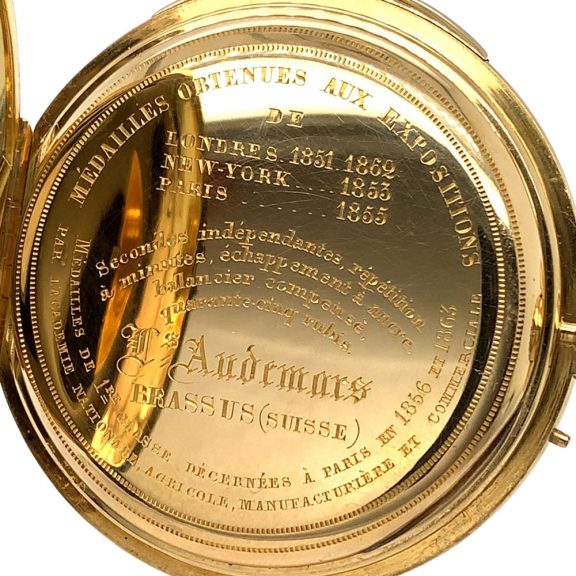
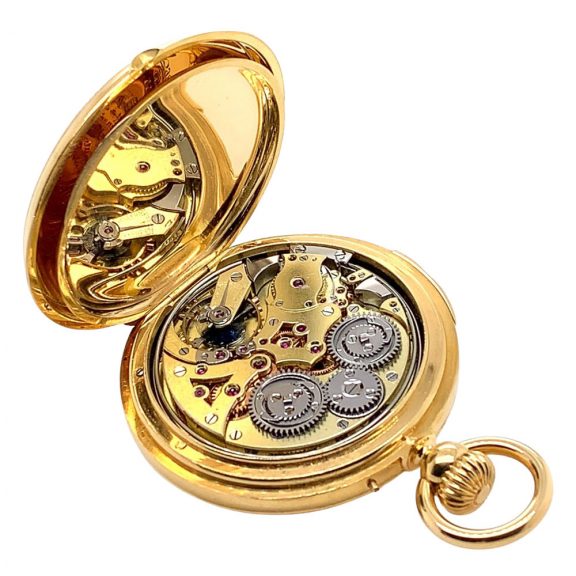
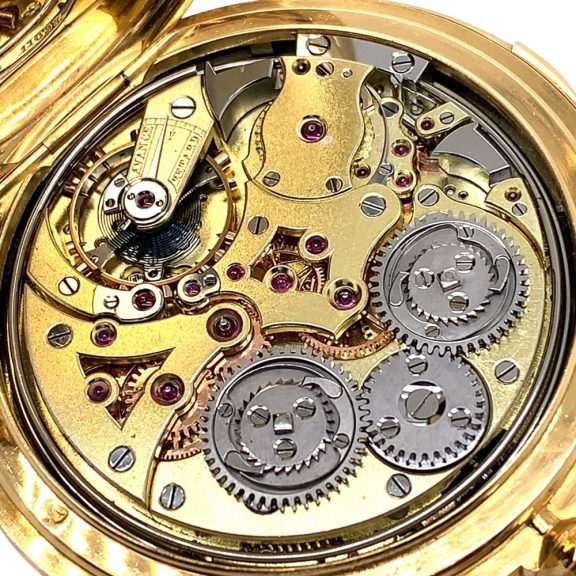
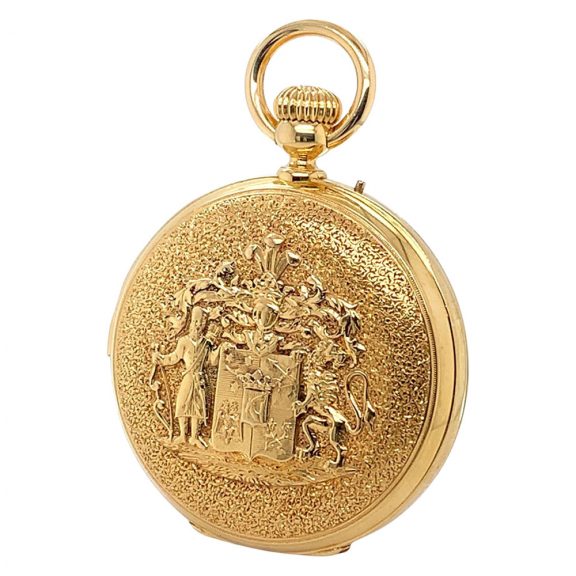
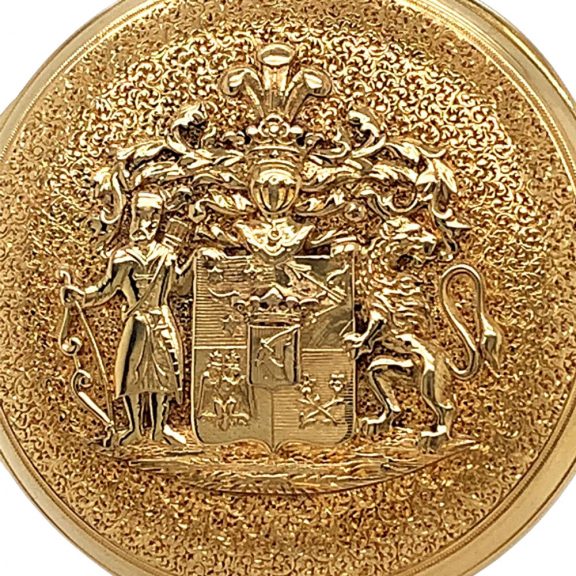
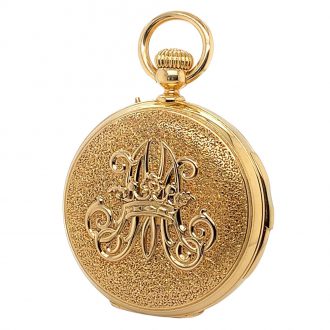
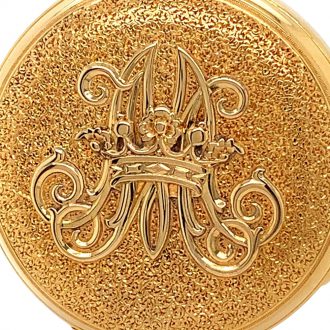
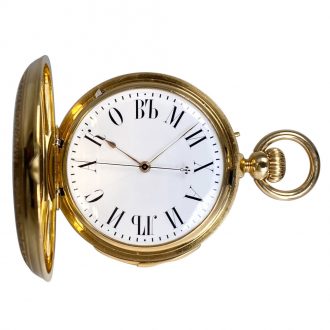
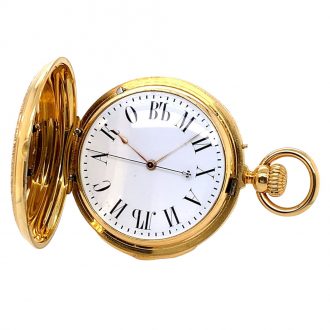
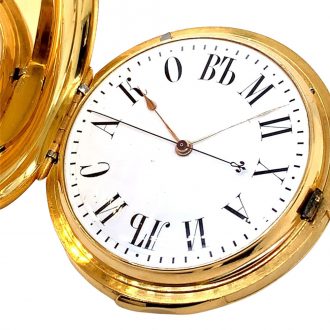
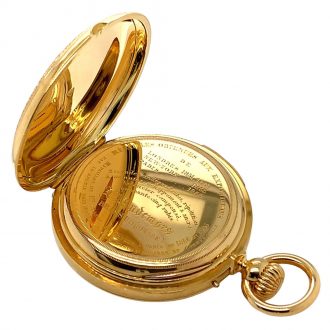
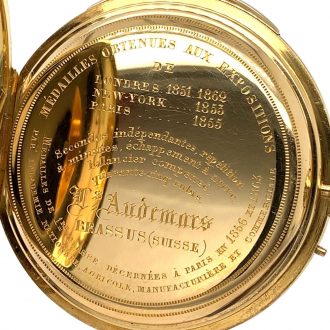
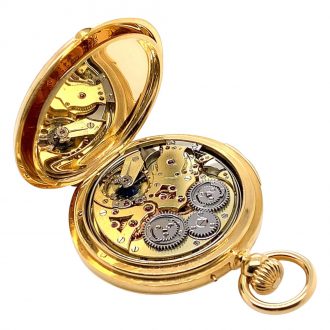
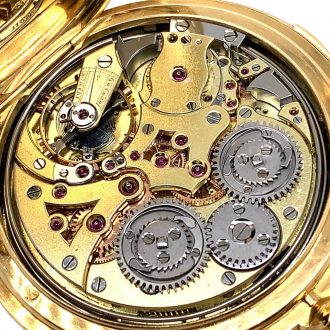
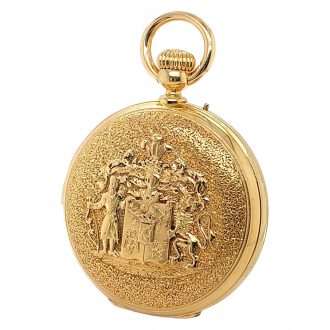
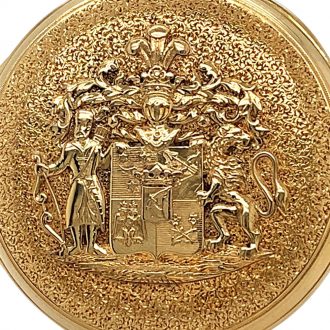
An important, probably unique and very fine Swiss 18 carat gold hunting cased minute repeating lever pocket watch with seconde morte, independent jumping center seconds, made for the Russian market, circa 1910. Bridge movement, two hammers, two gongs, a tandem winding mechanism with mirror polished clicks on top, red gold gear train and gold screw compensation balance. The cuvette is engraved with the technical details and prize medals. White enamel dial with personalized indices for Mikhail Isakoff in Cyrillic script for the hours, an outer minute track, spade & whip hands and a Fleur-de-Lys hand indicating the center seconds. An elaborately chased and engraved case, a monogram with crown on the front and the noble coat of arms of the Isakov family on the back. Cuvette signed, case numbered.
–
Diameter: 53 mm
–
Weight: 154 g
–
Signed: Ls Audemars Brassus (Suisse)
–
The seconde morte, also known as dead-beat seconds, is a complication of a mechanical movement in which the second hand moves every second. This is in contrast to the usual ‘running’ of the second hand. This complication is rare and was seen in the years before the quartz revolution, the 1970s and 1980s, but died a silent death because of the same quartz revolution. The reason for this was that the second hand moves per second in almost the same way as quartz watches, which ultimately also use a frequency of 1Hz. With that, the ‘running’ second hand became the distinction between mechanical watches and quartz watches. Incidentally, that external similarity only applies to the second hand jumping per second, the underlying mechanism of the dead seconds complication is of course of a completely different order.
–
The most striking feature of the present watch is the chased and engraved case, which is said to have taken three years to complete by experienced engravers from Russia.
–
This magnificent hunting cased timepiece was originally made for a descendant of the Tsar of Russia, Mikhail Isakoff, who presented this watch to Paul Souvray in recognition of his exceptional and loyal service at the court of the Tsar of Russia. An original letter from Paul Souvray from 1913, which confirms this history, has unfortunately disappeared since the watch was auctioned at Sotheby’s in New York a few years ago and only a copy exists. The letter testifies to the many exceptional qualities of the watch. The award winning chronometer movement was specially ordered from Louis Audemars & Cie.
–
Louis Audemars & Cie was founded in 1811 by Louis-Benjamin Audemars in the hamlet of Le Crêt Meylan near Le Brassus in the Vallée de Joux, Switzerland. Audemars married his first wife, Julie LeCoultre, laying the foundation for the close friendship between the two companies. He had 15 children, three of them died, four daughters and eight sons remained.
Louis-Benjamin and his sons specialized in producing ébauches, they made high-quality watch movements and precision complications such as repeater and chronograph mechanisms. Both design and production were carried out in-house. Their products were mostly entirely hand-made and are considered among the finest the world has ever seen. The craftsmanship was second to none at the time and even Breguet recognized this exceptional quality by listing the Audemars movement number next to his own in the cases, there was no greater compliment than that.
At the time watchmakers in the region made unbranded movements which they sold to users in Geneva and all over Europe. There the movements would be fitted with dials and cases and sold under the brand or name of the purchaser, therefore a timepiece of the period made in France, Germany, Russia or England might actually contain, and very often did, a movement from the Vallée de Joux. Louis-Benjamin’s ambition was to make complete cased watches signed with his own name. He never lived to achieve his goal because he died in 1833 at the age of 51. However, his sons did. They decided to train with different watchmakers and learn all the different aspects of the craft. Around 1850 they returned home and began using their combined knowledge to create their own brand. At the time manual work still played a decisive role in the production. However, development did not favour them.
Around 1840 Vacheron & Constantin were the first to equip their factory with production machinery, closely followed by LeCoultre and other companies. The new machines worked as well as the craftsmen but three times as fast, which of course reduced the purchasing price of the watches considerably. To counter this development, the Audemars’ decided to create watches which could not be made by machines, this is where they began making complicated watches and no other company but Audemars was able to reach such perfect coordination of design, precision and production. Theirs was the very first enterprise in the region of the Vallée de Joux to make complete watches from start to finish and signed with their own name. Unfortunately, they were much better watchmakers than businessmen and the company was bankrupt and liquidated in 1885.
Signed: Ls Audemars Brassus (Suisse)
Share this page: