Swiss ship’s chronometer with 52h power reserve Circa 1922
- Kenmerk
- AD1690
- Diameter
- 61 mm
- Estimate
- € 12.500 - 30.000
- Price sold
- € 44.800
Centre seconds deck chronometer by Paul Ditisheim
–
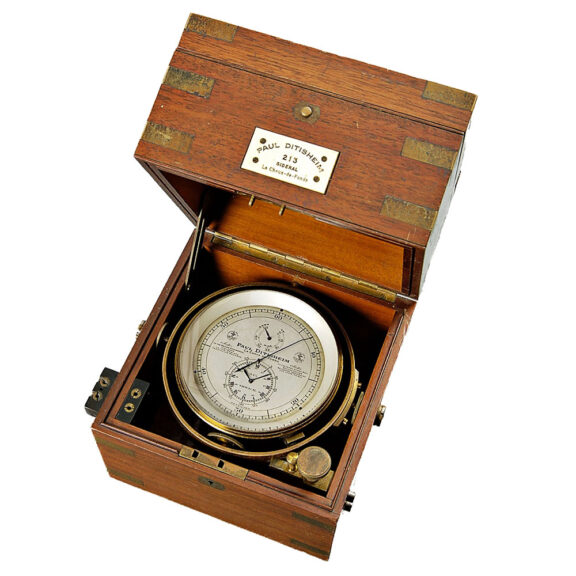
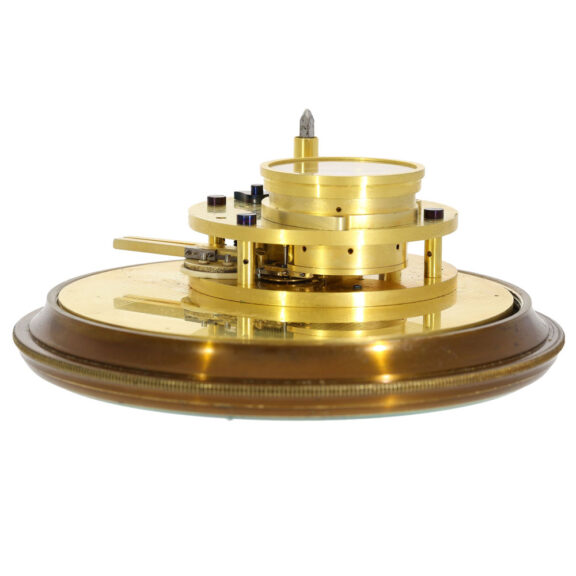
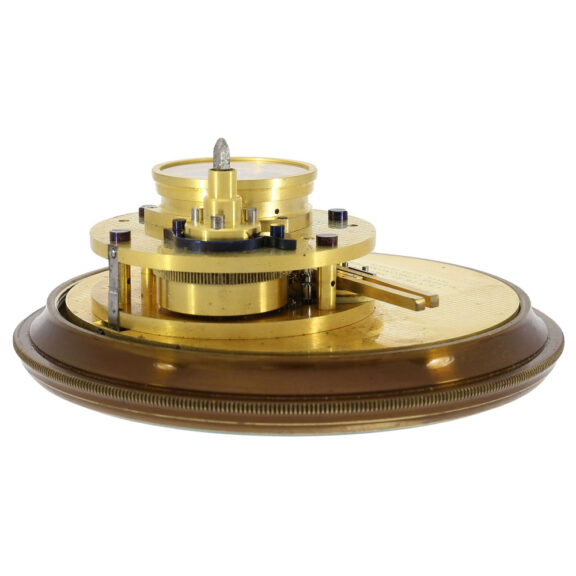
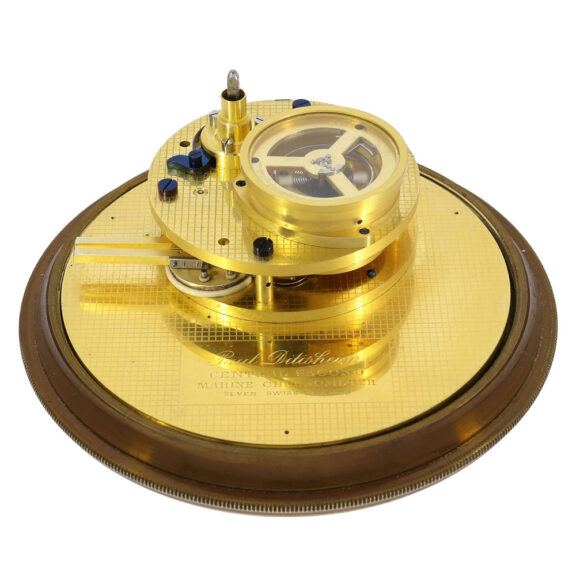
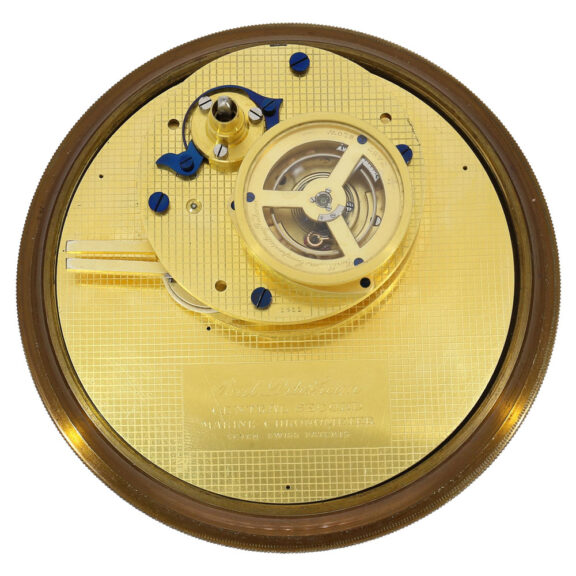
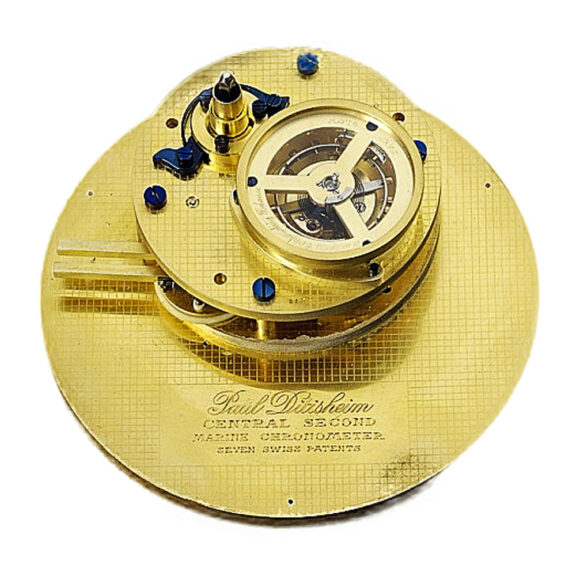
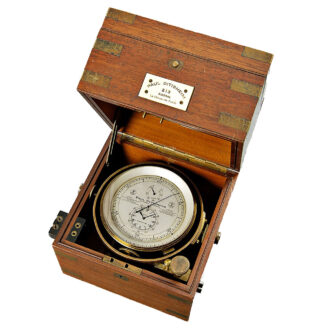
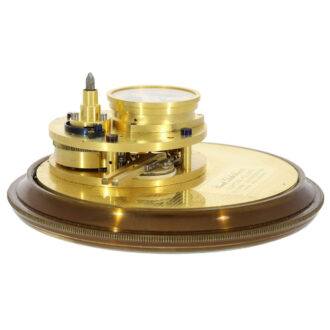
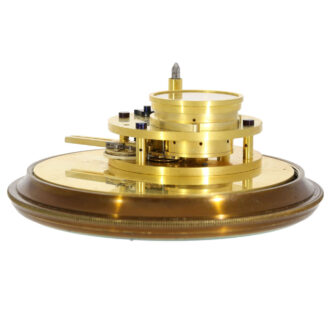
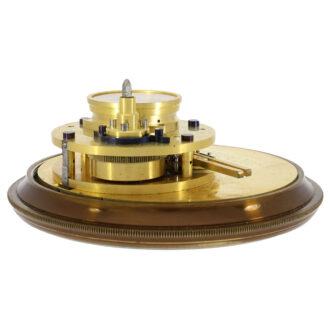
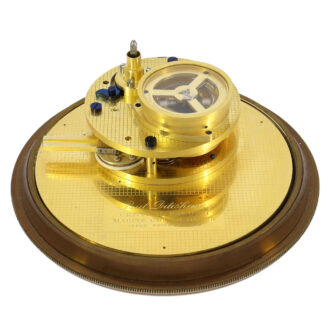
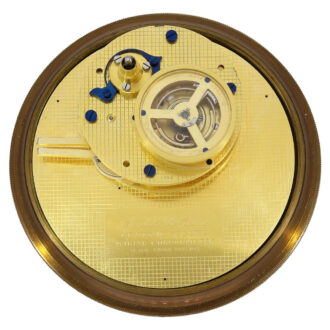
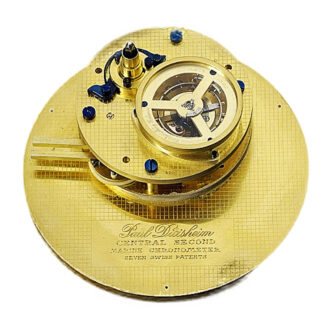
A remarkable, very rare Swiss ship’s chronometer with 52h power reserve, central seconds and seconds contact device – timed on sideral time, circa 1922.
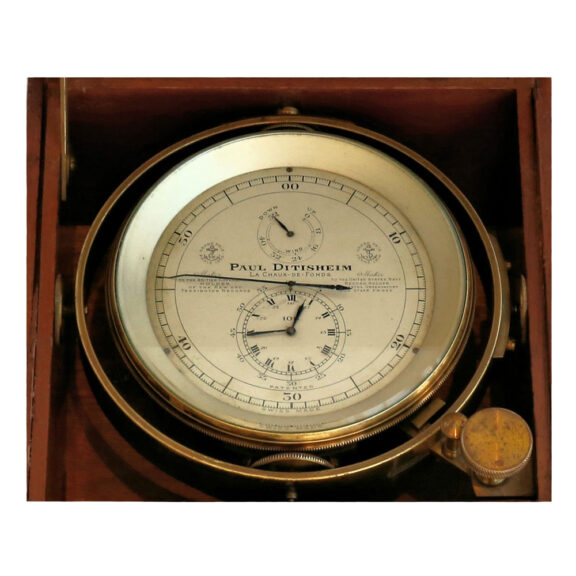
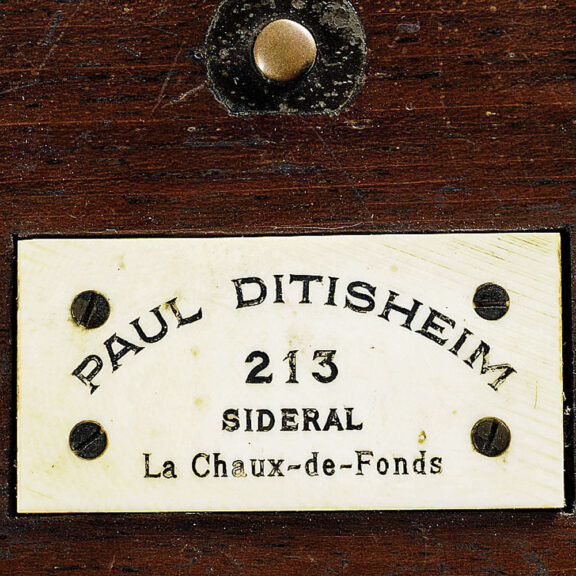
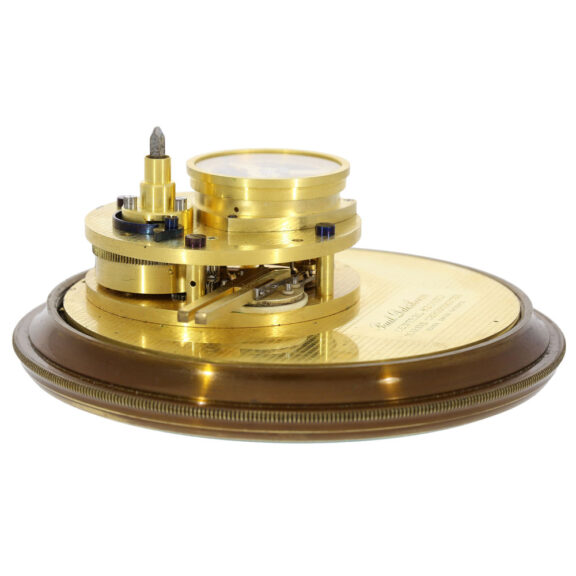
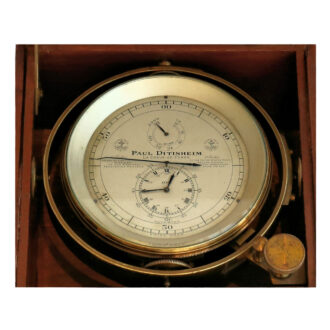
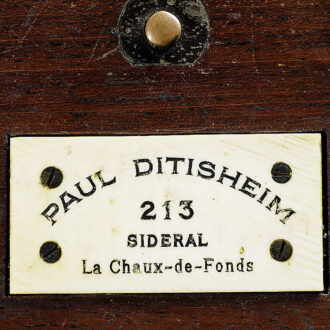
Three piece mahogany box with brass fittings and countersunk handles, original ivory plate, signed and numbered. Extraordinary brass case with gimbal suspension, a lateral electric device with minute impulse, in the bottom key less winding mechanism with a rotating knob, suspension with reeding ring nut for keyless time setting, gilt chronometer movement. Inscribed: Paul Ditisheim Central Seconds Marine Chronometer Seven Swiss Patents, 1011. Exceptionally large chronometer balance under the glazed bridge, bridge signed: Guillaume Compensating Balance, lever escapement, bearing jewel with gold chaton, power reserve indication with planetary gear, device for emitting a minute impulse. Silver plated dial with 1/5 second scale, a sign of two day power reserve and center seconds, steel hand, dial inscribed: Maker to the British government, holder of the Kew and Teddington records, maker to the United States Navy, record holder Neuchatel Observatory, 305 State Prizes Patented.
–
Dimensions box: 185 × 203 × 185 mm
–
Signed: Paul Ditisheim La Chaud-de-Fonds
–
These centre seconds chronometers by Paul Ditisheim are considered the finest Swiss marine chronometers and are very popular. Ditisheim was one of the most important Swiss watch and chronometer makers. He researched and published mainly on topics of precision time measurement. He studied at the watchmaking school in La Chaux-de-Fonds before working in Ponts-de-Martel, Berlin, Paris and Rotherham in Coventry. In 1892 he opened a watch factory in La Chaux-de-Fonds. With his watches, he took part in many exhibitions and was very successful in constructing pocket chronometers, mainly with lever escapement. Among other things, he developed a Marine chronometer with interchangeable escapement. He worked on developing and testing temperature-independent metal alloys with Charles-Edouard Guillaume. Paul Ditisheim was appointed Chevalier of the French Academy and Fellow of the British Horological Institute in 1900. In 1912 he achieved the world record in chronometry at the Kew Observatory.
Signed: Paul Ditisheim La Chaud-de-Fonds
Share this page: