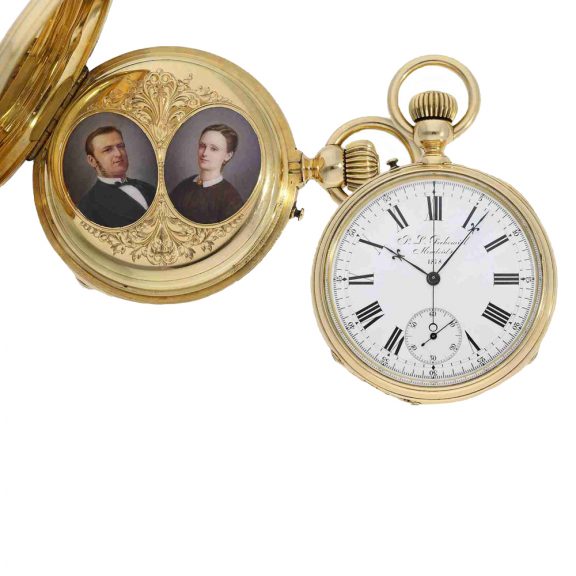
Swiss/Spanish chronograph with enamel paintings Circa 1878
- Kenmerk
- HC0588
- Diameter
- 54 mm
- Estimate
- € 7.500 - 15.000
- Price sold
- -
Early special chronograph for P.L. Pechemil
–
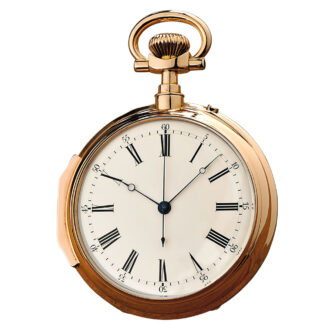
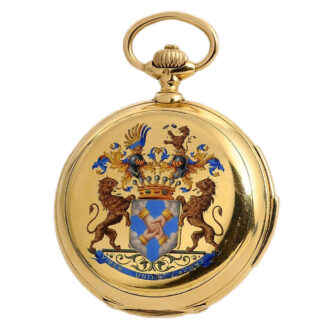
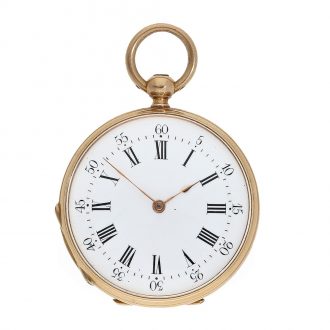
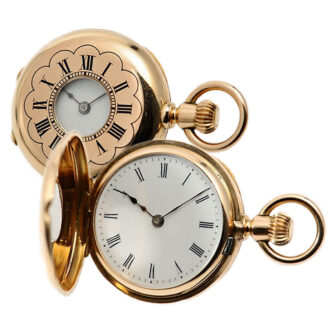
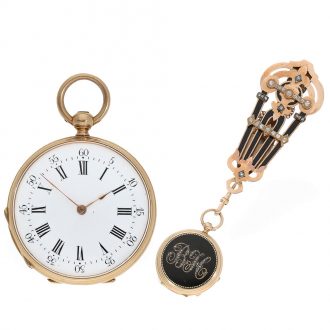
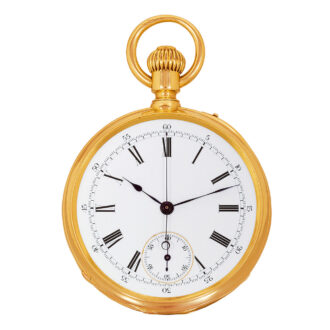
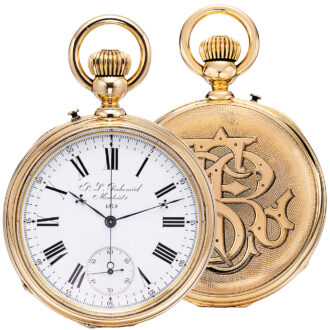
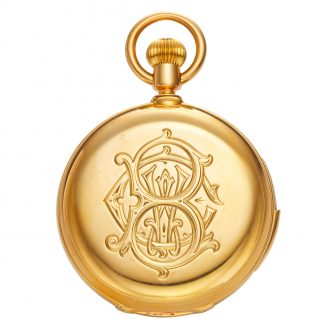
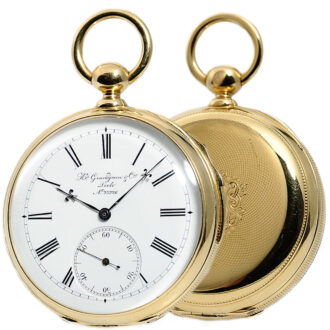
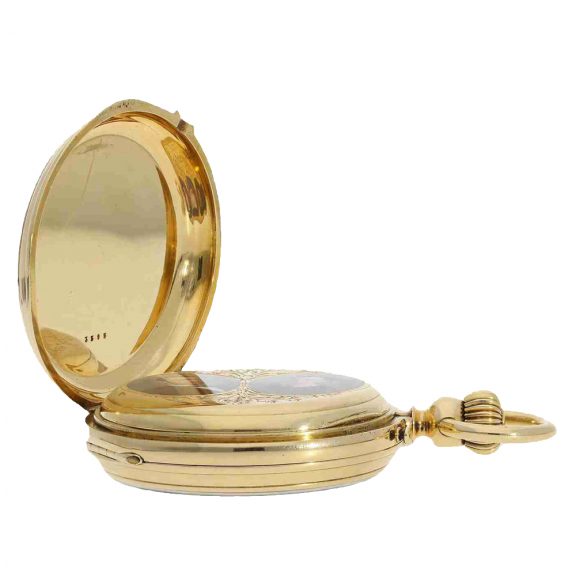
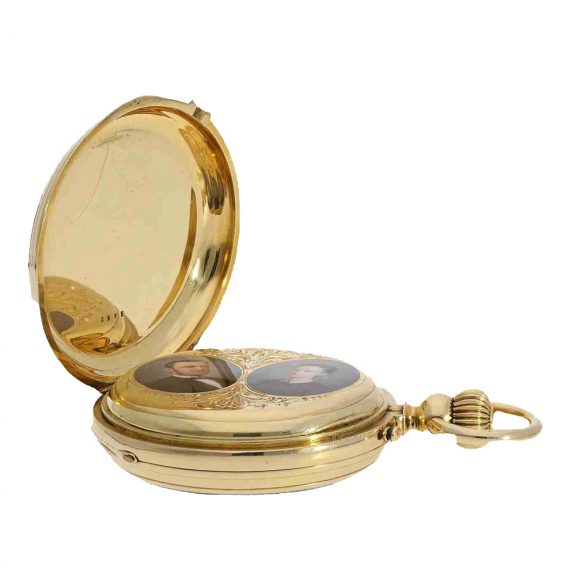
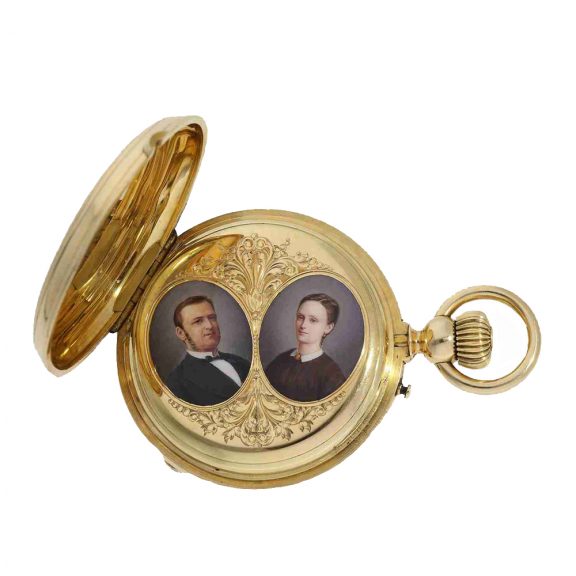
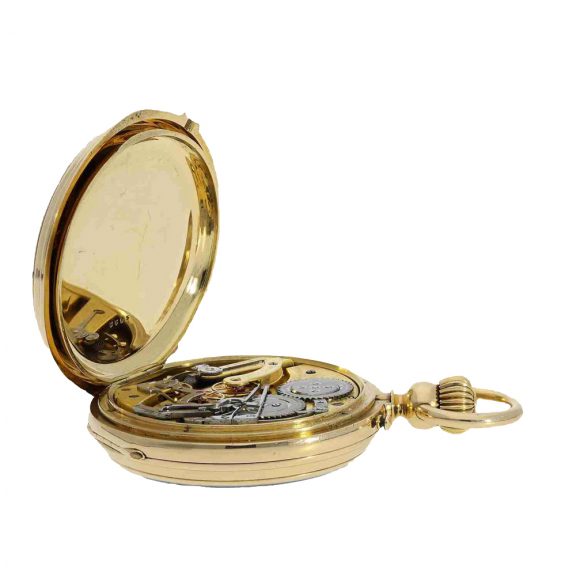
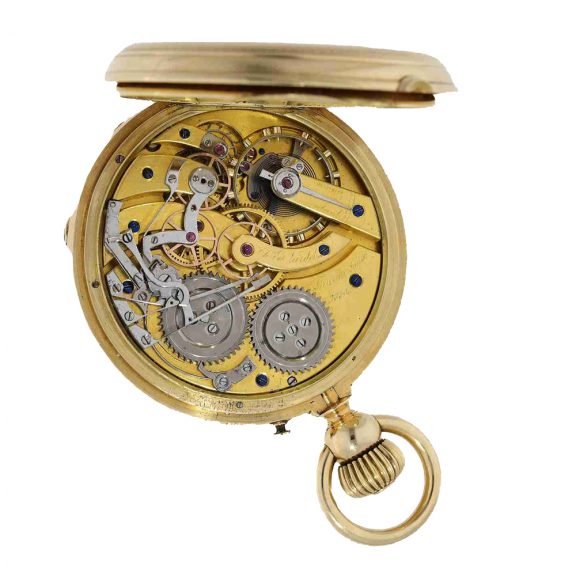
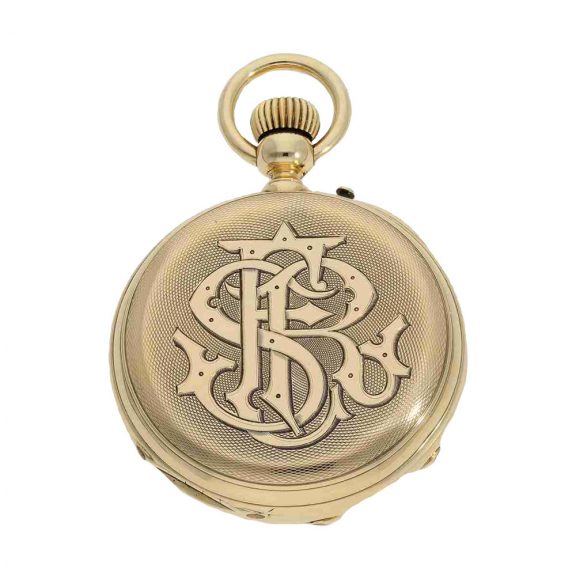
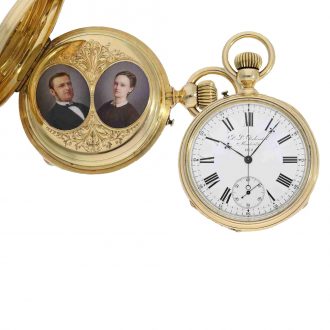
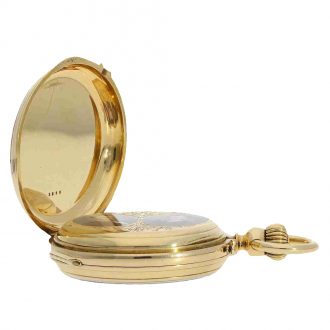
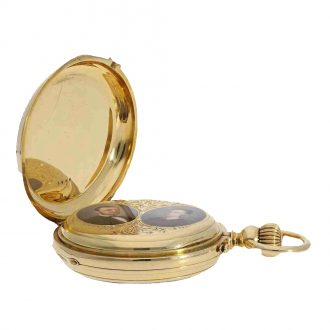
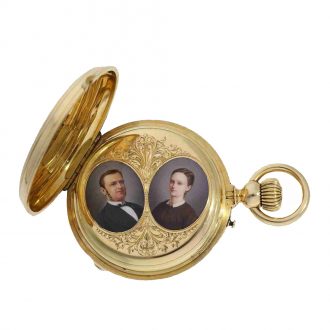
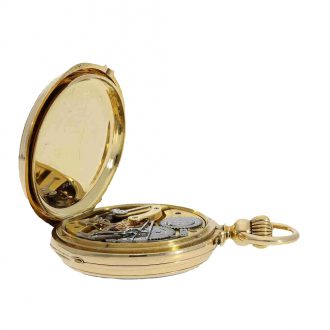
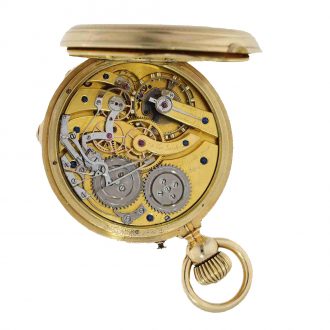
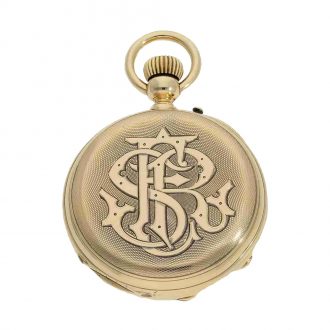
A unique early special chronograph pocket watch with the finest enamel paintings for P.L. Pechemil in Madrid and attributed to John Graff & Charles Lardet in Fleurier, Switzerland, circa 1878. The 18 Carat gold open faced guilloché case has a water drop (à goutte) shape and features an intertwined fine quality monogram on the engine turned back. On the dust cover an enamel work of the highest quality, attributed to the famous enamellist John Graff, probably depicts a wedding couple. The white enamel dial has Roman numerals for the hours and a subsidiary dial at six o’clock for the minutes and blued steel hands. The movement has an anchor chronometer with Wolf’s teeth, and an early version of a chronograph in top quality with gold wheels.
Case and movement have matching numbers and the dial is signed.
–
Diameter: 54 mm
–
Weight: 142 g
–
Signed: P.L. Pechemil, Madrid, 1878
–
This watch is a unique collector’s item, extremely interesting both because of the technical design of the chronograph and because of the famous enamel painting of the absolute top class.
–
John Graff
John Graff was an exceptionally skilled Swiss portrait enamellist, who produced work for many noble families across Europe. He also specialized in portrait miniatures of Indian and Chinese dignitaries.
–
Charles-Edouard Lardet (Fleurier 1832 – Madrid 1904), a watchmaker originally from Val-de-Travers who settled in Spain. From 1877 he was Consul General of Switzerland in Madrid. Lardet, who was highly respected and influential in Madrid, rendered great service to the Helvetic Confederation during the difficult times that the country was going through at the time. The modern chronograph with start, stop and return to zero functions was invented by Adolphe Nicole in London in 1861 (British Invention Patent No. 1 461 dated May 14, 1862) and presented at the 1862 World Exhibition in London. In 1868, Geneva watchmaker Auguste Baud (1825-1894) decided to place the entire chronograph mechanism behind the watch’s calibre for ease of assembly and adjustment. Very soon he worked with Adrien Philippe (1815-1894), one of the founders of Patek Philippe, and developed numerous watches for the Geneva manufactory in the years 1870-1880. In 1878, during the Paris World Fair, Auguste Baud received a bronze medal for his invention. The extremely fine chronograph shown here was manufactured at the same time.
Signed: P.L. Pechemil, Madrid, 1878
Share this page: