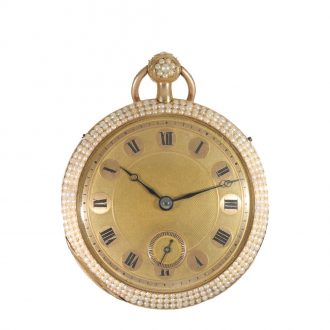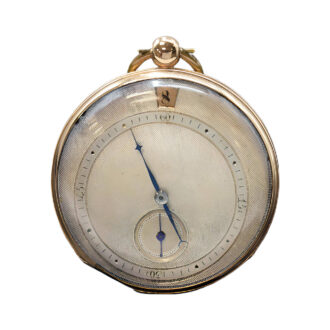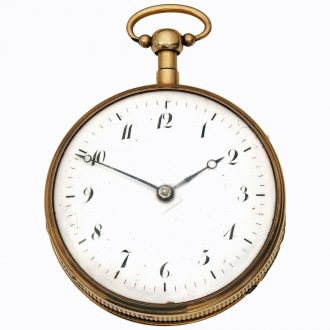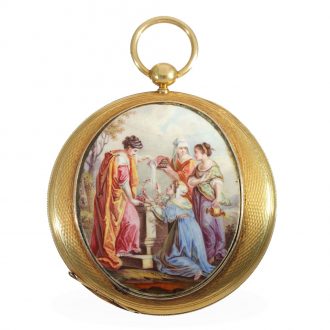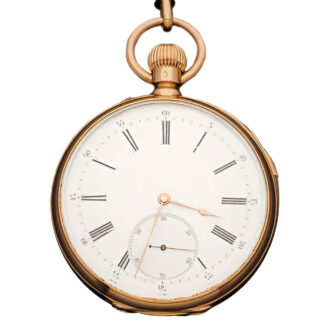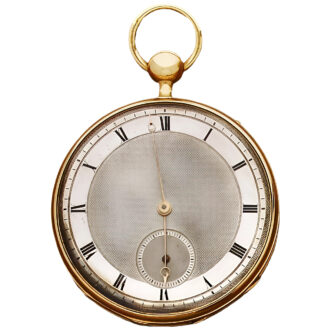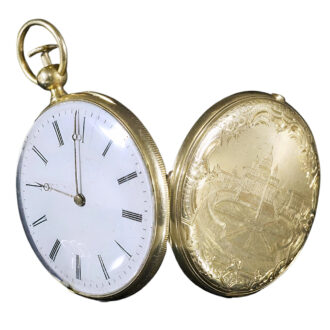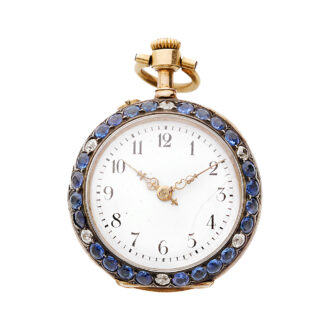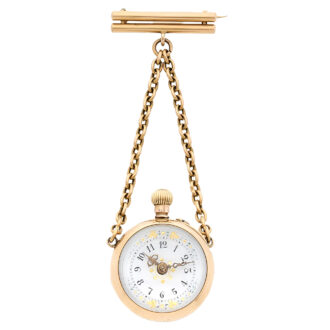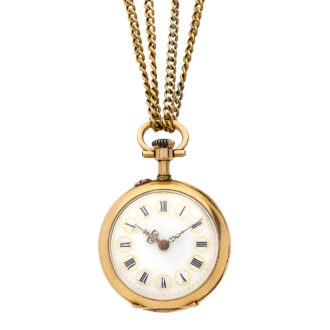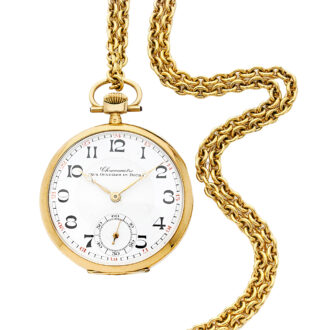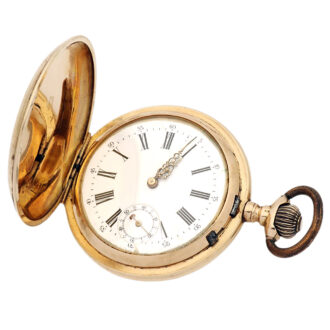
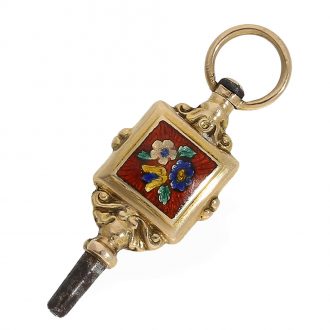
Swiss fine 18 Carat gold enamel lady’s watch with original key Circa 1830
- Kenmerk
- HC0838
- Diameter
- 31 mm
- Estimate
- € 4.000 - 10.000
- Price sold
- € 4.355
Lady’s pocket watch for the Chinese market
–
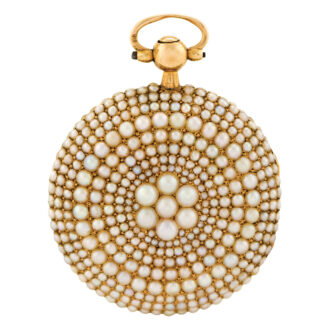
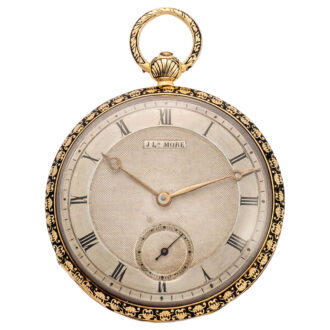
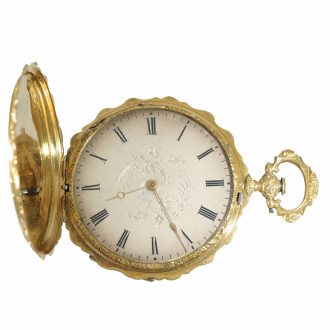
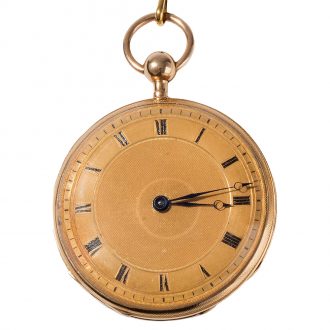
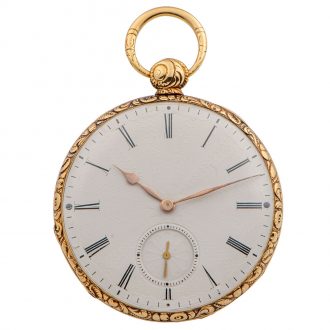
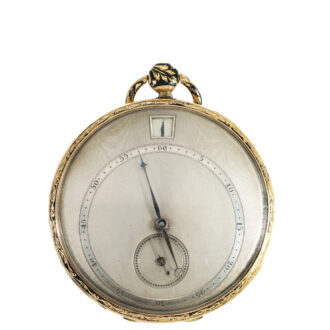
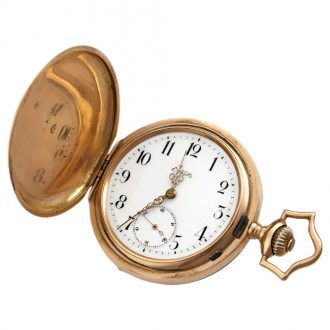
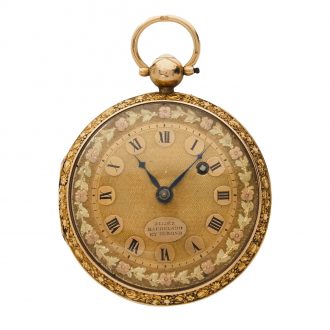
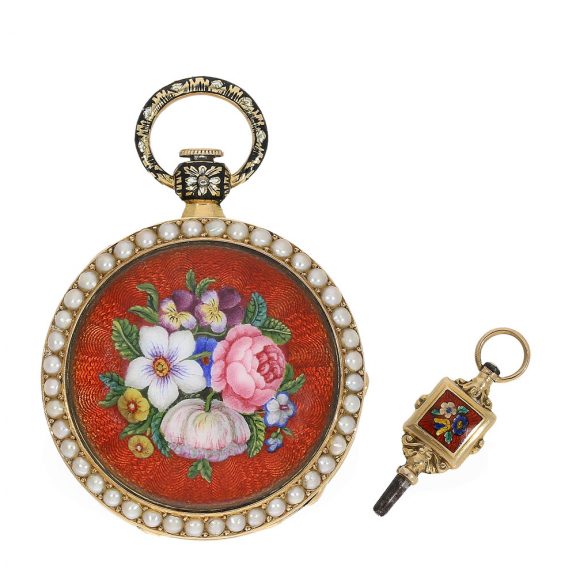
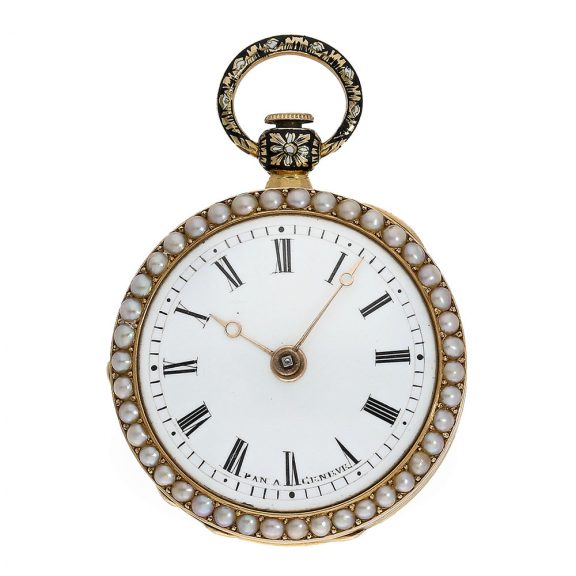
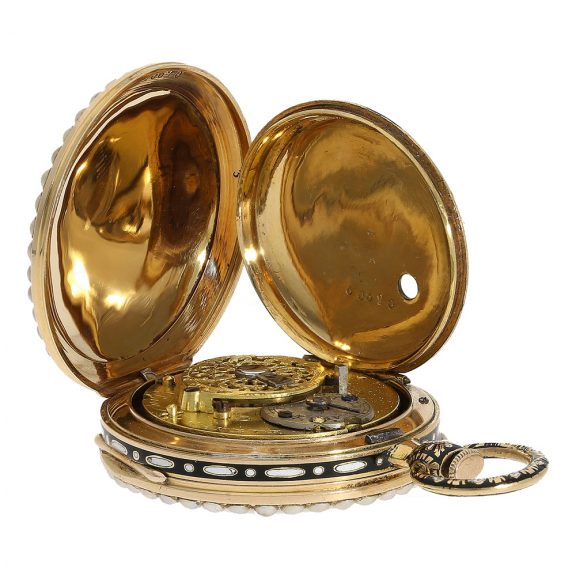
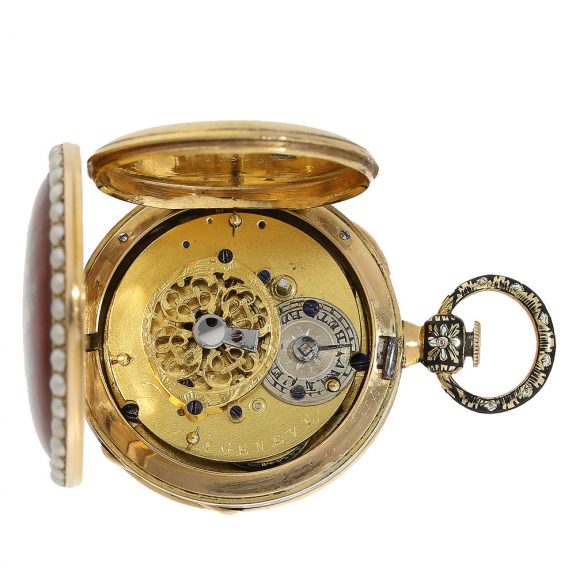
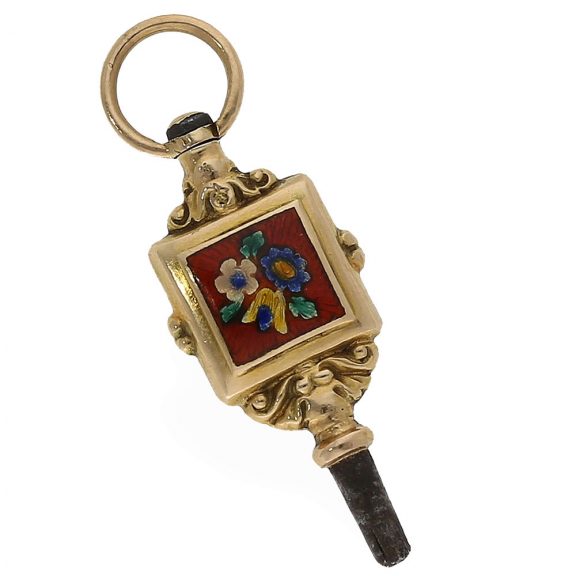
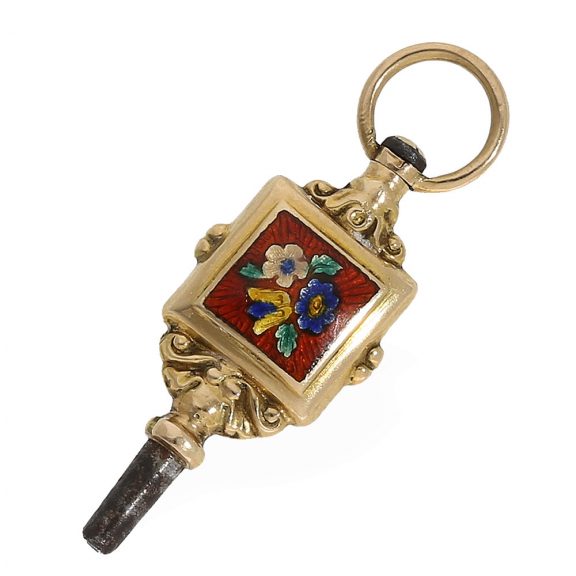
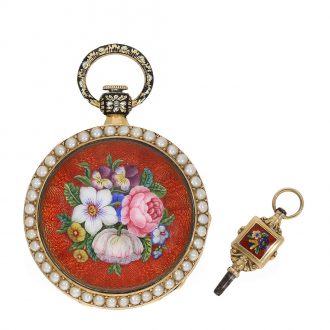
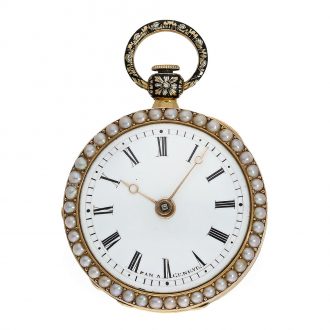
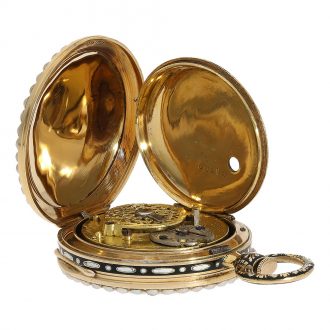
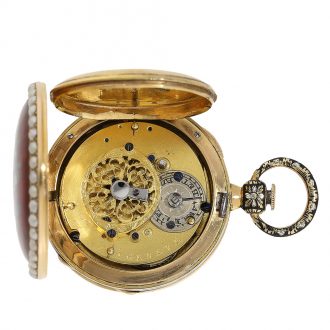
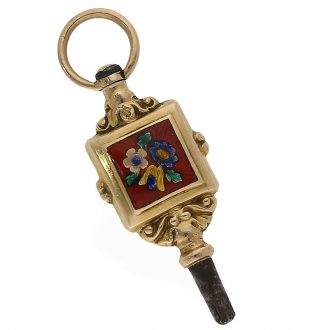
A very fine gold enamel lady’s watch for the Chinese market with an original gold key with a red engine turned enamel and floral motif like the case, made made in the Pan, Genève workshop, Switzerland, circa 1830. This open faced cased watch was crafted from 18 Carat gold and has an enamel painting of the very finest quality over red engine turned enamel on the back lid and both sides set with half Oriental pearls. The white enamel dial has black Roman hour numerals and gold Breguet hands. The movement has a verge escapement.
Dial and movement signed.
–
Diameter: 31 mm
–
Weight: 29 g
–
Signed: Pan à Genève
–
Gold enamel watches for the Chinese, Indian or Ottoman markets in lady’s size are much rarer than in man’s size. The watch is a museum quality in its condition.
–
Panchaud
François Panchaud was officially admitted as a resident (reçu habitant) of Geneva in 1764, allowing him to legally practice his trade. Prior to forming formal partnerships, he worked under his own name as a watch manufacturer (fabricant horloger). Around 1780, François Panchaud formed a commercial partnership (société) with master watchmaker Jean-Étienne Piot. Their firm was formally known and signed on timepieces as Piot & Panchaud between 1780 and 1790.
When François Panchaud exited the business around 1790, Jean-Étienne Piot maintained the continuity of the trading name by immediately partnering with master watchmaker Jean Adam Panchaud. The firm continued operating under the Piot & Panchaud banner until its dissolution in 1801.
Distinct from the 18th century Panchaud family, a separate Genevan workshop active between roughly 1820 and 1850 used the abbreviated signature “Pan” (or “Pan à Genève”) on Chinese export watches. This workshop stopped operating around 1850, as the market for traditional verge escapement montres chinoises declined and was overtaken by larger, more industrialised Swiss manufacturers (such as Bovet and Vacheron Constantin). Because the exact individual watchmaker(s) behind the “Pan” signature are unrecorded in surviving Genevan archives or horological reference works, the workshop is catalogued strictly under the trade name “Pan” rather than a confirmed full family name.
Signed: Pan à Genève
Share this page: