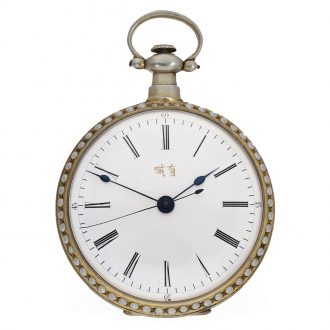
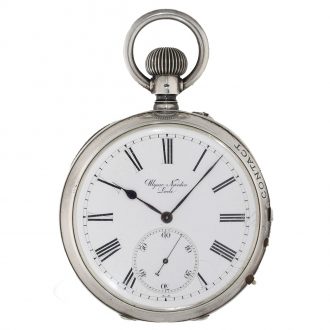
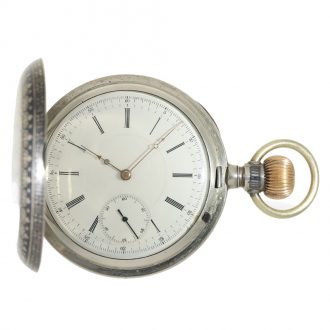
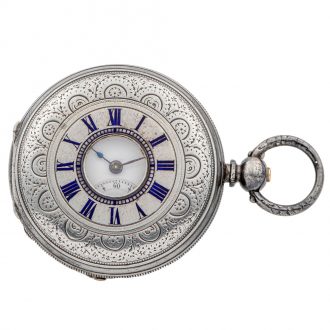
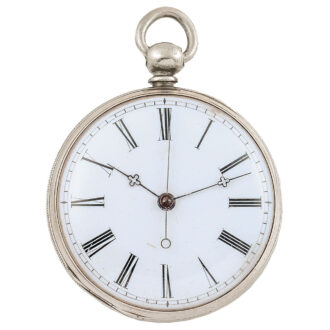
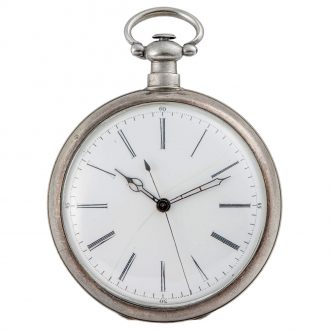
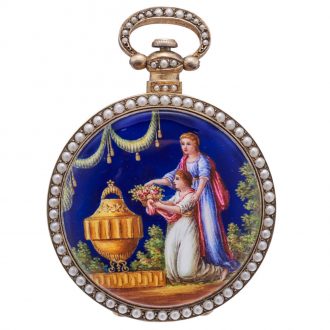
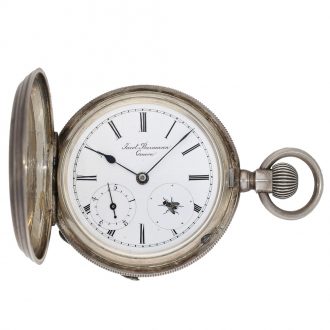
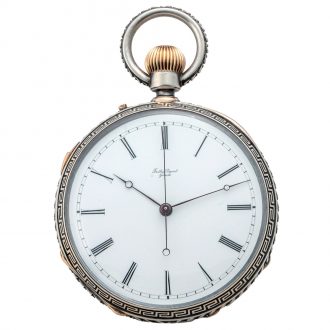
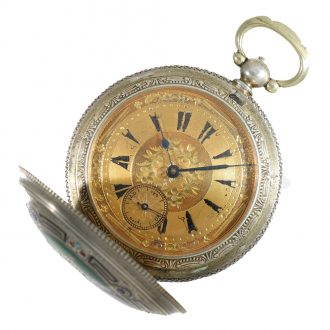
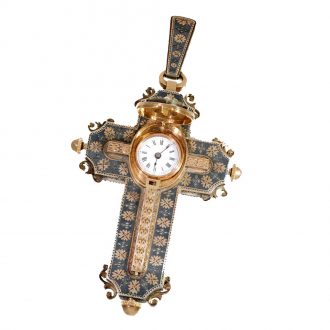
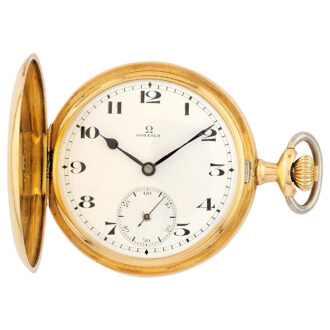
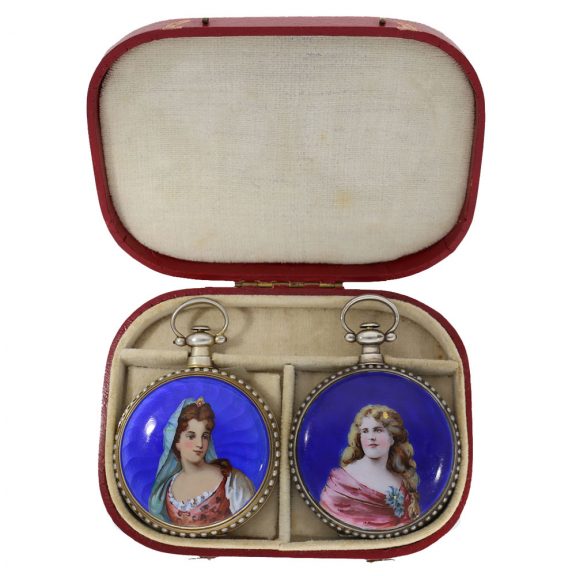
Swiss pair of enamelled watches for the Chinese market Circa 1880
- Kenmerk
- HC1145
- Diameter
- 55, 56 mm
- Estimate
- € 7.000 - 14.000
- Price sold
- € 11.150
Gold plated and silver watches set with pearls
–
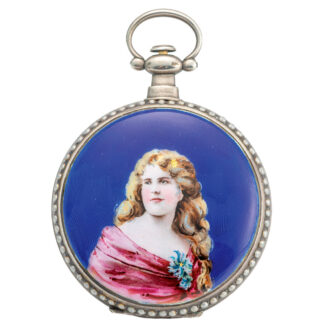
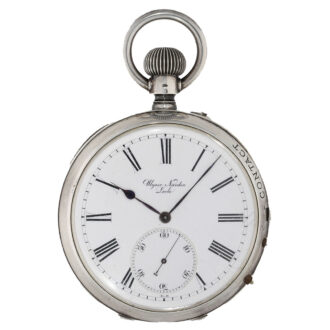
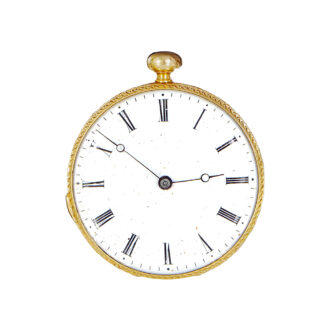
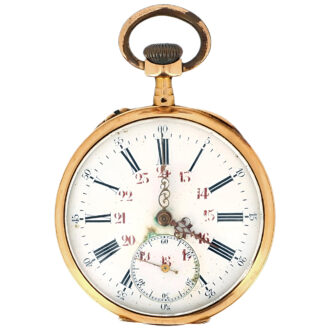
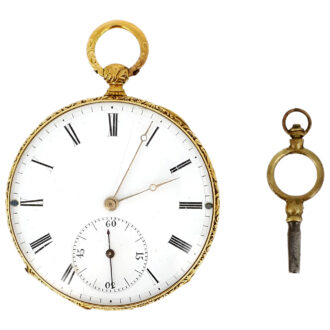
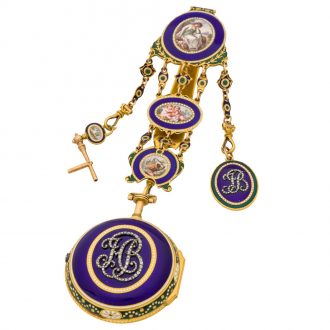
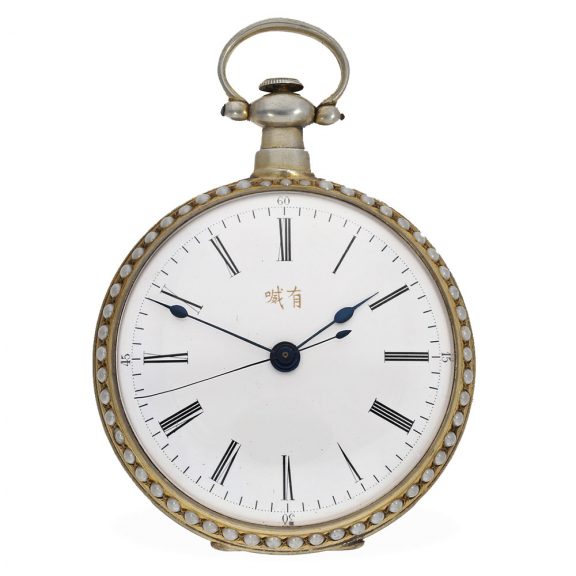
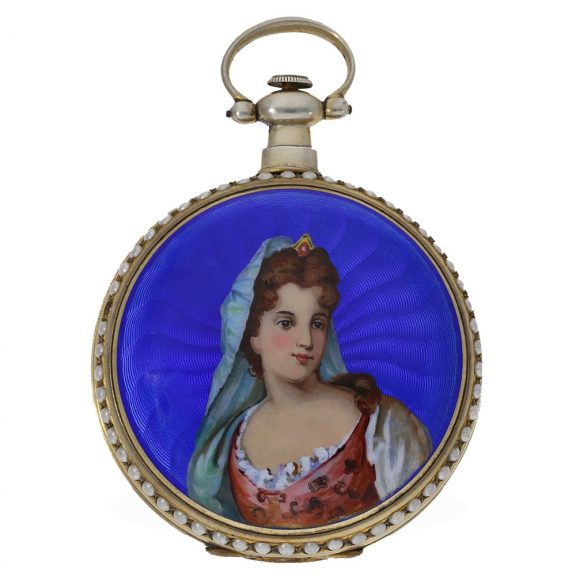
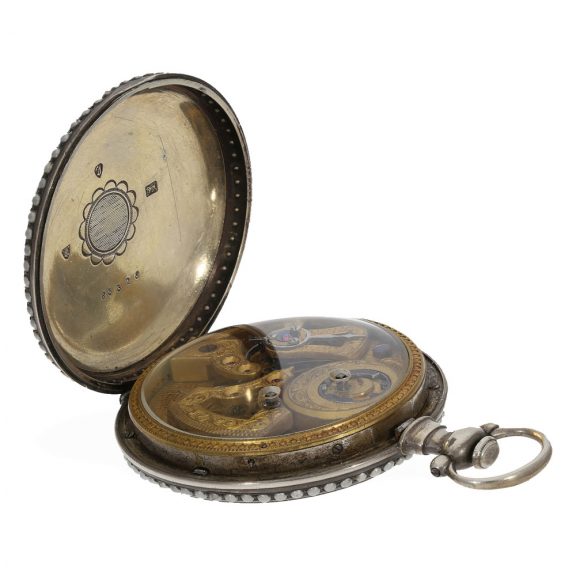
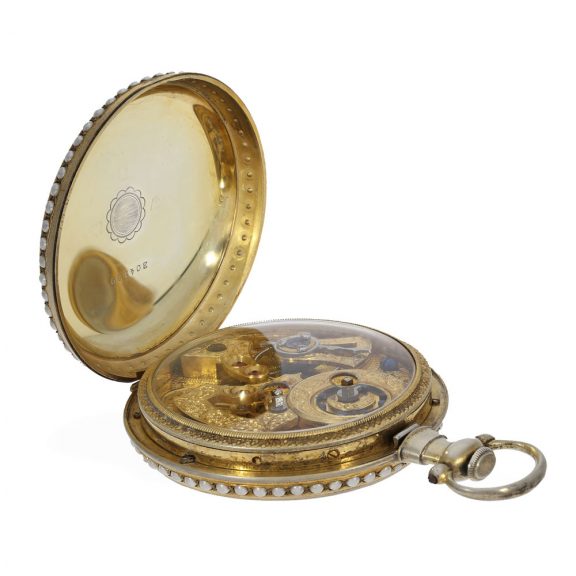
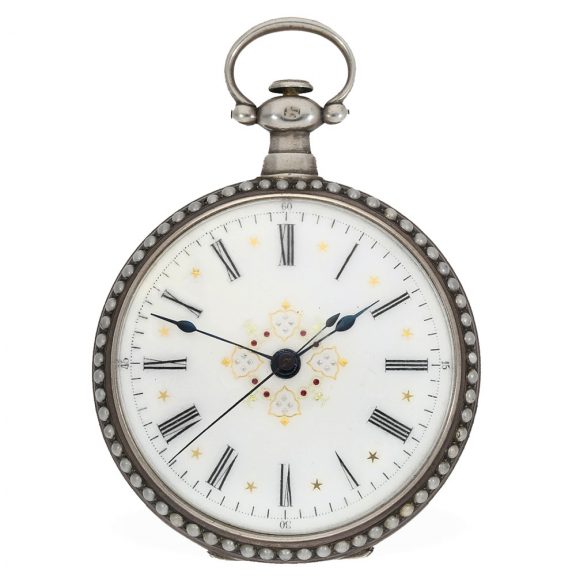
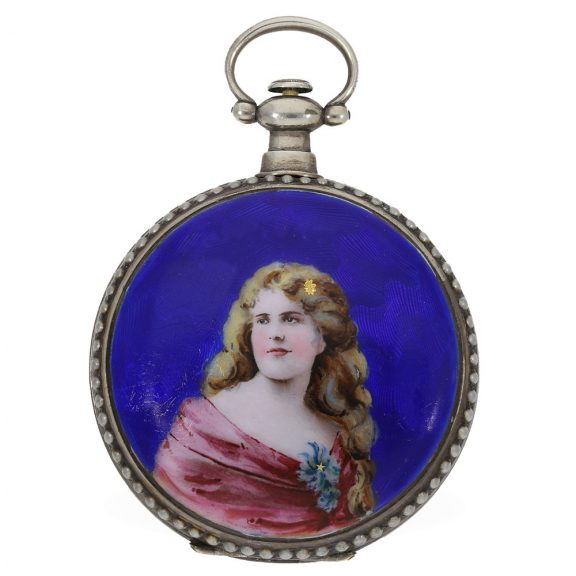
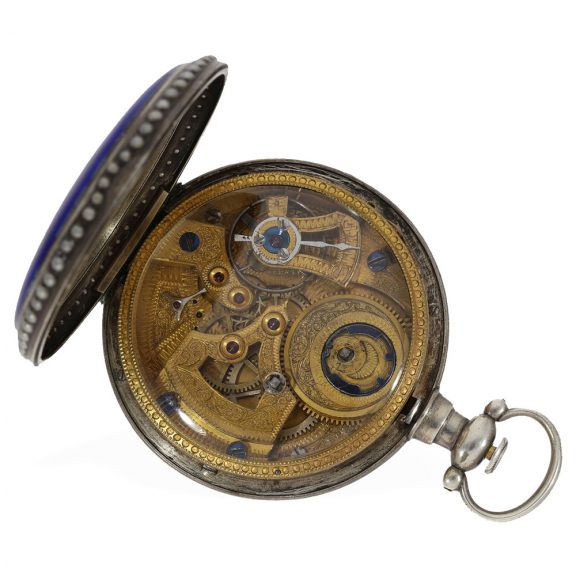
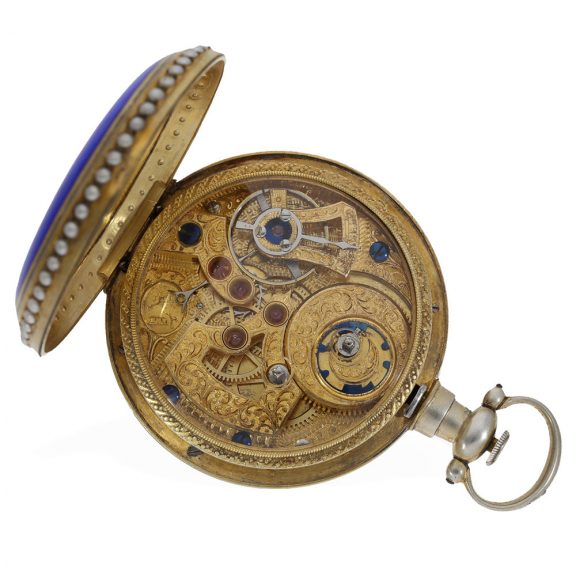
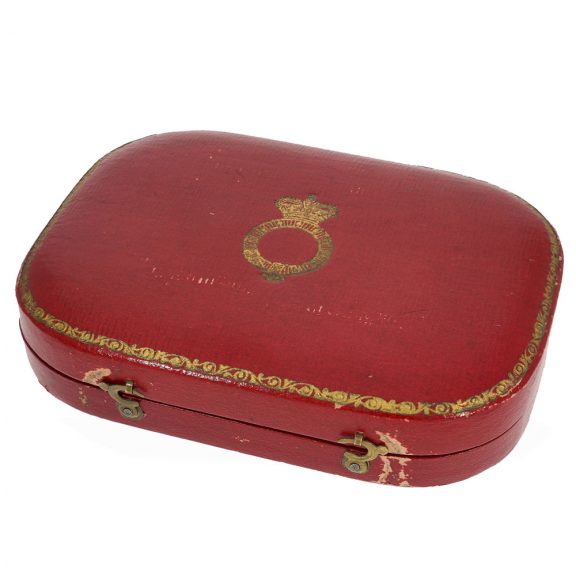
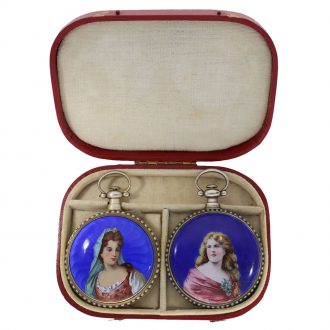
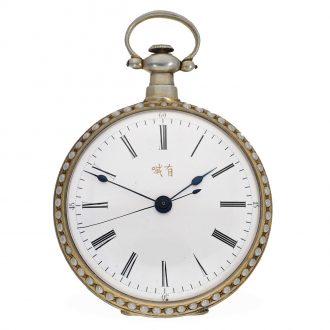
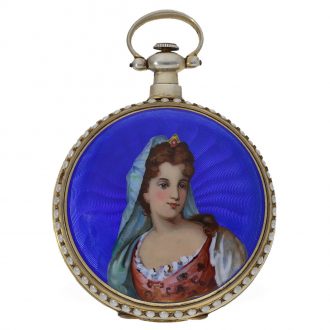
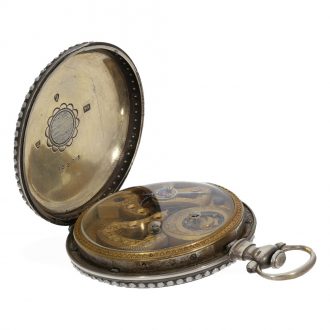
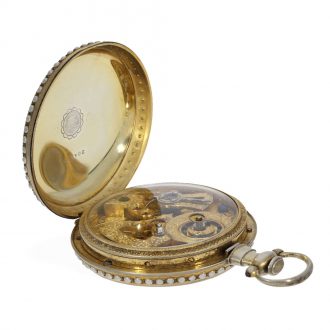
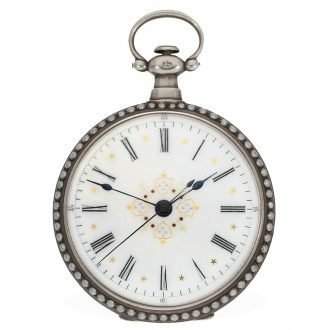
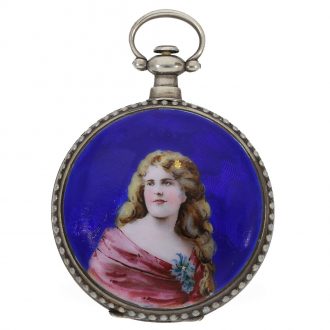
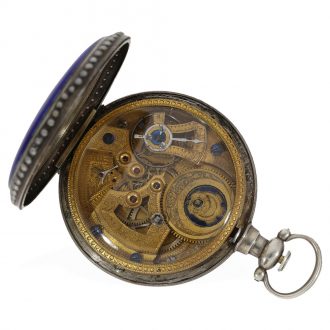
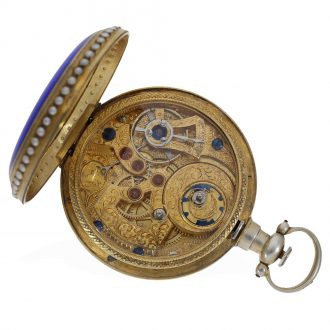
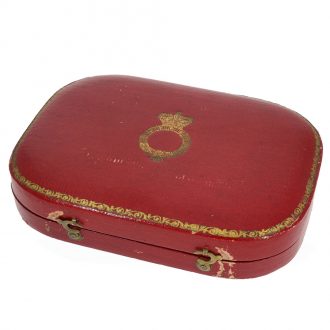
Two large gold plated, silver and enamelled pocket watches made for the Chinese market in the original presentation box made by Léo Juvet in Fleurier, Switzerland, circa 1880. Both watches are numbered. The open faced case of the first watch was crafted from gold plated silver, has half pearls on both sides and the polychrome painted portrait of a lady on blue guilloché enamel on the back, one half pearl is missing but otherwise this watch is flawless and completely original. Its white enamel dial has Roman hour numerals, an outer minute track, Arabic quarter hours, center seconds and blued steel hands. The movement has factory glazing, a Fleurier lever escapement with a mock pendulum and ruby bearings.
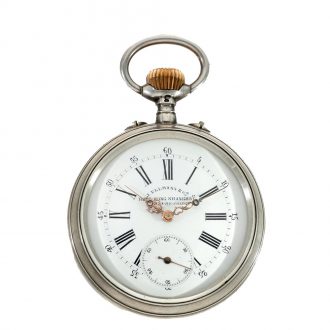
The case of the second watch was also crafted from silver, has pearls on both sides and another polychrome painted portrait of a lady on blue guilloché enamel on the back. The white enamel dial has Roman hour numerals, an outer minute track, Arabic quarter hours, applied decorations, center seconds and blued steel hands. The movement of this watch also has factory glazing, a Fleurier lever escapement and a mock pendulum.
Movements and dials of both watches are signed.
–
Diameter: 55 and 56 mm
–
Weight: 112 and 118 g.
–
Signed: Léo Juvet
–
Juvet
Edouard & Léo Juvet à Fleurier. The Juvet family was one of the important Swiss horological families which produced pieces for the Chinese market.
In 1842, Edouard Juvet (1820-1883) opened his workshop in Buttes and moved to Fleurier in 1844. In 1856, he started making watches for the Chinese market. Both his sons Ami-Louis and Léo (1848-1891) eventually went to China to work in the firm’s branches there. After Ami-Louis had died, Léo travelled to China to take his place. Only the Bovets rivalled the Juvets in Shanghai, however, the two families always maintained friendly relations. The Juvets flourished with branches in Beijing and Tianjin, to the extent that in 1872 Léo wrote: “Our watches sell like salt”.
–
Edouard Juvet registered a trademark in Chinese characters in 1873 to be used on the company’s products. In November 1875, he granted his son Léo a power of attorney and after Edouard’s death in February 1883, Léo succeeded him as head of the firm. The pocket watches by Juvet, with their finely handcrafted and unique artistic style, were welcomed by the royal family members of the Qing Dynasty. Juvet has since become the emperor’s watch brand. Owning a Juvet pocket watch is a symbol of nobility.
–
Léo Juvet was born on June 1, 1848 in Fleurier, Switzerland. He was the son of Edouard Juvet and Zélie Roulet and the brother of Ami-Louis Juvet, who died at a young age. On December 14, 1877, Léo married Sophie-Rosine Zurn in Fleurier. Sophie-Rosine was the daughter of the watchmaker Charles François Zurn and Pauline Piaget, who came from the Piaget watchmaking family. No children were listed from Léo’s marriage to Sophie-Rosine. Sadly, Léo Juvet died on January 11, 1891, at age 42.
Signed: Léo Juvet
Share this page: