Slim Swiss gold and cloisonné enamel lever watch Circa 1910
- Kenmerk
- SA0908
- Diameter
- 42 mm
- Estimate
- € 2.000 - 4.000
- Price sold
- -
Gold and cloisonné enamel pocket watch
–
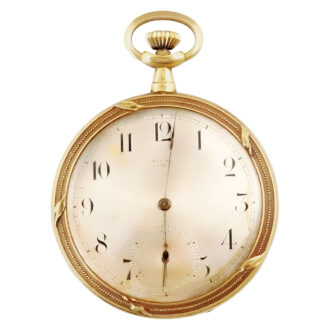
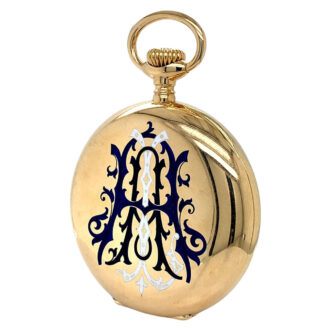
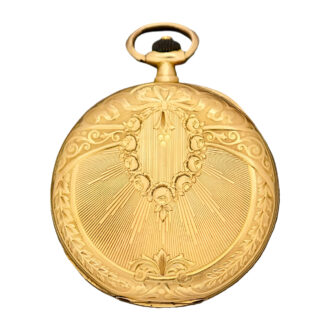
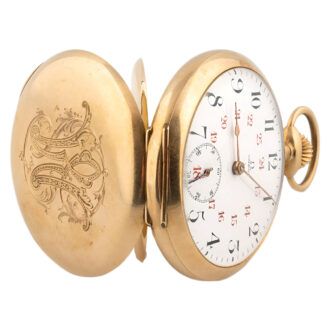
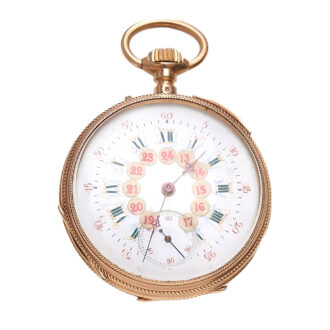
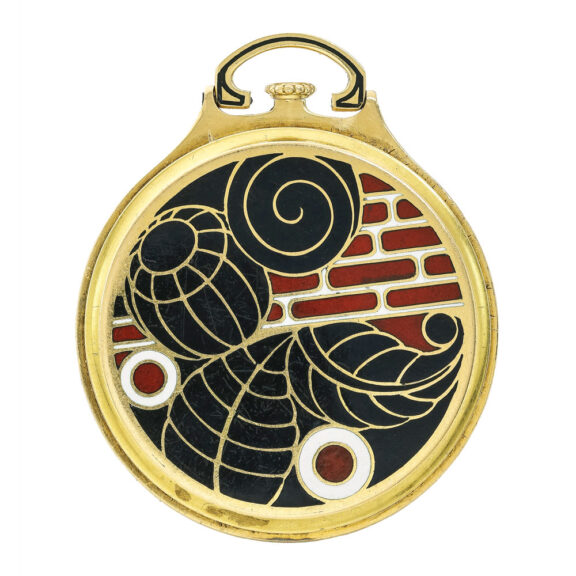
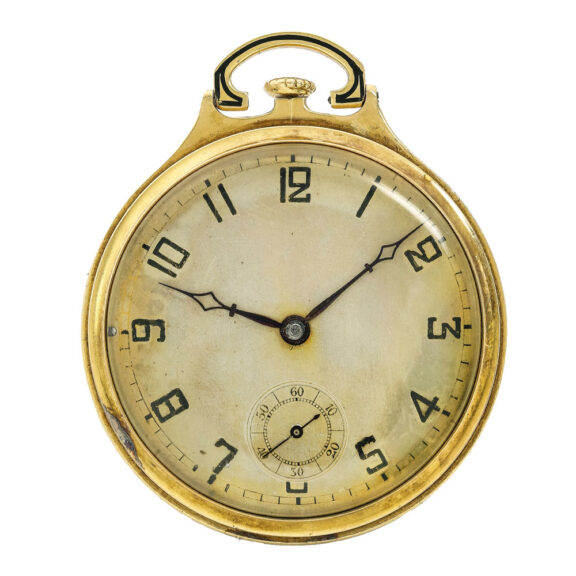
A rare and slim Swiss yellow gold and cloisonné enamel open faced lever pocket watch, circa 1910. Dates from the transition period between the Art Nouveau and Art Deco periods, possibly made for the Exposition International of Buenos Aires.
Jewelled manual winding nickel movement, cut bi metallic compensation balance.
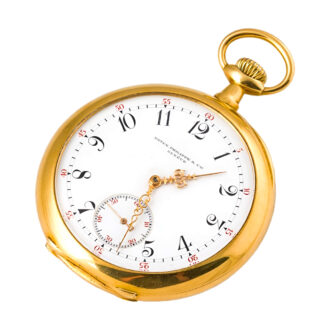
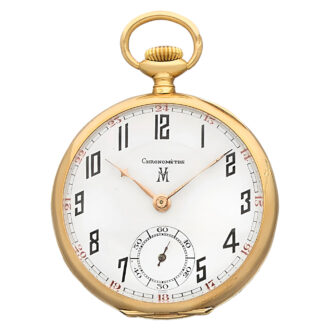
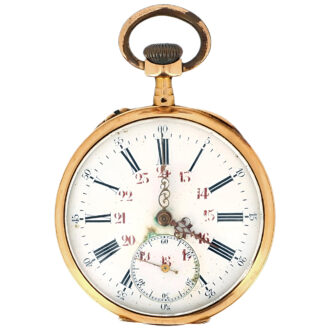
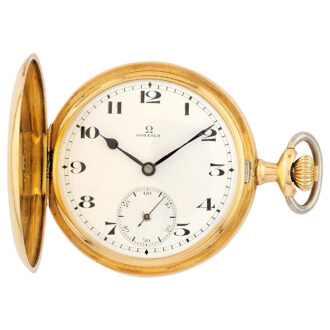
Silvered dial with black painted Arabic hours and outer minute divisions, subsidiary seconds at 6, blued hands. Case with red, black and white cloisonné enamel, the bow black enamelled.
–
Diameter: 42 mm
–
Signed: No name
–
Cloisonné is an ancient technique for decorating metalwork objects with coloured material held in place or separated by metal strips or wire, normally of gold. In recent centuries, vitreous enamel has been used, but inlays of cut gemstones, glass and other materials were also used during older periods, indeed, cloisonné enamel very probably began as an easier imitation of cloisonné work using gems. The resulting objects can also be called cloisonné.
–
A rare and slim Swiss yellow gold and cloisonné enamel open faced lever pocket watch, circa 1910. Dates from the transition period between the Art Nouveau and Art Deco periods, possibly made for the Exposition International of Buenos Aires.
Jewelled manual winding nickel movement, cut bi metallic compensation balance.
Silvered dial with black painted Arabic hours and outer minute divisions, subsidiary seconds at 6, blued hands. Case with red, black and white cloisonné enamel, the bow black enamelled.
–
Diameter: 42 mm
–
Signed: No name
–
Cloisonné is an ancient technique for decorating metalwork objects with coloured material held in place or separated by metal strips or wire, normally of gold. In recent centuries, vitreous enamel has been used, but inlays of cut gemstones, glass and other materials were also used during older periods, indeed, cloisonné enamel very probably began as an easier imitation of cloisonné work using gems. The resulting objects can also be called cloisonné.
Share this page: