Unusual silver verge watch with mock pendulum Circa 1700
- Kenmerk
- SA0030
- Diameter
- 56 mm
- Estimate
- € 7.000 - 11.000
- Price sold
- € 9.500
Unusual silver verge pocket watch
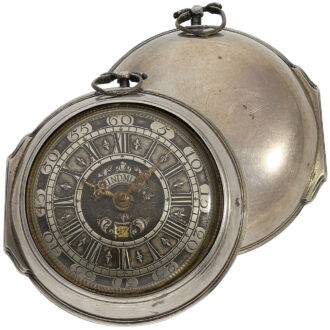
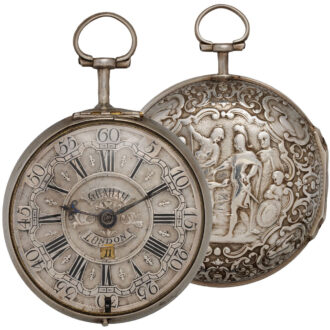
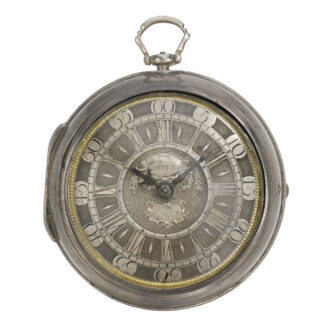
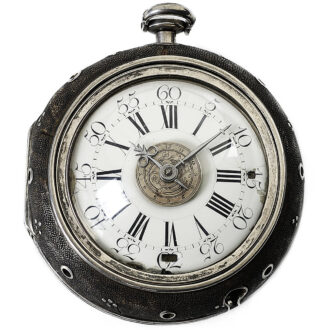
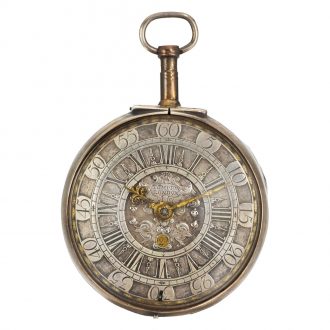
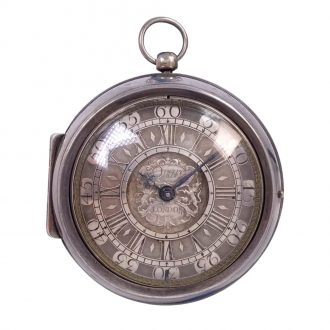
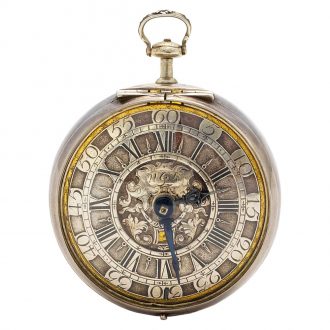
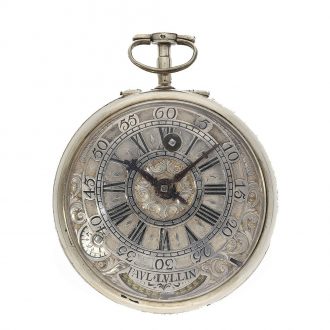
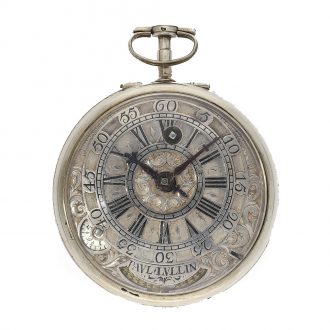
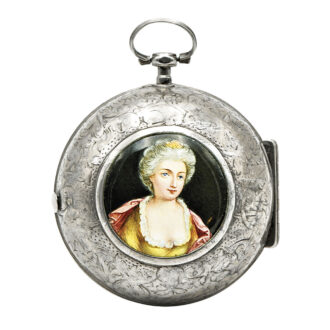
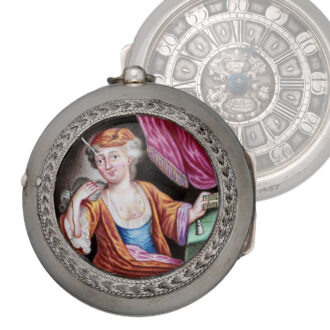
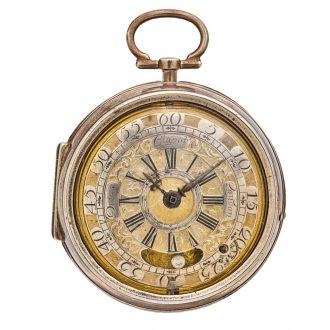
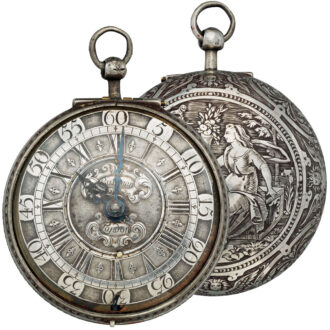
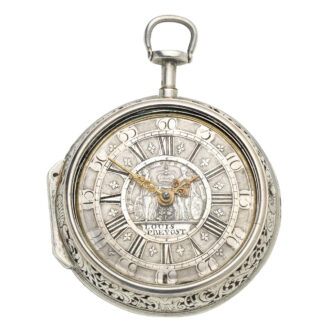
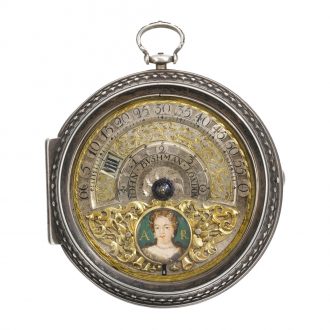
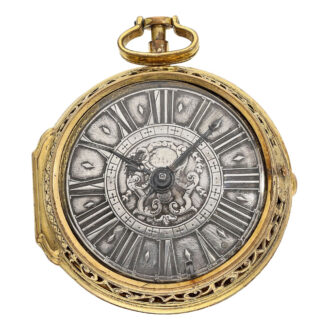
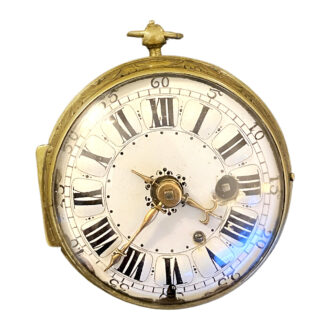
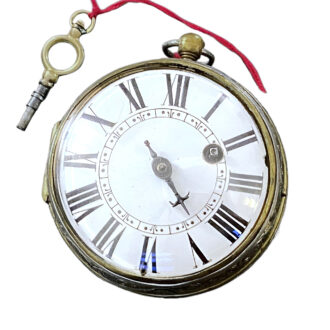
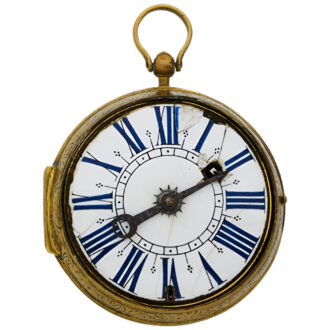
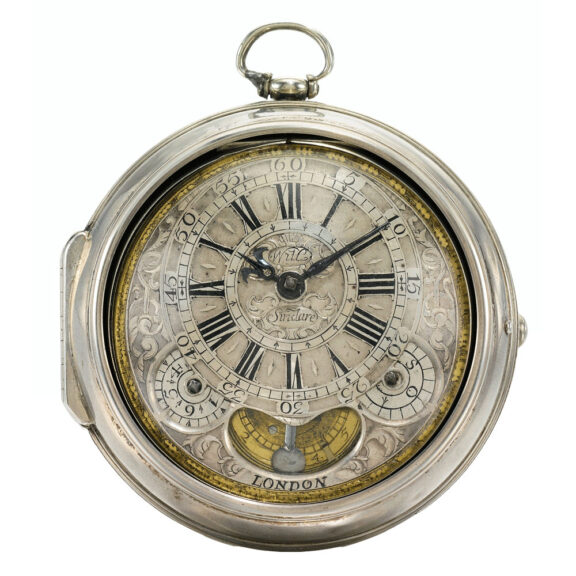
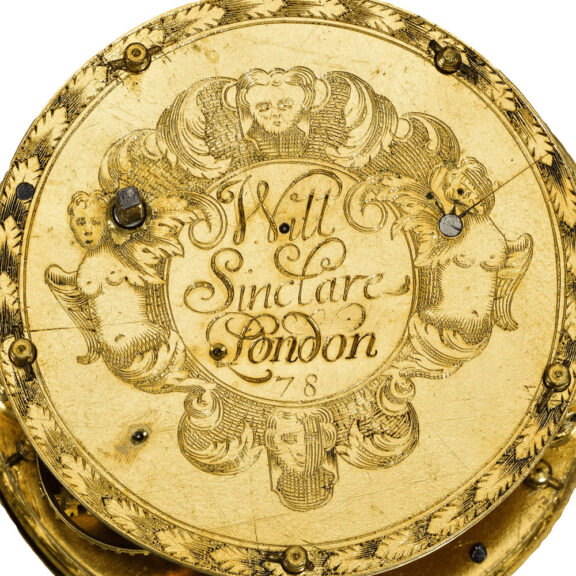
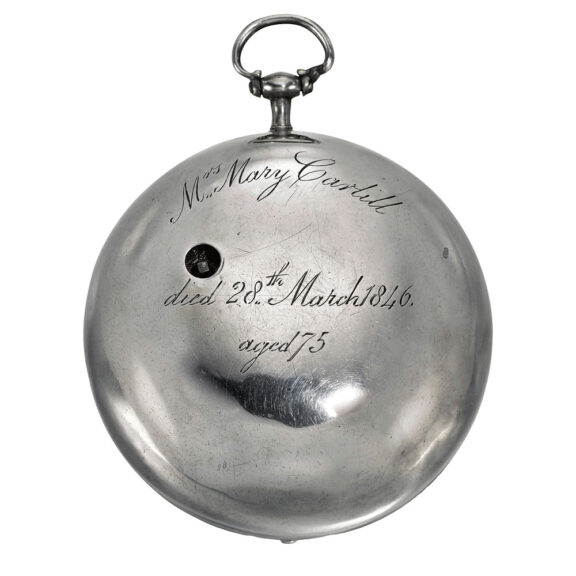
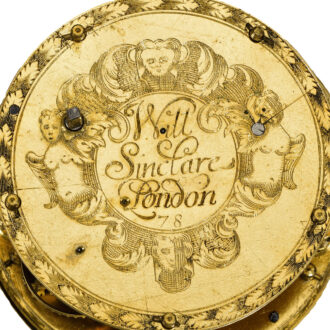
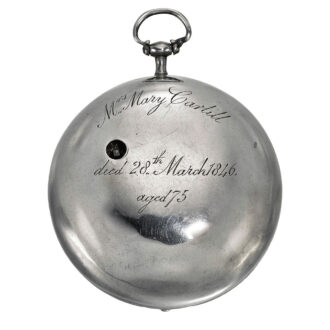
An unusual silver pair cased verge watch with mock pendulum, circa 1700, fire gilt full plate movement, verge escapement, fusee and chain, round baluster pillars with foliate capitals, the balance in the form of a mock pendulum between top plate and dial, silver champlevé dial, Roman numerals, outer Arabic minute track, tulip form hour and poker minute hands, glazed aperture to reveal the mock pendulum, subsidiary dials/squares for regulation to the left and catch to lock movement into case to the right, silver inner case, the back with winding aperture and engraved: Mrs Mary Carlill, died 28th March 1846, aged 75, stirrup pendant and bow, plain silver outer case, inner case with maker’s mark S over W, outer case with maker’s mark TW with rays above, movement and dial signed Will Sinclare, London.
–
Diameter 56 mm
–
Signed: Will Sinclare London
–
The ‘pendulum’ shown to the aperture at the front of the watch is a decorative device mounted onto the balance, moving as it oscillates and creating the appearance of a clock pendulum. By mounting the balance between the dial and movement, the backplate is treated in an unconventional manner and becomes of full plate design, allowing for a central cartouche which is signed and numbered by the maker and surrounded by two decoratively engraved half figures of winged nymphs. The symmetrically placed subsidiary dials to the dial for regulation and case/movement locking are also an unusual feature.
It is possible that William Sinclare was an Irish maker, as a Dublin maker of the same name is recorded as having worked during this period. The present lot signed William Sinclare, London may well be the same maker as William Sinclare, known to have worked in Dublin. Baillie records a W. & Gordon Sinclare, Dublin working circa 1725 and a William Sinclare, prior to 1753. Camerer Cuss Op.Cit also mentions a William Sinclare recorded as working in Dublin between 1698 and 1741, Good quality movement typical of the period (in later case). William Sinclaire was working 1698-1741 and took five apprentices between 1725 and 1741.
Signed: Will Sinclare London
Share this page: