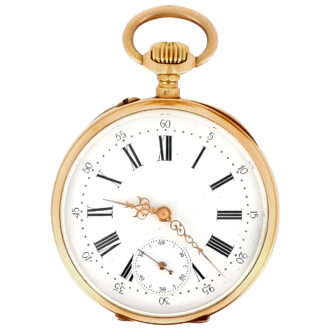
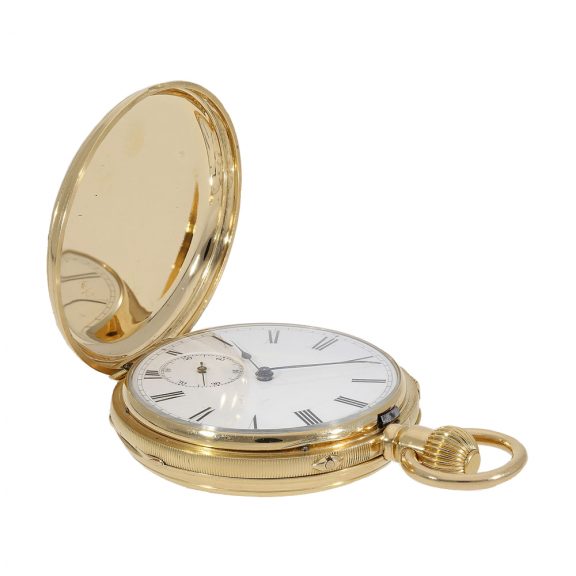
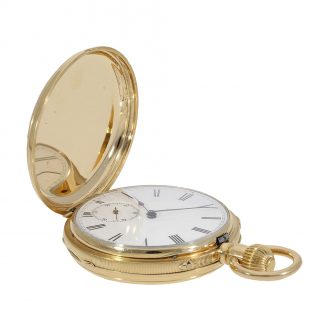
Very interesting pocket chronometer with crown winding Circa 1860
- Kenmerk
- HC0743
- Diameter
- 48 mm
- Estimate
- € 3.000 - 5.500
- Price sold
- € 3.200
Gold pocket chronometer with chain fusee
–
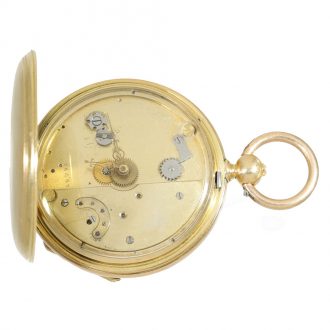
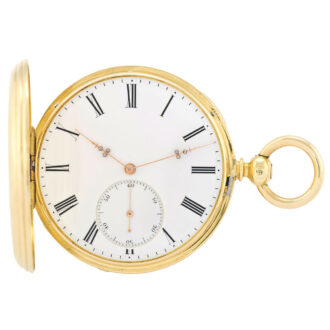
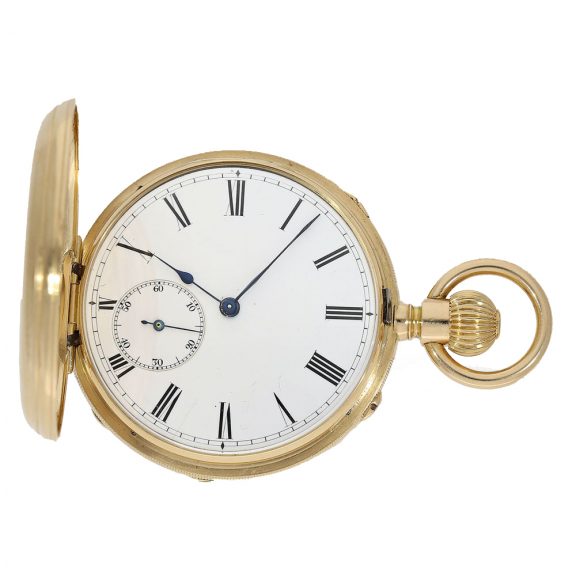
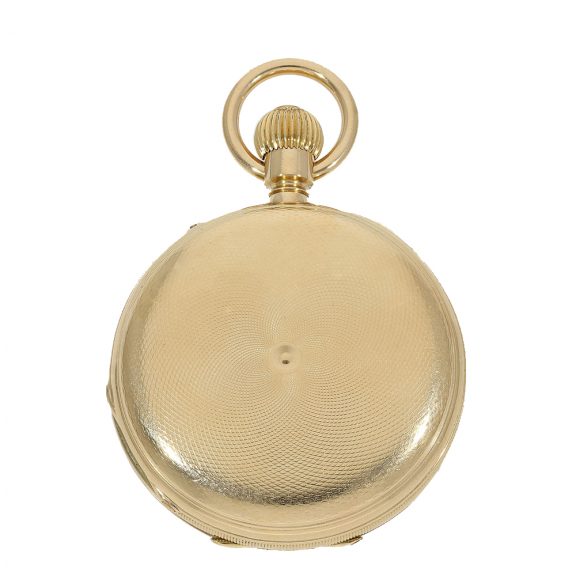
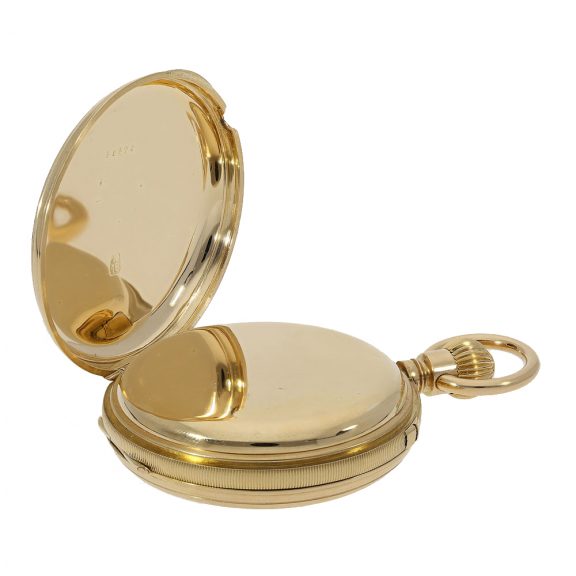
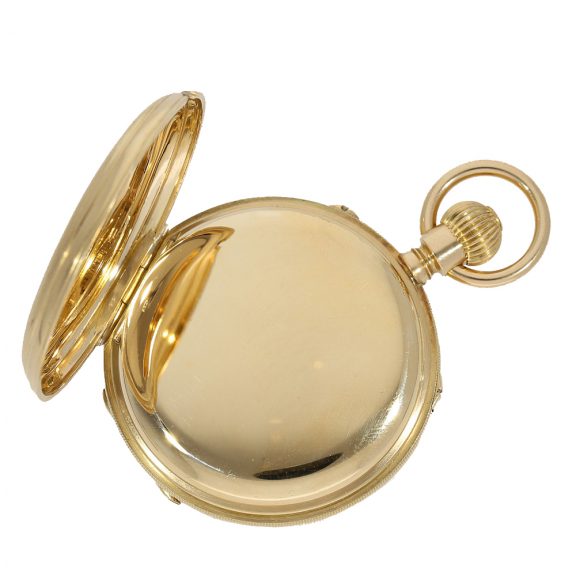
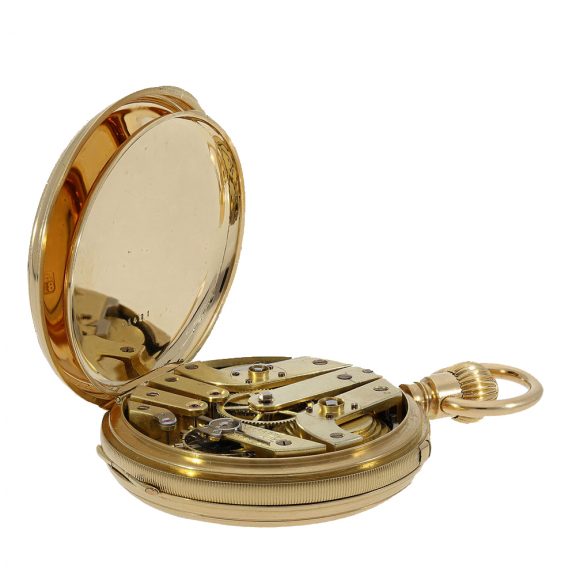
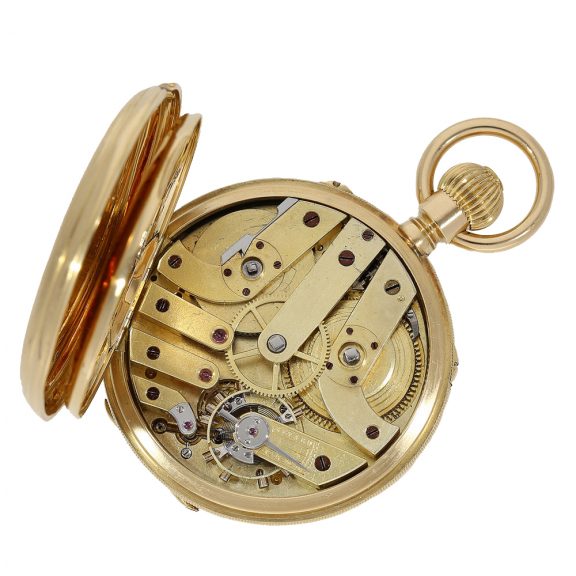
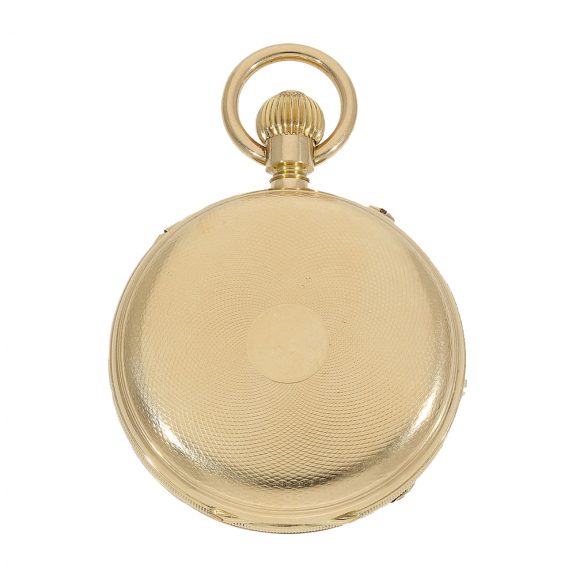
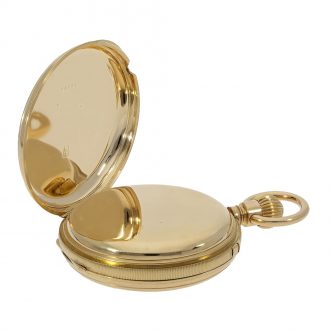
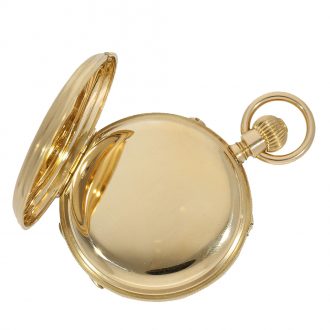
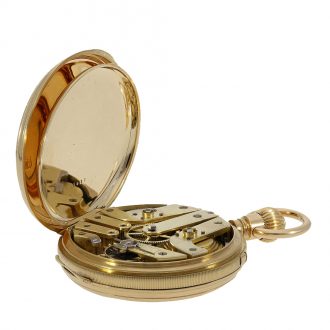
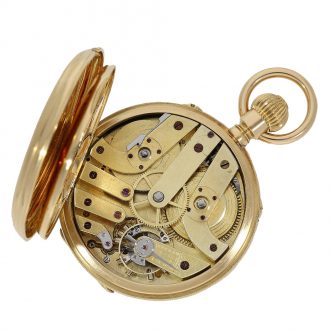
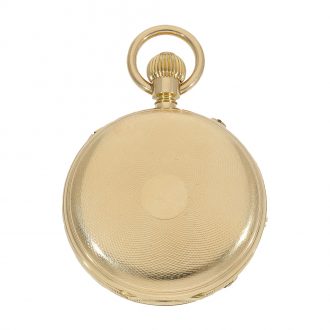
A very interesting pocket chronometer with crown winding and chain fusee, made circa 1860. The numbered full hunter case of this watch was grafted from 18 Carat gold, has engine turned decoration on both sides and a coined band. The white enamel has black Roman hour numerals, a subsidiary seconds dial with black Arabic numerals in an unusual position between eight and nine o’clock and blued steel hands. The very interesting chronometer movement with pivoted detent escapement and special winding mechanism, which can be disengaged by a lever in the case band and a chain fusee.
–
Diameter: 48 mm
–
Weight: 106 g
–
Signed: No name
–
Chain fusee
A chain fusee is a component used in the movement of a mechanical pocket watch. It is a type of power transmission device that helps to maintain a constant driving force on the watch’s mainspring.
The main function of the chain fusee is to compensate for the uneven release of energy from the mainspring as it winds down. As the mainspring unwinds, the force it exerts gradually decreases. The chain fusee helps to counteract this by using a conical pulley, called a fusee, that is connected to the mainspring barrel by a chain.
The chain wraps around the fusee, and as the mainspring unwinds, the chain winds onto the larger end of the fusee. This causes the effective radius of the fusee to increase, which helps to maintain a more constant force being applied to the watch’s gear train, ensuring a steady timekeeping rate.
The chain fusee was an important innovation in early pocket watch design, as it helped to improve the accuracy and reliability of mechanical watches before the development of more modern power reserve mechanisms. It remains a characteristic feature of many traditional and high-end pocket watch movements to this day.
Share this page: