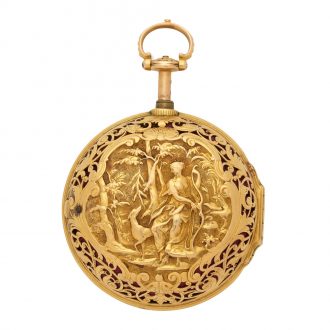
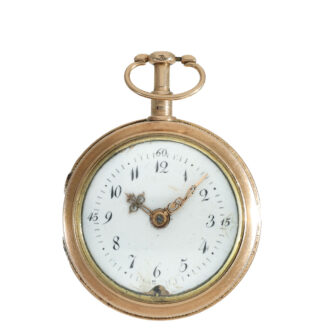
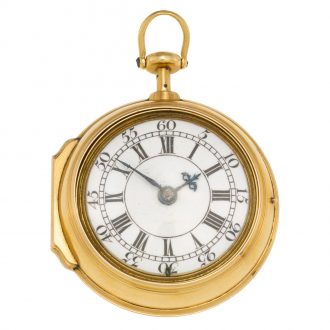
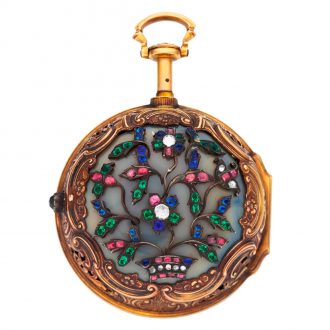
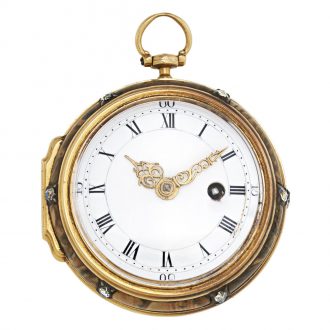
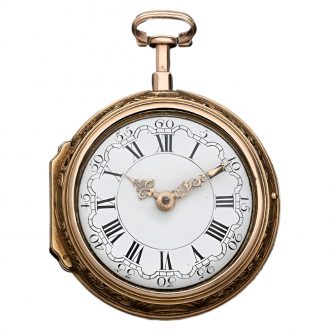
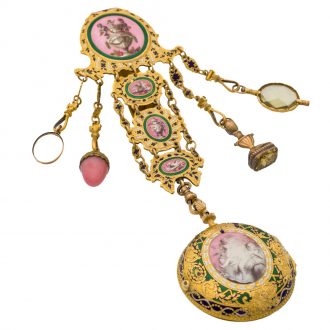
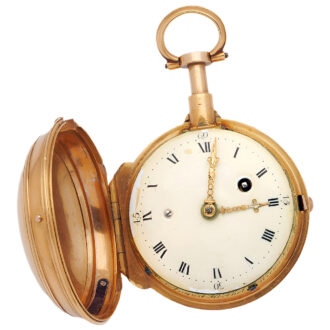
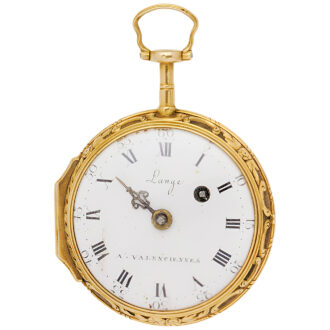
English gold and enamel verge with protective case Circa 1730-1750
- Kenmerk
- DB0244
- Diameter
- 46 mm
- Estimate
- € 25.000 - 50.000
- Price sold
- € 28.800
Gold richly enamel decorated verge by Daniel Paillet
–
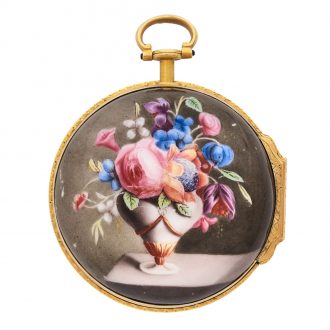
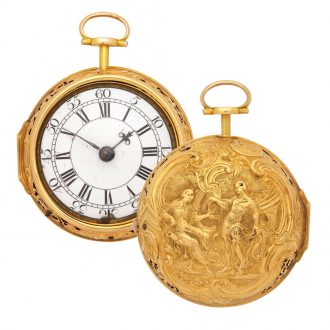
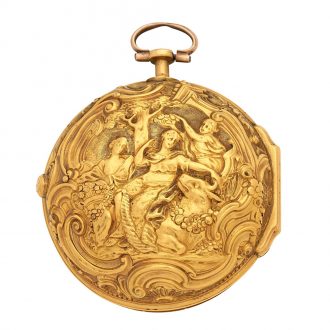
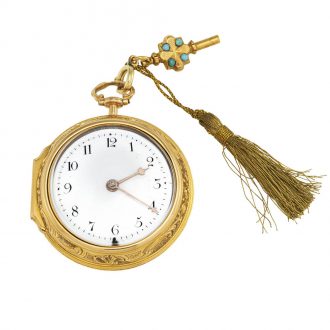
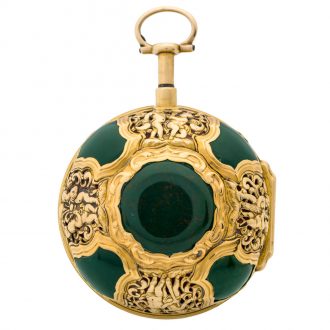
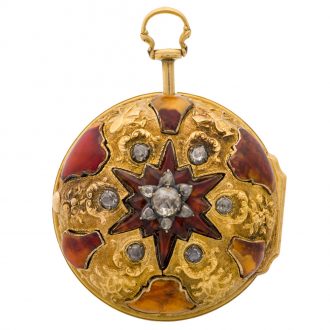
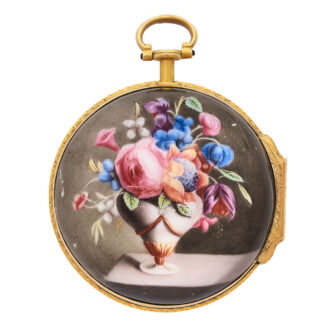
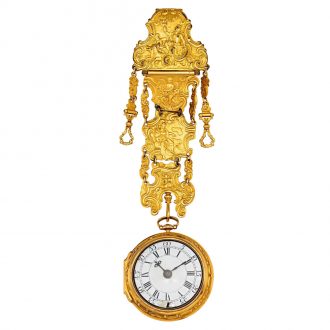
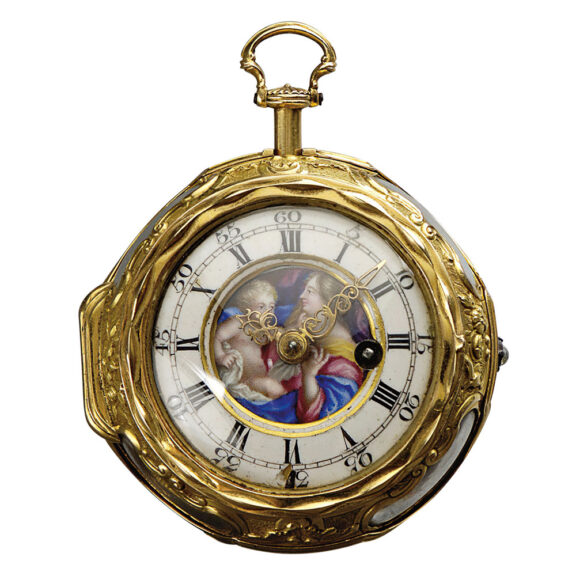
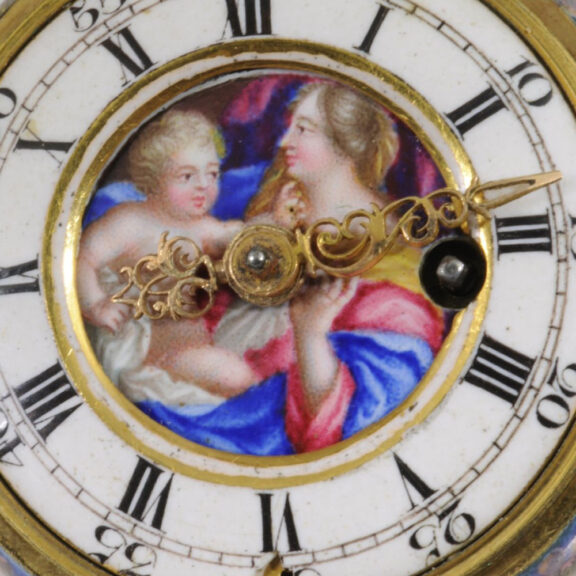
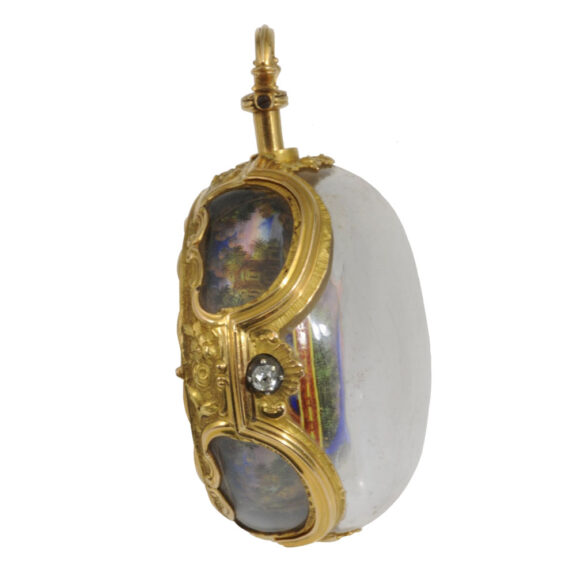
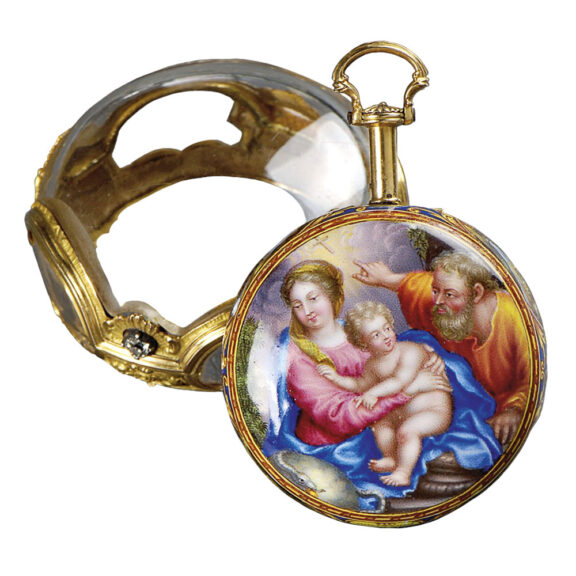
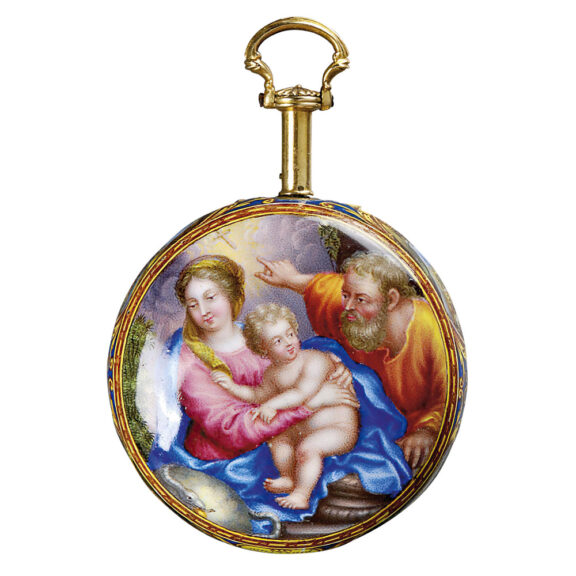
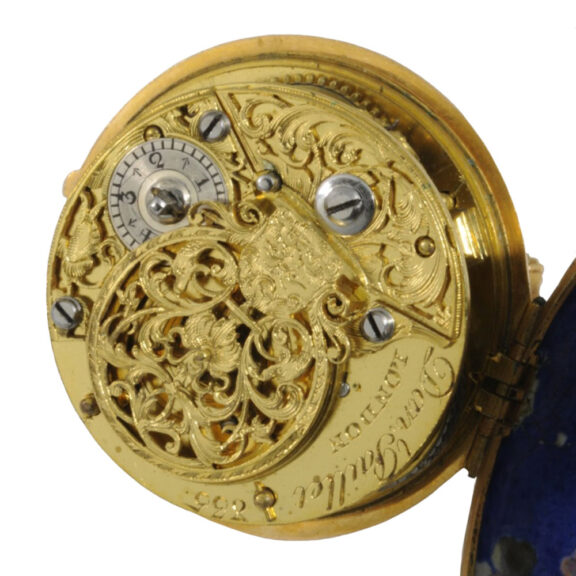
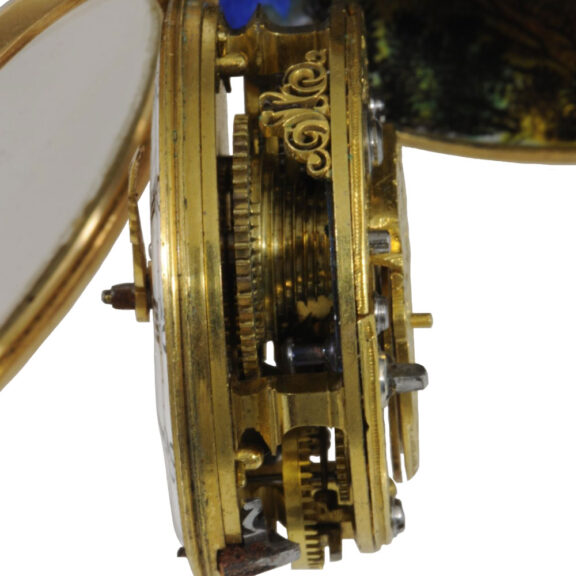
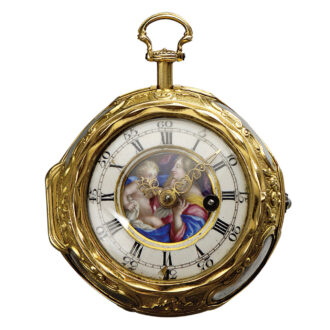
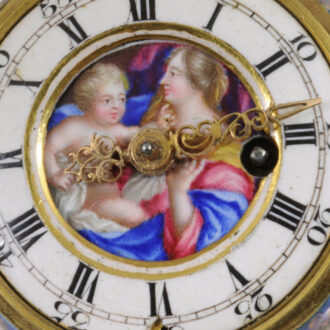
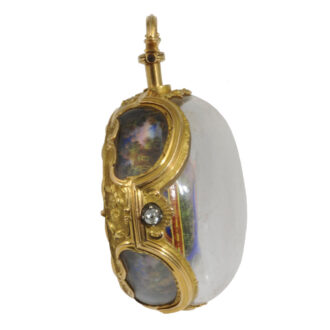
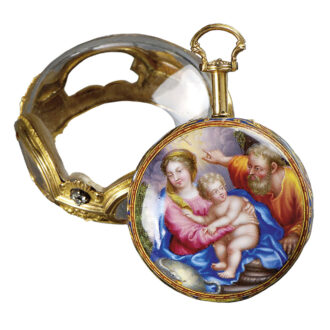
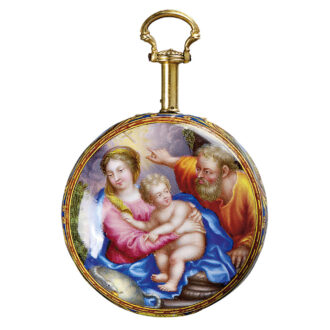
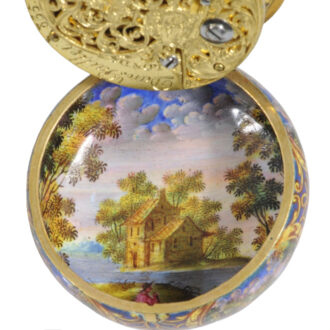
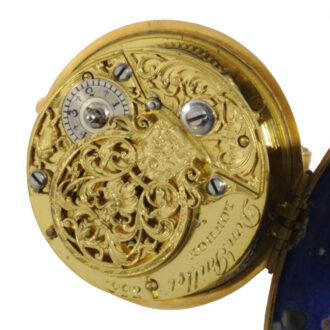
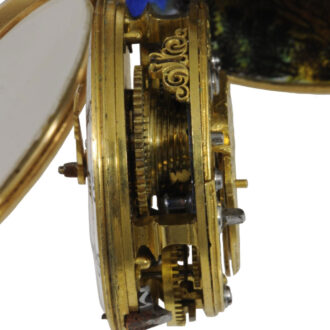
An English gold and enamel open faced verge pocket watch with a protective case, circa 1730-1750. Full plate movement, chain and fusee, verge escapement, three-arm brass balance. White enamel dial with Roman hours, Arabic five-minute numerals and a central polychrome enamel painting. A 22 carat gold and rock crystal protective case with a diamond thumb-piece, the inner case richly decorated, polychrome enamelled and set in a gold frame, the painted scene depicting The Holy Family with Allegorical Depiction of Sin and Salvation after a painting by Giovanni Battista Salvi (Sassoferrato). Movement signed by the watchmaker and numbered, the enamelling is signed Fretres Huaut Pinxerunt à Berlin.
–
Diameter: 46 mm
–
Weight: 103 g
–
Signed: Dan. Paillet London
–
Huguenot watchmaker Daniel Paillet fled France for England and is recorded at Frith Street in London around 1749. From 1754 he worked in Soho.
–
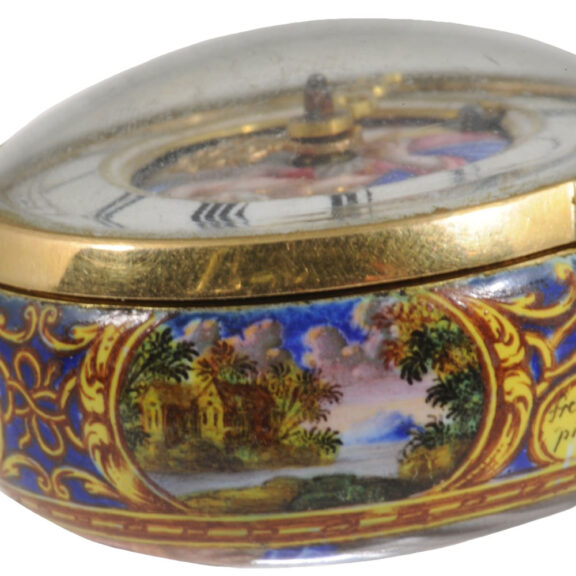
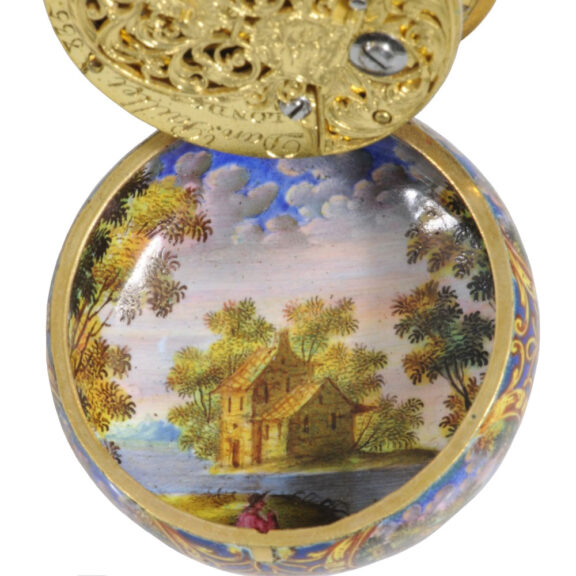
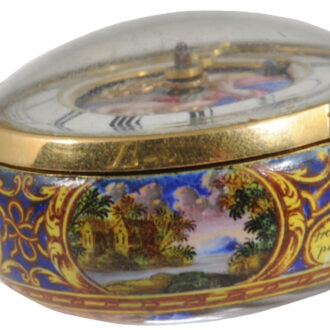
The polychrome enamel painting on the case back depicts the Holy Family with Jesus of Nazareth, his mother, Mary and his foster father, Saint Joseph. Joseph points his right forefinger towards the sky, where the clouds disperse, and a cross appears, surrounded by a bright light, indicating the predestination of Jesus Christ. Mary, with the baby in her arms, looks to her right at a globe with a serpent coiled around it. The serpent holds an apple in her mouth and represents evil and the original sin. Mary, Mother of God, is regarded as victor over all worldly sin. As she is destined to be the Mother of God, she remains untainted by the original sin. Another portrait of Mary with baby Jesus is shown in the centre of the dial. The case is further ornamented with four vignettes showing castles and farm buildings in wooded alpine lake settings. They are separated by yellow scrolls on blue ground. A signature plaque with Fretres Huaut Pinxerunt at 6 o’clock. The inside is painted with the figure of a hiker dressed in red near an alpine lake with an island. The motif was probably taken from a painting by Dutch painter Paul Bril.
–
Les Frères Huaut (or Huaud). The cases painted on enamel by ‘Les deux Frères Huaut’ were among the finest examples of their kind from the Geneva School and were not only highly valued when originally made but remained as art treasures in the centuries that followed. Pierre I was the founder of the Huaud dynasty. He was born in 1612 in Geneva as the son of a French goldsmith Jean Huaud. He settled in Geneva in 1630, and three of his 11 children became famous enamellers like their father: Pierre II (1647-1698), Jean-Pierre (1655-1723) and Ami (1657-1724). The brothers were most likely trained by their father and worked with him. Pierre II started his own business around 1680. Jean-Pierre and Ami became partners in 1682 and were appointed painters to the Prussian court in 1686 when they moved to Berlin and started working for Elector Frederick William of Brandenburg (1620-1688). Among their most well-known works are Diana and Actaeon, The Judgement of Paris, The Holy Family, St. John the Baptist, The Nativity and The Adoration of the Shepherds.
–
Paul Bril, born in Antwerp in 1554 and died in Rome on October 7, 1626, was a Southern Netherlandish painter of landscapes from the Baroque period.
–
Giovanni Battista Salvi da Sassoferrato was born on August 25, 1609 and died on August 8, 1685. He was also known as Giovanni Battista Salvi. Battista Salvi was an Italian Baroque painter known for his archaizing commitment to Raphael’s style. He is often referred to only by the town of his birthplace, Sassoferrato, as was customary in his time.
Signed: Dan. Paillet London – Fretres Huaut Pinxerunt
Share this page: