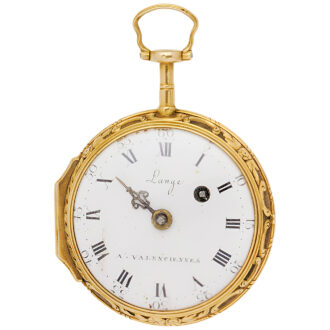
Early English 18K gold and enamel erotic watch Circa 1750
- Kenmerk
- AL3476
- Diameter
- 40 mm
- Estimate
- € 20.000 - 40.000
- Price sold
- € 34.000
Gold verge watch with erotic scene for the Chinese market
–
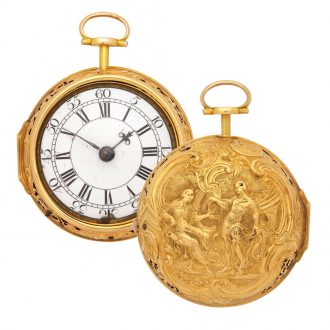
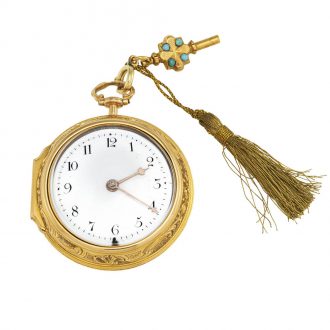
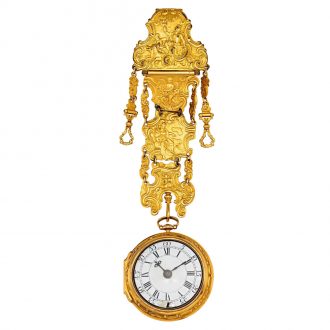
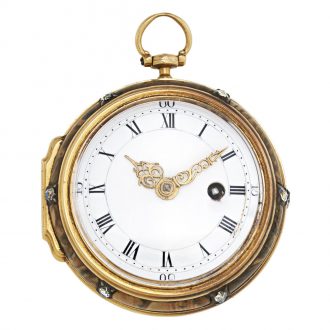
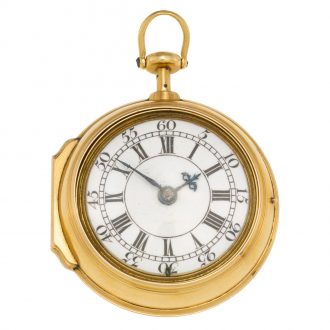
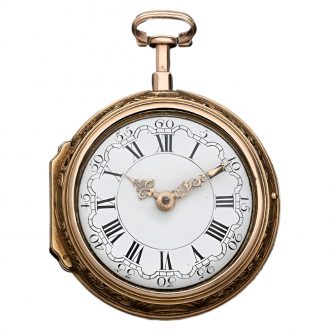
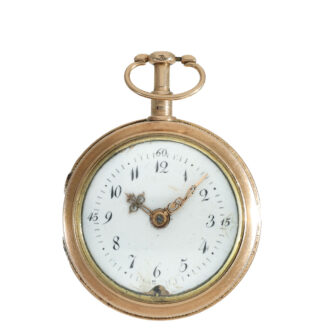
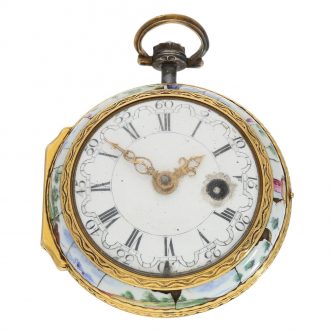
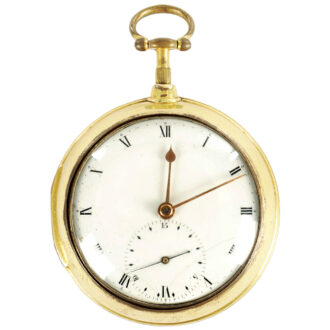
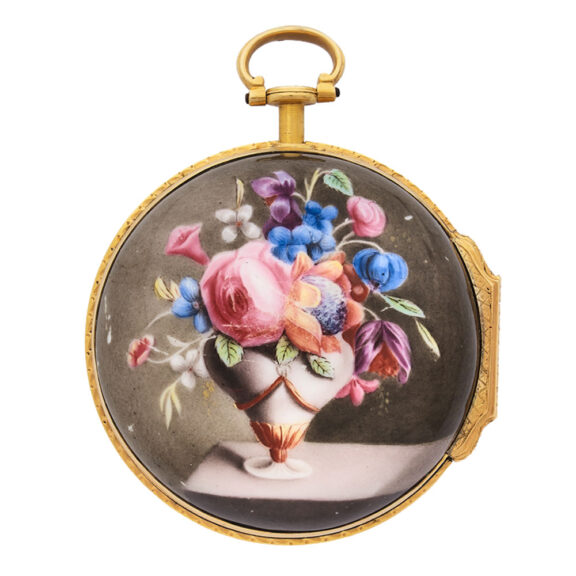
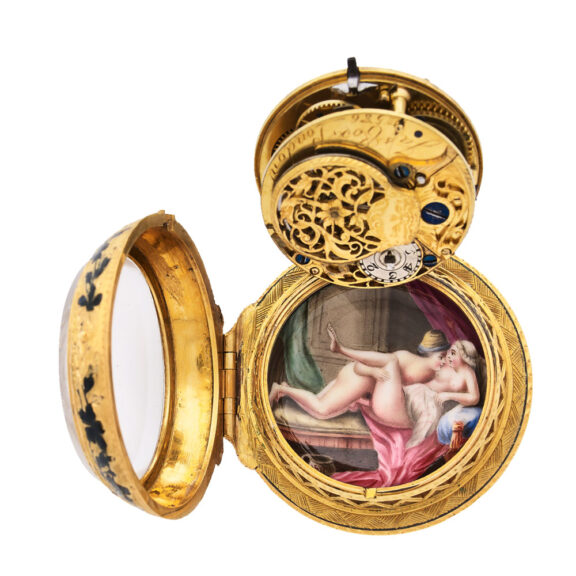
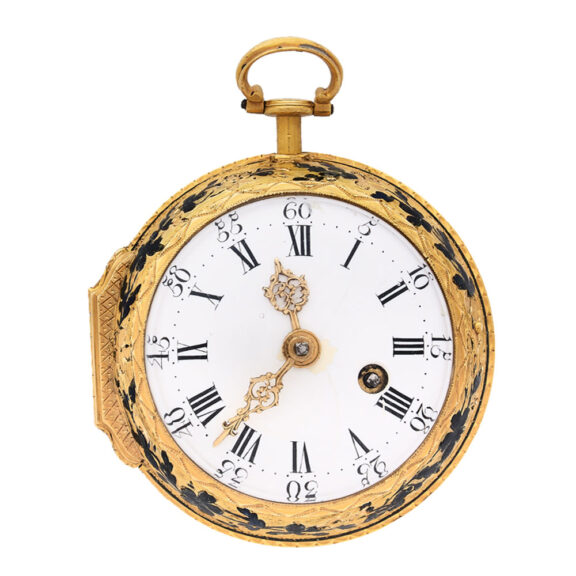
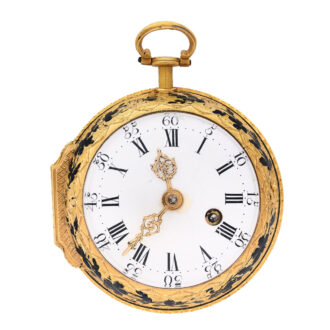
A magnificent English 18 carat gold open faced timepiece, known as The Vase of Flowers, features a verge movement and concealed polychrome enamel erotic scenes. It was made for the Chinese market by the celebrated maker James Cox in London, circa 1750. This watch has a mechanical key winding fusee and chain movement with a verge escapement, a spiral balance, an advance/retard adjustment regulation disc, and an intricately chased and pierced English balance cock with a single foot, signed on the backplate James Cox, London. The white enamel dial features black Roman numerals for the hours, outer Arabic numerals for the five minute marks from 5 to 60, a fine minute track, ornate stylized gold hands, and a winding aperture near 4 o’clock.
–
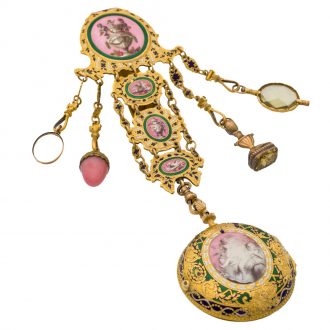
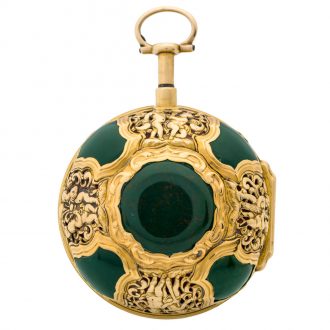
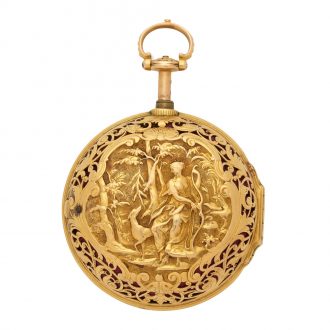
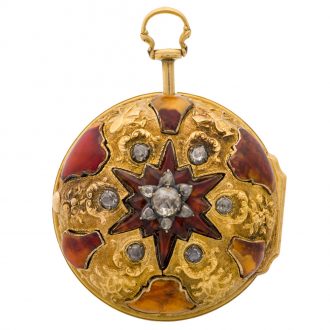
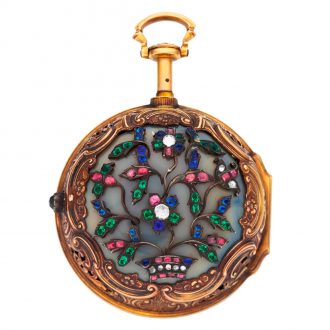
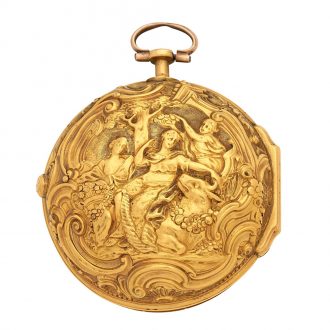
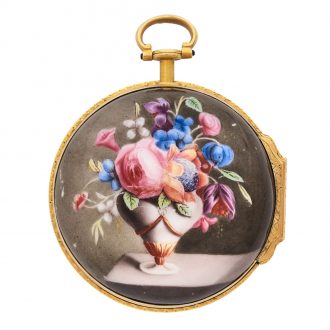
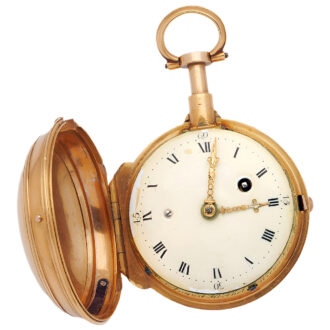
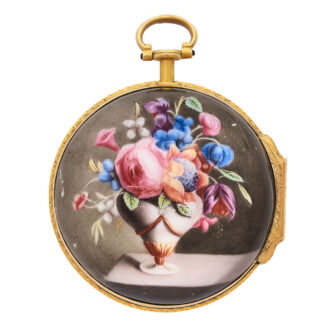
The timepiece is housed in an exceptionally fine hinged round three body, 18 carat solid gold case. The front features a bezel delicately decorated with engraved accents and blue champlevé enamel leaves. The reverse back cover is beautifully finished with a painted enamel scene depicting an abundant vase of flowers set against a shaded grey green background. The intricate case construction features a sophisticated secret mechanism. Opening the primary compartment reveals a concealed polychrome enamel erotic scene on the back panel opposite the movement depicting two lovers on a sofa. A secret secondary opening on the back cover reveals two additional painted enamel erotic scenes, including one depicting a classical nude woman holding a goblet presented by the mythological figure of Pan.
–
Diameter: 40 mm
–
Weight: 68 g
–
Signed: James Cox, London
–
In the 18th century, renowned British watchmaker James Cox (1723–1800) distinguished himself by creating erotic secret watches that blended mechanical art, high quality enamelling, and libertine humour. Crafted for the European aristocracy and private elite circles, these luxury timepieces reflected a broader fashion for secret objects that concealed unexpected surprises. In an era shaped by libertinism,m where eroticism was appreciated as an intellectual, aesthetic, and provocative game, owning such a piece signalled both refinement and membership in an exclusive cultural circle. Beyond their European appeal, Cox became famous in the 1760s and early 1770s for elaborate musical, automaton, and secret timepieces intended for the Far Eastern market, particularly the court of the Chinese emperor.
–
To achieve this blend of subversion and luxury, Cox collaborated with specialized watchmakers and skilled enamelers, using gold, silver, precious stones, and finely painted miniatures. The watches concealed intimate, custom enamel scenes beneath a cover or dial, usually revealed only through an ingenious secret mechanism or button. This design allowed owners to balance the public mastery of time with a private indulgence in desire, discreetly displaying the hidden imagery only among fellow initiates. Today, few James Cox erotic watches of such caliber survive. They remain remarkable not only for their transgressive nature but also for the extraordinary jewelry work and enameling needed to seamlessly conceal their secret scenes.
Signed: James Cox, London
Share this page: