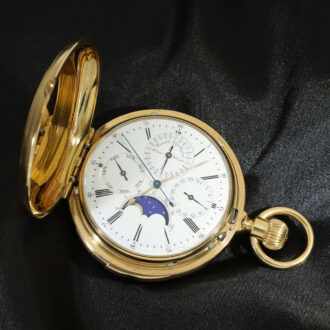
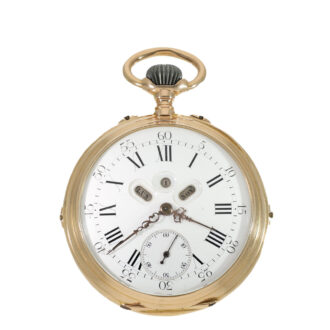
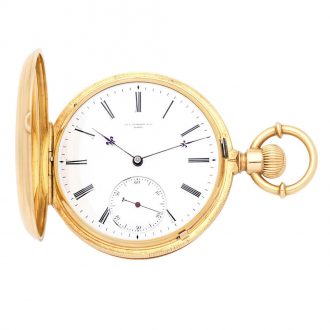
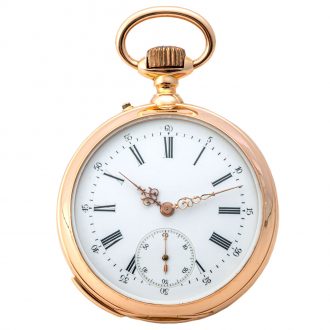
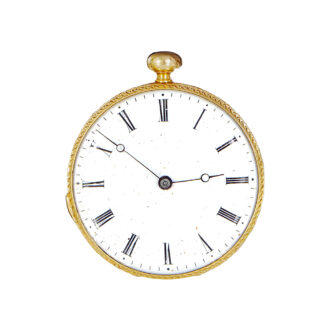
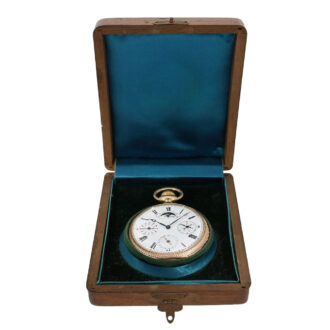
Very rare Swiss rose gold complicated chronometer Circa 1870
- Kenmerk
- BC0995
- Diameter
- 56 mm
- Estimate
- € 80.000 - 180.000
- Price sold
- € 99.200
Rose gold open faced chronometer by Patek Philippe
–
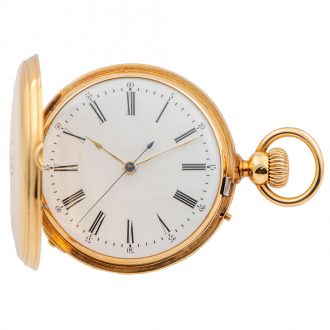
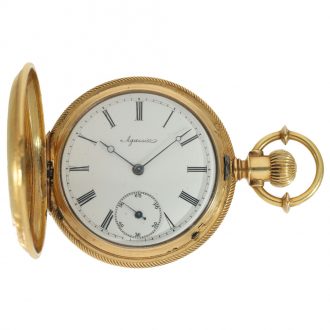
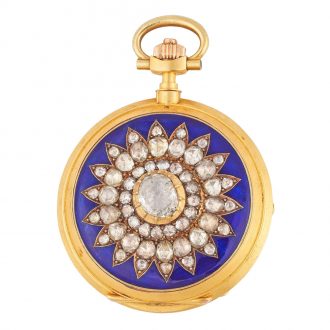
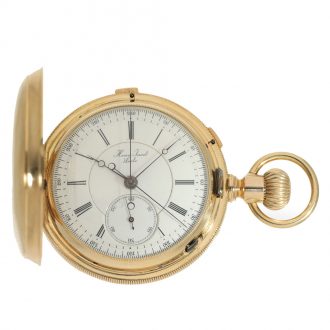
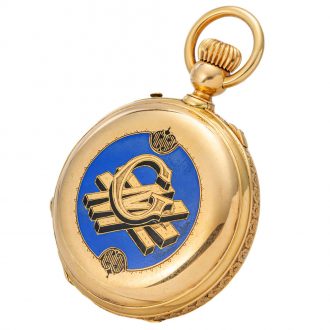
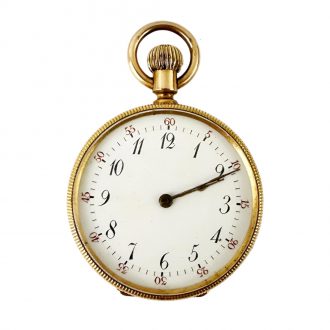
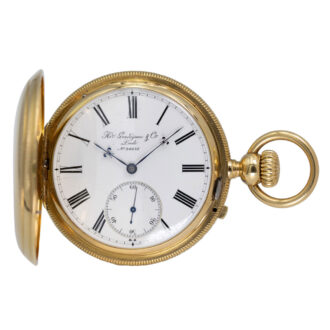
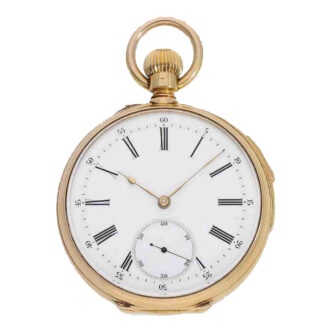
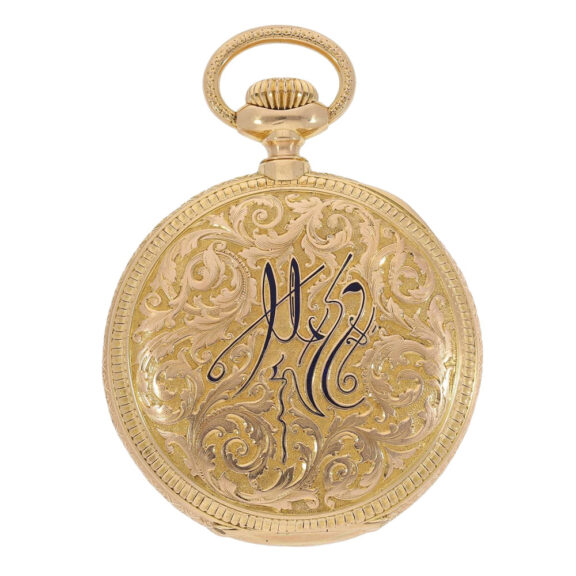
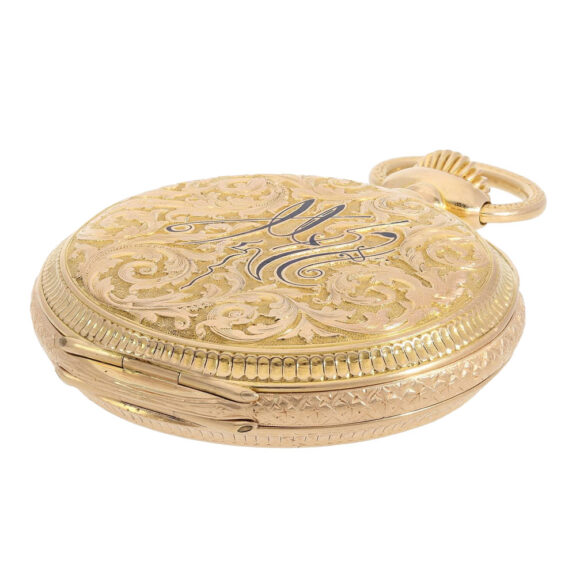
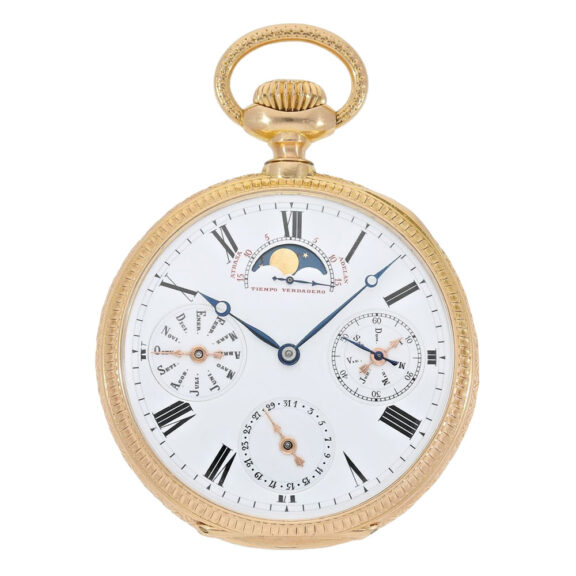
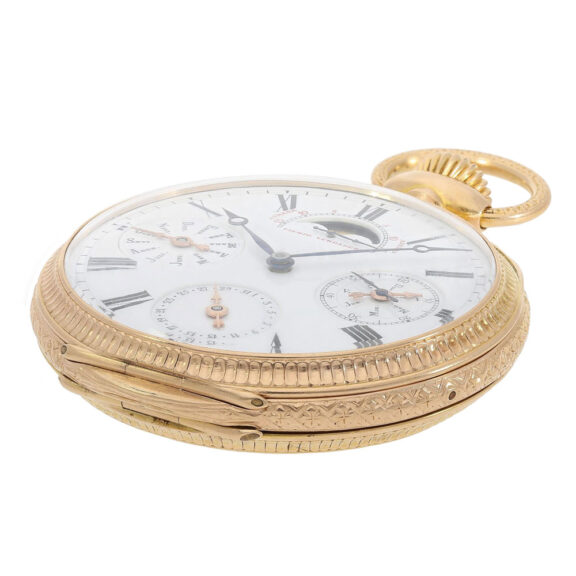
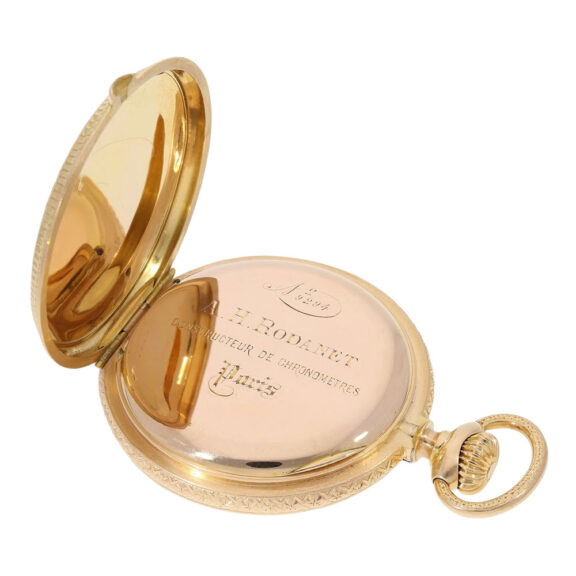
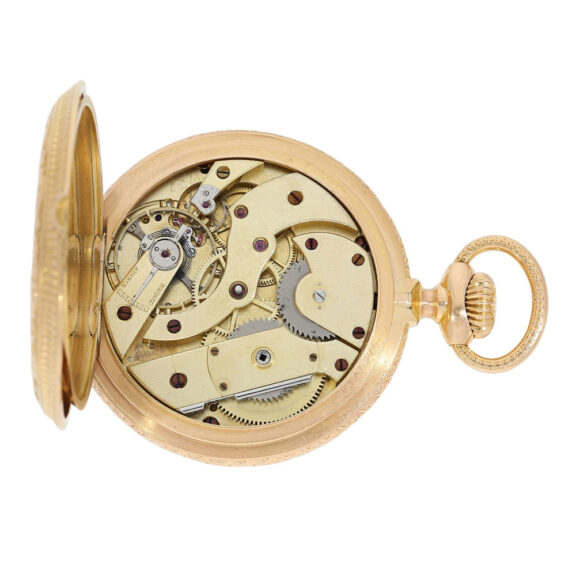
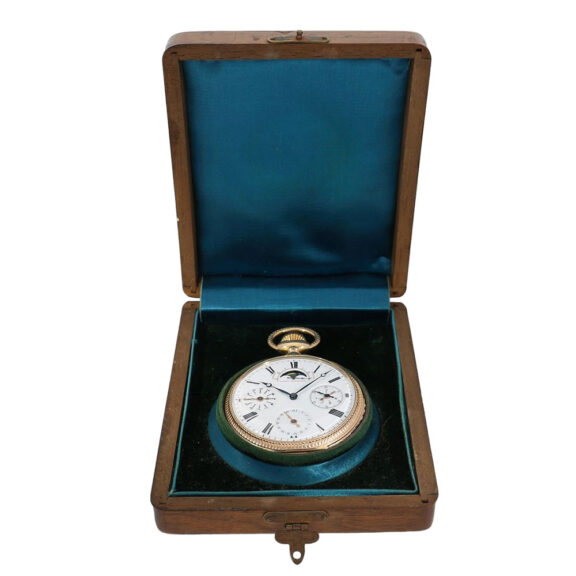
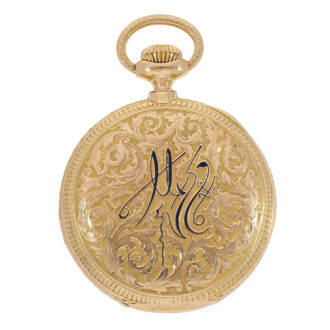
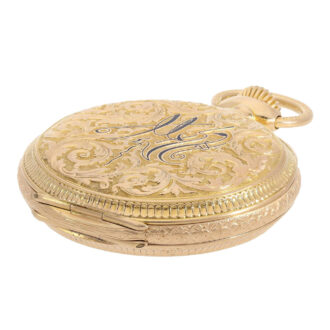
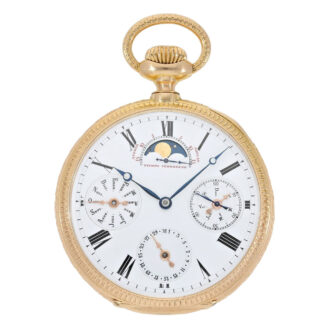
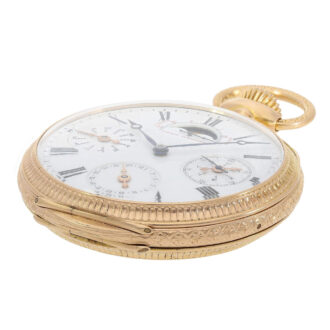
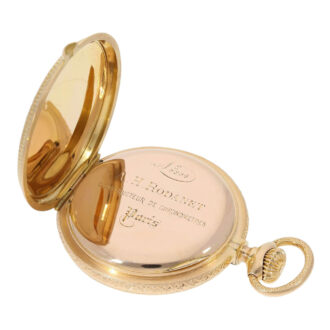
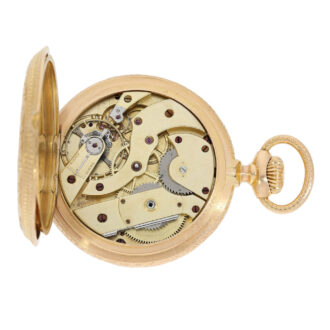
A Swiss 18 carat rose gold open faced pocket chronometer with the equation of time, perpetual calendar and moon phase, circa 1870. Delivered to Rodanet, the Patek Philippe distributor in Paris. Exquisite Patek Philippe chronometer movement, extra-large chronometer balance, lever escapement, wolf’s toothing, extremely rare technical complication: equation of time, perpetual calendar, moon phase. White enamel dial with Roman hours and outer minute divisions, below the 12 the indication of the moon phase and the true time (equation of time), rose gold hands for the perpetual calendar, blued steel hands for the time. The case back finely engraved with vines and leaves, integrated black enamelled monogram, probably an Arabic character. Case numbered, cuvette signed and numbered, case and movement with matching numbers. Comes with the original wooden box, covered with velvet and silk.
–
Diameter: 55.5 mm
–
Weight: 124 g
–
Signed: A.H. Rodanet Constructeur de Chronometres Paris
–
Only seven of these watches have been made and this piece was the third. The first of the series was No. 24920, which also had an equation of time table and a compass on the back. From this watch only archive photographs from 1867 exist, shown in Huber & Banbery, page 203, image 176. It is quite possible that the present watch is the only still existing example of these seven pieces because according to research no other of these watches have shown up so far. In total Patek Philippe produced only 11 pocket watches with the equation of time until the famous Henry Graves in 1933.
–
What is an equation of time?
The equation of time shows the difference between the mean solar time and the true solar time. This is variable during the course of a year. It is therefore the difference between the time shown by a sundial and the time shown by a perfectly regulated watch, which would indicate noon at the time the sun passes the meridian. This difference results from the combination of two effects. First, the movement of the earth around the sun, its elliptical orbit (instead of circular). Second, the inclination of its axis of rotation in the orbit.
–
What is a sector-type equation of time, such as the one in this watch?
Solar time is permanently indicated by an index or hand on a subsidiary dial, generally graduated in a sector from + 15 to – 15 minutes. To know the solar time, it is, therefore, necessary to add or remove this time-lapse to or from the meantime.
Signed: A.H. Rodanet Constructeur de Chronometres Paris
Share this page: