English gold and bloodstone verge watch Circa 1750
- Kenmerk
- SA0122
- Diameter
- 47 mm
- Estimate
- € 5.500 - 10.000
- Price sold
- € 7.000
Gold and blood stone verge watch
–
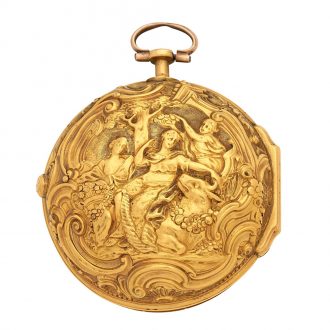
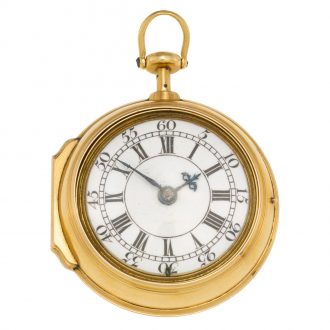
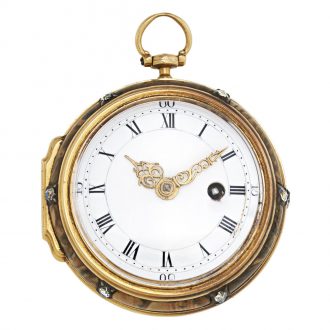
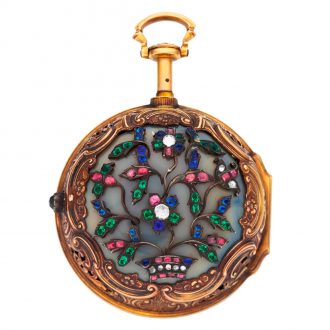
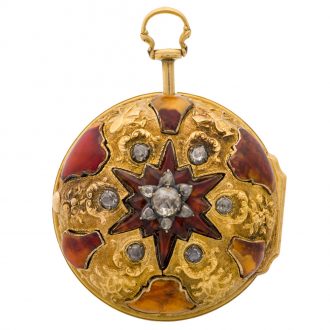
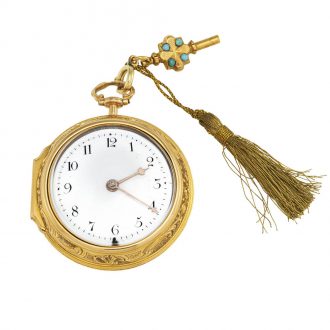
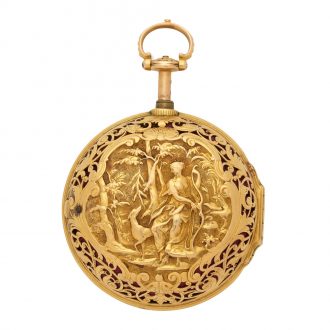
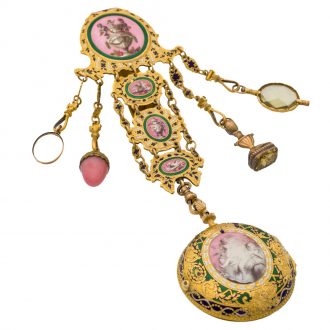
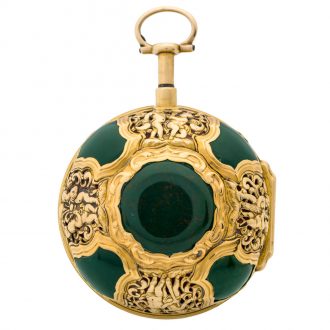
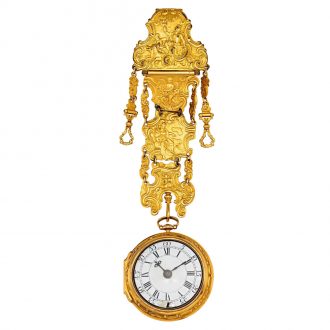
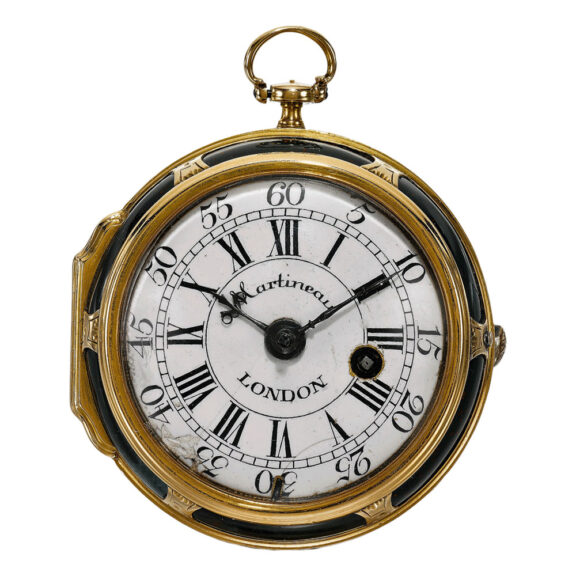
An English gold and bloodstone open faced verge pocket watch, circa 1750.
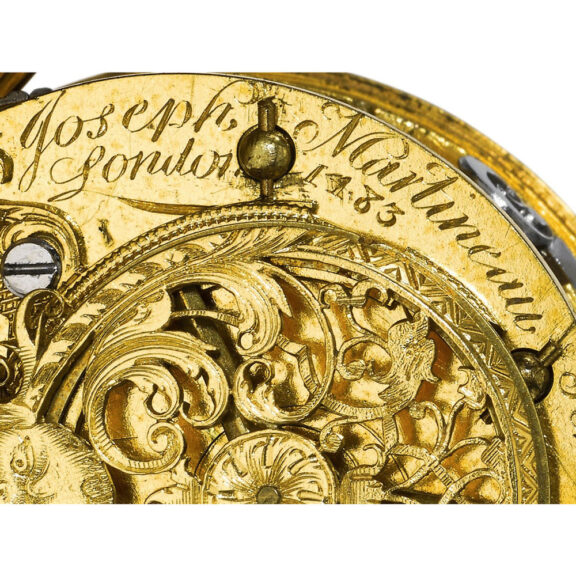
Gilded full plate movement, decoratively pierced and foliate engraved masked balance cock, plain flat balance, fusee and chain, baluster pillars.
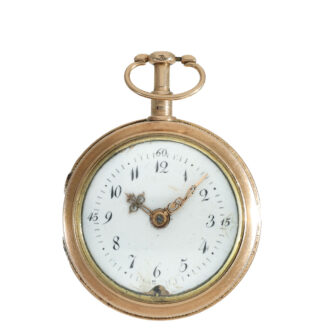
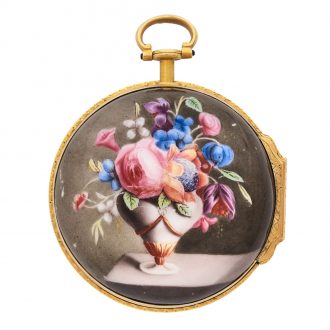
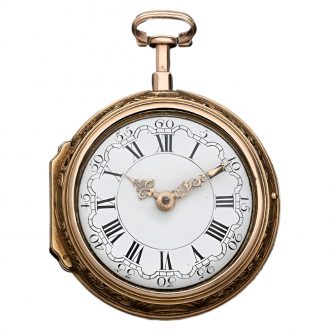
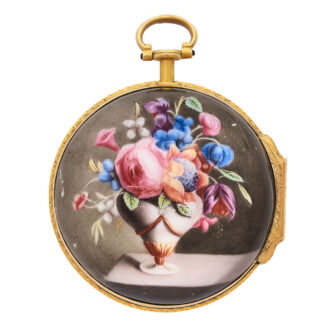
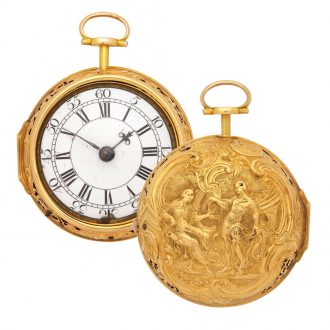
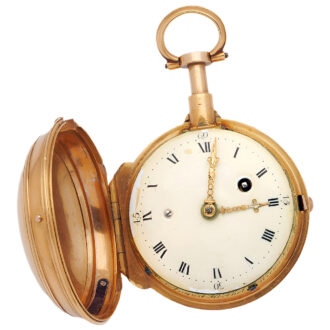
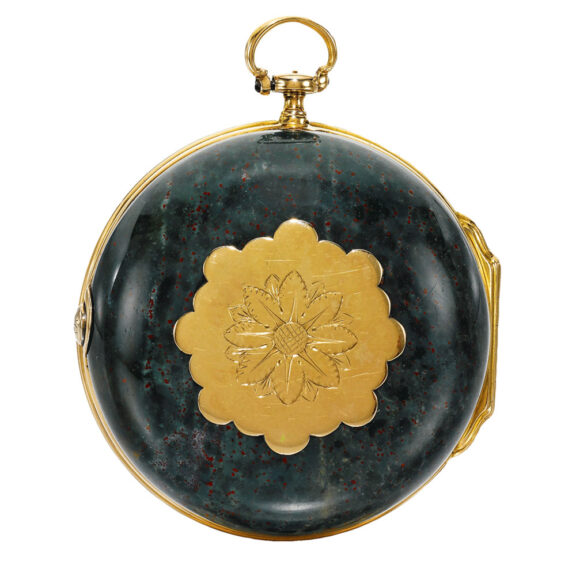
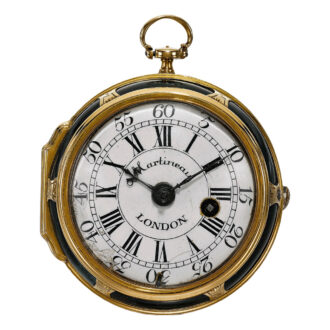
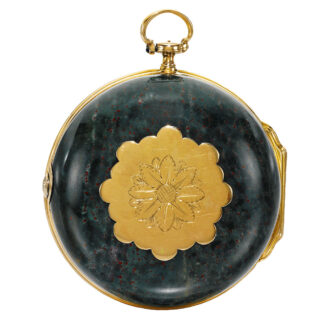
White enamel dial with Roman hours, Arabic minutes, blued steel beetle & poker hands, winding aperture between 3 and 4 o’clock. The case back set with a single bloodstone flattened towards the centre with a large gold rosette and engraved flower, the bezel set with six panels of blood stone.
Dial signed, movement signed and numbered.
–
Diameter: 47 mm
–
Signed: Joseph Martineau Senr London
–
Bloodstone is a beautiful, mostly, dark green stone that features red or brown spots that form as a result of impurities in the iron oxide. These spots look like blood splatters, giving the stone its English name. The stone is also referred to as a heliotrope, and gets this name from the Greek words helio, meaning ‘sun’, and tropos, meaning ‘toward the sun’. It’s said that the colour is also reminiscent of heliotrope plants that face towards the sun. The solid green colour that encompasses the rest of the stone is brought in as a result of the amphibole or Chlorite minerals found in the green Chalcedony. Chalcedony is a cryptocrystalline form of silica that’s composed of fine intergrowths of moganite and quartz, the minerals that make up most agate stones too. Because of its varied composition, the green in bloodstone is not always evenly distributed and may have blue or yellow streaks in addition to green. It has been a popular gemstone for at least two thousand years.
–
Only little is known of Joseph Martineau Senior. Accurate dating of this watch is difficult. Using the known hallmarked and numbered watches by Martineau, one might date this watch as early as the 1740s, yet the watch’s style could suggest a date closer to the 1760s. The body of the watch forms a complete gold dome beneath the bloodstone rather than the more common and later seen panels of stone (often agate) which require no solid backing, indeed, even when a single piece of stone is used in later watches, this tends to be pinned into a back bezel, rather than being mounted above a solid dome.
–
Joseph Martineau Senior is listed as working from 1744 in Orange Street and, at least until 1770, at his later address in St. Martins Court. Examples of his work are in the Metropolitan Museum of Art, New York, and were in the Ilbert. Watches by Joseph Martineau with repoussé cases signed by Wieland, Christopher Heckel and John Gastrell are recorded.
Signed: Joseph Martineau Senr. London
Share this page: