Swiss centre seconds watch for the Chinese market Circa 1820
- Kenmerk
- CH0832
- Diameter
- 60 mm
- Estimate
- € 100.000 - 200.000
- Price sold
- € 379.350
Gold, enamel and pearl-set cylinder watch by Piguet & Meylan
–
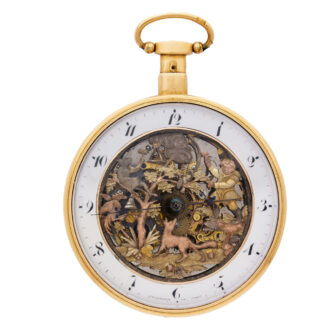
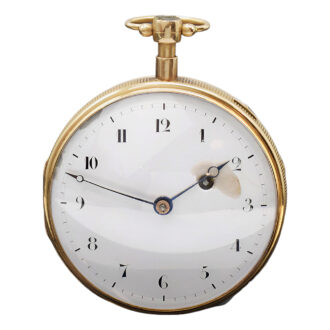
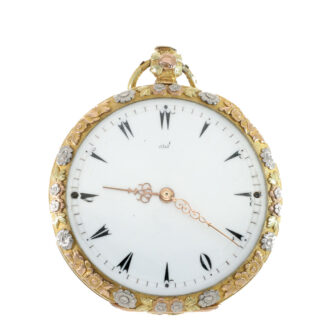
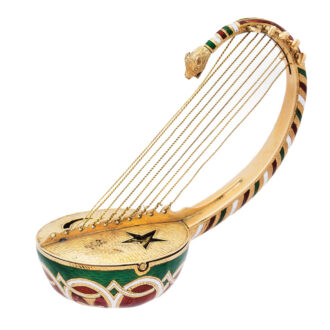
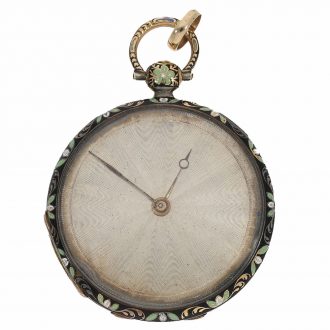
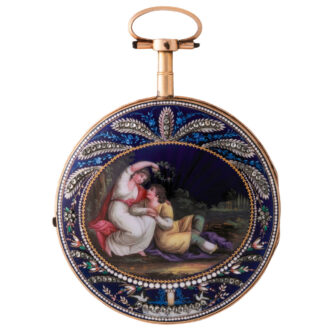
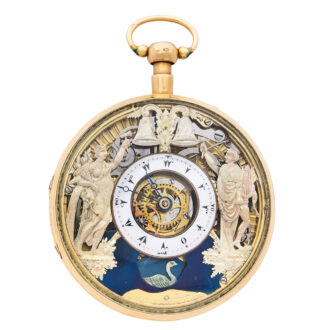
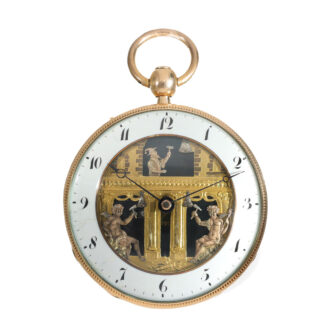
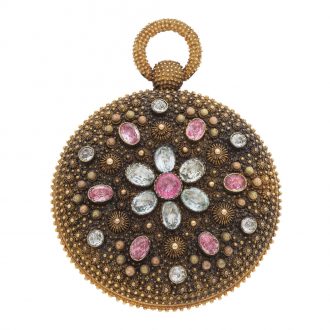
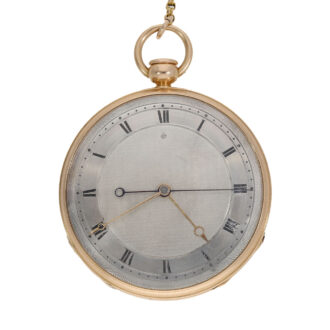
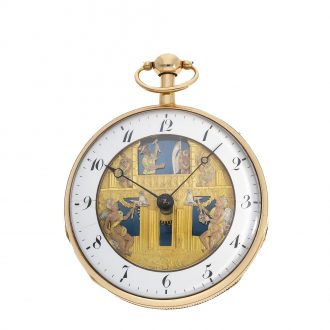
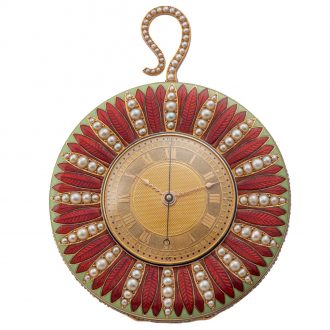
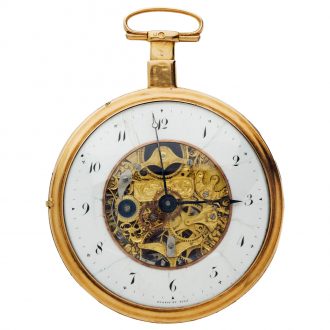
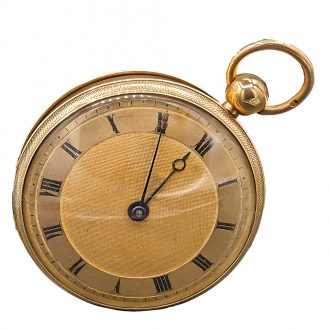
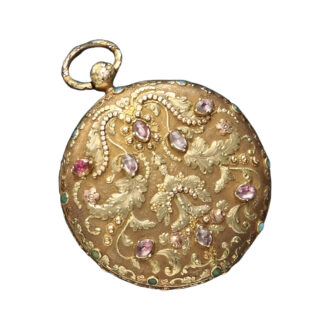
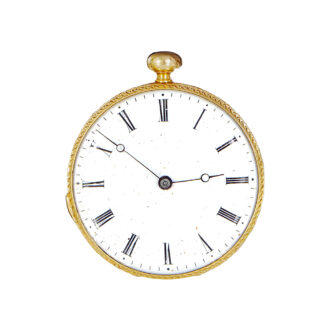
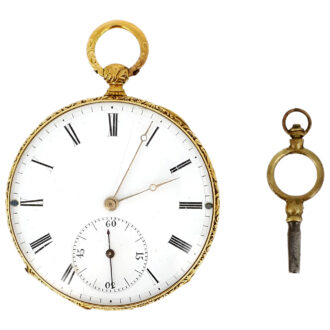
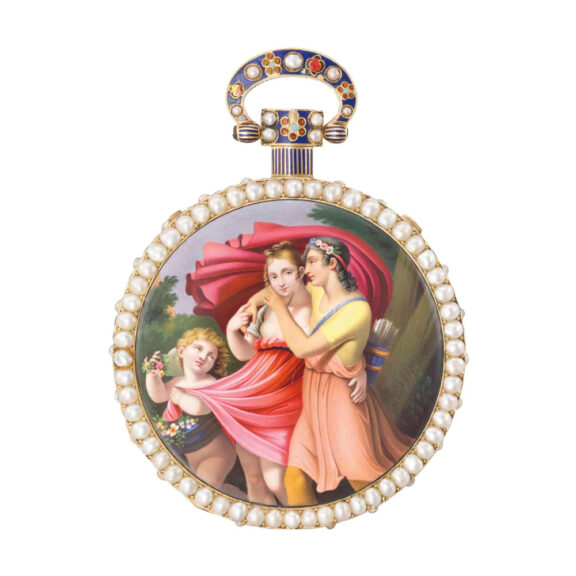
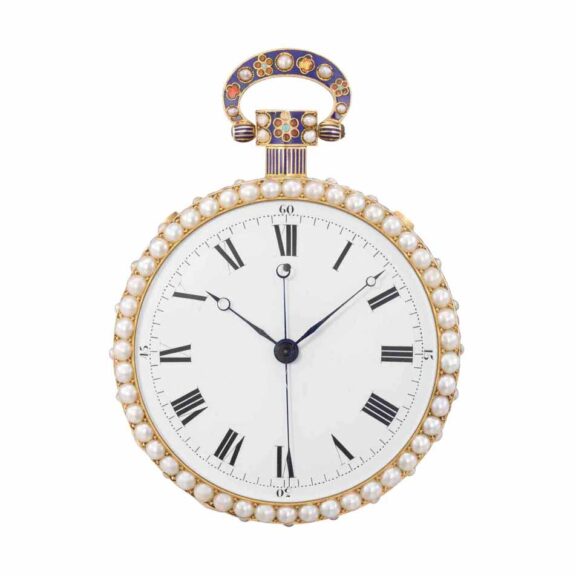
An exceptionally fine and rare Swiss 18 carat gold, enamel and pearl-set open faced quarter repeating cylinder pocket watch with an enamel miniature attributed to Jean Abraham Lissignol made for the Chinese market, circa 1820. Mirror polished and blued steel key-wound cylinder movement, plain three-armed brass balance, repeating with two hammers on two gongs, quarter repeating through the pendant, glazed dust cover. White enamel dial with Roman numerals and centre seconds. Case with pearl-set bezels, polychrome champlevé enamel and a pearl-set floral decorated band, pendant and bow, the back decorated with a polychrome enamel miniature after Pierre-Paul Prud’hon’s Love Seduces Innocence. Case signed and numbered, the case stamped FO in a lozenge for Frères Oltramare, the bezel is also numbered.
–
Diameter: 60 mm
–
Signed: Piguet & Meylan à Genève
–
Piguet & Meylan were both originally from the village of Le Chenit in the Vallée de Joux, Isaac Daniel Piguet (1775-1841) and Philippe Samuel Meylan (1772- 1845) came to Geneva as young men and formed a partnership that lasted from 1811 to 1828. The company specialized in elaborate and beautifully decorated musical watches, including skeleton and automaton watches and mechanical animals. The firm was established at 45, Rue Jean Jacques Rousseau in Geneva. After their association came to an end, both Piguet and Meylan continued for some time to work with their sons.
–
Jean Abraham Lissignol was a Swiss painter, revolutionary and one of the finest enamellers of his time. He was born in Geneva on May 7th, 1749 and died in Plainpalais on June 28th, 1819. He was the pupil of Jean-Marc Roux and later became his partner. Specialized in snuff boxes and watch cases, he worked for Jaquet-Droz & Leschot, the Rochat Brothers and John Rich.
–
From their first arrival in China around 1700, lavishly decorated watches manufactured for the Far East took incontestably a prominent position in the league of the most sumptuous timepieces ever made, highly coveted treasures, guarded like gold by their fortunate owners ever since. By the late 18th century, Chinese patrons requested only superlative watches, featuring finely decorated movements and also complications including repeating, music or automatons. To satisfy their desire for aesthetics, the cases had to be finely enamelled with motifs representing nature or classical scenes, set with pearls and precious stones. Many of these marvels were made for the Imperial Palace in Beijing where they can be admired still today. Often lost over the centuries and in particular during the tumultuous times in China, notably the first opium war in 1840 followed by the occupation of Beijing, the second opium war and the abdication of the last Emperor in 1912, to name just some, the appearance of even a single “survivor” of this extremely scarce species is always greeted enthusiastically by the connoisseurs. The discovery of such a complete group as the present collection however, comprising the different styles made for the export to China such as matching pairs, gold and enamelled watches as well as silver gilt and enamel examples, is doubtlessly a sensational event.
–
This timepiece was serviced in a most professional manner between 1961 and 1962 by the celebrated watchmaker Louis Cottier of Carouge, Geneva, best known for his invention of the world time system.
Signed: Piguet & Meylan à Genève
Share this page: