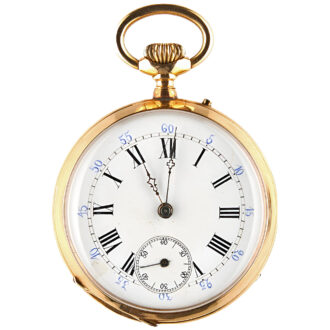
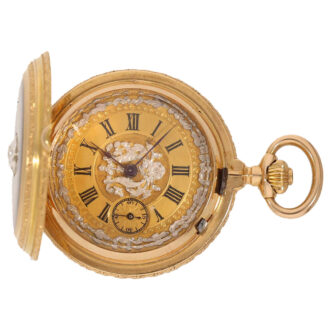
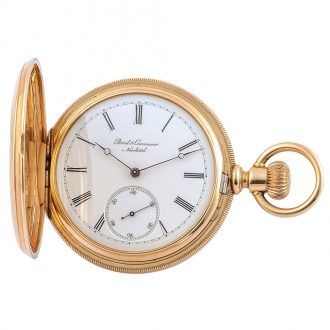
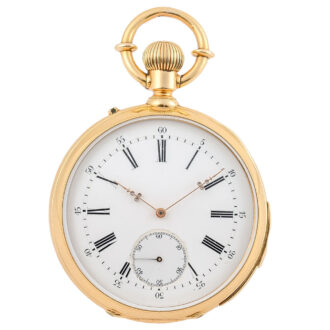
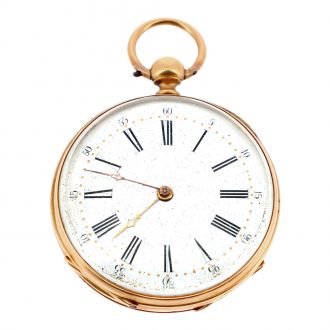
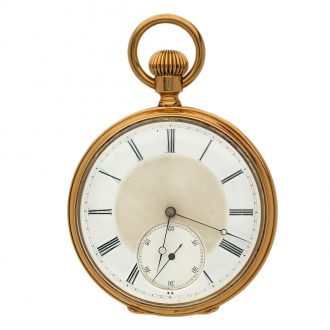
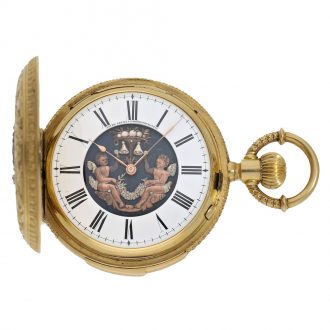
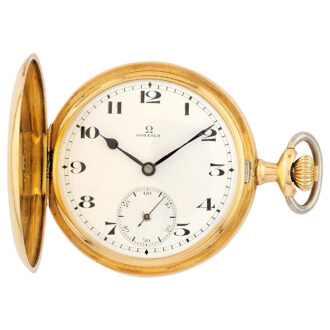
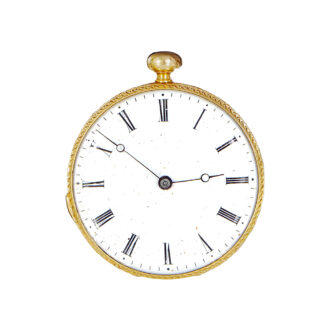
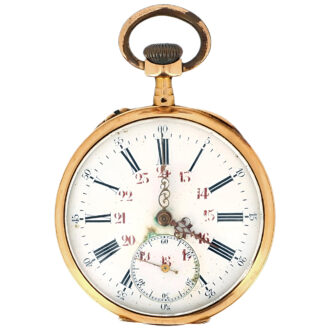
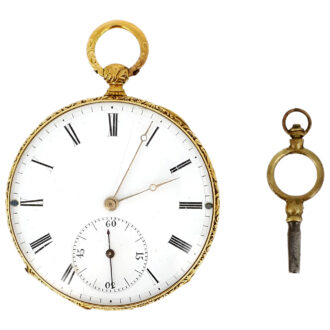
Swiss gold perpetual calendar with fly back date Circa 1880
- Kenmerk
- EB0039
- Diameter
- 51 mm
- Estimate
- € 12.500 - 22.500
- Price sold
- € 17.500
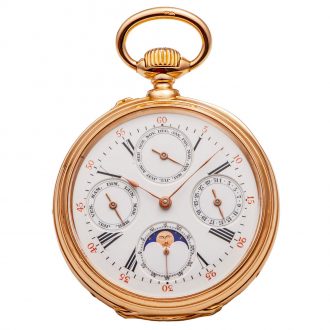
Gold open faced perpetual calendar with fly back date by Henri-Robert Ekegrén
–
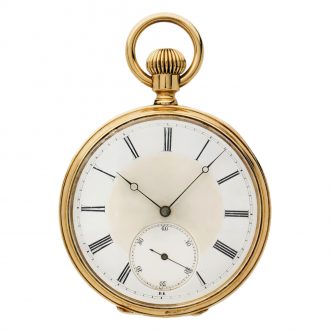
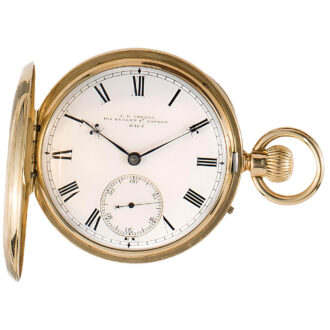
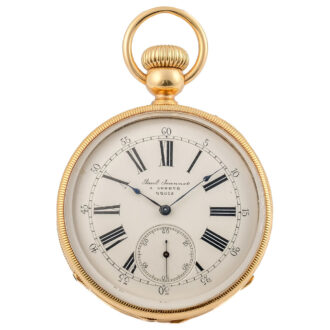
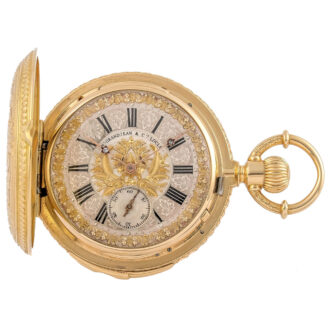
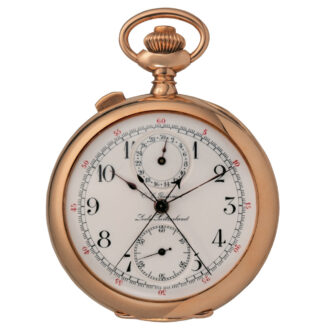
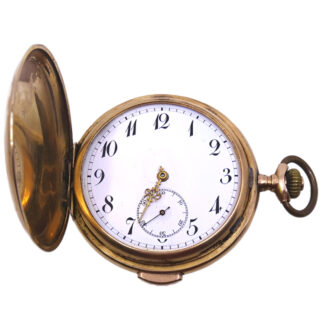
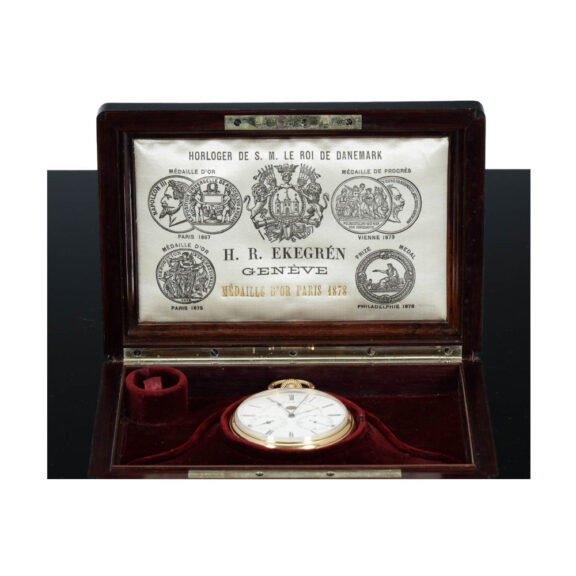
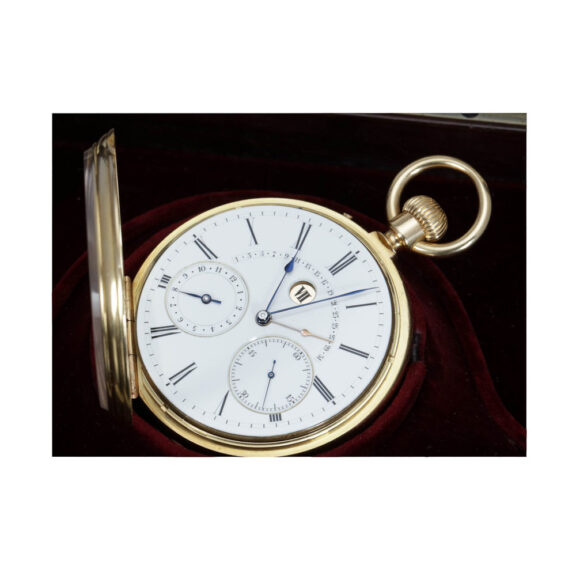
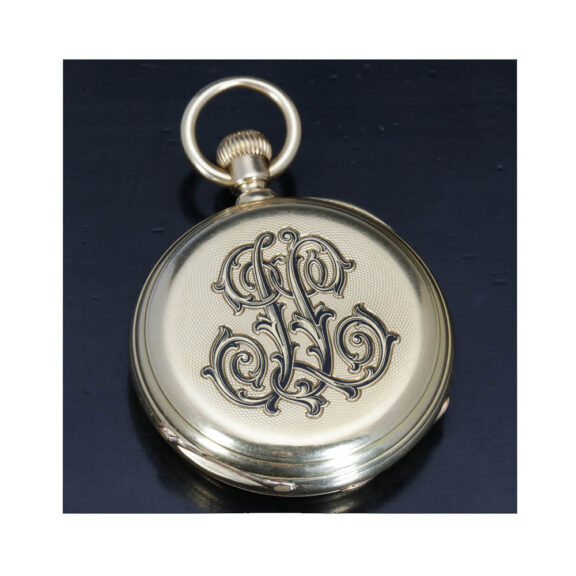
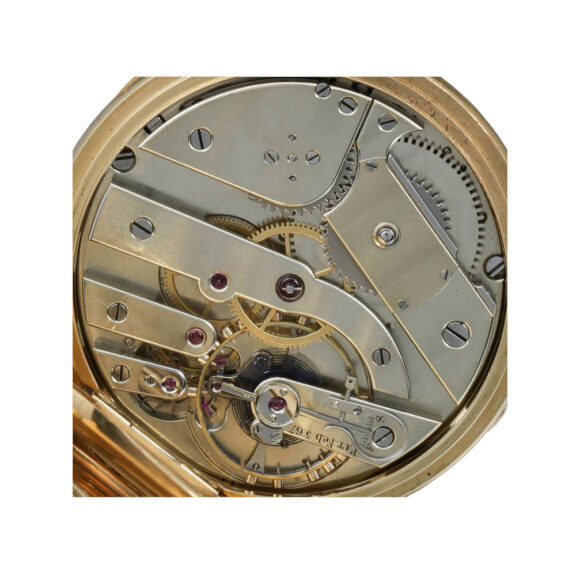
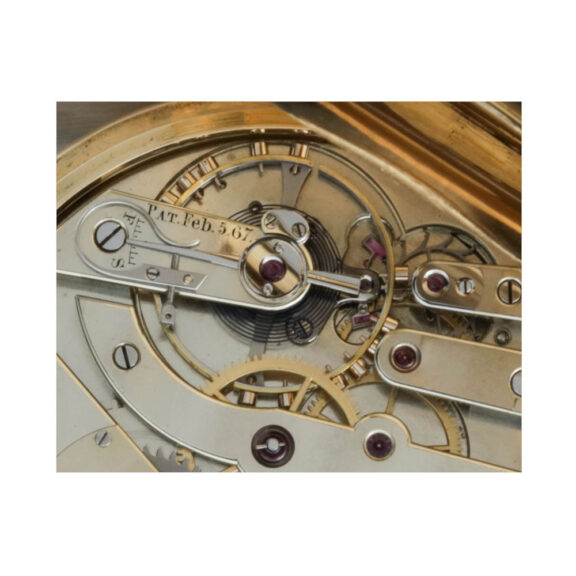
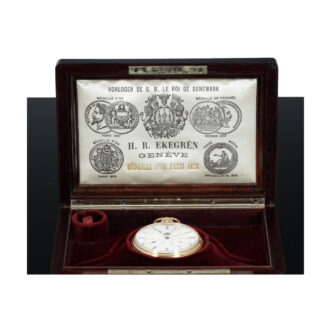
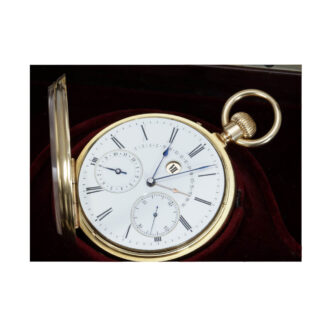
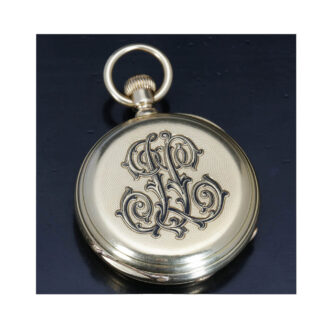
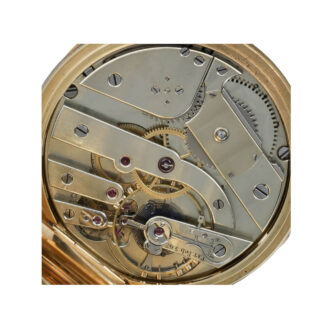
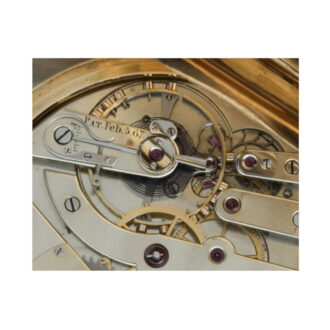
A very fine and rare Swiss 18 carat gold open faced keyless perpetual calendar with fly back date, circa 1880. Rhodium plated guilloché brigde movement, 15 jewels, wolf toothed mechanism, lever escapement, cut bimetallic compensation balance with gold interval and temperature regulation screws, blued steel Breguet spiral with overcast, swan neck micrometer regulator. White enamel dial, black Roman numerals, outer dot minute ring and Arabic five minute digits, sub dials for seconds and months, opening for week days, retrograde date sector and blue steel spade hands. Plain case with black enamel monogram ‘JL’. Gold, glazed cuvette. Comes with the original box made of Brazilian rose wood.
–
Diameter: 51 mm
–
Weight: 117 g
–
Signed: H.R. Ekegrén Genève
–
Henri-Robert Ekegrén (1823-1896) was the son of Daniel Ekegrén, of Swedish origin, who settled in Copenhagen and married a Danish girl. Although he was a skilled watchmaker, he devoted himself to the sale of watches, clocks and works of art. At the age of twelve, Henri became interested in watchmaking and engraving. After his apprenticeship, able to speak the Swedish, Danish and German language, he received a government scholarship to travel to other countries in the watch industry. During a winter he worked for his compatriot Jules Jürgensen in Locle. In London, he worked for a renowned law firm and acquired English language skills. In Paris, he worked for the famous Winnerl and made friends with Adolph length.
–
In 1847 he reached his most desired destination, Geneva. During the first year he worked with Henri Golay, an experienced watchmaker. The next ten years, he worked at Golay-Leresche, where he realized finishing off watches, repairs, time measurement and customer service. In 1857 he decided that it was time to profit from his experiences. He founded a partnership with Ferdinand Westermann, who had the necessary capital. As his first pupil Ekegén took on a young man, Louis Chevalier, who was attending the Geneva watchmaking school. Chevalier stayed with him for thirtyseven years. At the end of five years, Westermann retired to seek a climate that was beter for his health. Ekegrén was part of a committee to reorganize the College of Watchmaking for several years in order to serve the interests of production in Geneva.
–
At the exposition in Paris in 1867 he exhibited 36 watches designed by himself, which earned him the gold medal and a assesment by Professor Wartmann, which brought him honor and new customers. Following expositions like Vienna 1873, Paris 1875, Philadelphia 1876, Paris 1878 and Zurich 1883 brought him and his colleague Louis Chevalier further respect and awards. The competitions of the Society of Arts, later the Geneva Observatory, gave his watches very high ratings. He was one of the first to usey the theories of Phillips. He constantly worked to improve every detail and to create a product of the highest quality. His success is reflected in the high value of his watches in Europe and America up to this day.
–
His successor Edward Koehn left Patek Philippe in 1891 and bought the company Robert Ekegrén. Koehn also continued the quality standards of his predecessors and became himself a celebrated watchmaker. He built very high quality flat and extra flat watches, repeating watches, chronographs and fly back chronographs. The company, based at Grand Quai, made watches for Tiffany, New York.
Signed: H.R. Ekegrén Genève
Share this page: