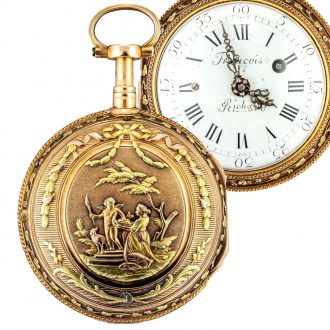
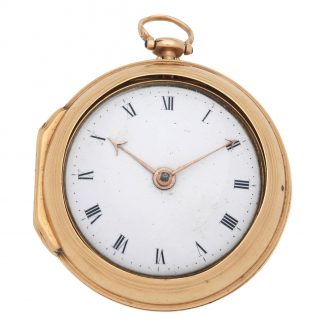
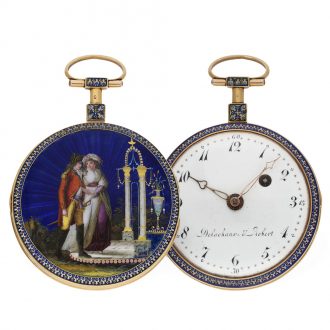
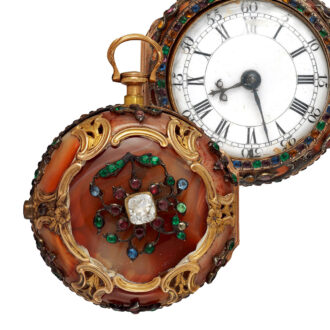
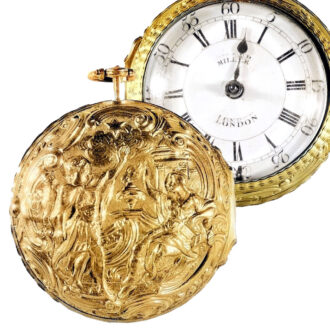
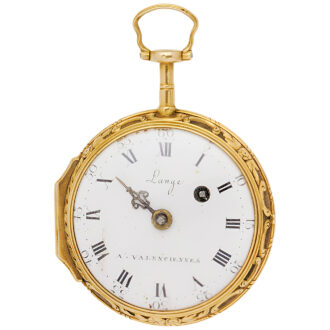
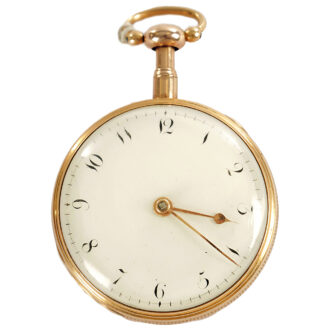
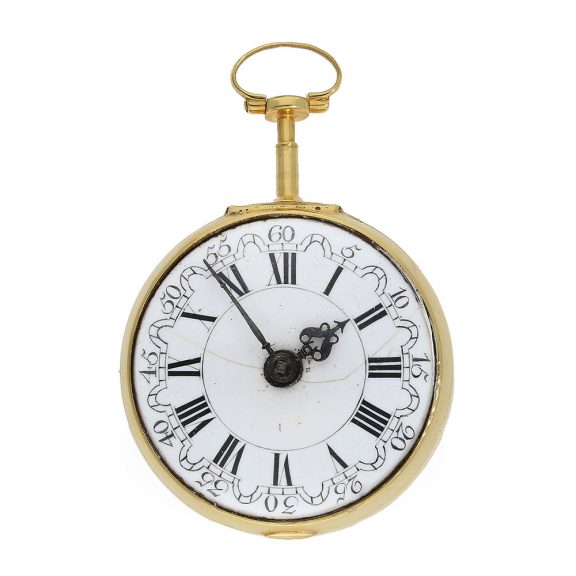
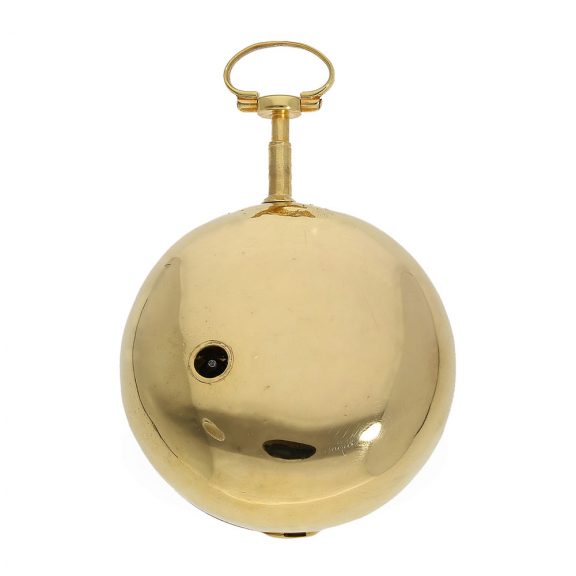
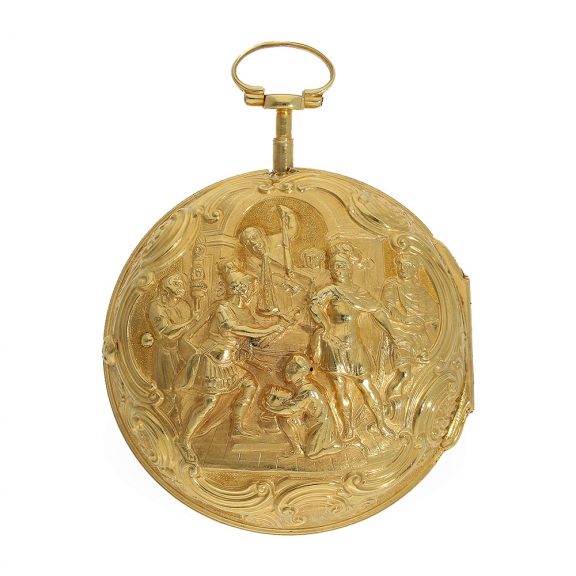
English 18 Carat gold outstanding quality verge watch Circa 1780
- Kenmerk
- HC0890
- Diameter
- 54 mm
- Estimate
- € 4.000 - 8.000
- Price sold
- € € 4.350
Repoussé watch with three separate cases
–
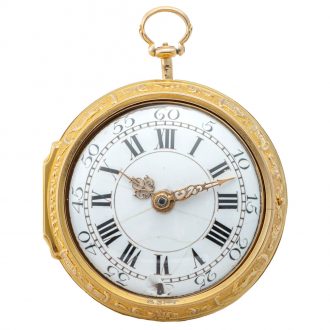
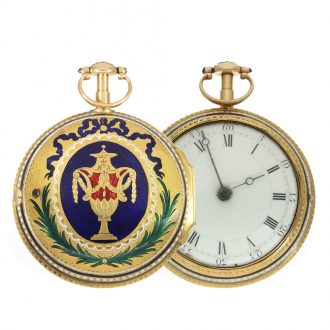
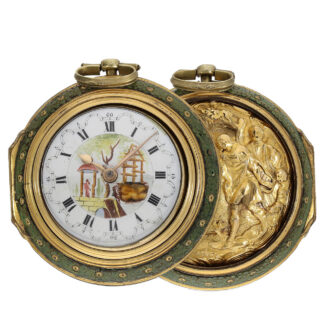
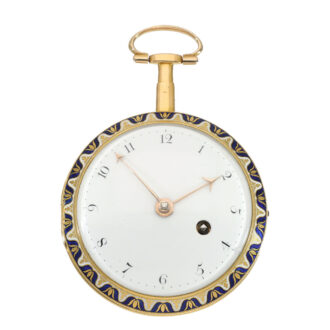
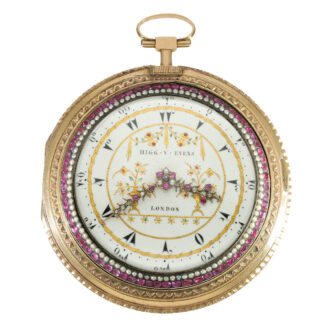
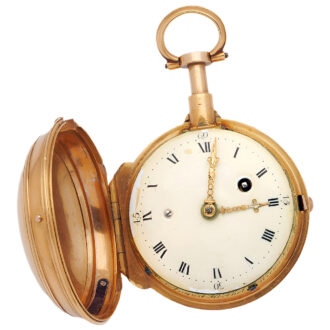
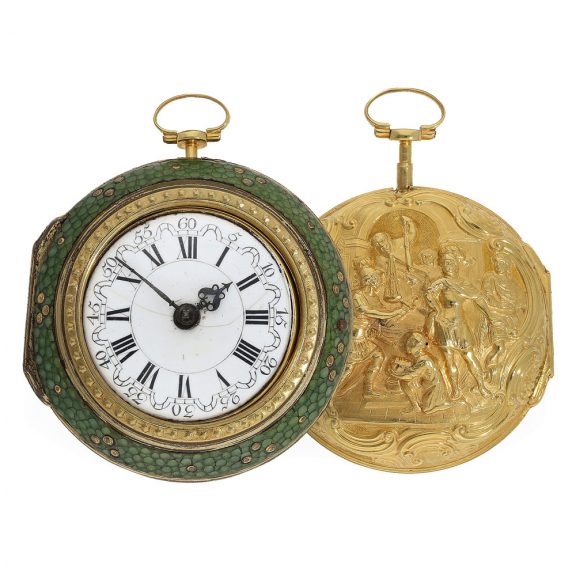
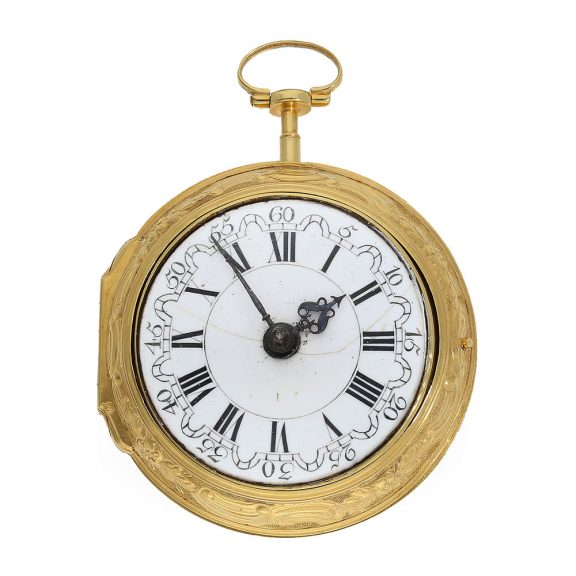
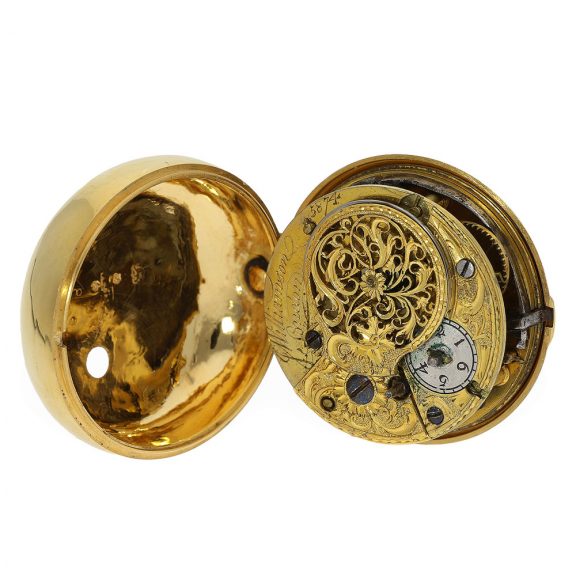
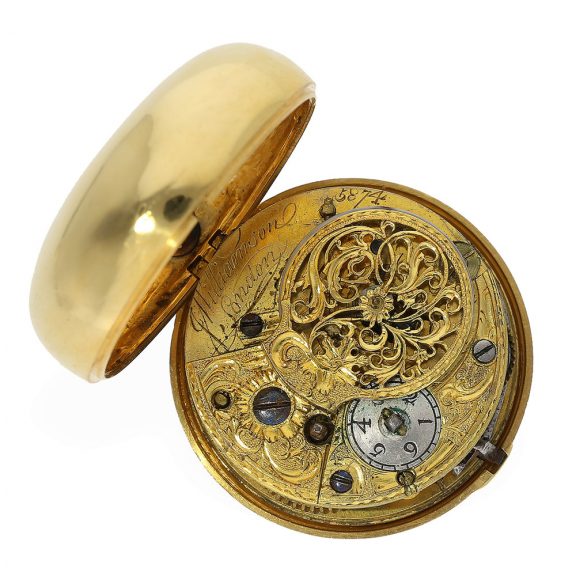
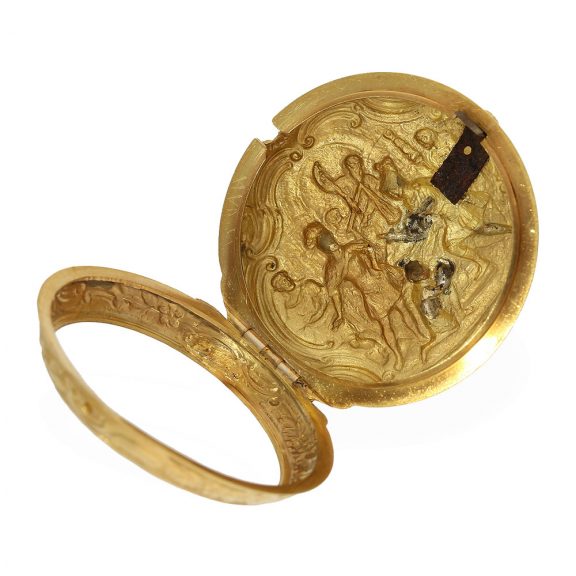
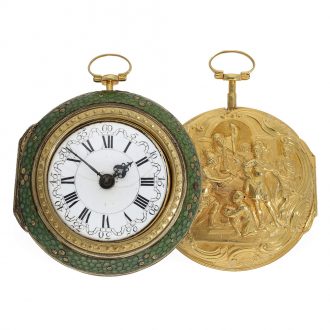
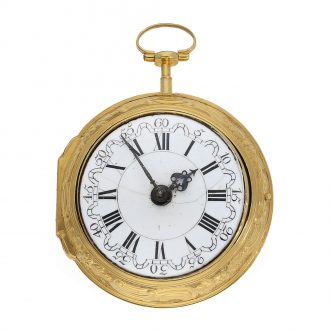
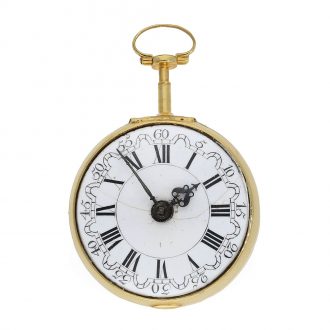
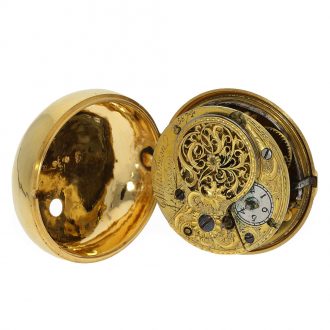
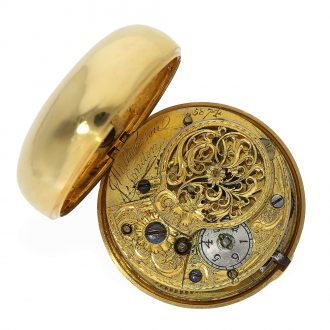
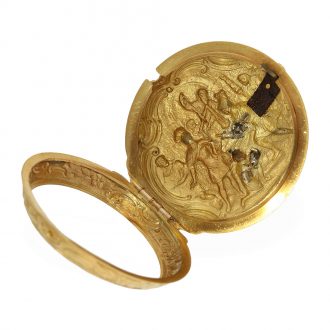
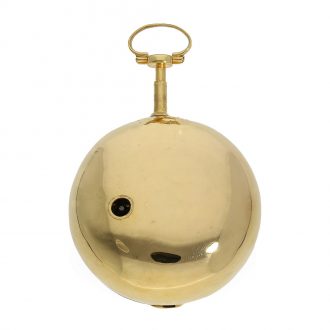
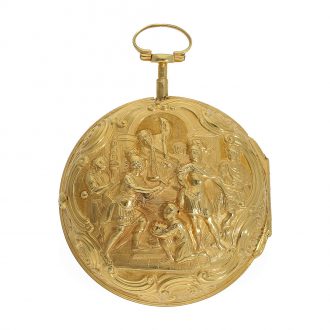
A repoussé verge watch of outstanding quality made by Williamson in London, England, circa 1780. The open faced case of this watch consists of three separate cases crafted of 18 Carat gold. The glazed outer protective case is covered with ray skin, the second repoussé case of exceptional quality has high relief and extremely detailed figures, is partly grained and polished and has a master’s mark punched on the hinge, probably “M”, which most likely refers to George Michael Moser and finally there is the plain inner case with London Hallmarks 1780. The white enamel dial has Arabic five minute numerals, Roman hour numerals and iron hands. The numbered movement has a verge escapement.
The movement is signed.
–
Diameter: 54 mm
–
Weight: 113 g
–
Signed: Williamson
–
The quality of the repoussé case is outstanding and makes the watch an extremely rare collector’s item.
–
George Michael Moser
Georg Michael Moser (17 January 1707 – 24 January 1783, was an artist and enameller of the 18th century, father of floral painter Mary Moser and, with his daughter, among the founder members of the Royal Academy in 1768. He was the son of Michael Moser, an eminent Swiss engineer and worker in metal. Moser was born in Schaffhausen, Switzerland and trained initially as a coppersmith in Geneva. He later learnt additional skills as a chaser, goldsmith and engraver.
He moved to London during the 1720s and married Mary Guynier. Surviving metal works by him include elaborate gold snuffboxes and watch cases (including movements by noted watchmakers George Philip Strigel and John Ellicott, among others) and silver candlesticks in the Rococo style.
He died at Somerset House on 24 January 1783 and was buried in the churchyard of St Paul’s, Covent Garden, his funeral being attended by almost all his fellow academicians and pupils. On the day after Moser’s death, a notice of him from the pen of Sir Joshua Reynolds was published, in which he was described as the first gold chaser in the kingdom, possessed of a universal knowledge of all branches of painting and sculpture, and ‘in every sense the father of the present race of artists’.
–
Williamson
Timothy Williamson is recorded as a London watch and clockmaker active between 1769 and 1790. He specialized in producing automata, decorative watches and clocks for the Chinese Market. He is known to have made pieces for Emperor Qianlong and became the “Watchmaker of the Emperor of China”.
For a listing of his work for China, see Catherine Pagani, Eastern Magnificence & European Ingenuity, Clocks of Late Imperial China.
Share this page: