English 18K gold chronometer with power reserve Circa 1890
- Kenmerk
- SA0472
- Diameter
- 52 mm
- Estimate
- € 4.000 - 8.000
- Price sold
- € 6.900
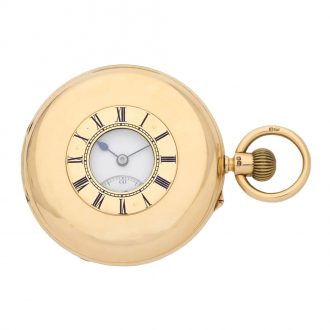
Fine gold hunting cased keyless pocket chronometer with power reserve
–
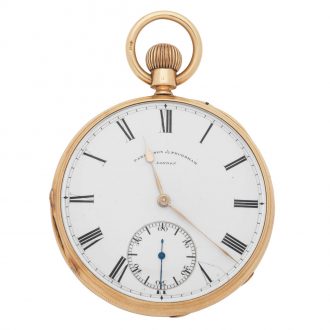
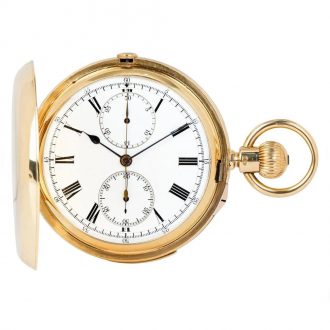
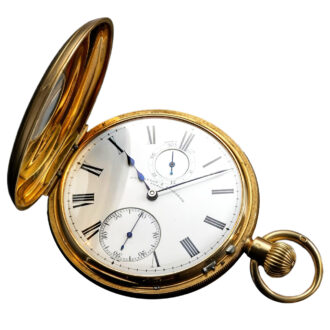
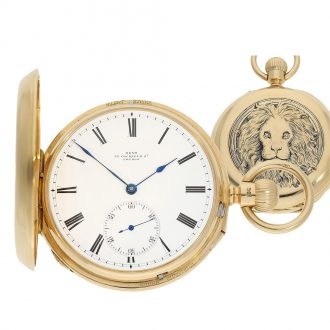
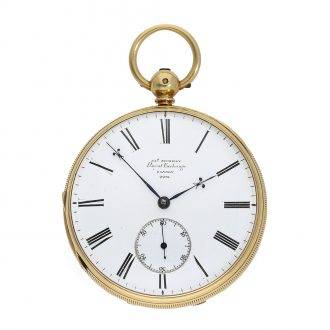
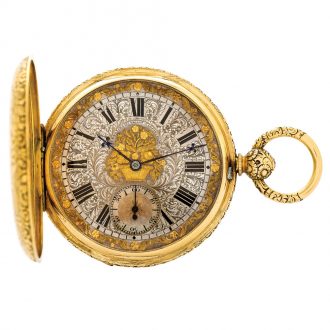
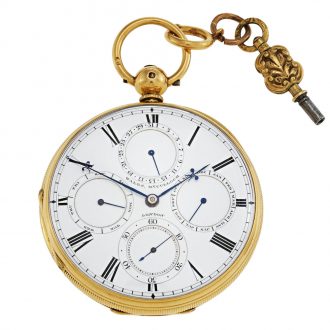
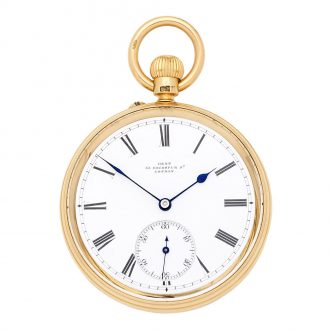
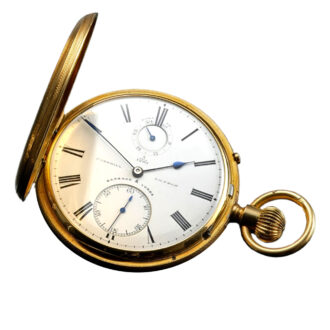
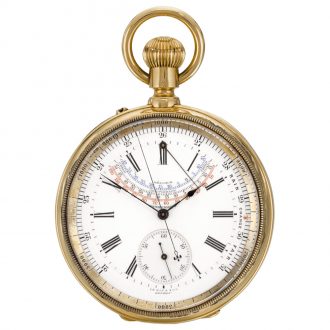
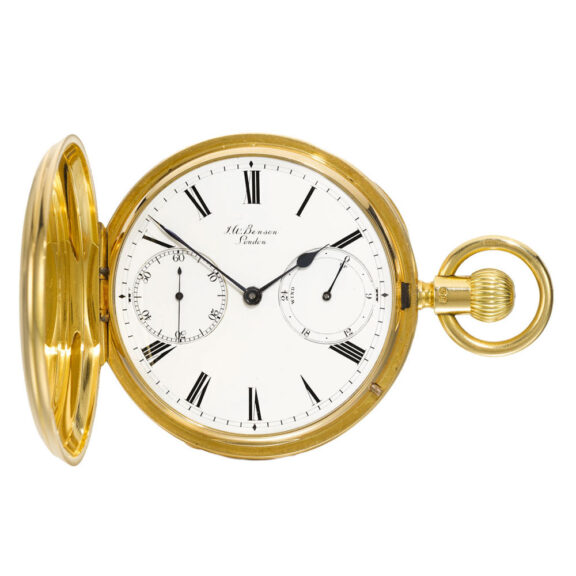
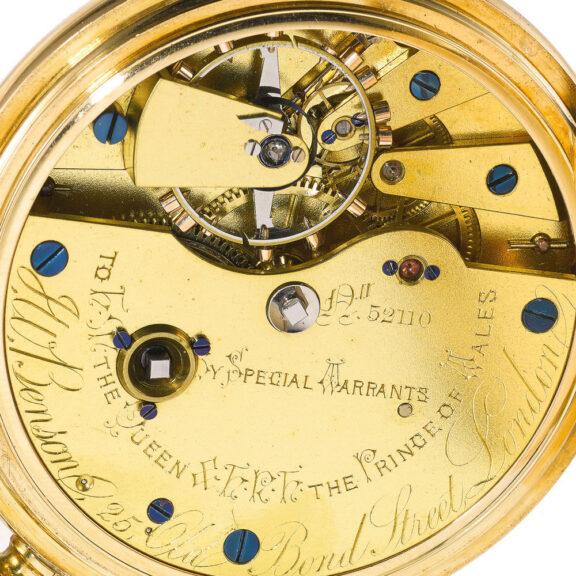
An English fine gold hunting cased keyless pocket chronometer with power reserve, circa 1890, gilded frosted half-plate movement, spring detent escapement, bimetallic compensation balance, blued steel helical spring, fusee and chain, signed J. W. Benson, 25 Old Bond Street, London, Special Warrants to H.M. the Queen and H.R.H. the Prince of Wales.
Willis white enamel dial, Roman numerals, outer minute ring, two sunken subsidiary dials for seconds and state of wind, blued steel hands, signed J. W. Benson, London.
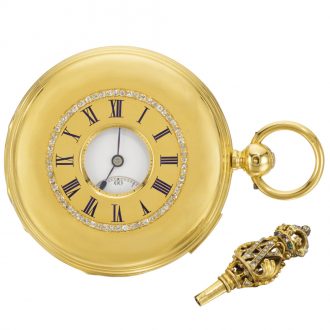
Plain polished case with stepped bezels, the cover with monogram HB, pusher to inner bezel below 4 o’clock for hand setting and disengagement of the winding mechanism when cover closed, plain polished gold cuvette, covers, cuvette, pendant and bow hallmarked for 18ct gold, date letter for London 1890, covers and cuvette with maker’s mark E.W. in rectangular cameo for Edgar Wilkins.
–
Diameter: 52 mm
–
Signed: J. W. Benson 25 Old Bond Street London, Special Warrants to H.M. the Queen and H.R.H. the Prince of Wales
–
James W. Benson were successful retailers who acquired the business of Hunt and Roskell in 1889. They purchased some of their best watches from the manufacturer Victor Kullberg, of which the present watch is an excellent example. Kullberg signed the watches for Benson in the usual way, often adding a zero to their own numbering sequence. The spring detent escapement has a ‘standing’ detent which is positioned north-south, being the most favorable position when the watch is worn.
Kullberg’s workbooks are owned by the Clockmakers’ Company and record some of the manufacturing processes and suppliers. The white enamel dial of this watch was supplied by Willis and the hands by Hood, both regarded as the finest makers in their respective disciplines. The ‘examiner’ of the watch was Peter Wennerstom, Kullberg’s nephew and, after Victor’s death in 1890, his successor to the business. An important role, the examiner/springer was responsible for the final stages of the watch, including testing the depths and end shakes, fitting the mainspring, setting up the stop work, and poising the balance.
Signed: J. W. Benson 25 Old Bond Street London, Special Warrants to H.M. the Queen and H.R.H. the Prince of Wales
Share this page: