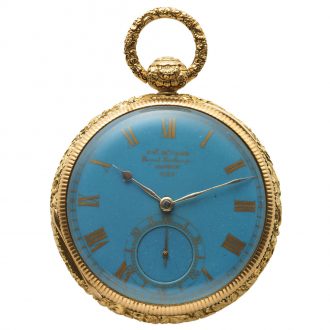
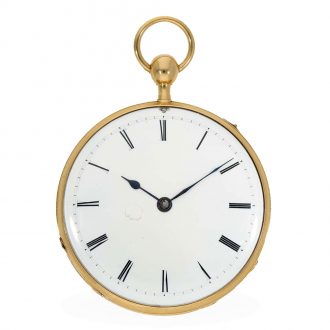
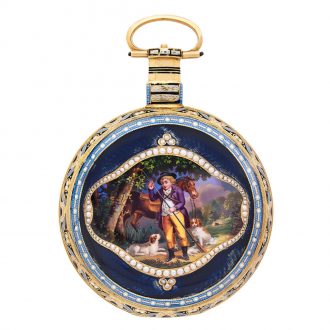
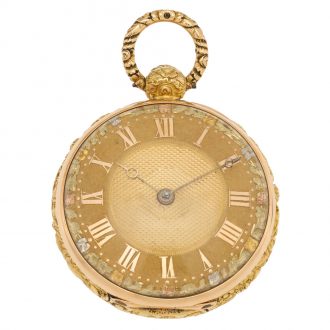
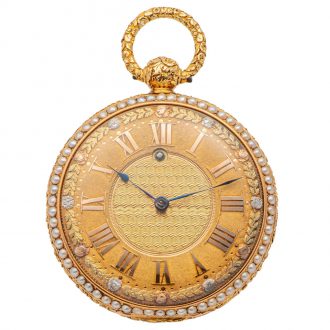
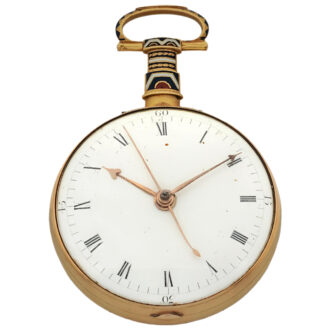
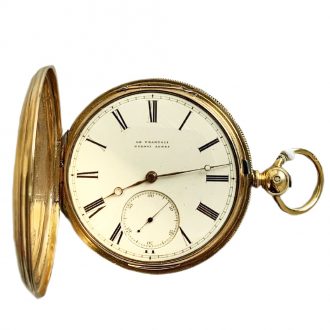
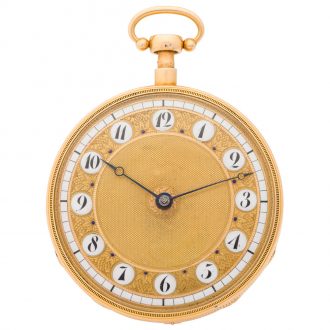
English gold cylinder watch for Ottoman market Circa 1820

- Kenmerk
- AD0230
- Diameter
- 56 mm
- Estimate
- € 20.000 - 35.000
- Price sold
- € 22.300
Gold, enamel triple cased watch for the Ottoman market
–
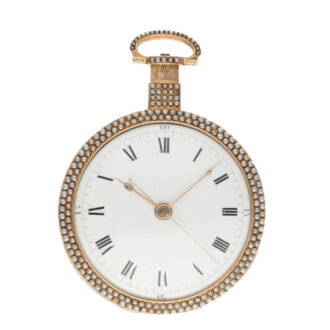
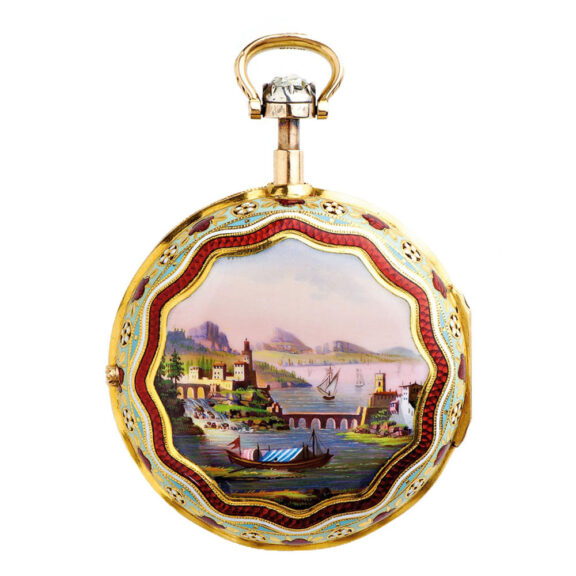
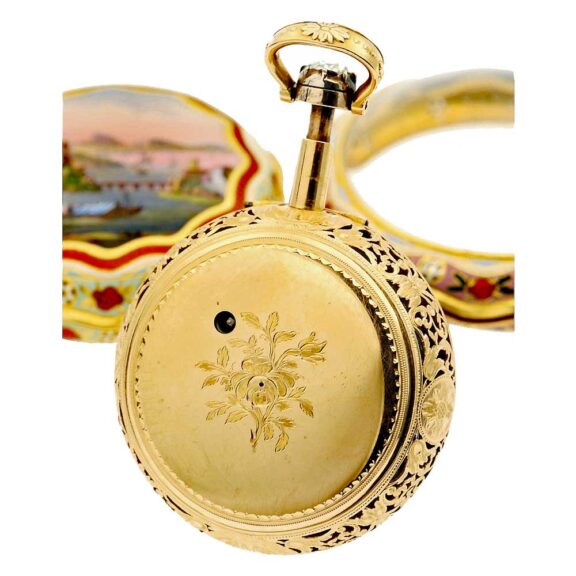
An English magnificent triple cased gold enamel pocket watch in practically new condition, with quarter repeater for the Ottoman market, circa 1820.
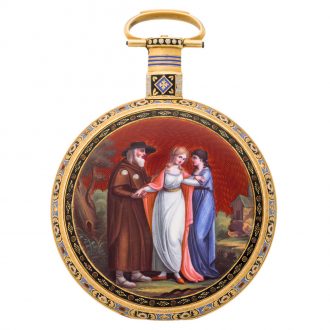
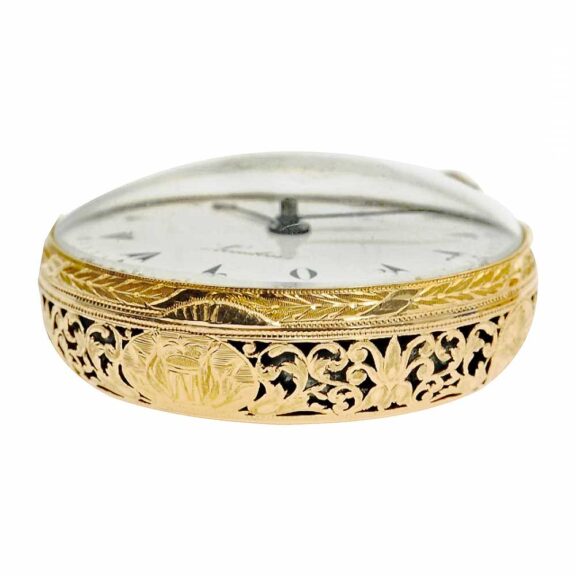
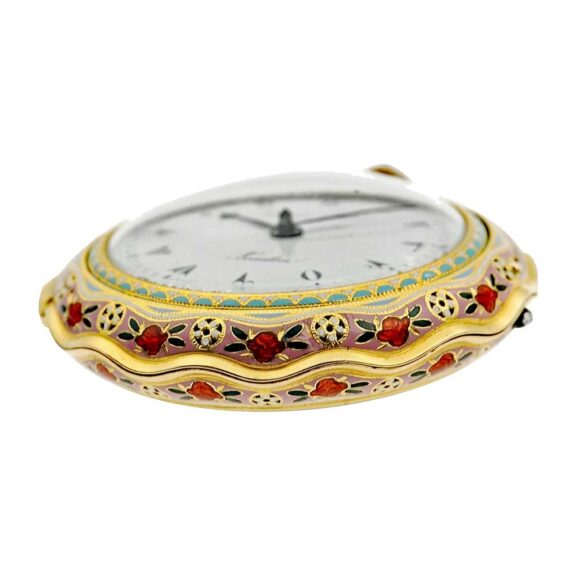
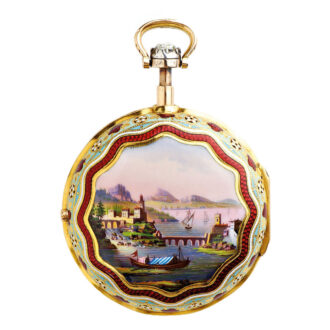
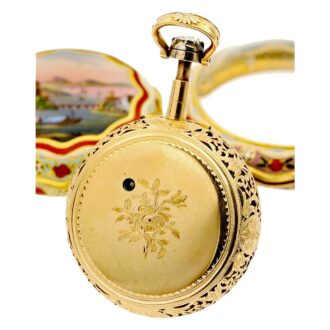
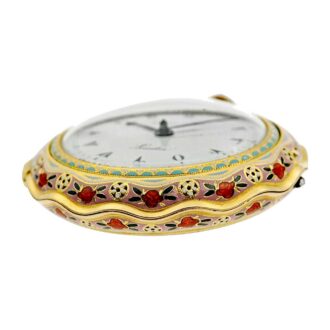
The outer case is 18 Carat rose gold, glazed, pierced, à goutte, florally engraved, polychrome enamelled. The middle case is 18 Carat rose gold, pierced, à goutte, florally engraved, polychrome enamelled, the backside with an exquisite translucent polychrome enamelled medallion depicting a maritime landscape. The inner case is 18 Carat gold, florally hand-engraved and pierced, rear bell.
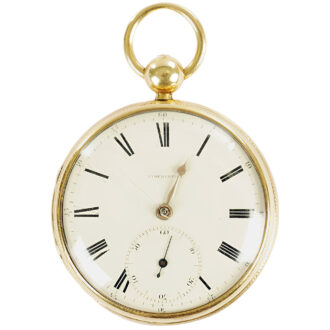
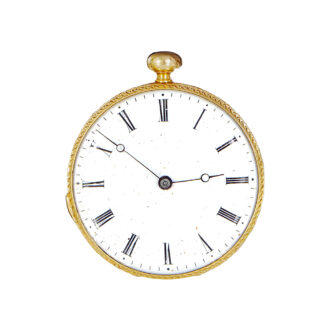
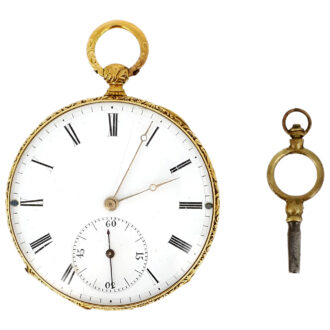
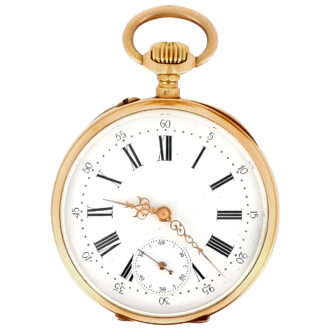
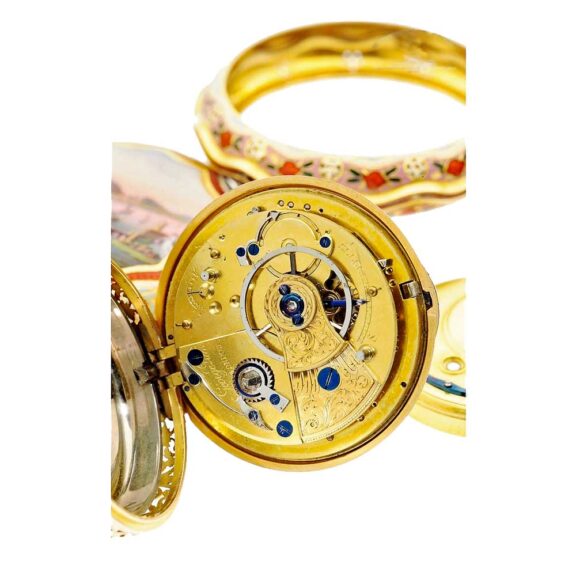
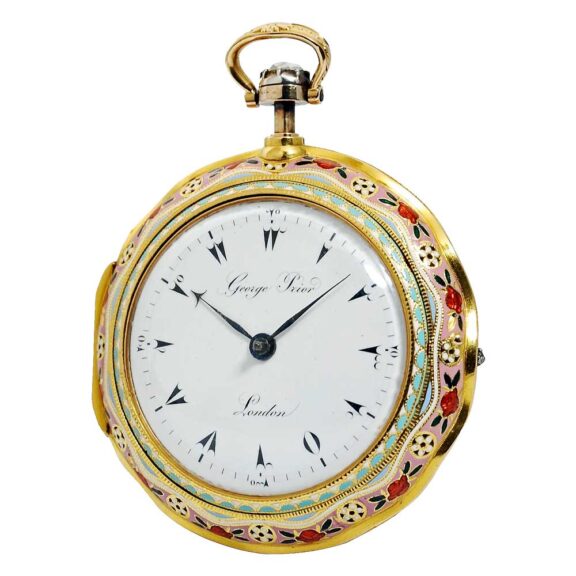
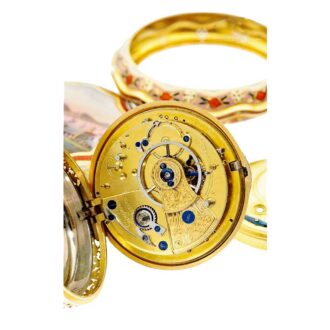
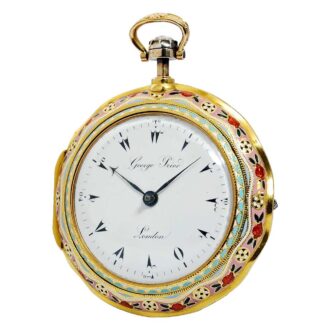
This watch consist, a white enamel dial with radial Ottoman numerals and blued steel hands, a full plate movement, keywind, frosted, gilt, two hammers, two barrels, cylinder escapement, three-arm steel balance, fine florally engraved balance bridge and diamond endstone on balance.
–
Diameter: 56 mm
–
Weight: 150 g
–
Signed: George Prior, London
–
Movement as well as case design of these watches intended for the Turkish market was already outmoded in 1817 – and even more so in later years; nevertheless Edward Prior and some of his contemporaries such as George Prior (II), George Charle, Markwick Markham-Perigal and Isaac Rogers specialized on this type of watch because there was an ongoing demand for them on the Turkish market – be it from tradition or from a true love of the elaborately ornamented movements and cases. It is quite possible that many of these watches – the one we have here are among them – never even left England, because their exotic beauty had its devotees in their own country too. Very often these buyers kept the watch safely in a drawer like jewellery, which explains the mint condition of some of these marvellous pieces – as is the case with our watch. The exquisite gold enamel cases were probably created by goldsmith Augustus Newman in 7 Plumptree Street, Bloomsbury, London, whose mark appears for the first time on November 4th, 1813; we still do not know who painted the gallant scenes on the outer cases though.
Signed: George Prior, London
Share this page: