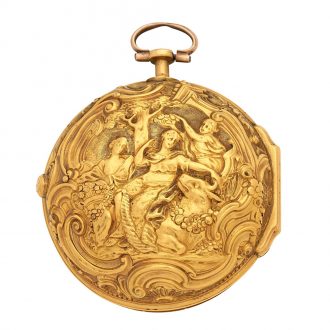
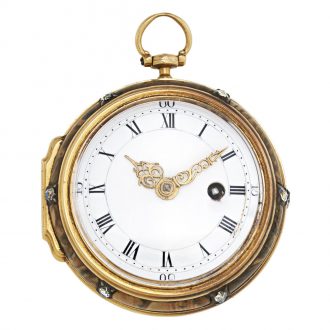
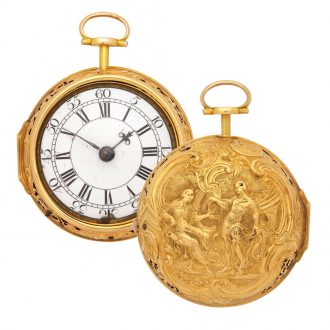
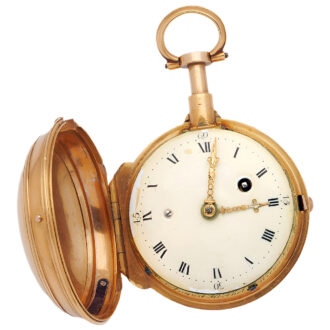
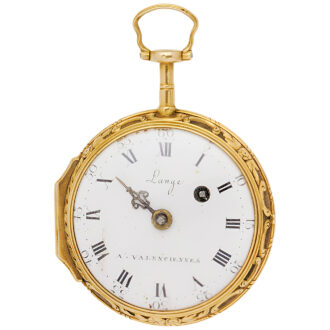
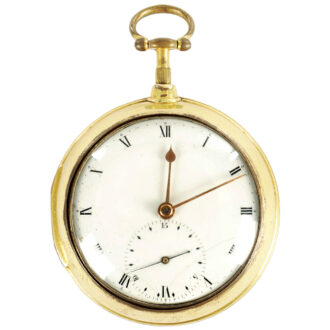
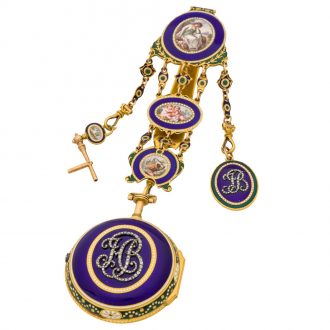
English repeating pocket watch with repoussé decoration Circa 1750
- Kenmerk
- AD9512
- Diameter
- 48 mm
- Estimate
- € 3.000 - 5.500
- Price sold
- € 3.350
Gold pair cased verge pocket watch by Charles Cabrier
–
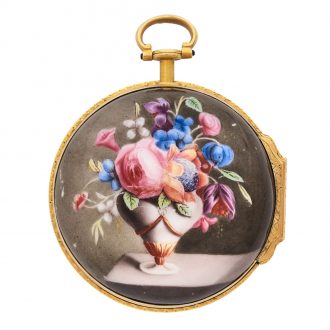
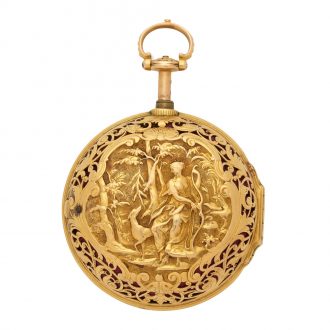
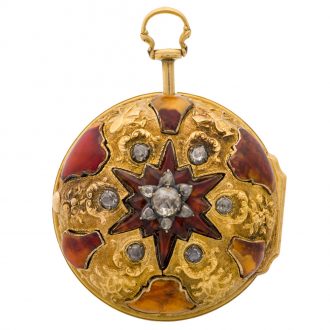
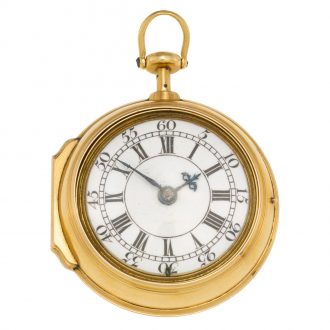
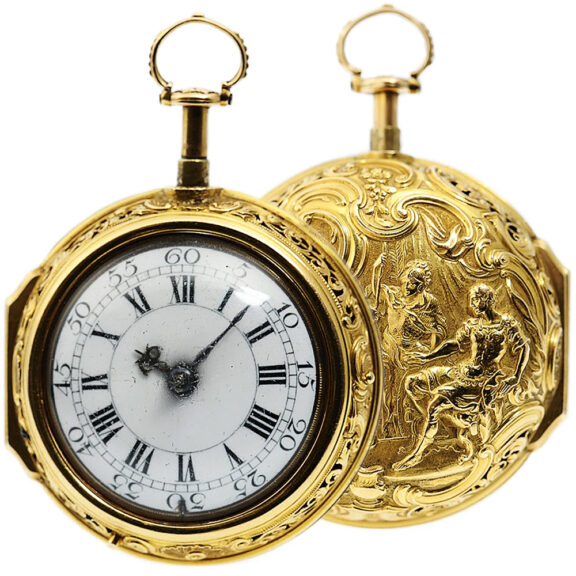
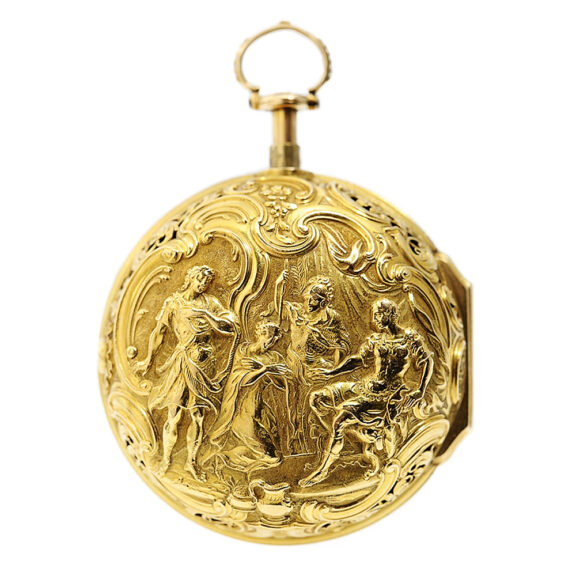
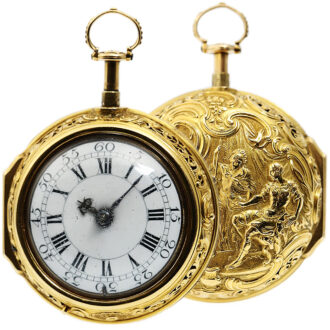
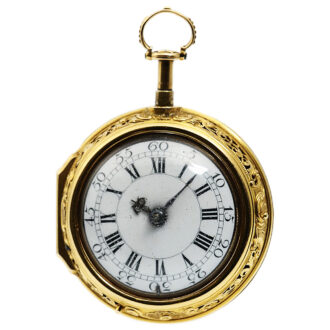
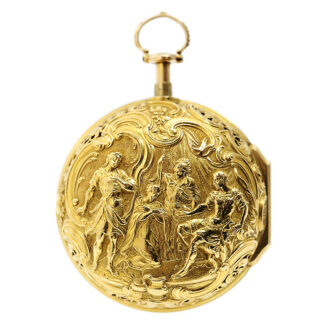
An English pair cased hour repeating verge pocket watch with repoussé decoration The Continence of Scipio, circa 1750.
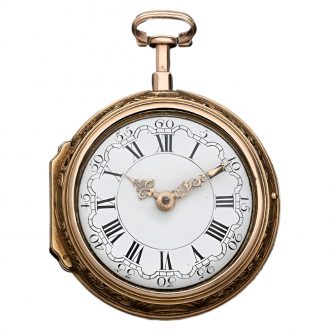
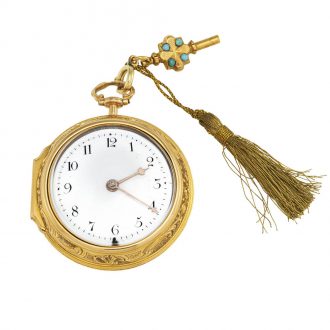
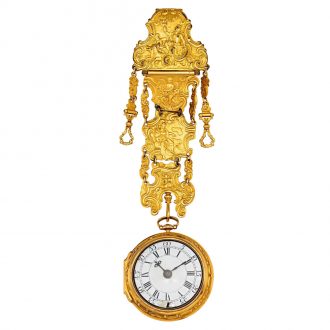
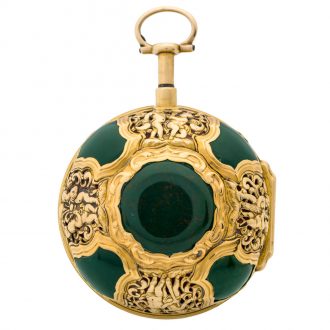
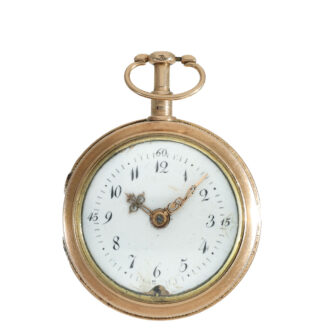
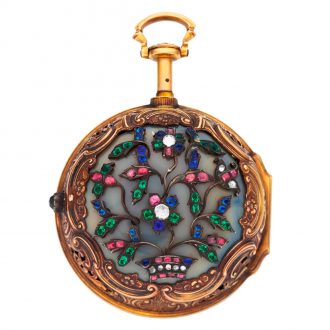
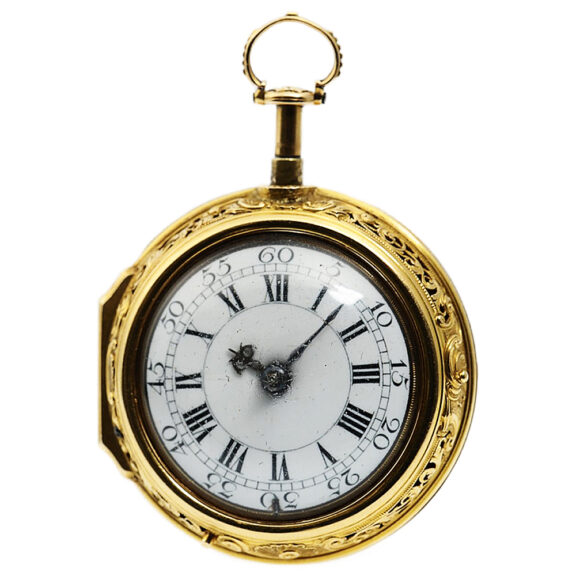
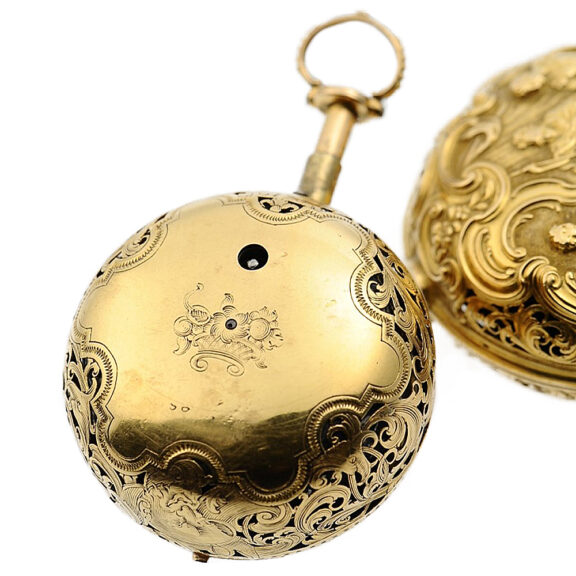
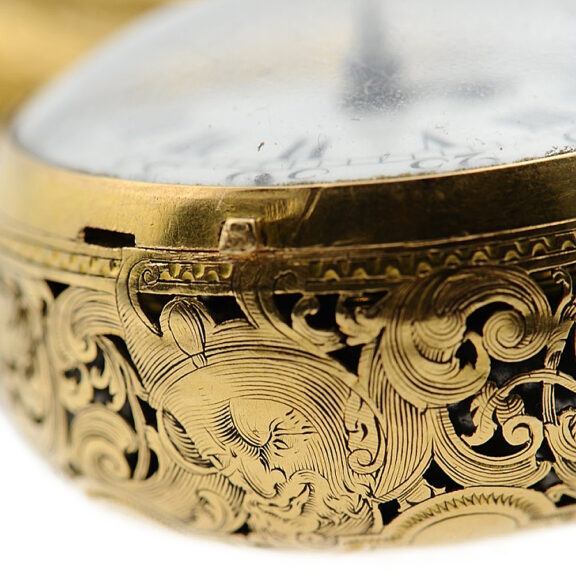
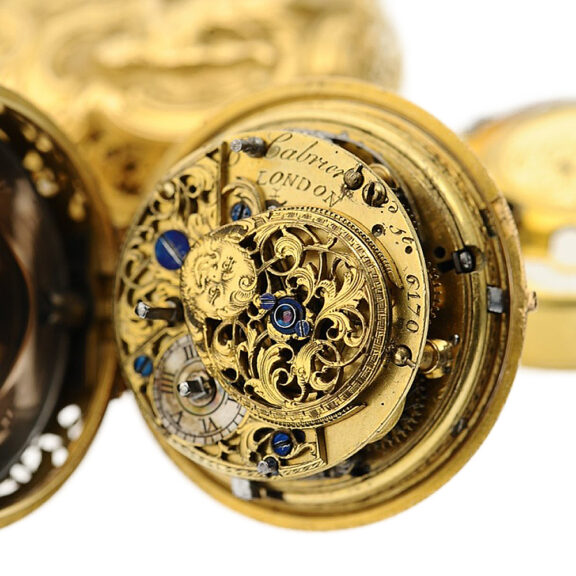
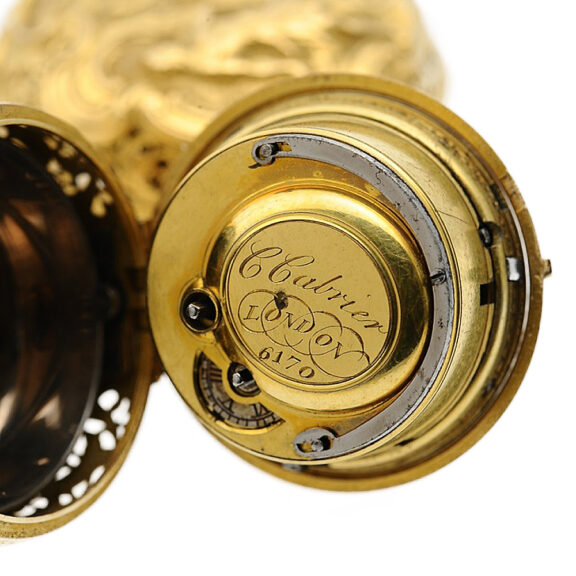
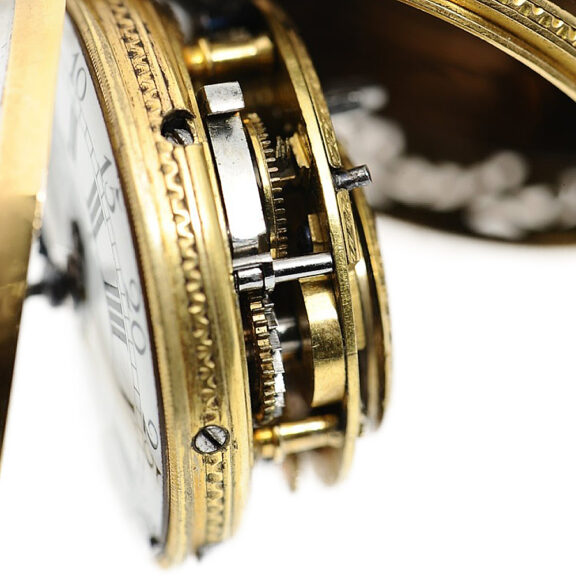
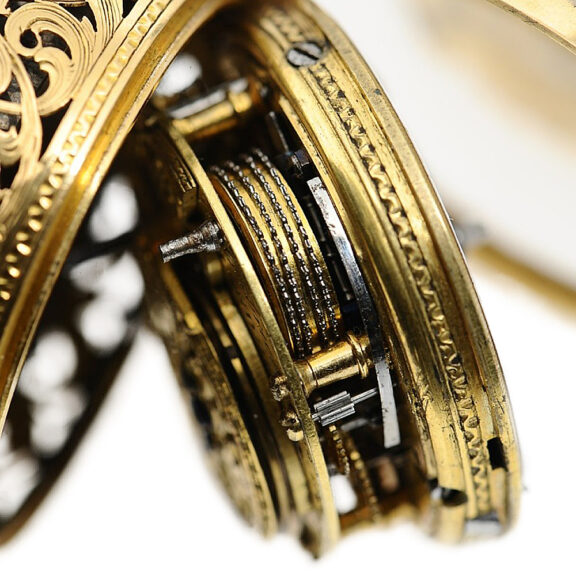
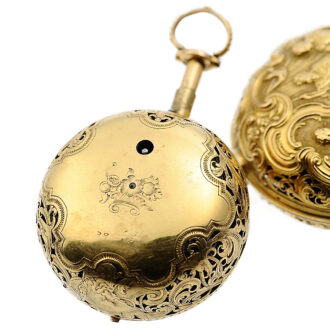
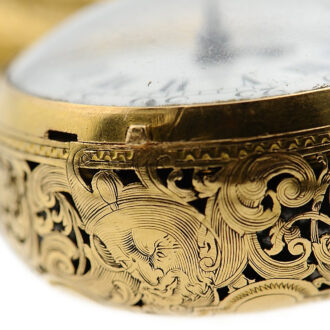
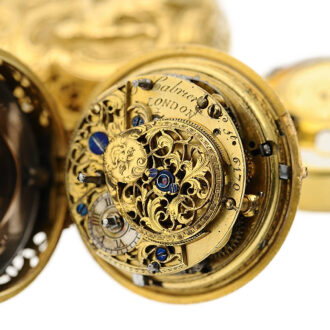
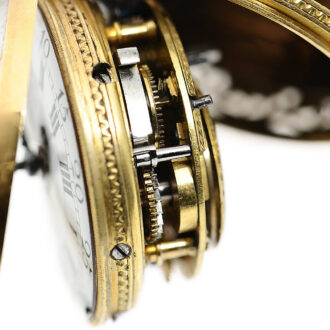
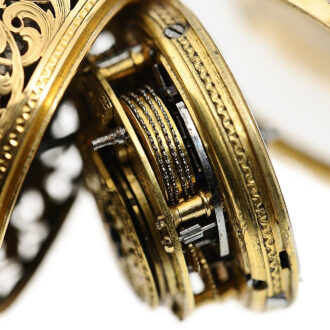
Two cases: an outer case – gold, repoussé decoration, depiction of The Continence of Scipio, engraved and chased volutes and scrollwork, large lateral hinge; and an inner case – gold, pierced band decorated with engraved flowers, pusher for repetition via pendant, bell. Enamel dial with radial Roman hours and blued Poker & Beetle hands. Full plate movement, fire-gilt, chain/fusee, moulded baluster pillars, one hammer, three-arm brass balance, very finely engraved, and pierced balance cock with mascaron.
–
Diameter: 48 mm
–
Weight: 110 g
–
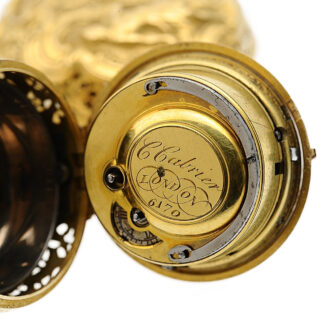
Signed: Charles Cabrier, London
–
Charles Cabrier II
Charles Cabrier’s father (a French watchmaker who emigrated to England after the revocation of the Edict of Nantes) and his son – Charles Cabrier I and III – were both reputed makers as well. Cabrier began his apprenticeship in 1719, was a member of the Clockmakers’ Company from 1726 on and a master from 1757 until 1772. Until 1759 he had a workshop at 79 Broad Street, near Finsbury Circus; he then moved to Pig Street – which does not exist anymore – near Threadneedle Street. The watch we have here may have been a joint effort by Charles Cabrier II and his son. Baillie mentions Charles Cabrier II as a “famous maker”; Britten calls him a “celebrated maker”. The Continence of Scipio The Continence, or alternatively The Clemency of Scipio, is a historical episode told of the Roman general Scipio Africanus during his campaign in Spain during the Second Punic War. In recognition of his generous treatment of a prisoner, he was taken as one of the prime examples of mercy during warfare in Classical times. His image was further enhanced during the Renaissance, and the episode figured widely in literary and figurative arts.
Signed: Charles Cabrier, London
Share this page: