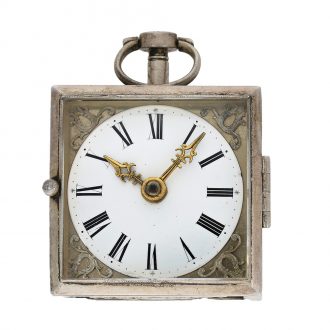
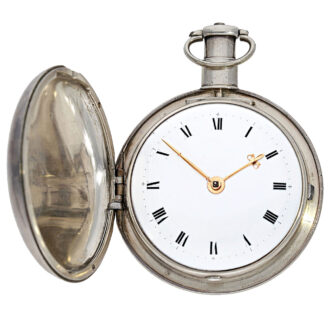
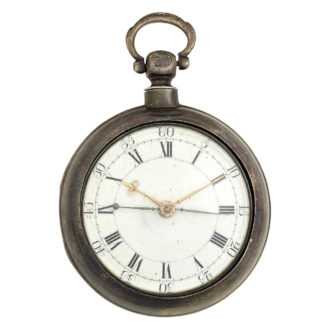
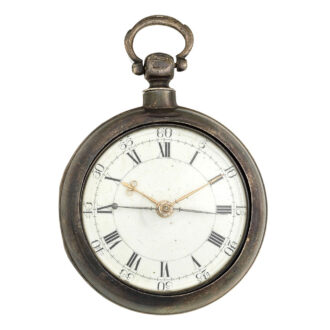
English temperature compensation pocket chronometer Circa 1803
- Kenmerk
- AA0175
- Diameter
- 56 mm
- Estimate
- € 4.500 - 10.000
- Price sold
- -
Silver chronometer with spring detent escapement
–
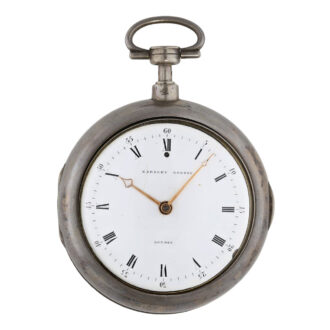
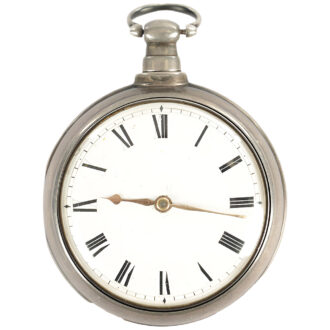
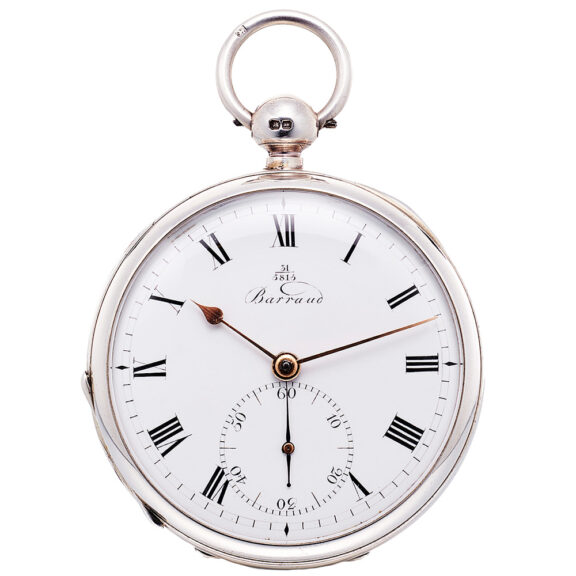
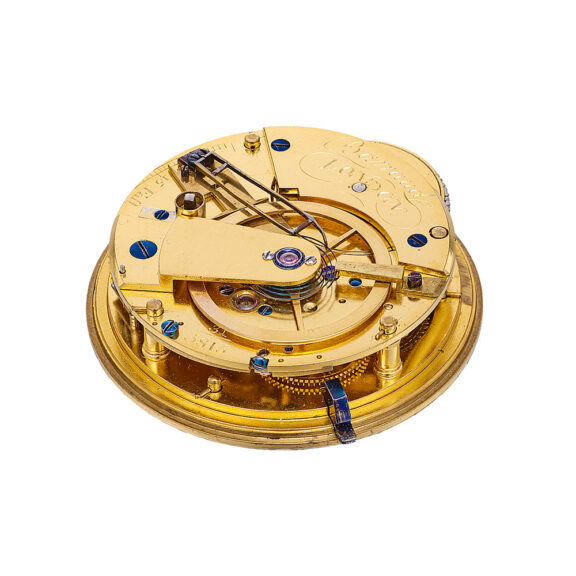
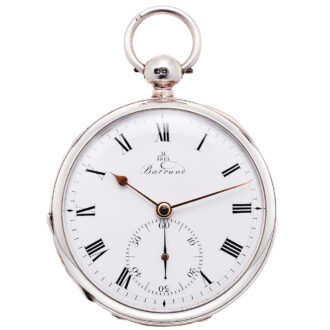
An English key-winding pocket watch by Thomas Earnshaw with open-face, sugar-tongs temperature compensation, and spring detent escapement from Barrauds Earnshaw Series, circa 1800-1805.
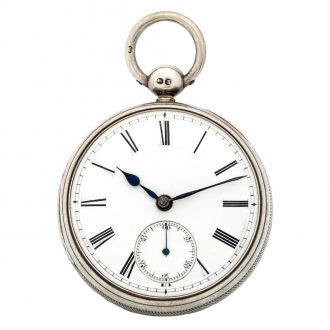
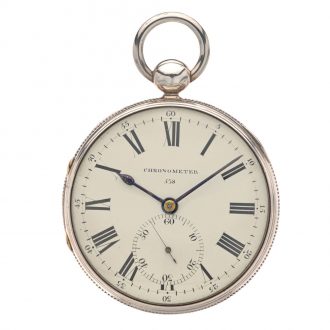
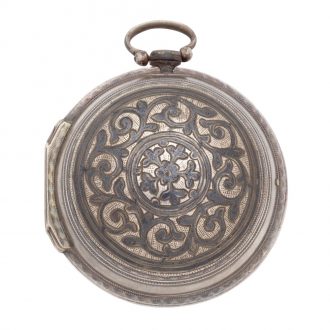
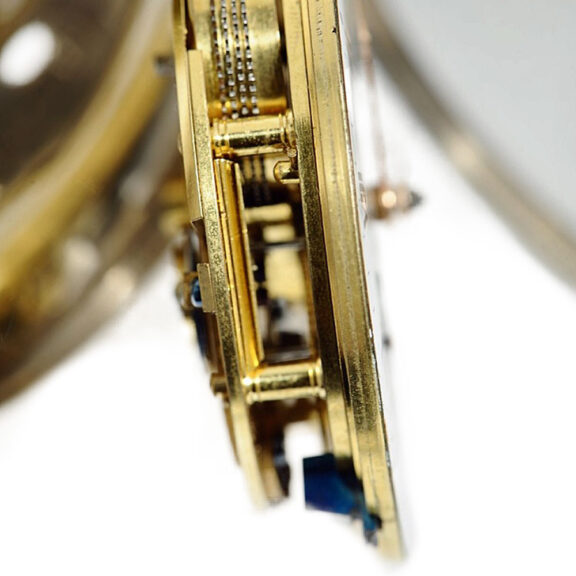
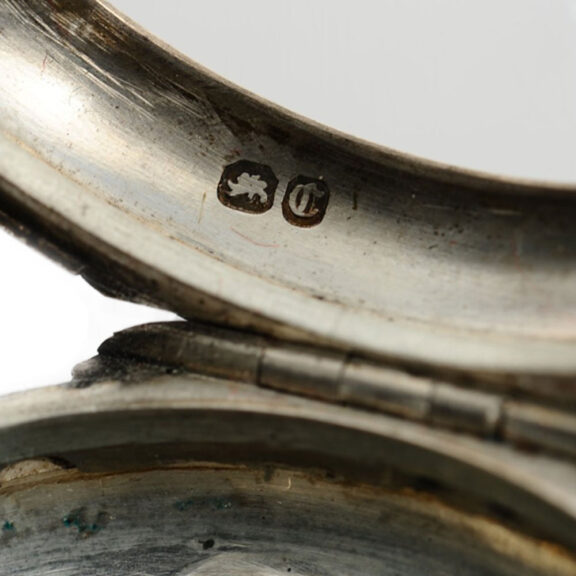
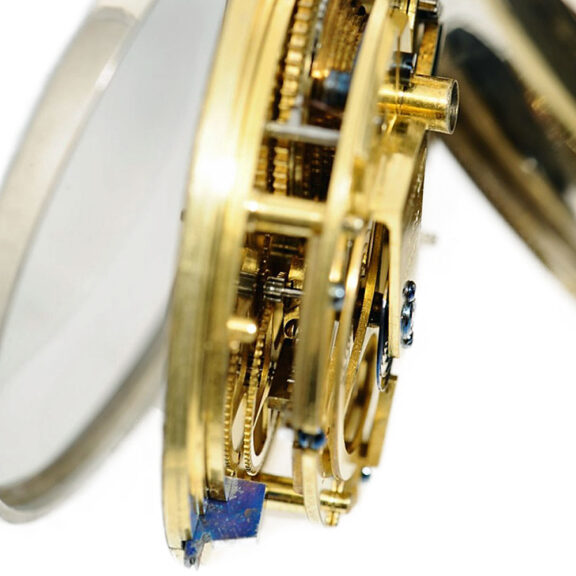
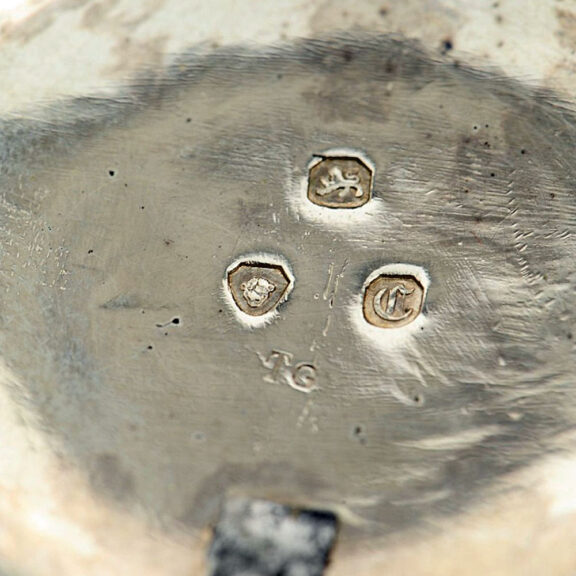
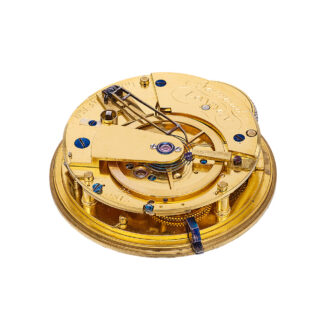
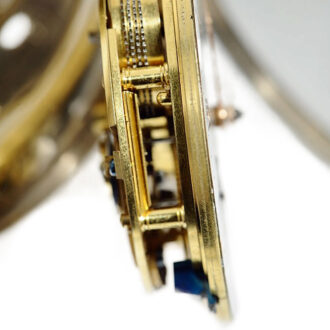
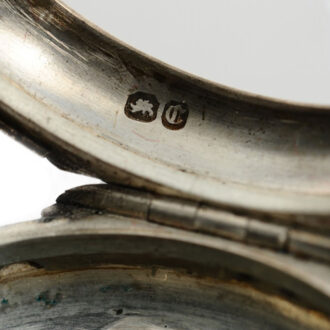
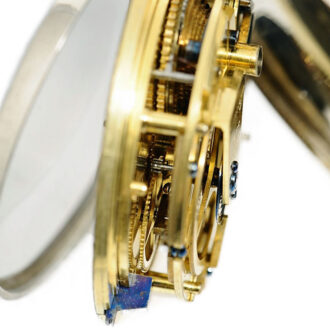
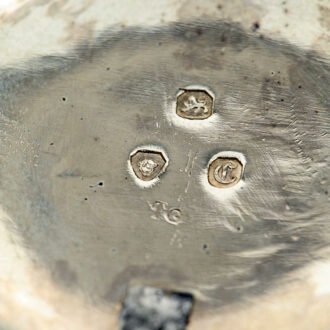
Silver, polished, à goutte case. Signed and numbered enamel dial with radial Roman hours, auxiliary seconds, and gold spade hands. Full plate, gilded brass movement with fusee and chain, spring detent escapement (Earnshaw-type), monometallic balance (gilded brass), blued steel flat hairspring, and bimetallic temperature sugar-tong compensation. Dial and movement signed.
–
Diameter: 56mm
–
Signed: Barraud London
–
The “sugar-tong compensation” was an invention of Thomas Earnshaw.
Although Thomas Earnshaw (1749-1829) made pocket watches with bimetallic balances and free-sprung helical springs, he equally often turned them out with an uncut flat monometallic balance, flat hairspring, regulator and compensation curb. This latter is a curious arrangement with two bimetallic arms, one pin on each end. Instead of sliding along the balance spring, the gap between the two pins widened in cold weather and closed in hot, which has the same effect. Earnshaw’s curb is usually known as a “sugar-tong compensation” due to its pincer-like appearance and action. It is thought that these watches were for clients who needed a watch that could withstand robust use rather than watches with heavier bimetallic balances that could easily break the balance pivots if subjected to shock.
–
This invention must date from circa 1795. According to Cedric Jagger (1920-?), English horologist (Former Keeper of the Clockmakers’ Museum in Guildhall London), the pocket chronometers of this type, with “sugar-tong compensation” signed “Barraud”, were in fact produced by Thomas Earnshaw and sold by Paul Philipp Barraud (1750-1820). They are today referred to as being of the “Earnshaw Series”. Very few survived; seven of them are known (see list below). Several of Earnshaw’s movements (with “sugar-tong compensation”) were left in “gray” by Thomas Earnshaw and subsequently finished, cased and sold by his son, Thomas Earnshaw Jr., in the 1820s-1830s. We also know from the very late-18th century and/or early-19th century, some chronometers with “sugar-tong compensation” made, signed and/or retailed by Robert Best (a foreman in the Earnshaw’s workshop), James Mc Cabe (1748-1811) and Parkinson & Frodsham, the house founded in 1801 by William Parkinson († c.1842) and William James Frodsham (1779-1850). John Roger Arnold (1769-1843) used circa 1810 a kind of compensation which is probably inspired by Earnshaw’s, who was the great competitor of his father, John Arnold Barraud, Paul Philip, London
Signed: Barraud, London
Share this page: