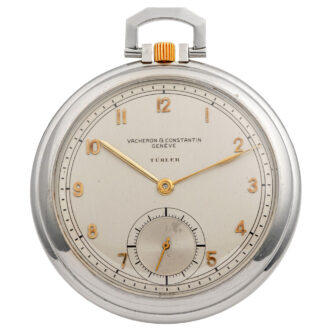
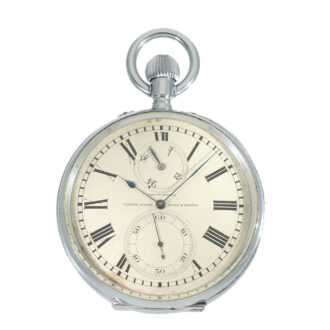
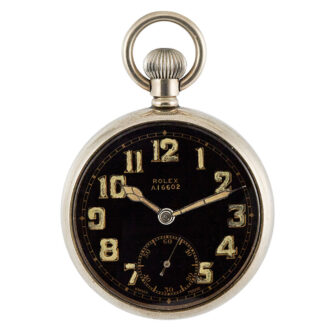
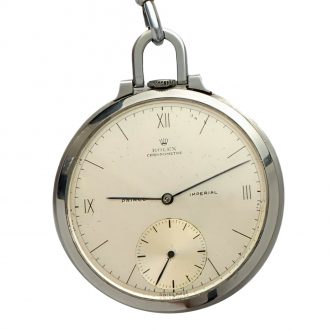
Fine Swiss stainless steel keyless chronograph Circa 1930
- Kenmerk
- BB1175
- Diameter
- 49 mm
- Estimate
- € 800 - 1.750
- Price sold
- € 1.000
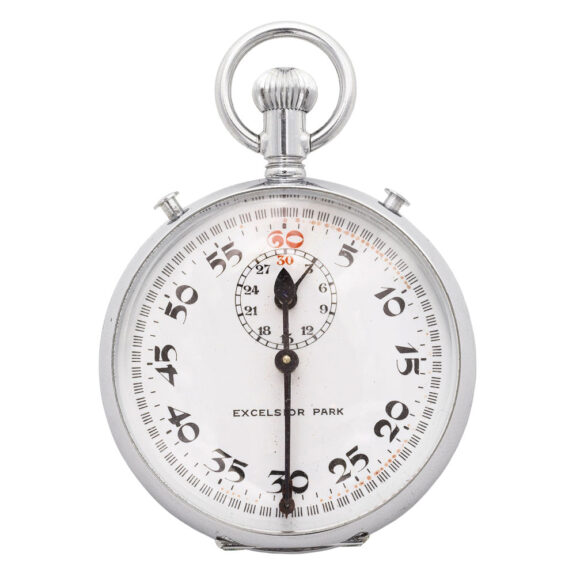
Stainless steel inking chronograph
–
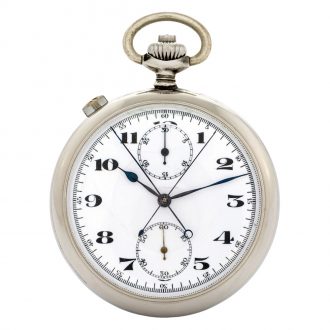
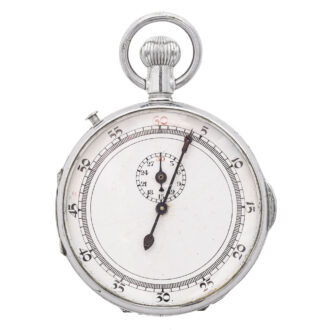
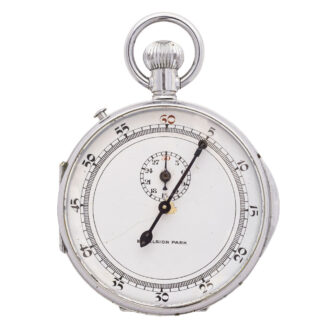
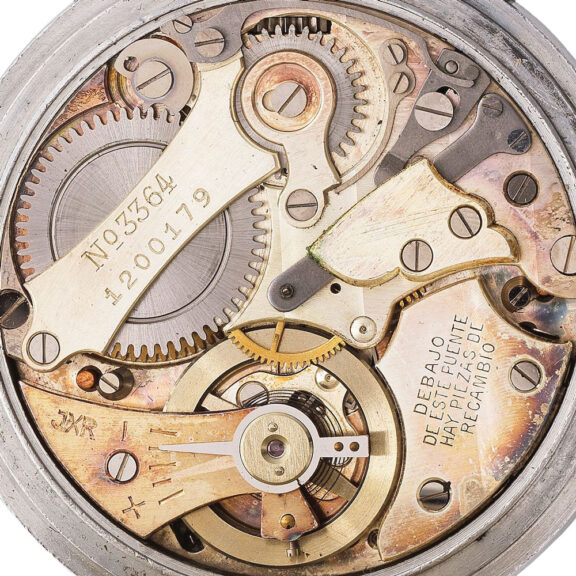
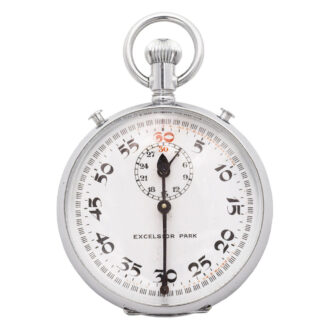
A Swiss stainless steel open faced inking chronograph made by Excelsior Park in Saint-Imier, circa 1930. Jewelled keyless wind movement. White enamel dial with Arabic second markers, inner second track and outer fifth of a second divisions, a 30 minute register at 12 o’clock and blued steel inking hands. The polished hinged case with the winding crown and chronograph pusher at 12 and inking function to the band at the 55 marker. Dial signed, movement signed and numbered.
–
A Swiss stainless steel open faced inking chronograph made by Excelsior Park in Saint-Imier, circa 1930. Jewelled keyless wind movement. White enamel dial with Arabic second markers, inner second track and outer fifth of a second divisions, a 30 minute register at 12 o’clock and blued steel inking hands. The polished hinged case with the winding crown and chronograph pusher at 12 and inking function to the band at the 55 marker. Dial signed, movement signed and numbered.
–
Diameter: 49 mm
–
Diameter: 49 mm
–
Signed: Excelsior Park
–
An unassuming municipality in the Bernese Jura in Switzerland, Saint-Imier is the home of many renowned Swiss watch brands. Among these companies are Moeris, Léonidas, Excelsior Park and Jules-Frederic Jeanneret, all of which are inextricably linked to the name Jeanneret.
–
Established in 1866 by Jules-Frederic Jeanneret, Excelsior Park was one of the leading companies in the field of stopwatches and chronographs.
–
In 1888, Jules-Frederic’s three sons took over the business, with the eldest, Albert, taking over as representative.
–
In 1891, the pocket watch chronograph was patented, which was developed in collaboration with Alfred Lugrin.
–
In 1894, the company changed its name to Jeanneret & Fils and began developing sports watches.
–
The name Excelsior was originally used for their chronometers, though in 1915, Jeanerette & Fils began using the brand name for repeater and chronograph watches as well. ‘Park’ was later added to unify everything under Excelsior and launch it in English speaking markets.
–
In 1918, the company name was changed to Les Fils de Jeanneret-Brehm, Excelsior Park.
–
In the early 1920s, under the direction of R.H. and E.D. Jeanneret, Excelsior Park focused specifically on chronometers and chronographs. In 1922, a wide range of stopwatches in 32 different models was launched, which were used in a variety of sports, including football, rugby, hockey, water polo, boxing, canoeing and motorsports.
–
The high precision Excelsior Park watches were used in a variety of situations, and by 1928, the company had become one of Switzerland’s leading chronometer and chronograph manufacturers. The product range was further expanded with decimal stopwatches and stopwatches that could measure to within 1/100th of a second using a hand that completed one rotation per second.
–
In the 1930s, chronographs for athletes became increasingly popular, and Excelsior Park began developing its own calibers. In 1938, the company seriously started to develop chronographs for wristwatches.
–
The success and numerous awards that Excelsior Park has won have not only demonstrated its reputation for using in-house calibers. Due to its high level of accuracy, the company also supplied chronograph movements to other companies, such as Gallet, Zenith, and Girard-Perregaux.
–
Excelsior Park further made movement for Swedish and Japanese military watches.
–
The company continued to make chronographs and chronometers until the 1970s, with the company still led by a descendant of the founder. However, Excelsior Park could not withstand the harsh conditions of the quartz crisis of the 1970s and went bankrupt in 1984.
–
An unassuming municipality in the Bernese Jura in Switzerland, Saint-Imier is the home of many renowned Swiss watch brands. Among these companies are Moeris, Léonidas, Excelsior Park and Jules-Frederic Jeanneret, all of which are inextricably linked to the name Jeanneret.
–
Established in 1866 by Jules-Frederic Jeanneret, Excelsior Park was one of the leading companies in the field of stopwatches and chronographs.
–
In 1888, Jules-Frederic’s three sons took over the business, with the eldest, Albert, taking over as representative.
–
In 1891, the pocket watch chronograph was patented, which was developed in collaboration with Alfred Lugrin.
–
In 1894, the company changed its name to Jeanneret & Fils and began developing sports watches.
–
The name Excelsior was originally used for their chronometers, though in 1915, Jeanerette & Fils began using the brand name for repeater and chronograph watches as well. ‘Park’ was later added to unify everything under Excelsior and launch it in English speaking markets.
–
In 1918, the company name was changed to Les Fils de Jeanneret-Brehm, Excelsior Park.
–
In the early 1920s, under the direction of R.H. and E.D. Jeanneret, Excelsior Park focused specifically on chronometers and chronographs. In 1922, a wide range of stopwatches in 32 different models was launched, which were used in a variety of sports, including football, rugby, hockey, water polo, boxing, canoeing and motorsports.
–
The high precision Excelsior Park watches were used in a variety of situations, and by 1928, the company had become one of Switzerland’s leading chronometer and chronograph manufacturers. The product range was further expanded with decimal stopwatches and stopwatches that could measure to within 1/100th of a second using a hand that completed one rotation per second.
–
In the 1930s, chronographs for athletes became increasingly popular, and Excelsior Park began developing its own calibers. In 1938, the company seriously started to develop chronographs for wristwatches.
–
The success and numerous awards that Excelsior Park has won have not only demonstrated its reputation for using in-house calibers. Due to its high level of accuracy, the company also supplied chronograph movements to other companies, such as Gallet, Zenith, and Girard-Perregaux.
–
Excelsior Park further made movement for Swedish and Japanese military watches.
–
The company continued to make chronographs and chronometers until the 1970s, with the company still led by a descendant of the founder. However, Excelsior Park could not withstand the harsh conditions of the quartz crisis of the 1970s and went bankrupt in 1984.
Signed: Excelsior Park
Share this page: