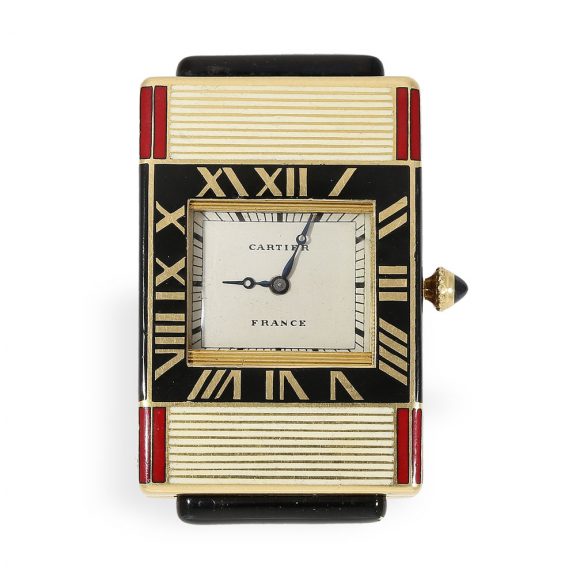
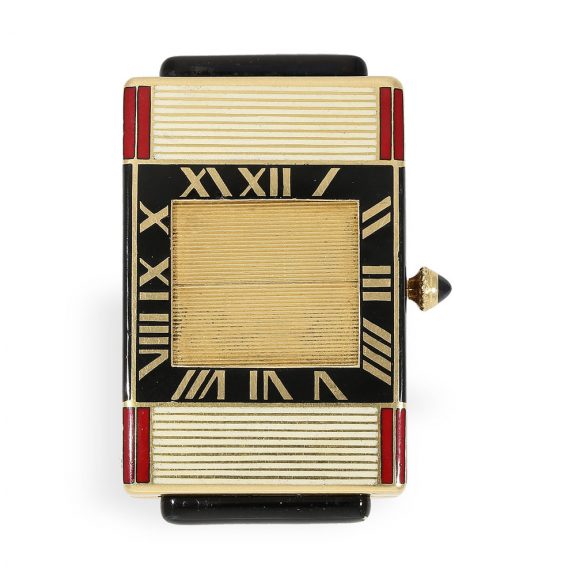
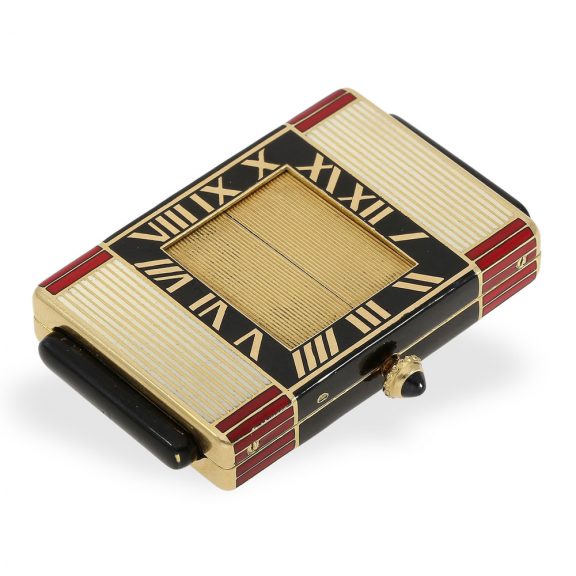
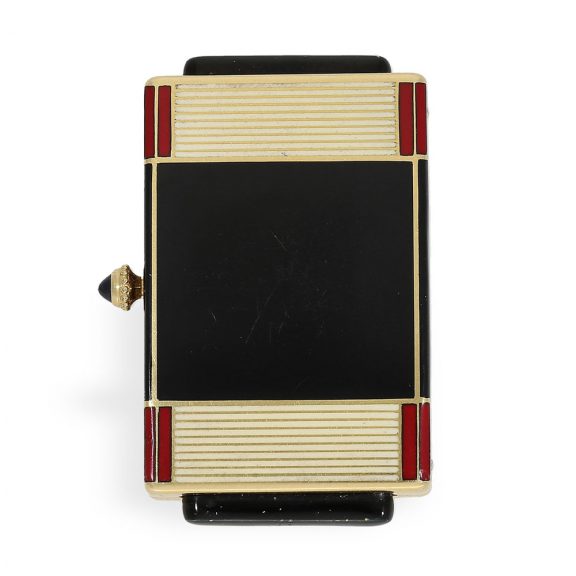
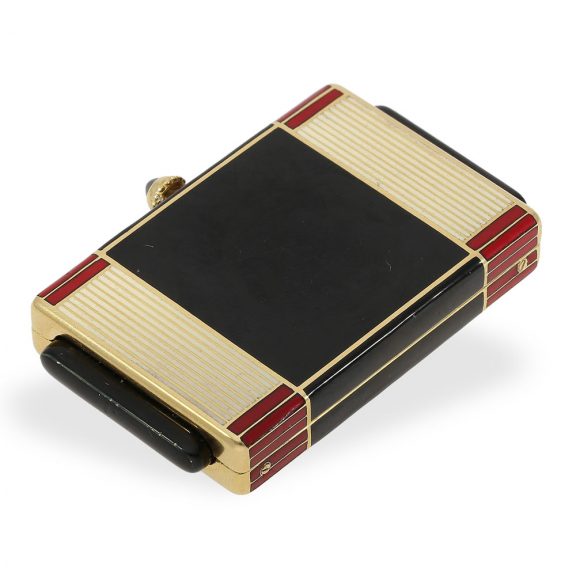
Swiss 18 carat gold Art Deco guillotine pocket watch Circa 1929
- Kenmerk
- HC0714
- Diameter
- -
- Estimate
- € 10.000 - 20.000
- Price sold
- € 19.050
Red, black and white enamelled gold travel clock
–
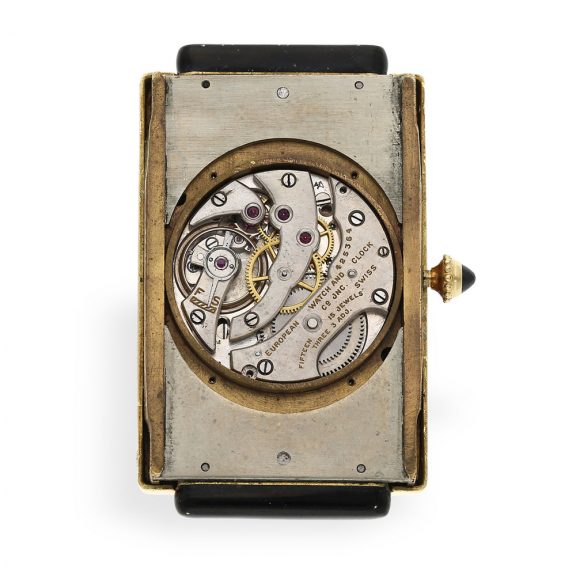
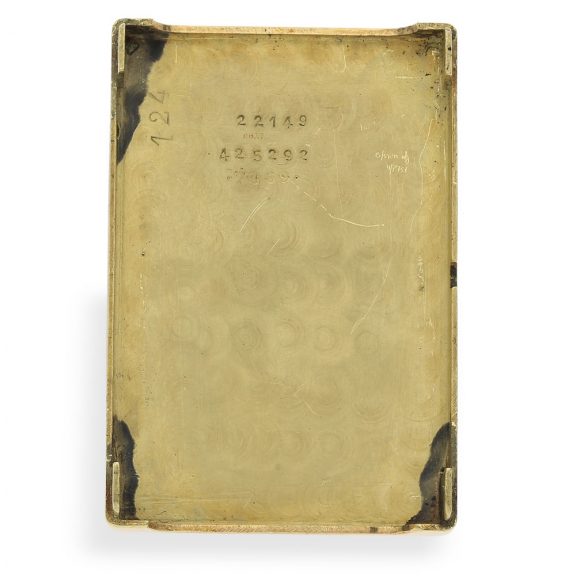
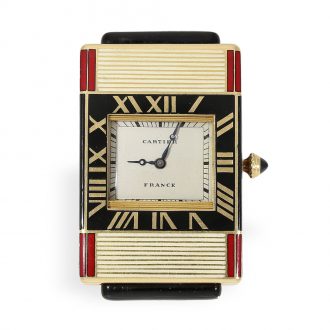
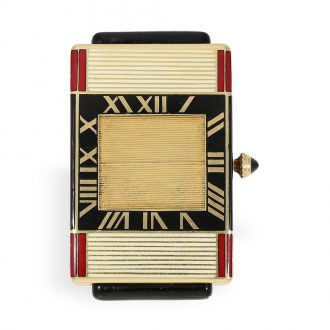
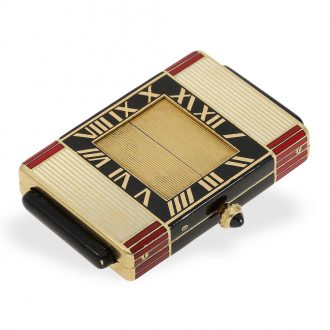
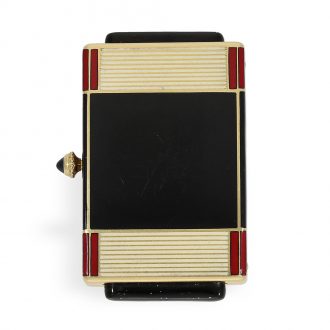
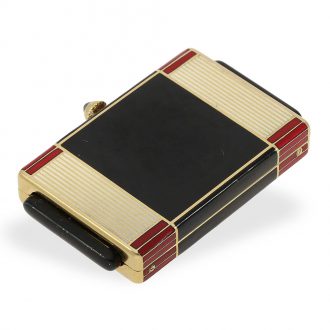
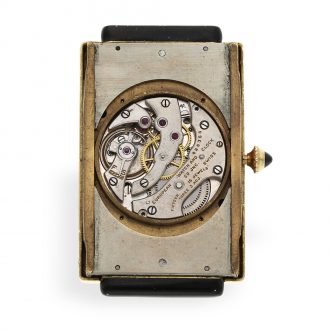
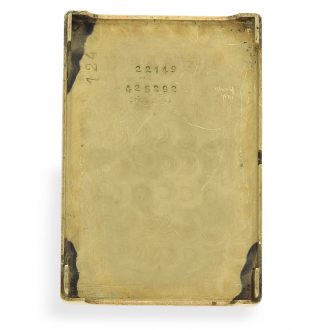
A travel clock from the Art Deco period, a guillotine pocket watch made for Cartier by the European Watch & Clock Company Inc., in Sentier, Switzeland, circa 1929. The numbered full hunter case of this watch is crafted from 18 Carat gold, is red, black and white enamelled and has pushers for the shutters at the top and bottom. The silvered dial has an outer ring with Roman hour numerals (outside) and Breguet steel hands. The numbered movement has fifteen jewels, three adjustments and a lever escapement.
Dial and movement signed.
–
Dimensions: 28 x 47 mm
–
Weight: 66 g
–
Signed: Cartier, France (dial); European Watch and Clock C0 Inc.
–
A matching watch was part of the special auction ‘The Magical Art of Cartier’ Geneva 1996 and sold for a hammer price of CHF 16.000.
–
The European Watch and Clock Co. Inc.
The European Watch and Clock Co. Inc. was established in the 1920’s as a collaboration between Cartier and Edmond Jaeger of the LeCoultre & Cie watch factory. Cartier worked with various watch movement manufacturers, including Vacheron Constantin, Audemars Piguet and Movado, but many of their top products featured movements from the European Watch & Clock Company, which were manufactured at Jaeger-LeCoultre’s Le Sentier factory in Switzerland. The watch cases were made in Paris, Geneva, London and New York, with each branch responsible for its production. However, the French branch also exported its watches to other stores. In 1930, Jaeger partnered with Jacques-David LeCoultre to form Jaeger-LeCoultre. In the 1920’s, Henri Rodanet, the technical director of the Etablissements Ed. Jaeger, developed the Calibre Duoplan, one of the smallest movements with high accuracy.
Signed: Cartier, France (dial); European Watch and Clock C0 Inc. (movement)
Share this page: