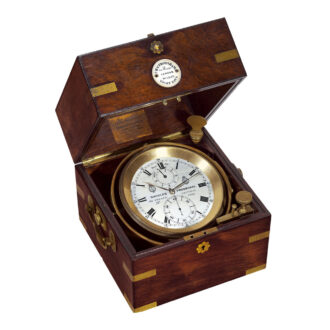
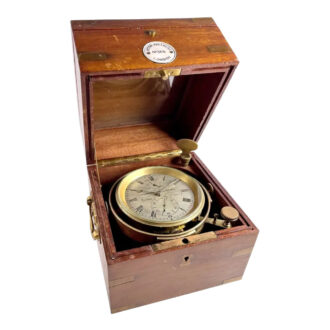
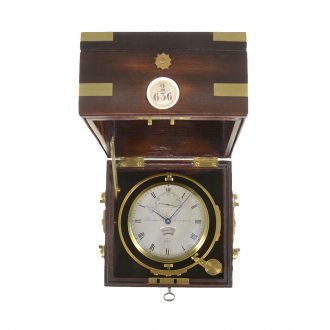
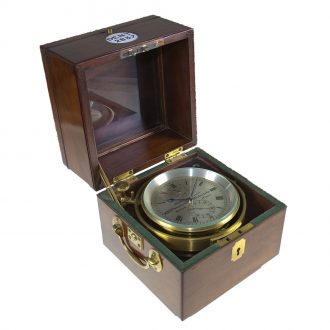
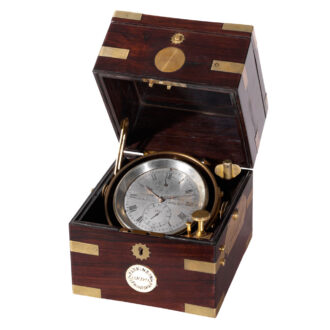
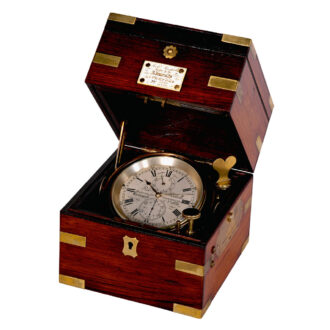
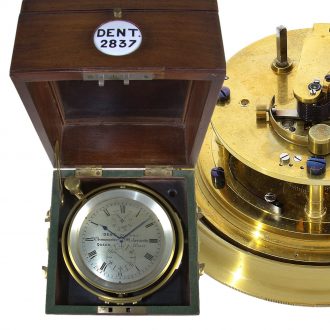
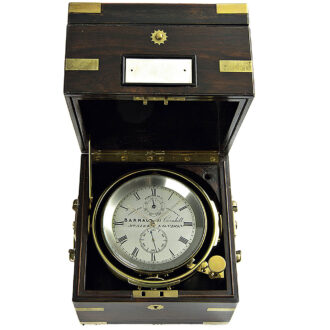
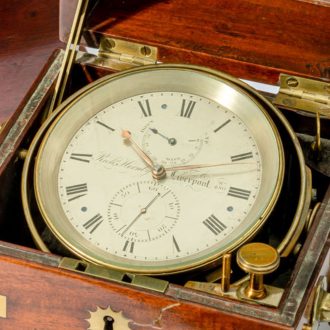
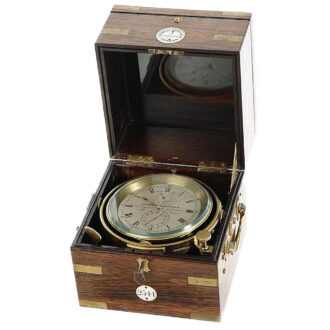
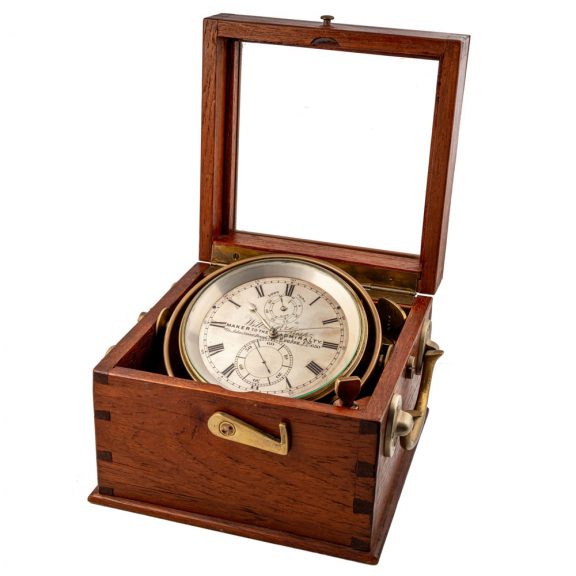
English brass 56 hour going deck chronometer Circa 1860
- Kenmerk
- TA4976
- Diameter
- 125 mm
- Estimate
- € 750 - 2.000
- Price sold
- € 900
Marine chronometer by William B. Crisp
–
An English brass key wind 56 hour going marine chronometer with spring footed detent, circa 1860. Silver dial with radial Roman hour numerals, outer minute track, outermost Arabic five minute numerals, subsidiary seconds at 6 o’clock, power reserve indication below 12 and spade hands. The bowl mounted on a gimbal in a glazed wooden box. Movement with spring detent escapement, fusee and chain, cut bimetallic compensated balance with poising screws and blued steel free sprung cylindrical hairspring. Accompanied by a crank winding and hand setting brass key (numbered 5134). Dial and movement signed.
–
Diameter: 125 mm
–
Dimensions box: 140 x 192 x 189 mm
–
Signed: William B. Crisp London
–
Accompanied by a mahogany box and brass key.
–
William Baker Crisp (1825-1895), Maker to the Admiralty
Born in 1825, William B. Crisp was recorded working as a clockmaker in London at 81 St. John Street, Clerkenwell, from circa 1858 until 1865, before he moved to 174 St. John Street and finally to 133 Liverpool Road. He worked for the great chronometer maker Robert Molyneux and was a founding member of the British Horological Institute in 1858, becoming a well-known commentator on chronometer matters. He was declared bankrupt in 1879. In 1895, Crisp died in the Clockmakers’ Asylum in New Southgate. His son, named after him, was also a known maker.
Signed: William B. Crisp London
Share this page: