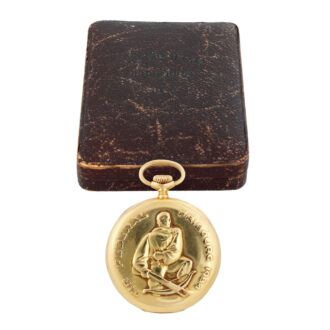
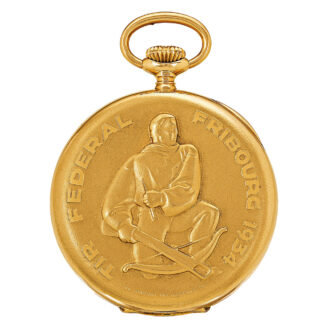
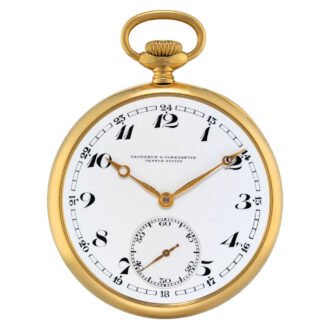
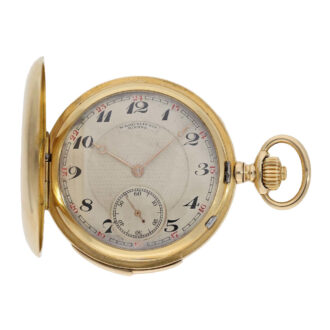
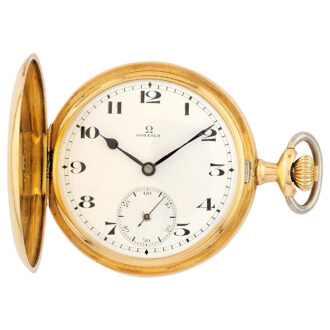
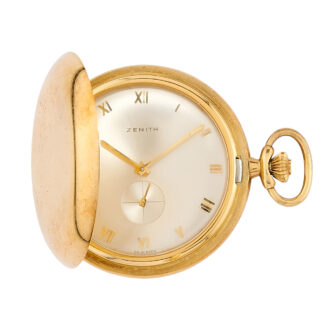
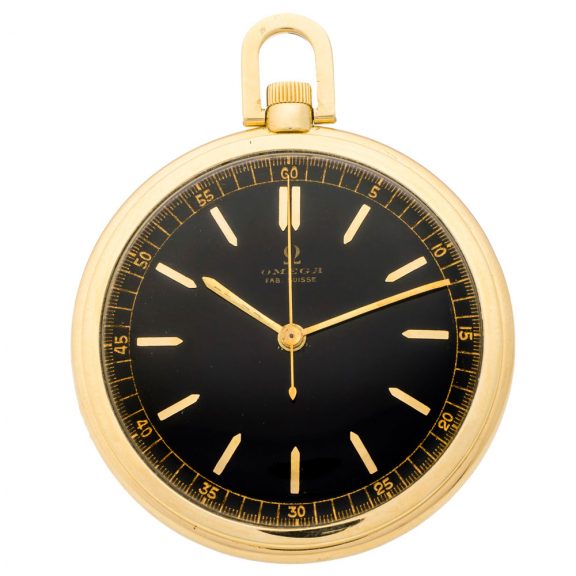
Swiss 18K gold centre seconds keyless pocket watch Circa 1934
- Kenmerk
- TA4803
- Diameter
- 44 mm
- Estimate
- € 2.500 - 5.000
- Price sold
- € 3.500
Gold watch with black dial
–
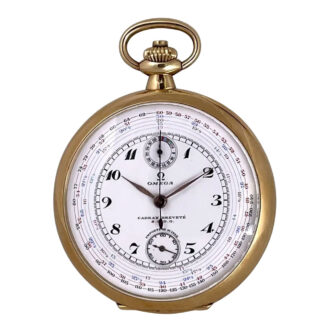
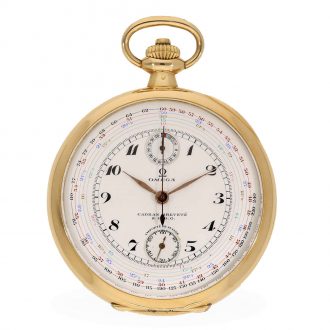
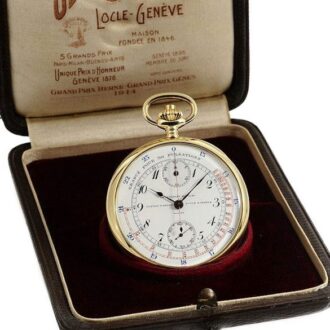
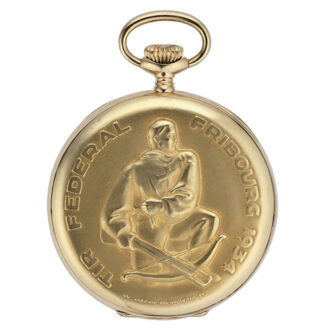
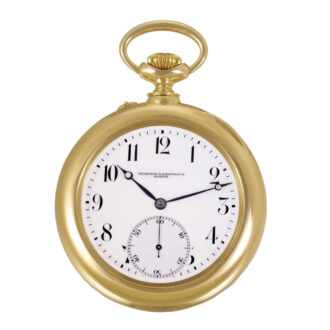
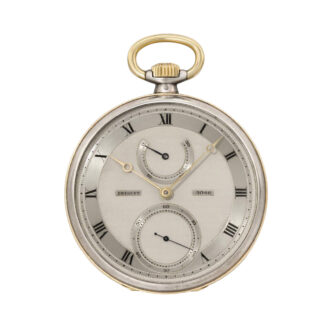
A fine and rare Swiss, 18 carat yellow gold centre seconds keyless pocket watch, circa 1934. A solid, polished case, black dial with applied gold baton indexes, outer minutes/seconds divisions with Arabic five minute markers and yellow gold baton hands. Rhodium plated movement, 15 jewels, monometallic balance, straight line lever escapement, self compensating flat balance spring, shock absorber, index regulator. Dial, case and movement signed.
–
A fine and rare Swiss, 18 carat yellow gold centre seconds keyless pocket watch, circa 1934. A solid, polished case, black dial with applied gold baton indexes, outer minutes/seconds divisions with Arabic five minute markers and yellow gold baton hands. Rhodium plated movement, 15 jewels, monometallic balance, straight line lever escapement, self compensating flat balance spring, shock absorber, index regulator. Dial, case and movement signed.
–
Diameter: 44 mm
–
Thickness: 7 mm
–
Signed: Omega Swiss
–
Omega. In 1848, a young watchmaker named Louis Brandt opened a small workshop in the Swiss village of La Chaux-de-Fonds. In the family villa, it was here that the 23 year old Brandt began the company that was to become Omega. Brandt was passionate about precision and he set about developing the most accurate watches he could. Within a few years, his reputation for high quality watches was established within Switzerland and shortly after, throughout Europe.
–
After Louis Brandt’s death on November 6th, 1879, his two sons, Louis-Paul and César, took over the family business, inspired by their father’s passion for watchmaking and precision. Little did they know, they were destined to change the industry forever. Under the new name Louis Brandt & Fils, in 1880, the growing company moved from la Chaux-de-Fonds to larger premises in the bustling town of Biel/Bienne. The company first moved to 119 Route de Boujean and then to 96 Rue Jakob Stämpfli, the address that remains the home of Omega.
–
In 1885, the Brandt brothers launched their first series produced caliber, the Labrador. Boasting many new technological advances and superb timing results, the new movement was of excellent quality for the time. This strong beginning provided the base for future innovations such as the 19 ligne Omega caliber that would revolutionise watchmaking ten years later. The success of that movement was so great that the brothers changed the name of their company to Omega Watch Co. By 1903, Omega had become the largest manufacturer of finished watches and had taken on the role of research and development facility.
Diameter: 44 mm
–
Thickness: 7 mm
–
Signed: Omega Swiss
–
Omega. In 1848, a young watchmaker named Louis Brandt opened a small workshop in the Swiss village of La Chaux-de-Fonds. In the family villa, it was here that the 23 year old Brandt began the company that was to become Omega. Brandt was passionate about precision and he set about developing the most accurate watches he could. Within a few years, his reputation for high quality watches was established within Switzerland and shortly after, throughout Europe.
–
After Louis Brandt’s death on November 6th, 1879, his two sons, Louis-Paul and César, took over the family business, inspired by their father’s passion for watchmaking and precision. Little did they know, they were destined to change the industry forever. Under the new name Louis Brandt & Fils, in 1880, the growing company moved from la Chaux-de-Fonds to larger premises in the bustling town of Biel/Bienne. The company first moved to 119 Route de Boujean and then to 96 Rue Jakob Stämpfli, the address that remains the home of Omega.
–
In 1885, the Brandt brothers launched their first series produced caliber, the Labrador. Boasting many new technological advances and superb timing results, the new movement was of excellent quality for the time. This strong beginning provided the base for future innovations such as the 19 ligne Omega caliber that would revolutionise watchmaking ten years later. The success of that movement was so great that the brothers changed the name of their company to Omega Watch Co. By 1903, Omega had become the largest manufacturer of finished watches and had taken on the role of research and development facility.
Signed: Omega Swiss
Share this page: