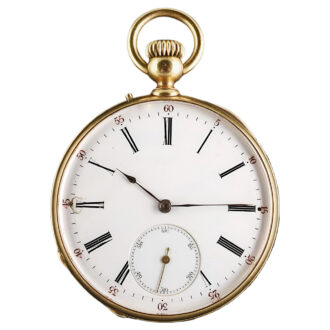
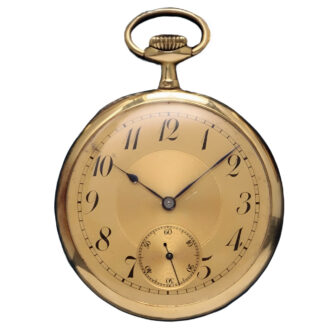
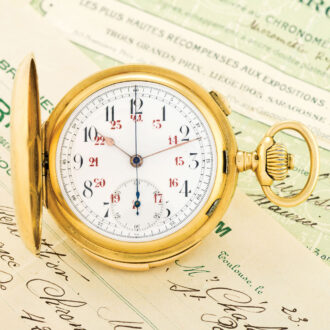
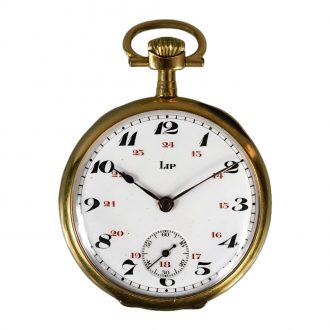
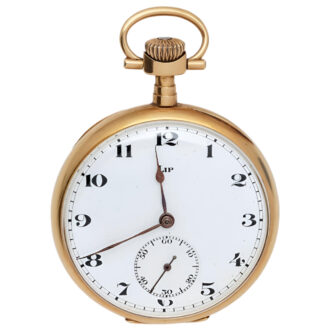
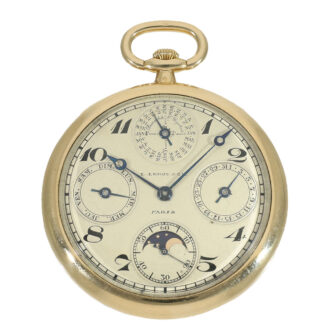
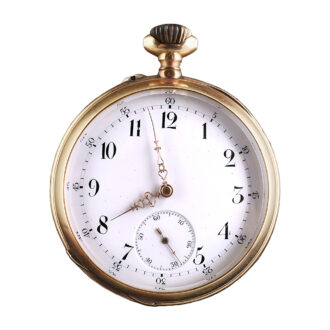
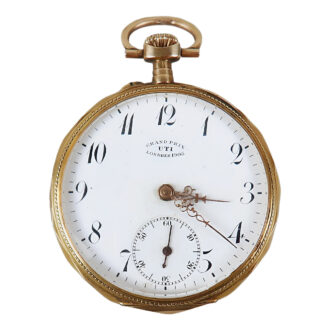
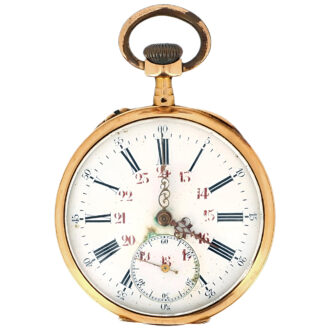
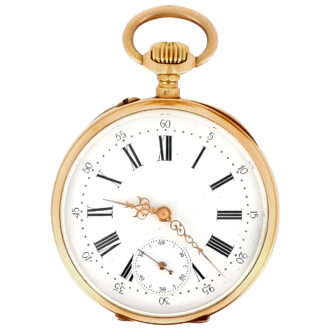
French gold lever with extravagant special dial Circa 1910
- Kenmerk
- CT2063
- Diameter
- 49 mm
- Estimate
- € 2.000 - 6.000
- Price sold
- € 1.850
Gold unique knife edged watch
–
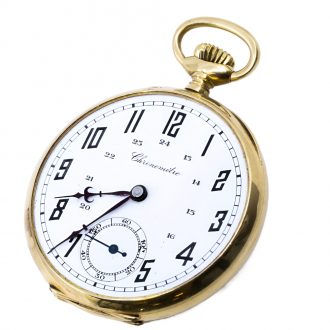
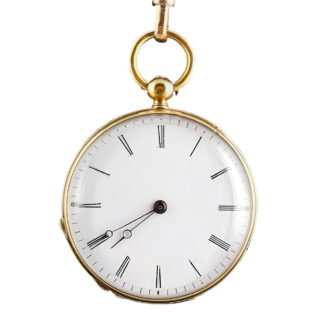
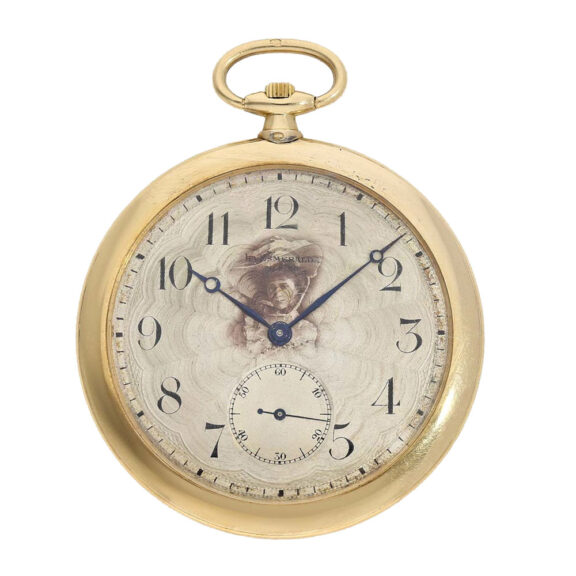
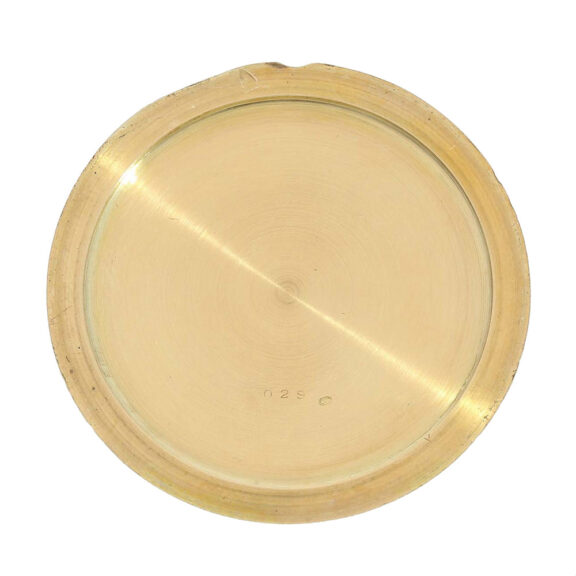
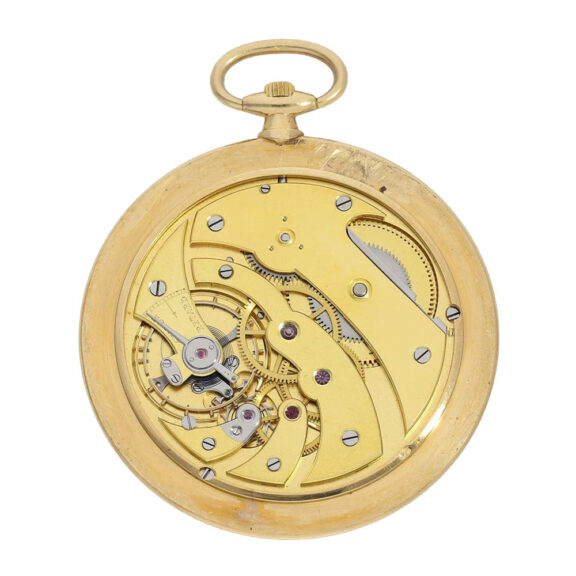
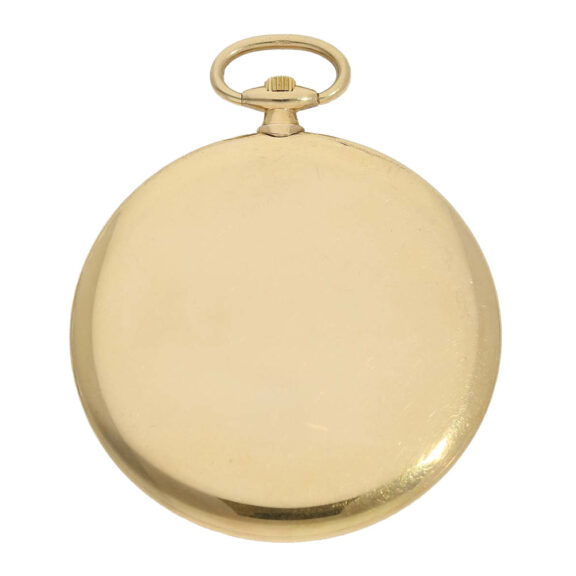
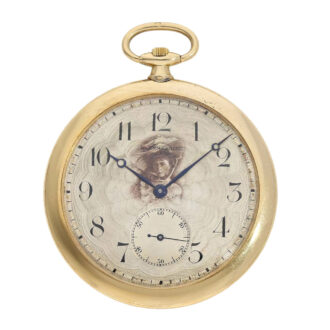
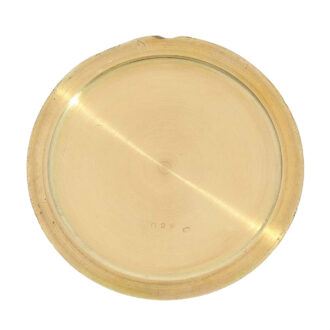
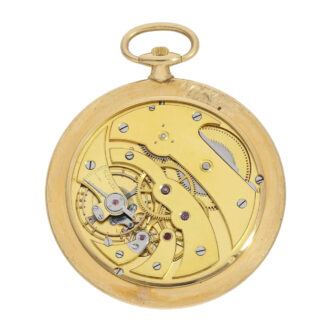
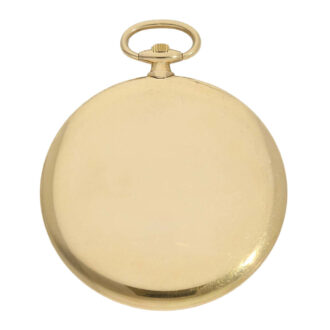
A unique French 18 carat gold open faced pocket watch with extravagant special dial in Cartier’s montre couteau style made for the noble jeweller Hauser Zivy & Cie. in Mexico, circa 1910. A gilt extra flat precision lever movement in top quality. An extremely thin but solid case with a knife edge, the typical Cartier case form. A unique, special silver dial, engine turned and with a rainbow-like surface refinement, whereby, depending on the light incidence, the colour changes from green to rose tones, a further portrait of a lady with a hat, the image of a Mexican woman, reading the words “La Esmeralda Mexico”, subsidiary seconds at 6 o’clock and blued Breguet hands.
–
Diameter: 49 mm
–
Weight: 57 g
–
Signed: No name
–
Although not signed by Cartier, this watch is, in all parts, a typical Cartier watch. Presumably only due to the fact that it bears the brand name “La Esmeralda” of the Mexican luxury jeweller Hauser Zivy & Cie. and its very unique special dial, it is not additionally signed by Cartier.
–
The dial is in fantastic and completely original condition, a rarity.
–
Hauser Zivy & Cie., based in Mexico City, sold the best European brands such as Cartier, Breguet and Vacheron & Constantin, and was one of the top ten jewellers in the world around 1900, along with Boucheron, Mauboussin, Tiffany, La Cloche, Cartier, Van Cleef & Arpels and Gübelin.
–
Couteau is the term used by Cartier in their manufacturing records to describe the type of ultra thin watches with knife edged cases, open faced or hunting cased models. These watches, with thicknesses of less than 4 mm for the open faced and less than 5 mm for the hunting cased version, are among the thinnest mechanical watches ever produced.
–
For these thin watches from the first half of the 20th century, Cartier used movements from Edmund Jaeger (Jaeger-LeCoultre), who had just invented a movement only 2 mm thick. In the 1920s, Cartier and Jaeger formed a joint venture, the European Watch & Clock Co., whose signature can be found on many Cartier movements. Movements were further sourced from Vacheron & Constantin, who, from 1940, utilized a movement which was only 1.31 mm thick.
Signed: La Esmeralda Mexico
Share this page: