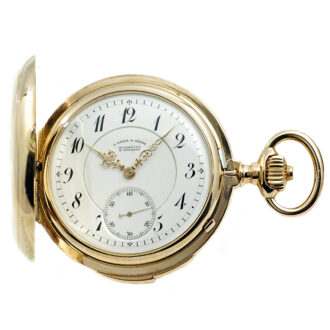
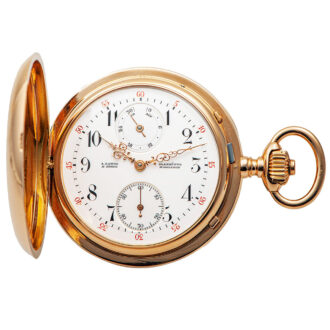
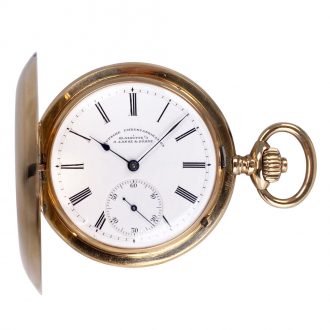
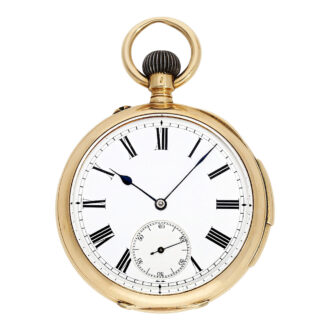
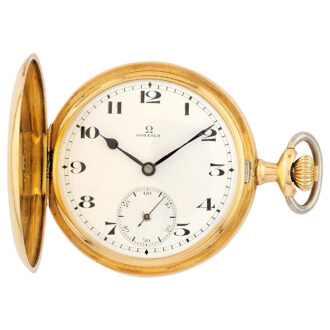
German 18 carat gold hunter case pocket watch Circa 1898
- Kenmerk
- HC2178
- Diameter
- 50 mm
- Estimate
- € 7.000 - 14.000
- Price sold
- € 7.450
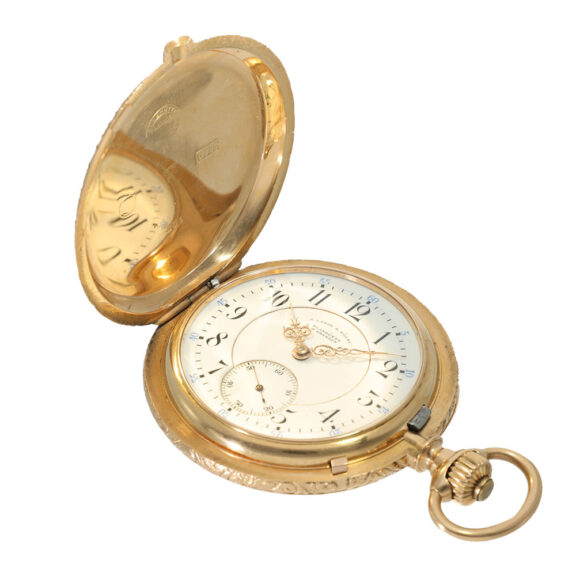
Significant pocket watch with a case ornately designed by Graff
–
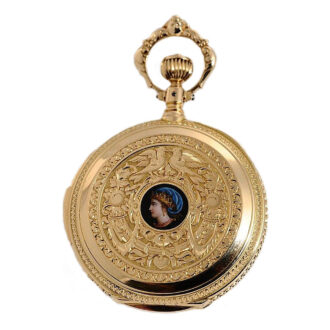
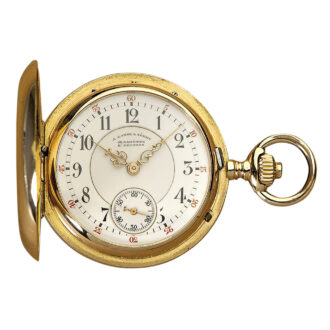
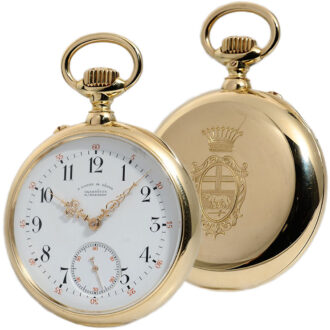
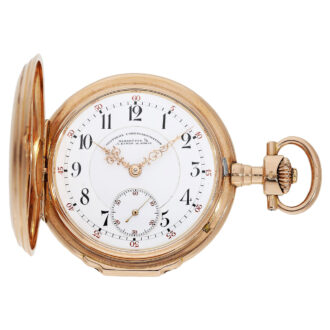
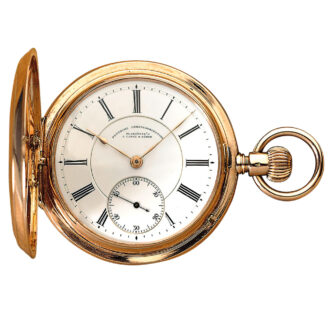
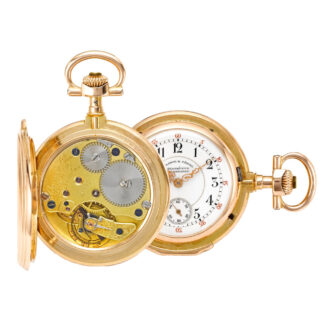
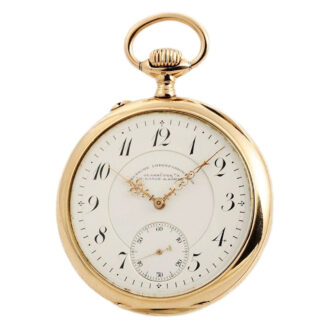
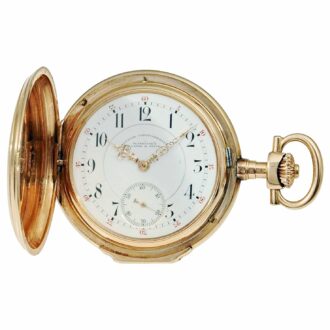
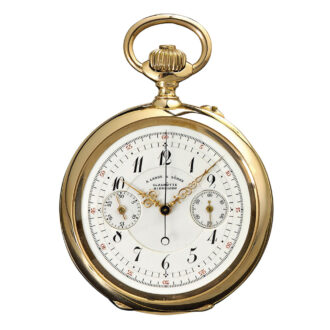
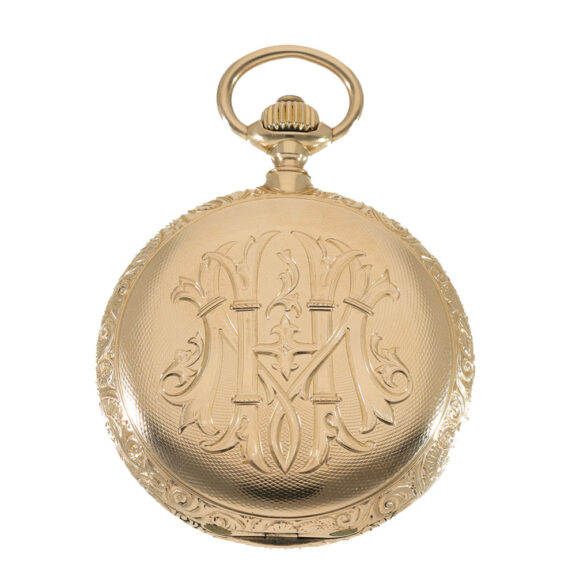
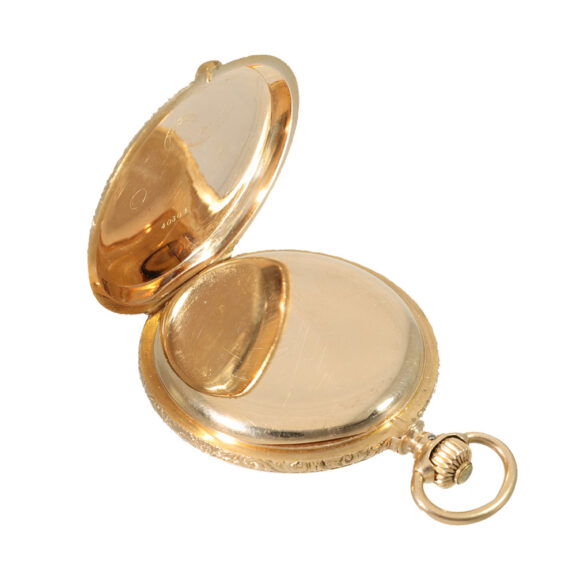
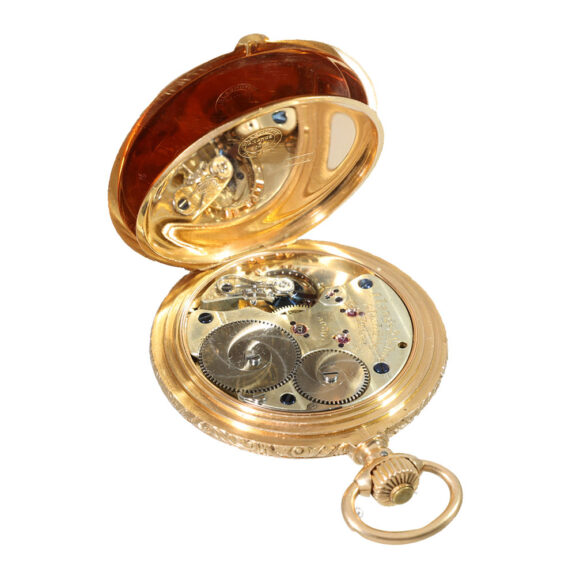
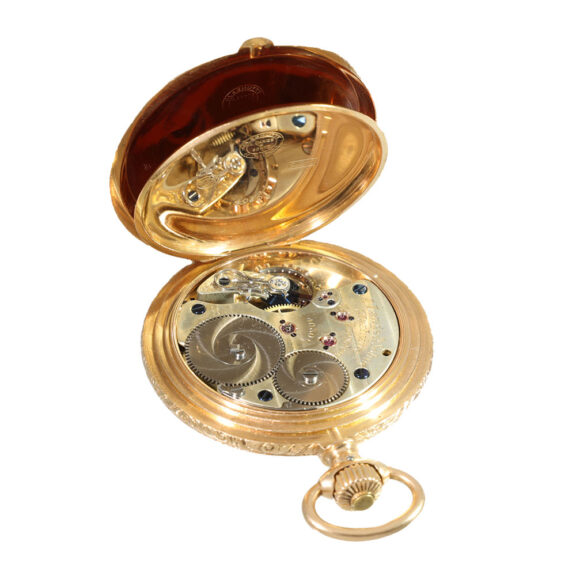
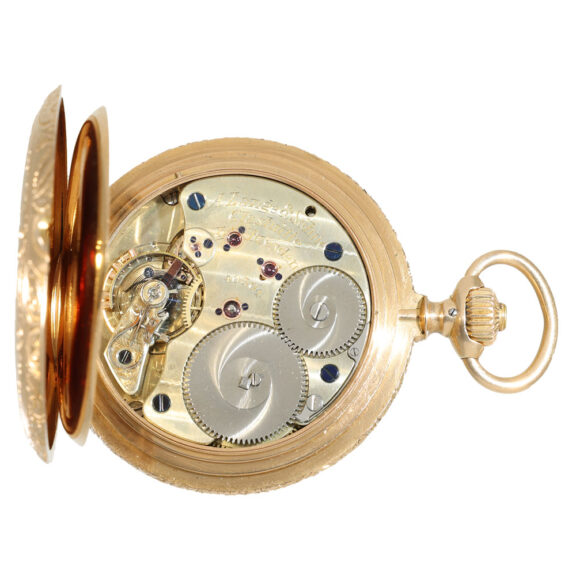
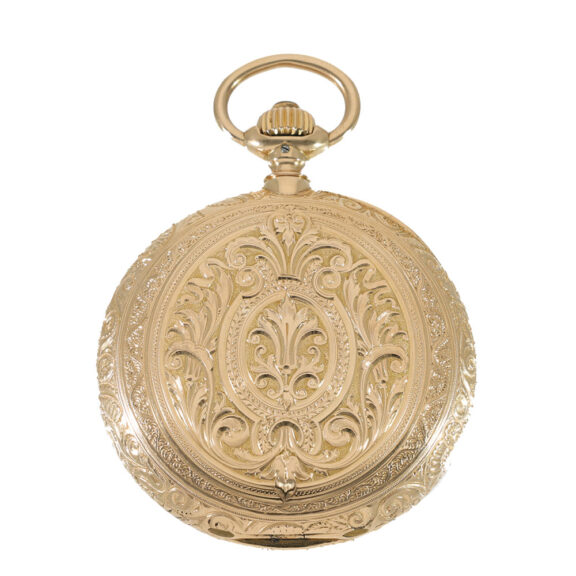
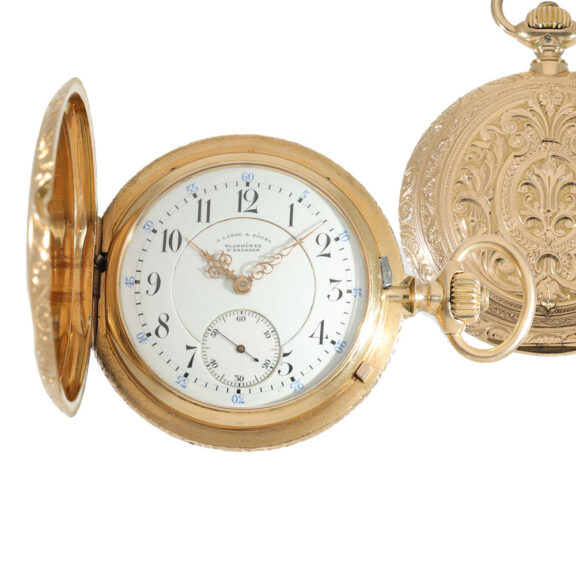
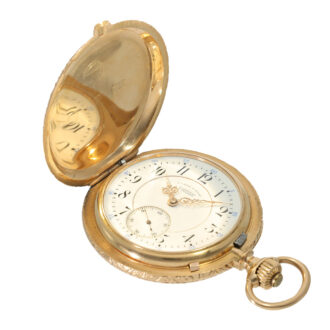
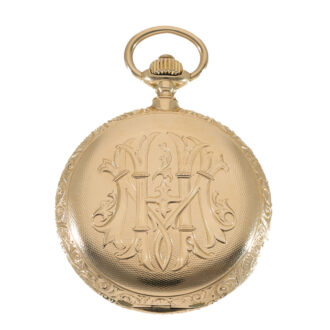
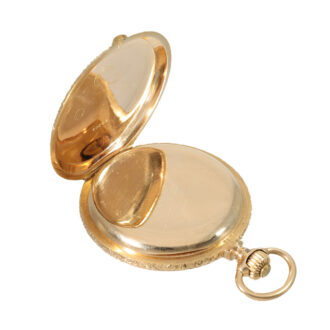
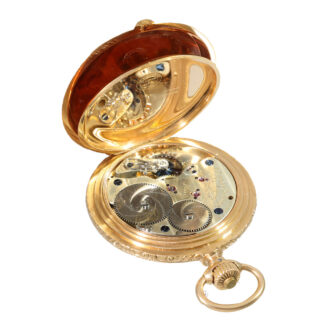
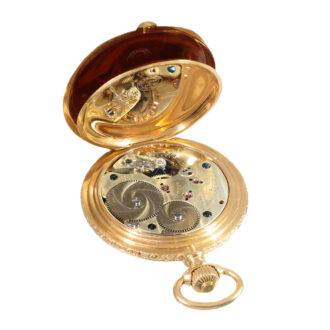
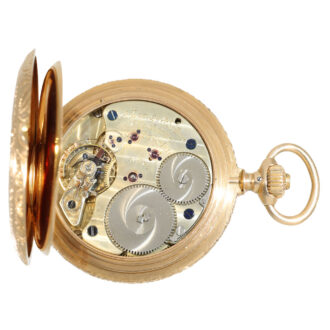
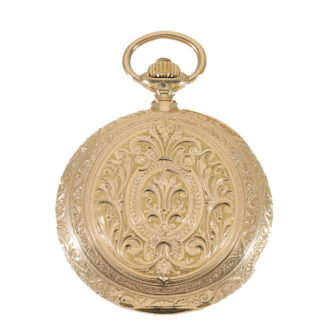
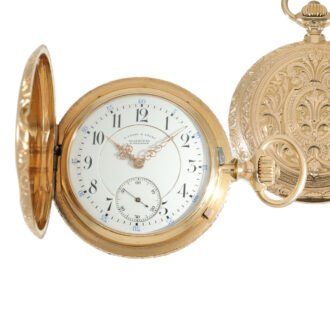
A significant, ornately designed by Graff, quality 1A hunter cased pocket watch, made by A. Lange & Söhne in Glashütte, Germany, circa 1898. This watch features an à goutte (waterdrop shaped) 18 carat gold numbered case designed by Carl Ludwig Theodor Graff with lavishly engraved Renaissance ornaments and an elaborately engraved spring lid with an “HM” monogram. The enamel dial features an outer track with Arabic numerals for the minutes (in blue) and the hours (in black), a subsidiary seconds dial at 6 o’clock and original gold Louis XV hands in opulent Rococo design characterised by “S shaped” curves and floral patterns. The numbered movement is fitted with an A. Lange & Söhne precision lever escapement in top quality 1A, screwed gold chatons, a gold lever, a gold escapement wheel and a diamond end stone.
The case and movement bear matching numbers and the dial and movement are signed.
–
Diameter: 50 mm
–
Weight: 100 g
–
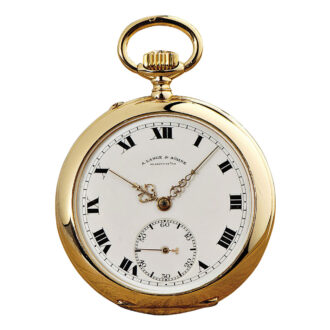
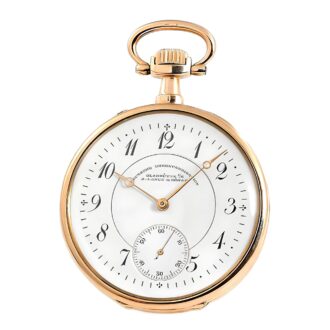
Signed: A. Lange & Söhne Glashütte bei Dresden
–
Important A. Lange & Söhne collector’s watch. A. Lange & Söhne pocket watches with Graff cases featuring elaborately engraved Renaissance scenes are among the most sought after and expensive Glashütte collector’s watches and often go for double the price of pieces of the same quality in a smooth gold case.
–
Graff
Carl Ludwig Theodor Graff ((May 4, 1844 – February 25, 1906), born in Grabow, Mecklenburg, Germany, was the son of a merchant and became a prominent German architect, designer and professor. During the late 1880’s through to the late 1890’s, premium German watch manufacturers – most notably A. Lange & Söhne and Union Glashütte – commissioned Professor Graff to create aesthetic blueprints for their highest grade timepieces.
Master engravers hand carved Graff’s precise patterns directly onto solid gold hunter cased pocket watches. The physical pocket watches produced using his designs generally bear serial numbers dating from roughly 1892 to 1910.
Graff retired from his academic positions in 1905 due to failing health and passed away shortly after on February 25, 1906, in Leipzig. He was buried back in Dresden.
Signed: A. Lange & Söhne Glashütte bei Dresden
Share this page: