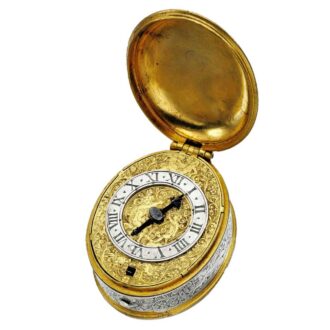
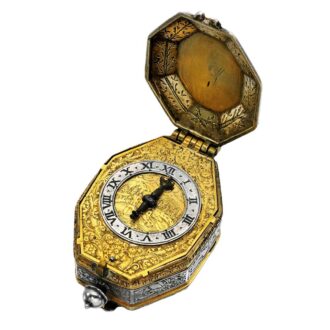
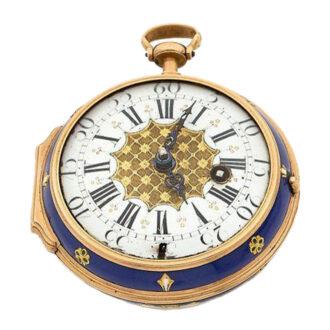
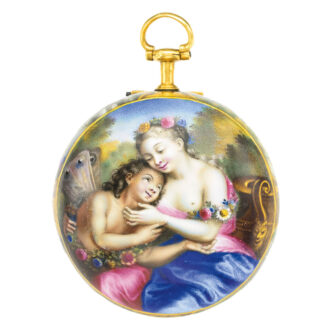
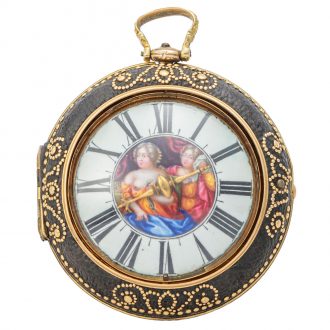
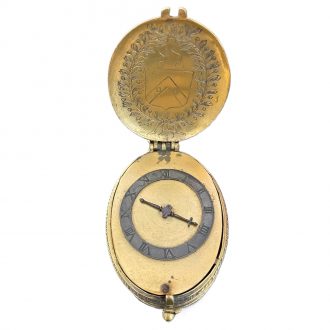
German important fire gilt Renaissance coach clock Circa 1583








- Kenmerk
- HC1807
- Diameter
- -
- Estimate
- € 50.000 - 100.000
- Price sold
- -
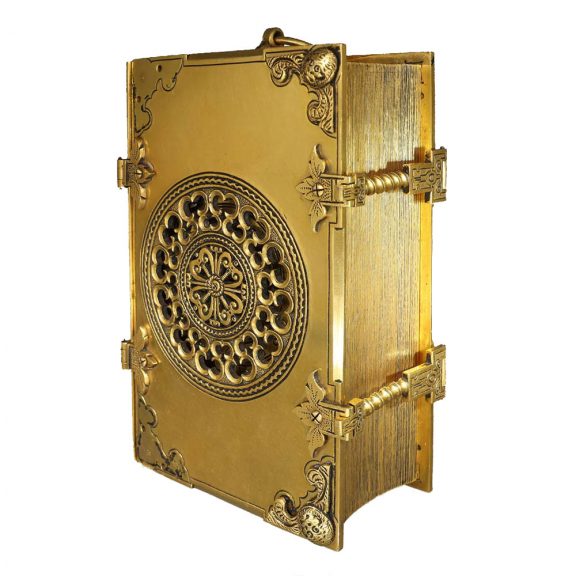
Fire gilded museum quality book form clock
–
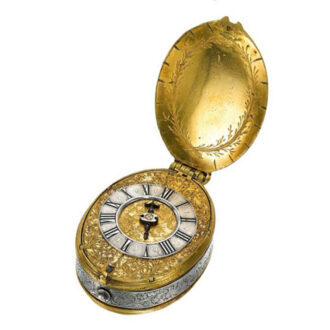
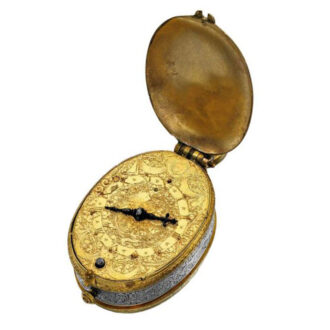
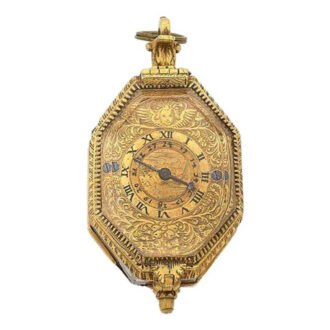
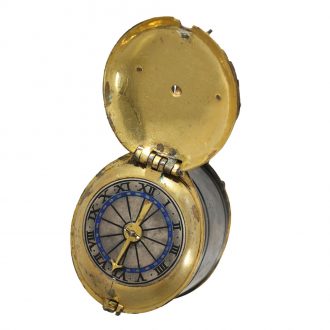
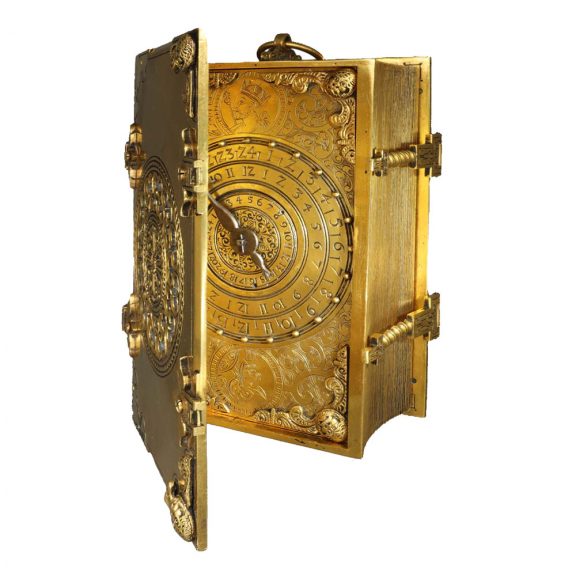
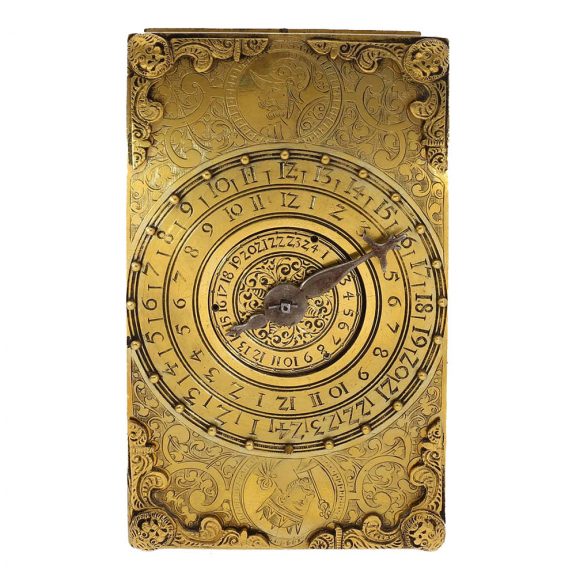
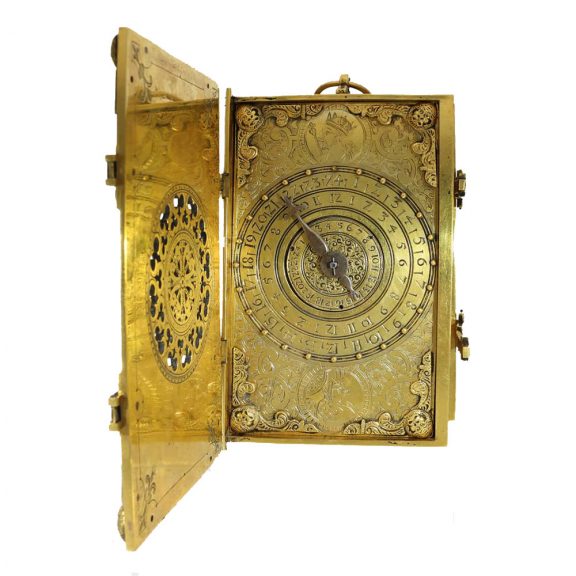
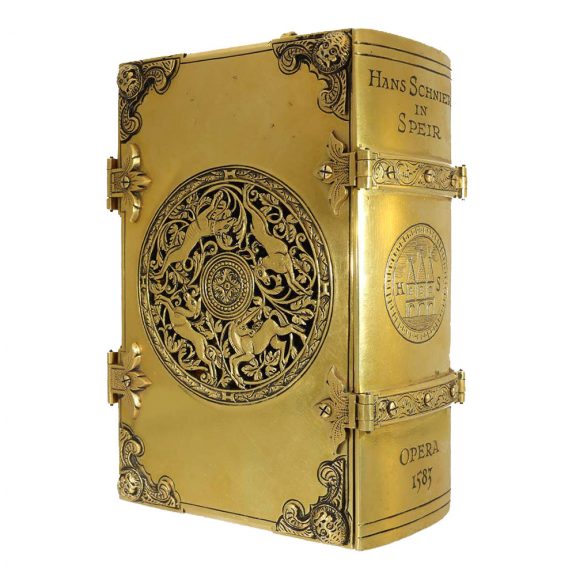
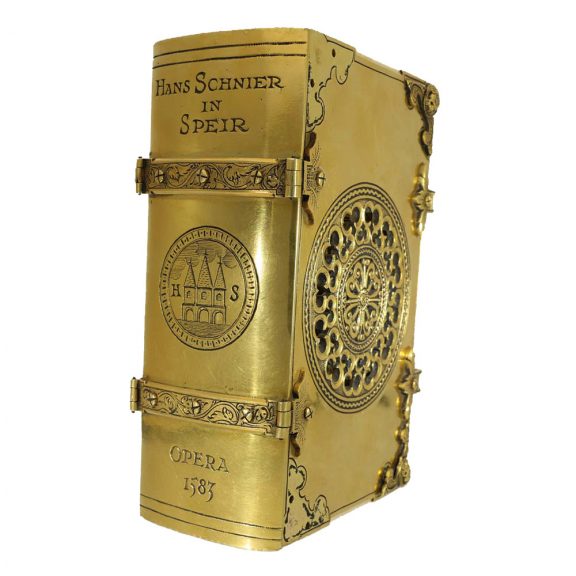
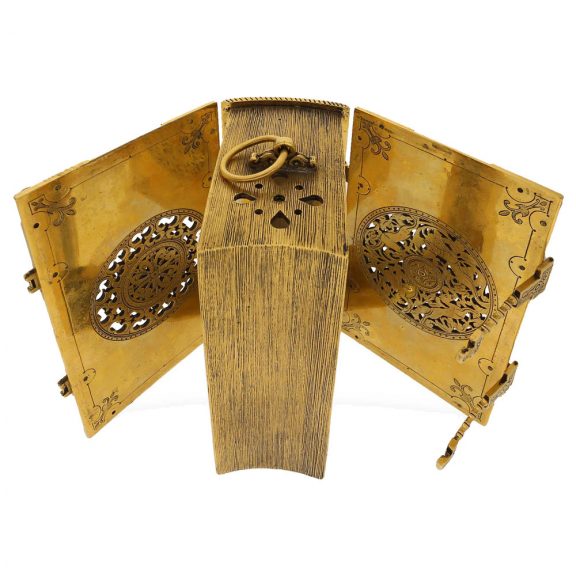
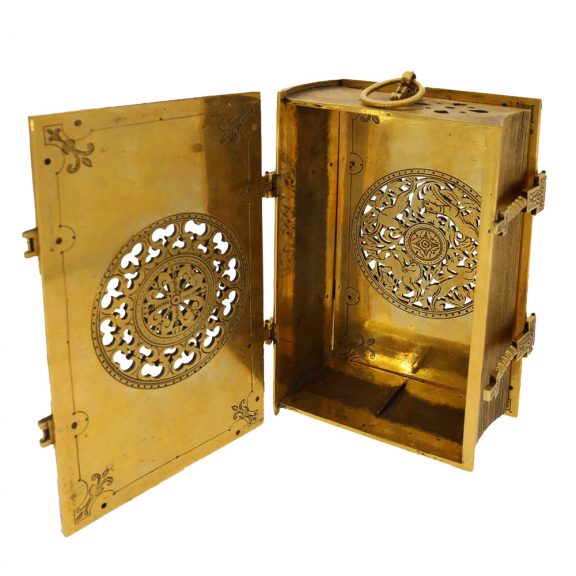
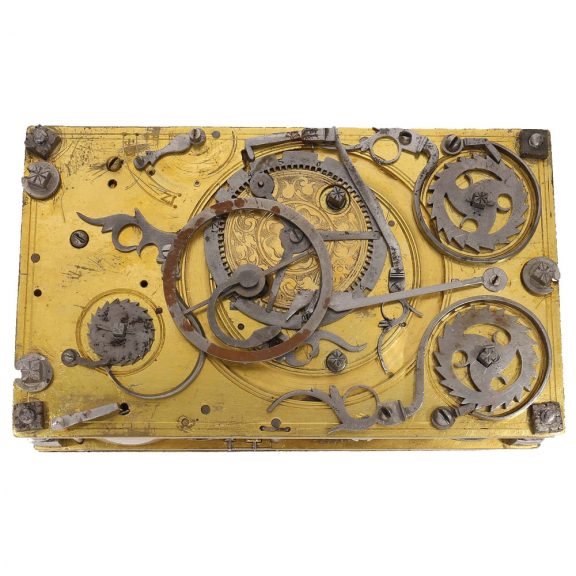
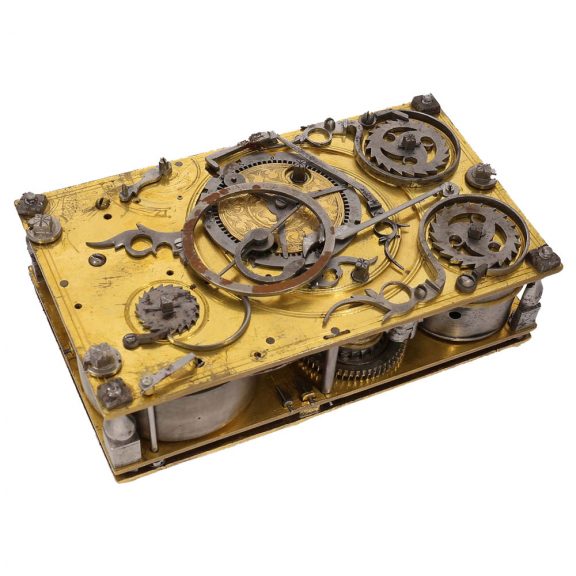
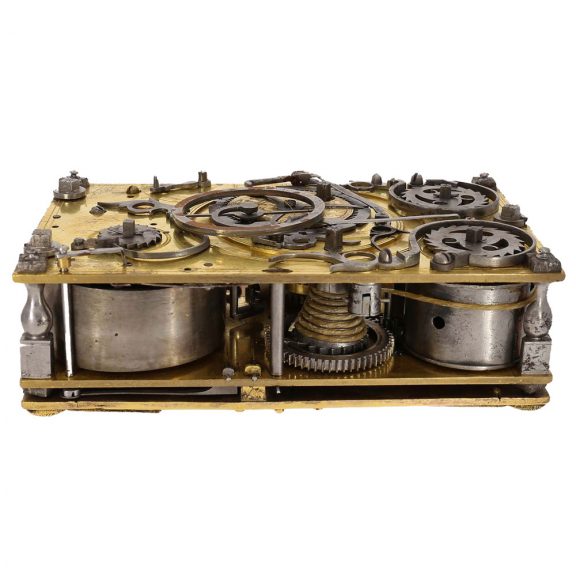
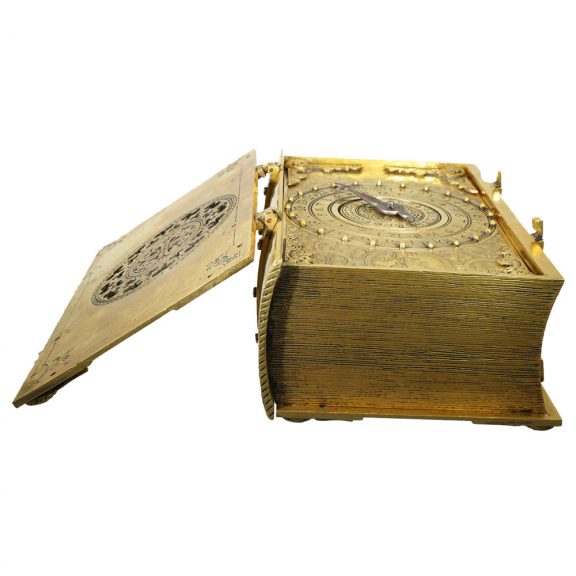
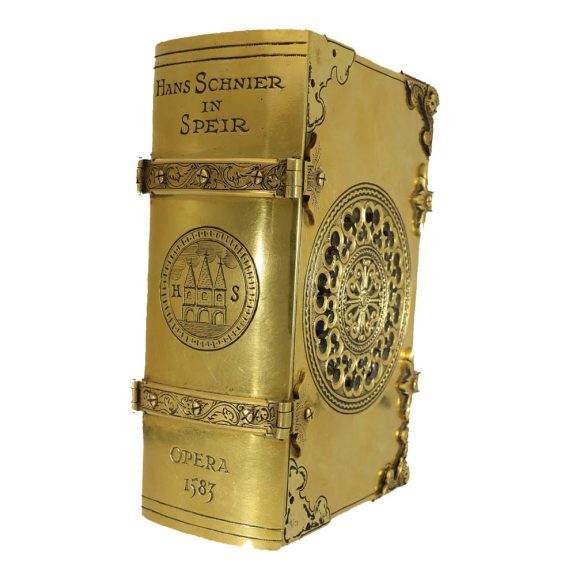
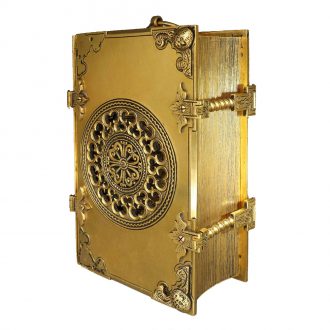
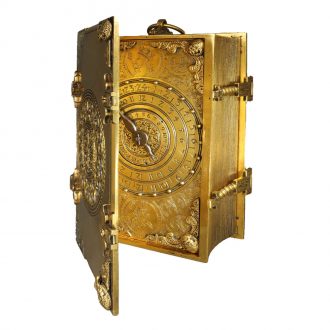
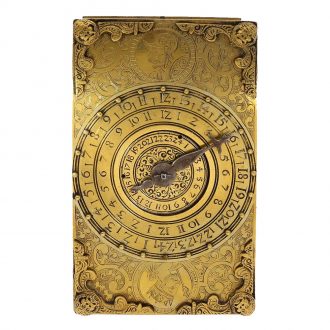
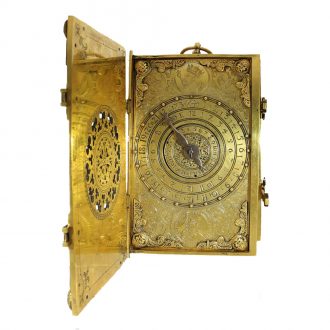
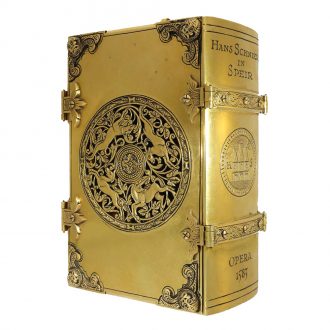
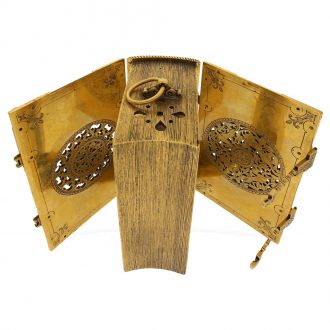
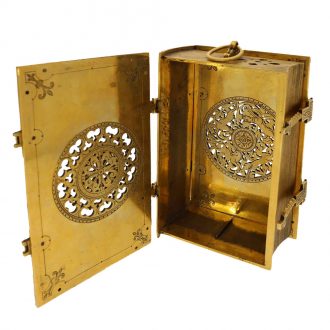
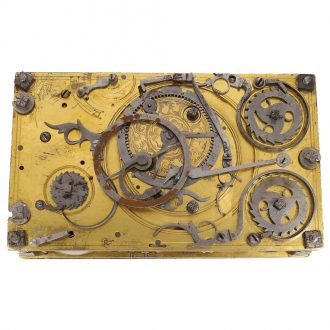
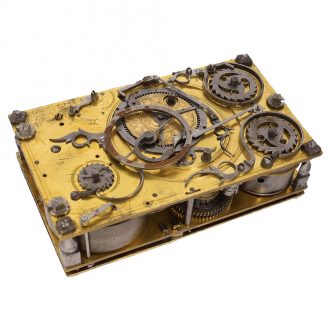
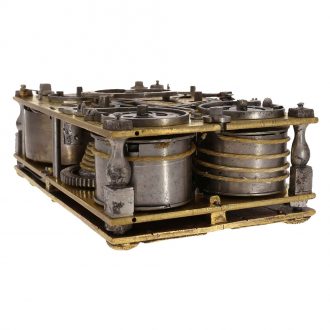
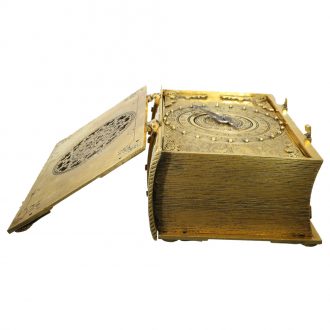
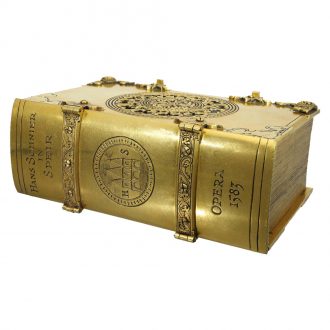
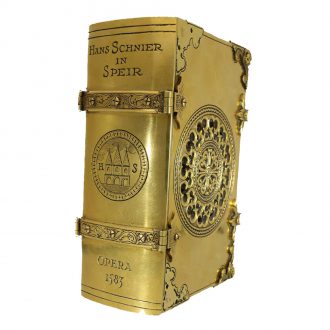
An important, museum quality Renaissance coach clock in book form made by Hans Schnier in Speyer, Germany, circa 1583. This magnificent timepiece features a fire gilded case in the shape of a book which has sound holes on both sides and all corners decorated with monkey heads, two of which are missing. The eyelet at the top of the case is a sign that the clock was used as a travel and coach clock, it could, however, also have served as a standing table clock. The magnificently engraved dial features the portraits of a king and knight, Arabic hour numerals and iron hands. The movement is fitted with a verge escapement, bristle regulator, self strike and alarm.
The back is signed.
–
Dimensions: 150 x 100 x 60 mm
–
Signed: Hans Schnier in Speir
–
The clock presented here is one of the rarest surviving Renaissance coach clocks from the 16th century, probably formerly in the possession of King Rudolf II. Hans Schnier was one of the most important watchmakers of the 16th century. His watches can be found in the most important collections and museums, e.g. the Louvre, Metropolitan Museum of Art and British Museum. The clock in the Louvre is also from 1583 and made in book form.
–
Schniep
Hans Schnier (more likely spelled Schniep) was a notable watchmaker who worked in Speyer, Germany, in the late 16th century. He gained the “Freedom of Speyer” (essentially, citizenship) in 1572 and his name appears in the records of the local Guilds of Smiths until 1599, indicating his active period as a master craftsman in the city.
–
Speyer (also known as Speir) was a significant city as the seat of the Reichstag, which had a substantial influence on the political and religious history of the region during the Reformation.
–
Schniep is primarily known for an exceptional and mechanically ambitious clock in the shape of a book, signed “Hans Schnier in Speir”, marked with the town mark of Speyer and his initials. This piece, currently housed in the Musée du Louvre in Paris, demonstrates his mastery. Key features of his work (specifically the Louvre watch and a similar one at the British Museum) include:
–
Complex mechanics: The timepieces often featured two separate movements, one for the time and one for the alarm, a stackfreed mechanism (an early form of constant force regulation) and a foliot balance.
–
Astronomical features: The interior of the lid of his book clocks includes a sundial, compass, and geometrical dials for recording the age and phases of the moon, months and other astronomical divisions, showcasing the alignment between horology and scientific observation at the time.
Signed: Hans Schnier in Speir
Share this page: