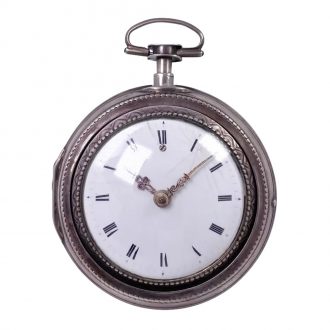
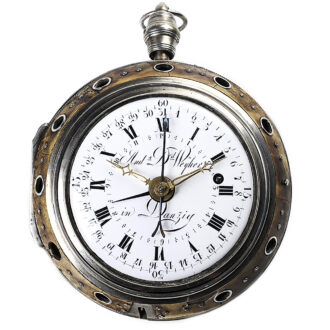
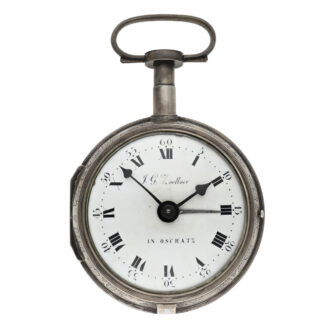
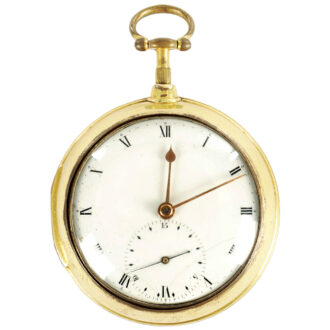
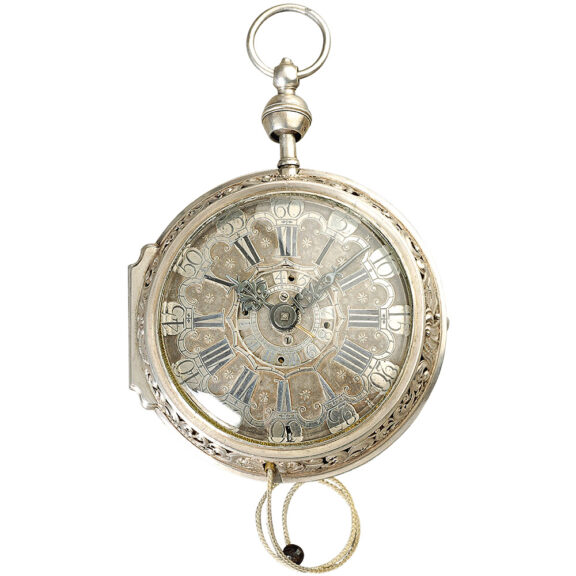
German silver quarter repeating coach clock with alarm Circa 1750
- Kenmerk
- AD2301
- Diameter
- 105 mm
- Estimate
- € 30.000 - 50.000
- Price sold
- € 37.500
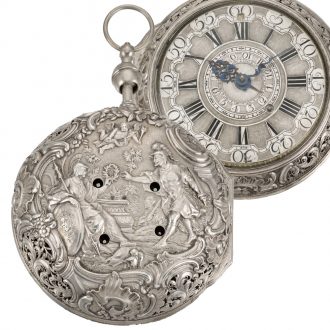
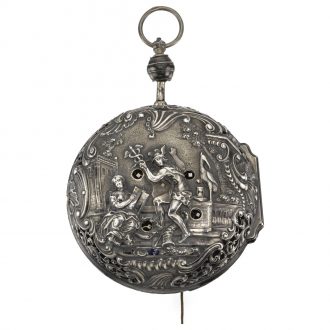
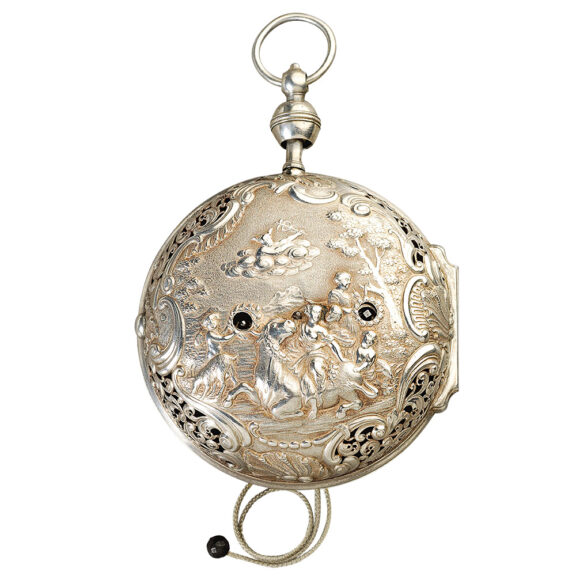
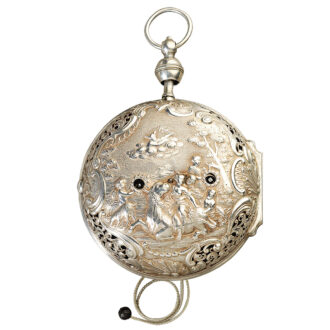
Silver coach clock with repoussé scene The abduction of Europe
–
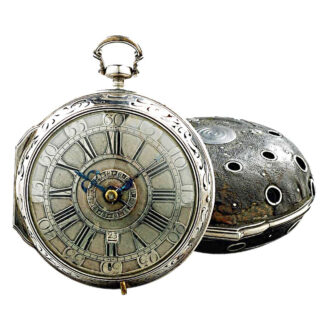
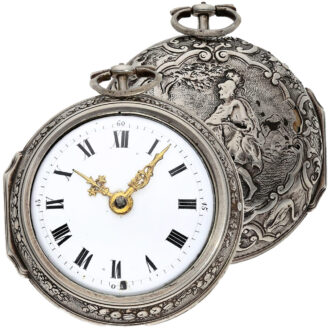
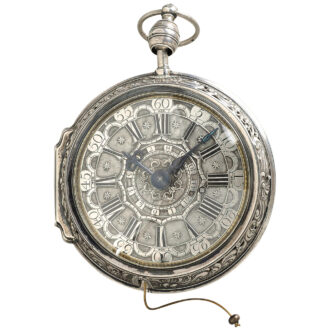
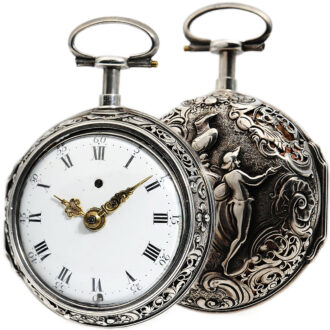
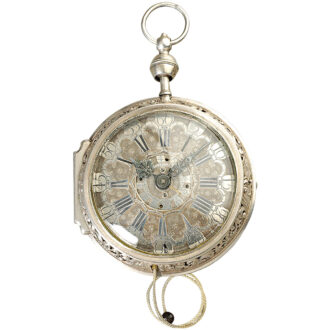
A German silver open faced quarter repeating repoussé coach clock with alarm in museum quality, circa 1750.
Silver outer case, elaborately finished, the open work edge decorated with tendrils, rocailles and volutes adorning the back framing the chased scene The abduction of Europe. The inner case is also silver with a pierced edge, rear bell.
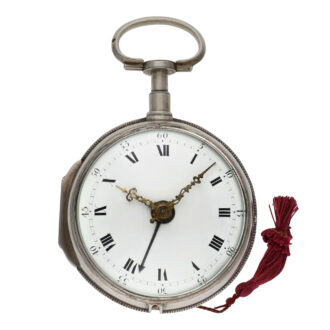
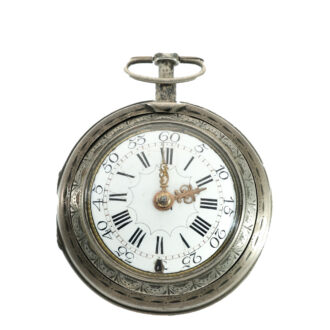
Silver champlevé dial, a central turnable alarm disc, Roman numerals, outer Arabic minute track and decorative hands.
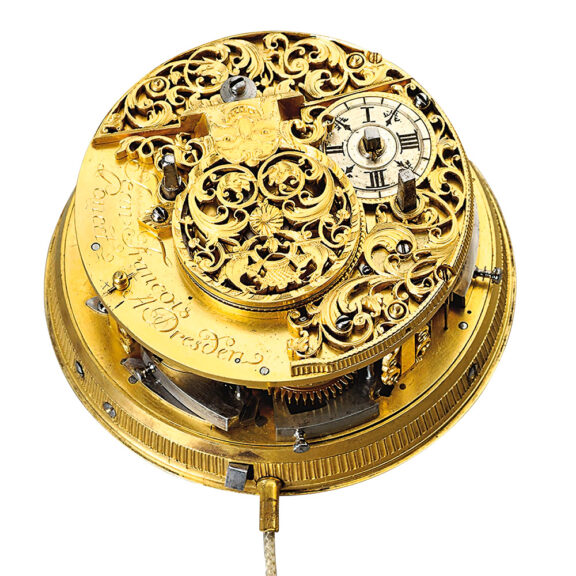
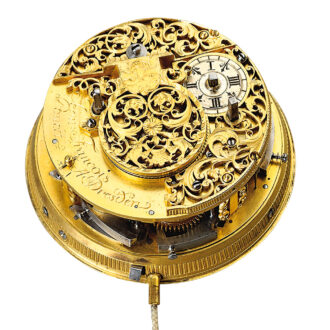
Full plate movement, a barrel, chain and fusee for the going train, two florally engraved barrels for the striking and alarm train, three hammers, a verge escapement and three-arm steel balance.
–
Diameter: 105 mm
–
Weight: 944 g
–
Signed: Jean François Poncet Dresden
–
Jean François Poncet (1714-1804) was watchmaker to the court of King Augustus III. It is said that the Poncet family descend from an old Roman family of consuls. They use a legionary eagle in their coat of arms and trace their ancestry back to Pontius Pilate. They originally lived near Marseille and had to emigrate from France because of their Calvinist faith.
–
The Abduction of Europe was a popular theme in the 18th century and was often depicted in the fine arts. The portrayal of the liaison between a powerful beast and a graceful maiden was traditionally used for small sculptures, with bronze versions since the Renaissance period and even more abundantly with porcelain sculptures during the rococo period. The sensuous rococo period chose for itself the most erotic interpretation of the ancient myths. Europe is by no means the victim of a brutal abduction, the abduction of Europa turns into the seduction of Europe. At the end of the story the bull, flanked by nereids and tritones, carries the maiden across the ocean to the shores of Crete in a triumphal procession.
Signed: Jean François Poncet Dresden
Share this page: