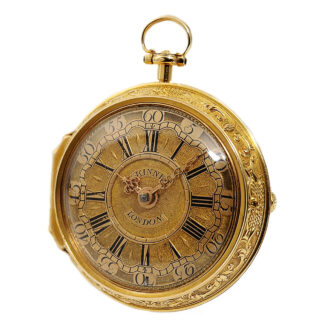
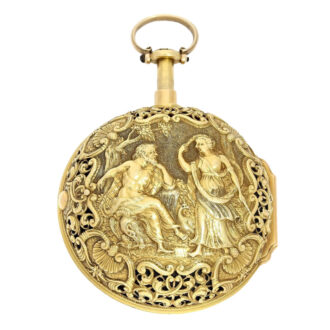
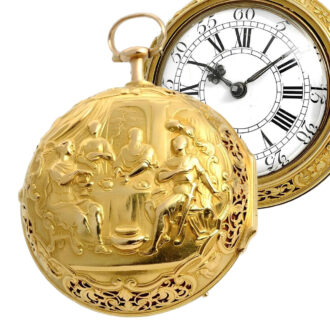
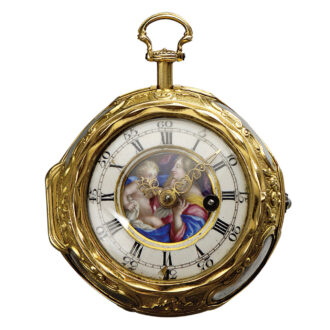
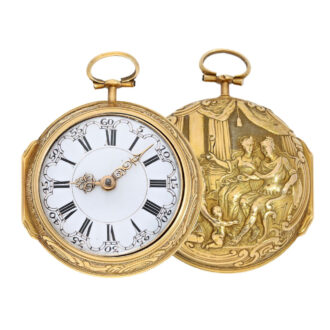
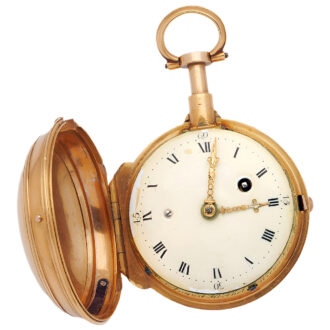
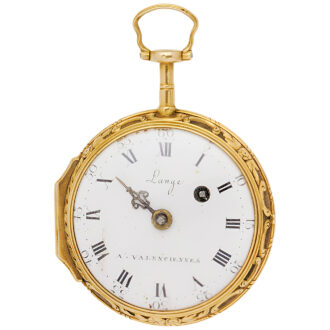
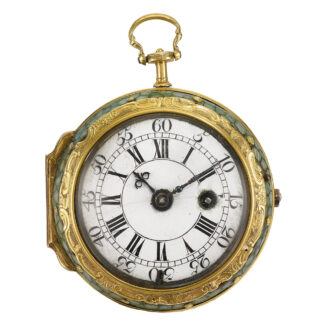
English gold bloodstone and stones set verge Circa 1730
- Kenmerk
- ST0055
- Diameter
- 47 mm
- Estimate
- € 6.500 - 12.000
- Price sold
- € 7.050
Gold open faced verge watch by John Gerrard
–
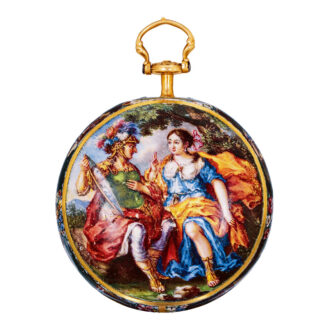
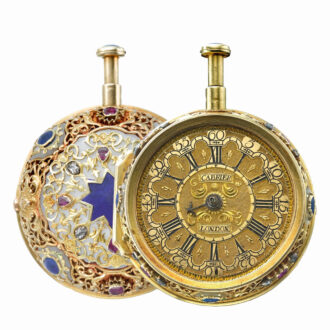
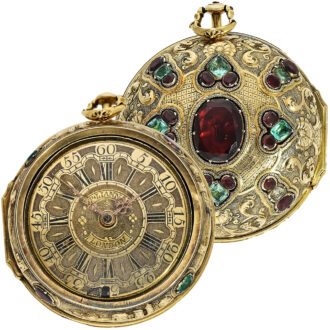
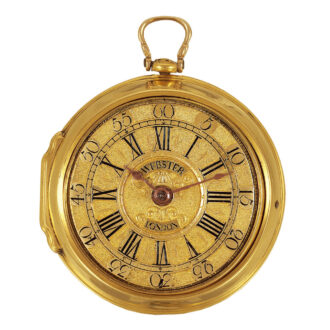
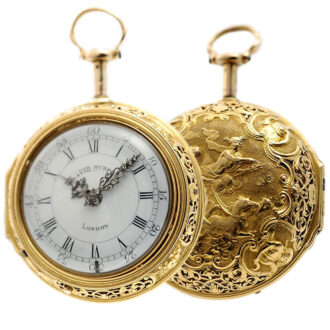
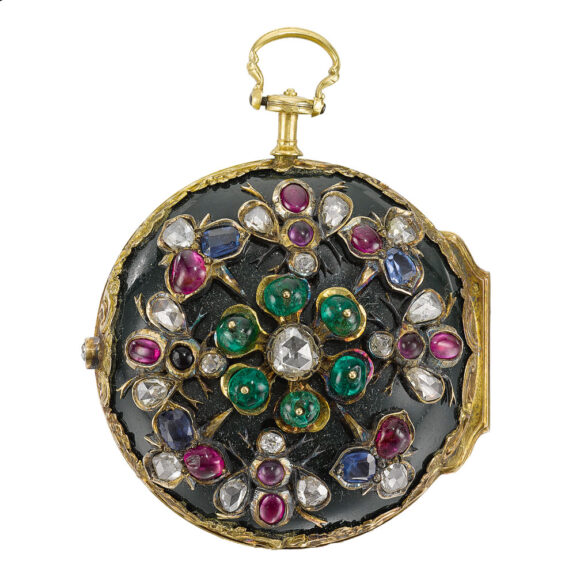
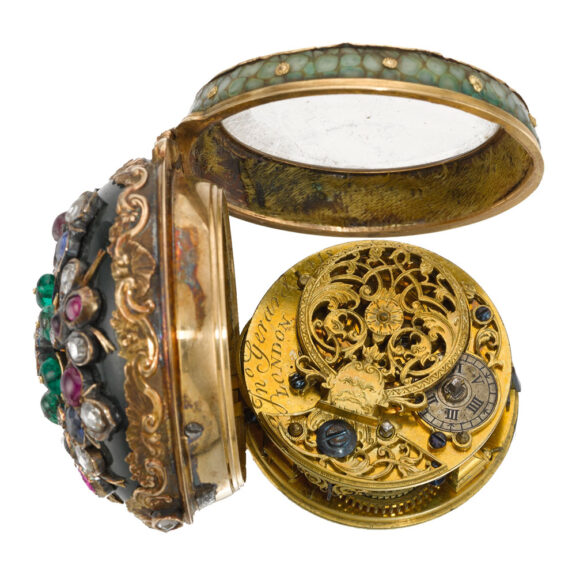
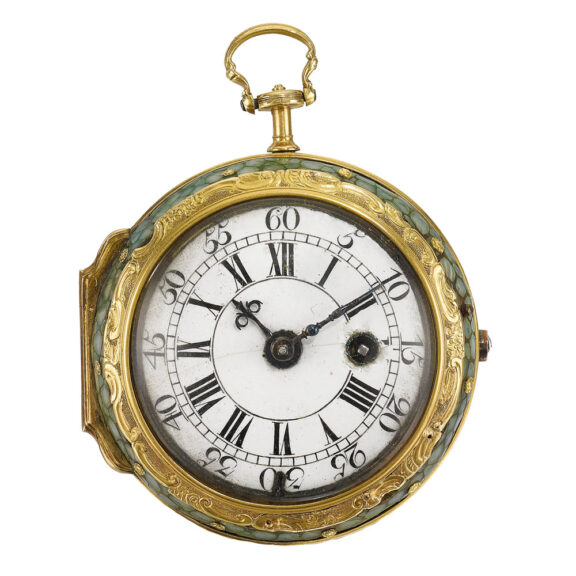
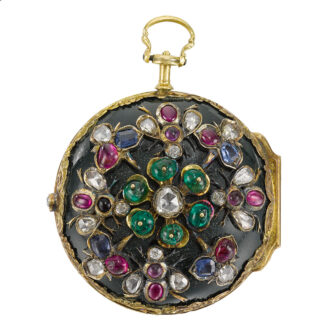
An English yellow gold and bloodstone, diamond, ruby, emerald and sapphire-set verge pocket watch, circa 1730. Gilt full plate movement, verge escapement, masked pierced and engraved balance cock, fuse and chain. White enamel dial with Roman hours, outer Arabic minute track, blued steel beetle and poker hands. The case back with bloodstone and gold scroll mountings, applied rose cut and circular cut diamonds, drilled emerald beads, cabochon rubies and varied cut sapphires depicting a flower surrounded by insects, inlaid shagreen bezel, diamond set thumb piece.
Movement signed.
–
Diameter: 47 mm
–
An English yellow gold and bloodstone, diamond, ruby, emerald and sapphire-set verge pocket watch, circa 1730. Gilt full plate movement, verge escapement, masked pierced and engraved balance cock, fuse and chain. White enamel dial with Roman hours, outer Arabic minute track, blued steel beetle and poker hands. The case back with bloodstone and gold scroll mountings, applied rose cut and circular cut diamonds, drilled emerald beads, cabochon rubies and varied cut sapphires depicting a flower surrounded by insects, inlaid shagreen bezel, diamond set thumb piece.
Movement signed.
–
Diameter: 47 mm
–
Signed: Jno Gerard London
–
Bloodstone is a beautiful, mostly, dark green stone that features red or brown spots that form as a result of impurities in the iron oxide. These spots look like blood splatters, giving the stone its English name. The stone is also referred to as a heliotrope, and gets this name from the Greek words helio, meaning ‘sun’, and tropos, meaning ‘toward the sun’. It’s said that the colour is also reminiscent of heliotrope plants that face towards the sun. The solid green colour that encompasses the rest of the stone is brought in as a result of the amphibole or Chlorite minerals found in the green Chalcedony. Chalcedony is a cryptocrystalline form of silica that’s composed of fine intergrowths of moganite and quartz, the minerals that make up most agate stones too. Because of its varied composition, the green in bloodstone is not always evenly distributed and may have blue or yellow streaks in addition to green. It has been a popular gemstone for at least two thousand years.
Signed: Jno Gerard London
–
Bloodstone is a beautiful, mostly, dark green stone that features red or brown spots that form as a result of impurities in the iron oxide. These spots look like blood splatters, giving the stone its English name. The stone is also referred to as a heliotrope, and gets this name from the Greek words helio, meaning ‘sun’, and tropos, meaning ‘toward the sun’. It’s said that the colour is also reminiscent of heliotrope plants that face towards the sun. The solid green colour that encompasses the rest of the stone is brought in as a result of the amphibole or Chlorite minerals found in the green Chalcedony. Chalcedony is a cryptocrystalline form of silica that’s composed of fine intergrowths of moganite and quartz, the minerals that make up most agate stones too. Because of its varied composition, the green in bloodstone is not always evenly distributed and may have blue or yellow streaks in addition to green. It has been a popular gemstone for at least two thousand years.
Signed: John Gerrard London
Share this page: