Important English ultra complicated double dialled watch Circa 1904


- Kenmerk
- AS2068
- Diameter
- 79 mm
- Estimate
- € 500.000 - 1.000.000
- Price sold
- € 751.600
M.F. Dent double-dial astronomical grande sonnerie clock watch
–
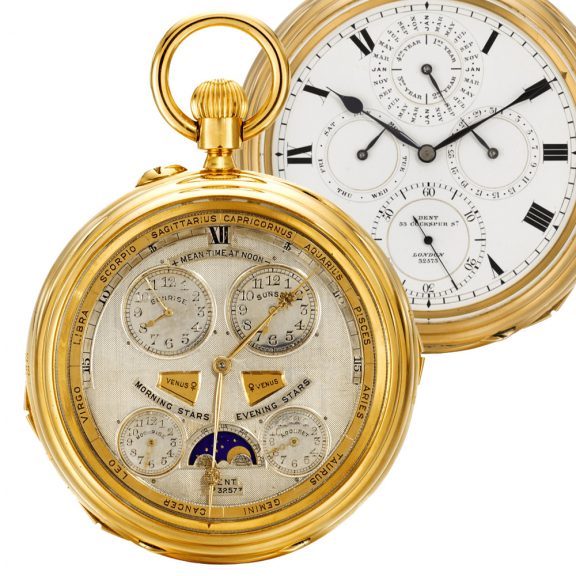
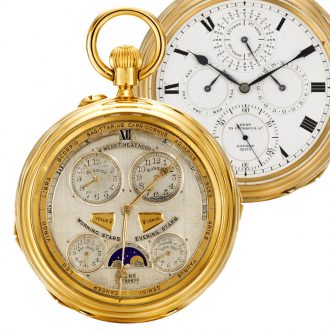
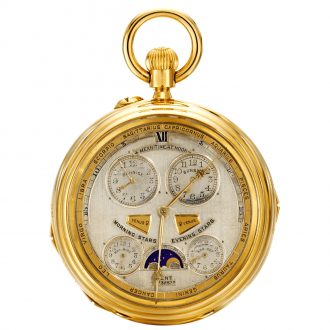
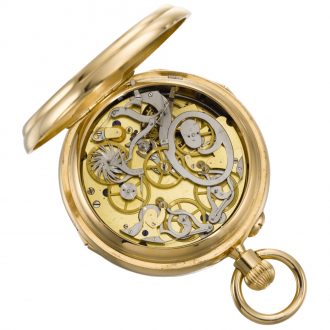
This highly important, large and heavy English gold clock watch was made by M.F. Dent in London around 1904. It has two dials and combines grande and petite sonnerie and a trip minute repeater with a perpetual calendar and a wealth of astronomical indications. It shows the equation of time, the signs of the zodiac, the times of sunrise and sunset, moonrise and moonset, and the phases of the moon. At every other new moon, the moon disc shows the Big Dipper (the Plough) instead.
–
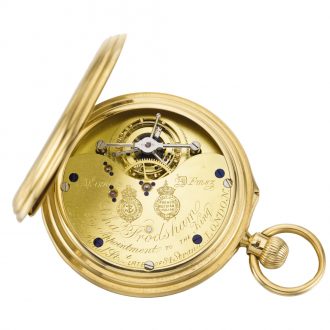
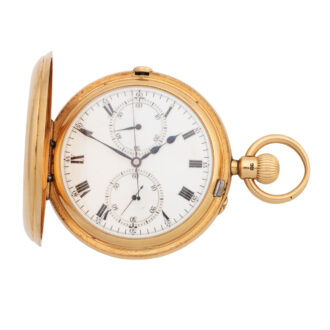
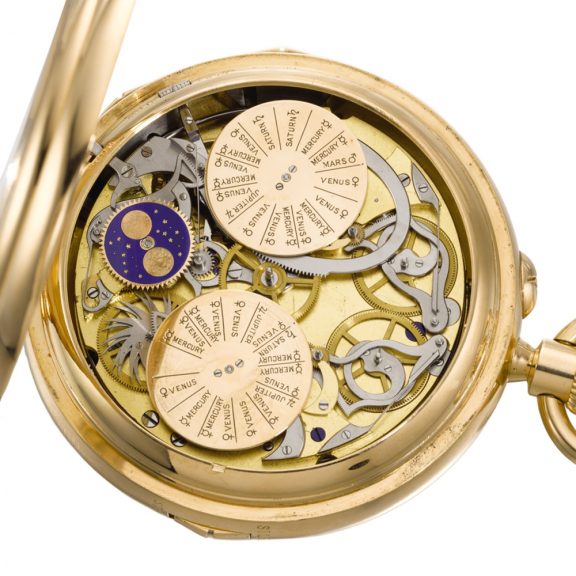
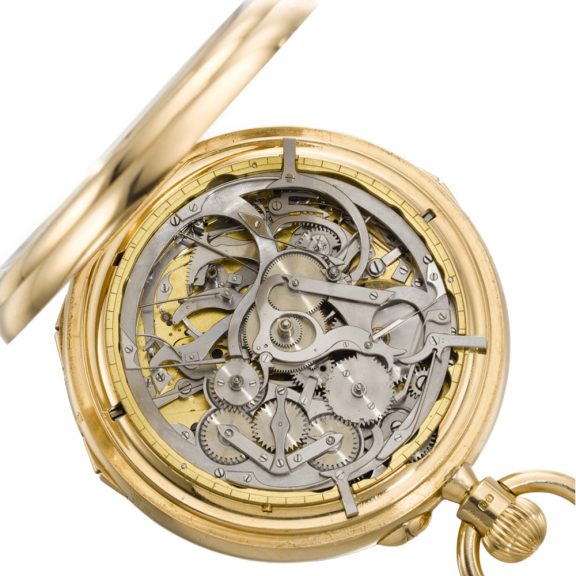
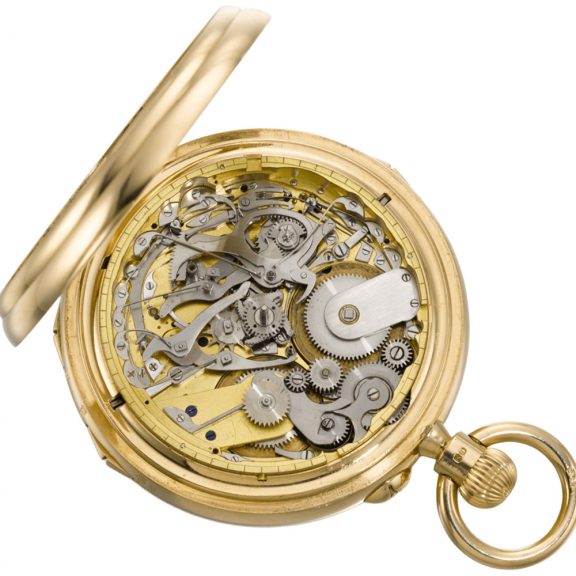
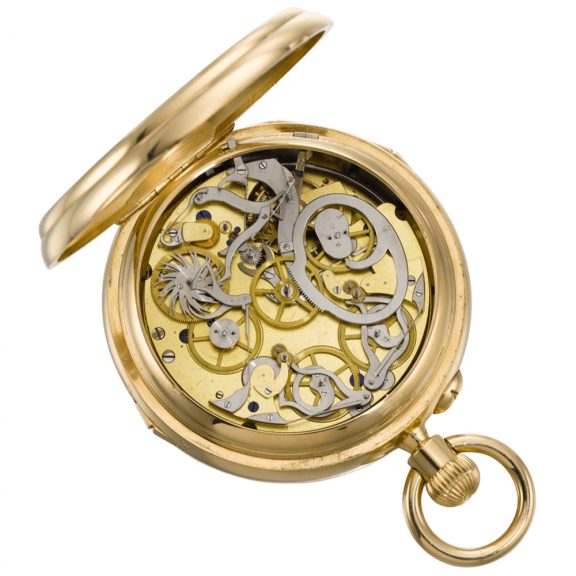
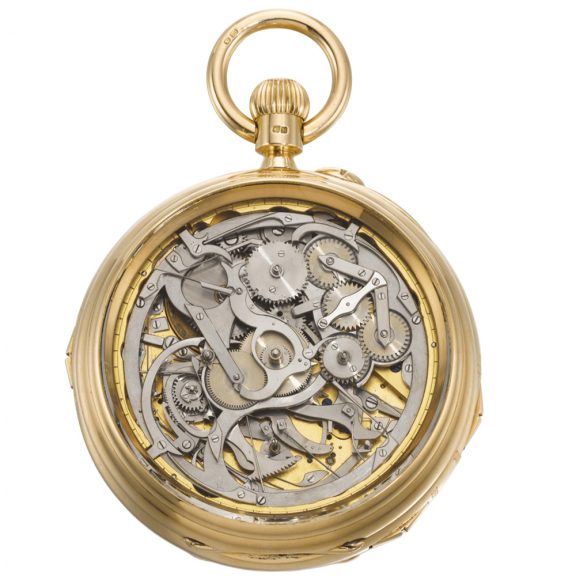
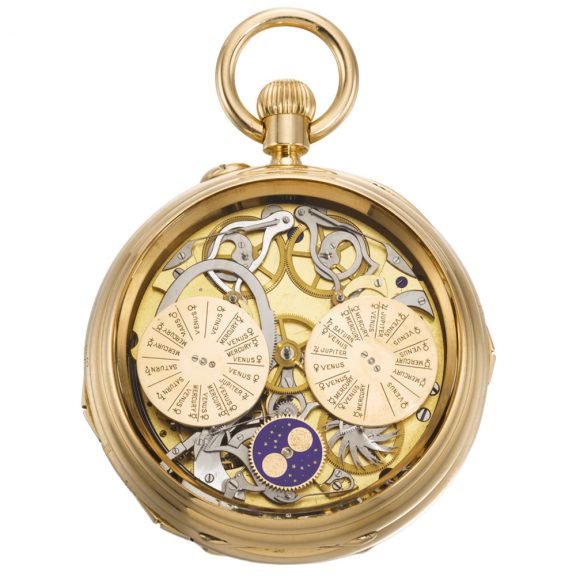
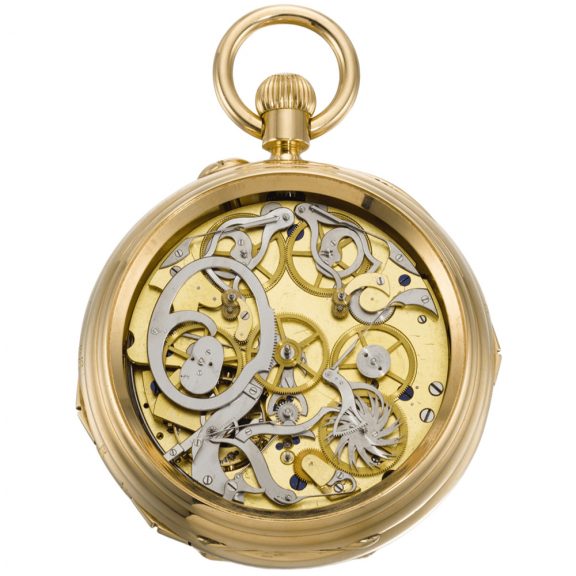
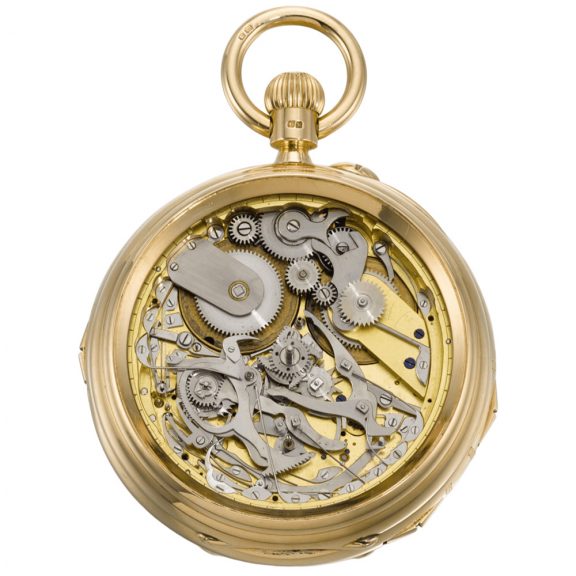
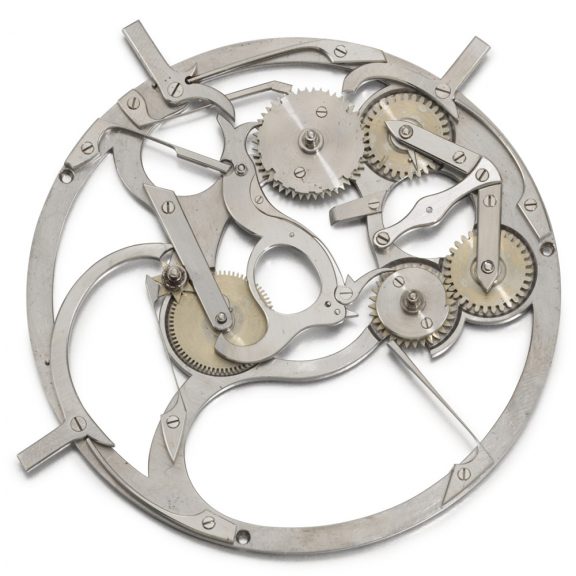
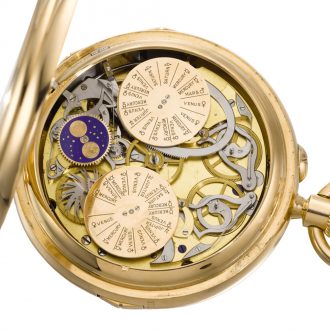
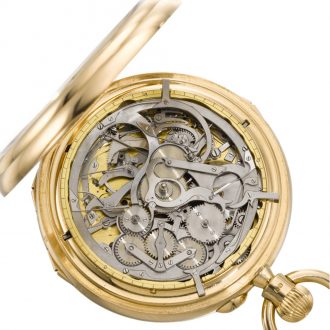
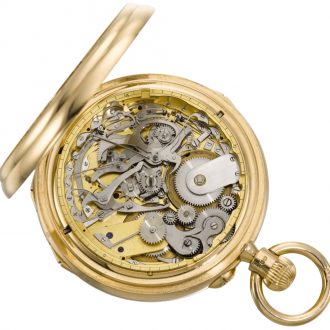
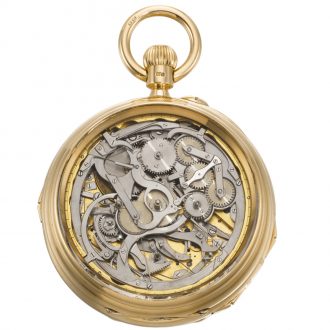
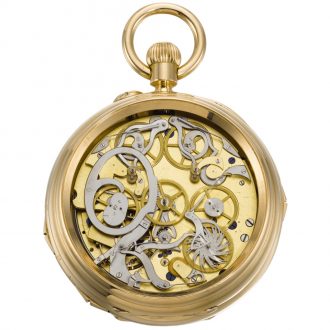
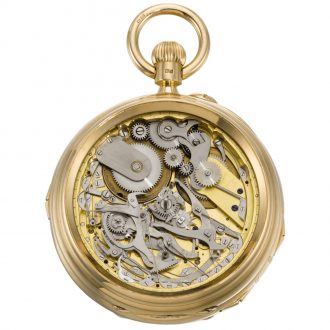
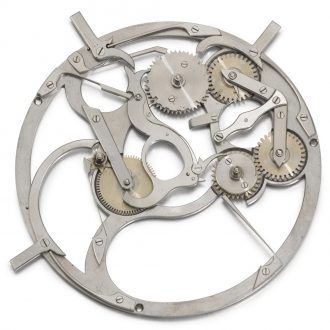
The movement. The movement is built in several layers on a gilt English three-quarter main plate. It has a lateral lever escapement, a bimetallic compensation balance and a blued steel balance spring with a Phillips terminal curve. On the time side, a removable skeletonised plate carries the perpetual calendar and leaves part of the striking and repeating mechanism visible. The watch chimes on gongs. On the astronomical side, a kidney-shaped cam drives the equation of time, and discs show the morning and evening stars and the moon phases.
–
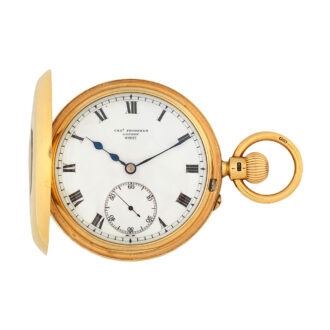
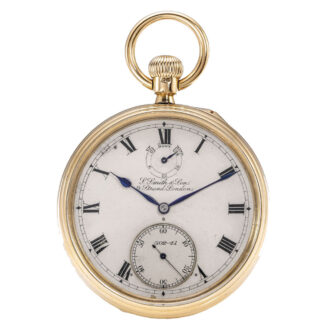
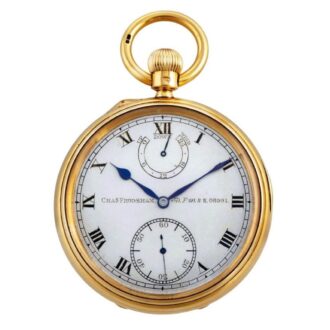
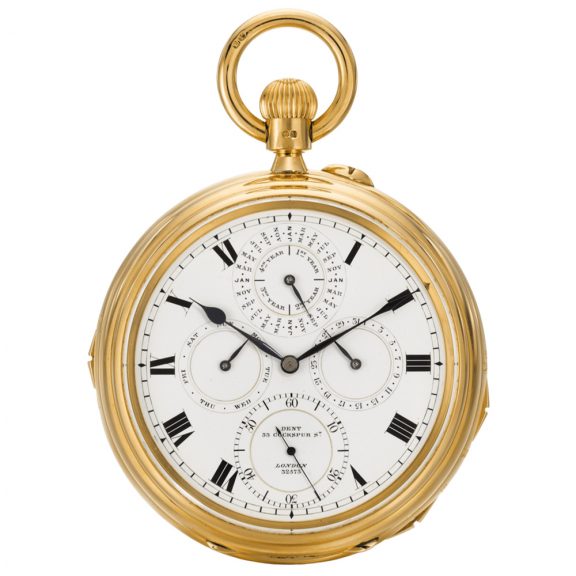
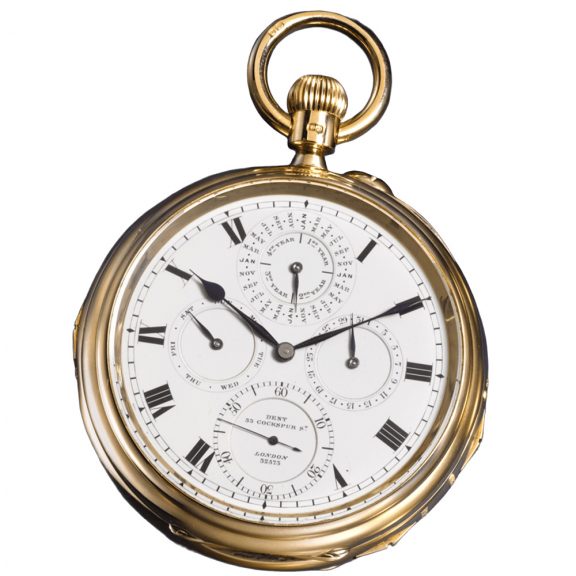
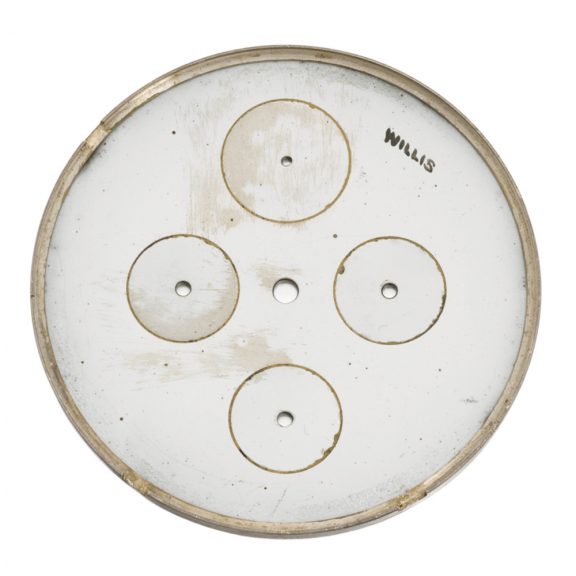
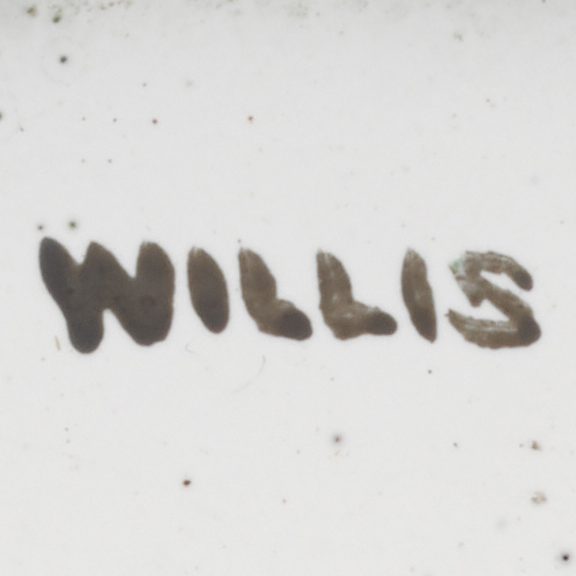
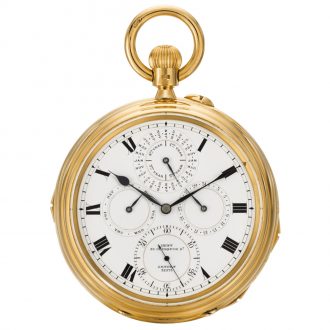
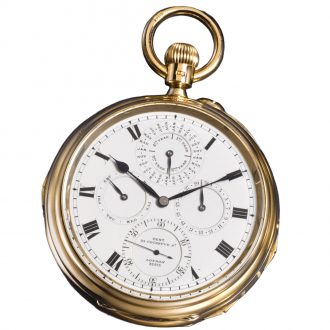
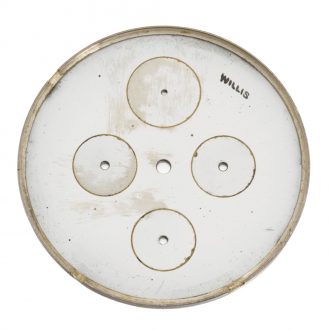
The time dial. The white enamel dial has black Roman numerals and an outer minute track. Four small sunken dials show the month with the leap-year cycle, the date, the seconds and the day of the week. The hands are blued steel spade hands. The dial is signed and numbered Dent, 33 Cockspur Street, London, 32573, and is signed on the back by the enameller Willis.
–
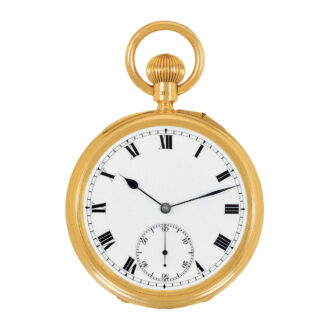
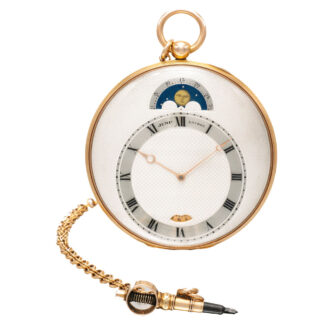
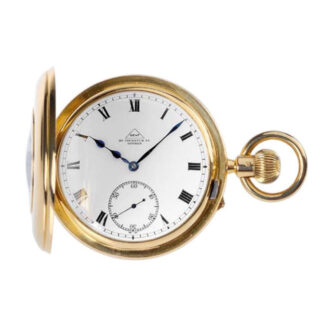
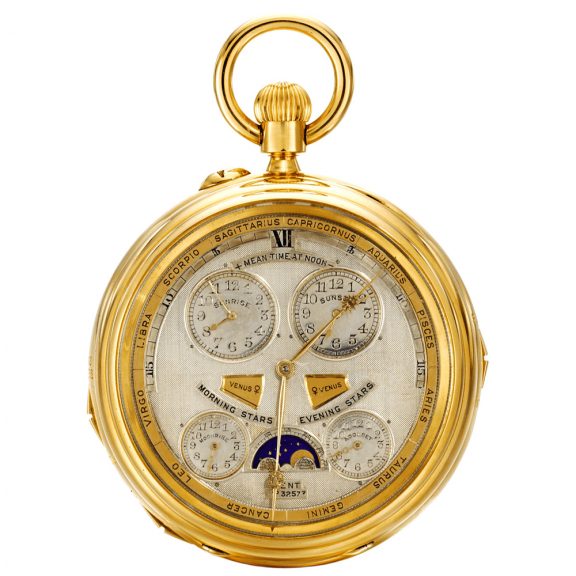
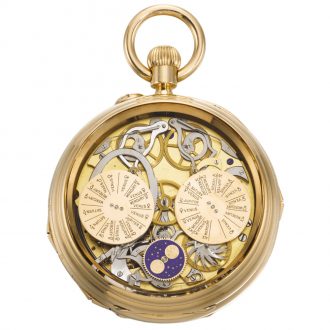
The astronomical dial. The silver dial has a finely engine-turned surface, with an outer scale for the equation of time. Four polished small dials show the times of sunrise, sunset, moonrise and moonset. Two wedge-shaped apertures show gold discs for the morning and evening stars. An outer gold ring shows the signs of the zodiac. Of the two gold centre hands, the one with a star points to the equation of time and the one with a globe points to the zodiac. A small opening under the bezel gives access to the regulator.
–
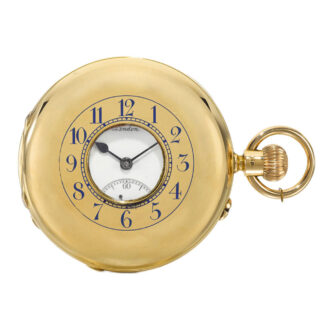
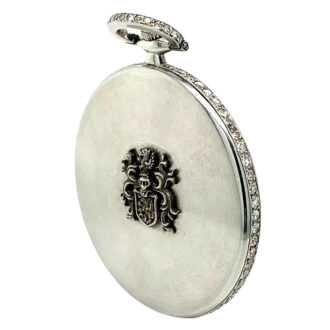
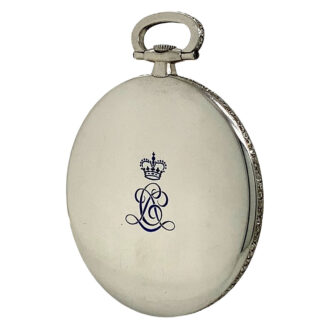
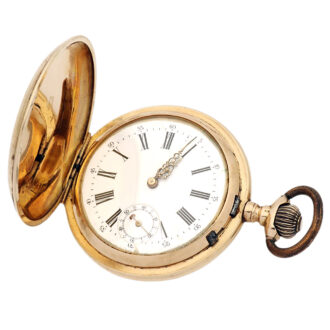
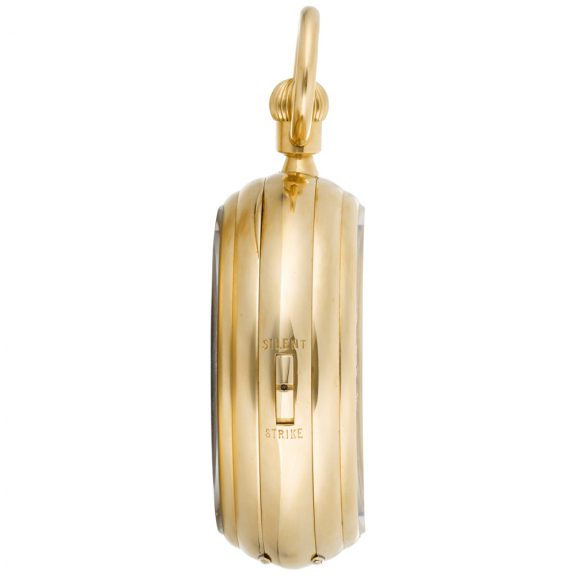
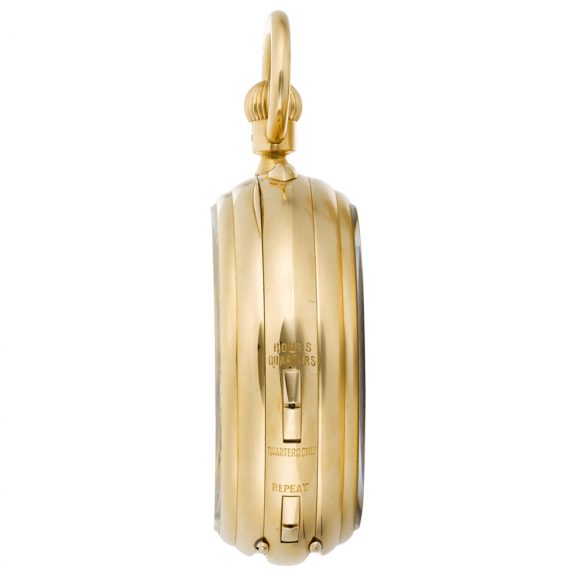
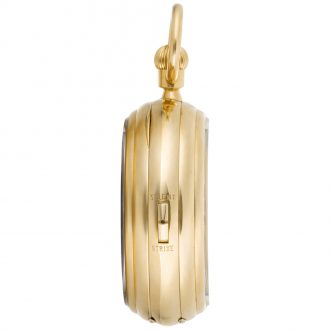
The case. The 18K yellow gold case is open on both sides, with elegant twin-stepped, rounded bezels. Three slides in the band control the strike/silent function, the choice between hours and quarters or quarters only, and the repeater. Both sides are glazed and hinged. Small levers under the bezel set the day, month and date. The pendant and bow carry London hallmarks for 18K gold.
–
Diameter: 79 mm
–
Signed: Dent 33 Cockspur Street London
–
The Dent Ultra Complication was a groundbreaking watch and one of the most advanced of its time. With 19 complications, it had only five fewer than Patek Philippe’s famous Henry Graves Jr. Supercomplication, which was completed almost thirty years later.
–
The watch was the result of a unique collaboration between three makers: the English firm Dent, the Swiss firm Capt & Cie. of Le Solliat, and the watchmaker Léon Aubert of Le Brassus. It was probably made to a special order from a client. Dent asked Capt & Cie. to develop the complications for the movement. In a letter of 8 January 1904, Capt describes how he approached Léon Aubert to design the calendar and astronomical mechanisms, almost certainly for this extraordinary watch.
–
The movement of the Dent Ultra Complication is of exceptional quality and built on several levels. The perpetual calendar sits in a skeletonised module under the time dial, above the striking and repeating work.
–
Its most extraordinary feature, however, is the astronomical side, especially the display of the times of moonrise and moonset. In an article for Chronométrophilia, Daniel Aubert explains the complex calculations and gearing needed to show these times continuously and accurately. The watch has to follow the moon’s daily movement: on average, 24 hours, 50 minutes and 30 seconds pass between two passages of the moon across the meridian. It also has to follow the sidereal month, the 27 days, 7 hours, 43 minutes and 11.5 seconds the moon takes to orbit the Earth once.
–
Perpetual Calendar Dial
The front dial not only shows standard time but also features a perpetual calendar. This calendar accurately displays the day of the week, date, and month, automatically adjusting for the varying lengths of months and leap years. Since a solar year is 365 days, 5 hours, 48 minutes and 48 seconds long, and a mean year is 365 days, an extra day is added every four years as a leap year. Additionally, a leap year is omitted every four centuries according to the Gregorian calendar reforms of 1582. Century years divisible by 400 without remainder are considered leap years. As a result, this watch’s perpetual calendar will remain accurate until the year 2100, when it will require its first adjustment.
–
Astronomical Dial
The central sun-tipped hand on the dial indicates the equation of time along a semi-circular track. This track is calibrated to show the difference between apparent solar time (as shown by a sundial) and mean time (the average solar time). Due to Earth’s elliptical orbit, this difference varies from +14 minutes 59 seconds to -16 minutes 15 seconds. Solar time aligns with mean time around April 15, June 15, August 31 and December 24. Another central hand, ending in a sphere, points to the current zodiac sign displayed at the dial’s edge. Four subsidiary dials separately indicate the times of sunrise, sunset, moonrise and moonset. Three apertures display the moon phases, with its age marked at the edge, as well as the morning and evening stars. The Morning and Evening Stars apertures show the currently visible planet: Venus, Jupiter, Mercury, Saturn and Mars, which may appear singly or in pairs.
–
The enamel dial on this watch is marked “Willis” on the back. The Willis family was renowned as one of the finest English dial makers of the 19th and early 20th centuries. An 1889 advertisement for T. J. Willis states that the company was founded in 1787. In his book “Old Clocks and Watches and their Makers,” F. J. Britten mentions the enameller John Willis, who was active in Smithfield, London, from 1820 to 1836. His son, Thomas John, described as “an excellent dial maker,” continued the business, relocating to 10 Rydon Crescent, London EC, and later to 19 River Street, Myddelton Square, London EC. Thomas John passed away in 1893 at the age of 57. After his death, the company continued producing dials into the 1920s. An 1889 advertisement in Antiquarian Horology highlighted T. J. Willis’s speciality in “Venetian Enamel Dials,” known for their distinctive creamy, off-white hue.
–
MF Dent, an esteemed English watchmaker, was based in London at 33 & 34 Cockspur Street, Charing Cross, around 1896. The company held the prestigious title of Chronometer Maker to the Queen. It gained renown for creating the most intricate Dent watch ever made, No. 32573, crafted by Léon-Ernest Aubert. This watch is comparable to the La Fabuleuse pocket watch by Louis Elisée Piguet, which was ultimately completed by Richard Daners for Gübelin in 1985.
Signed: Dent, 33 Cockspur Street, London
Share this page: