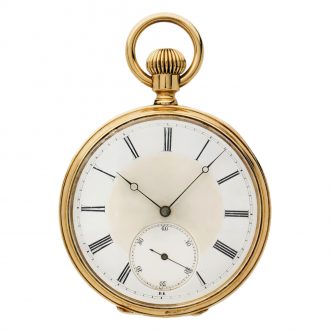
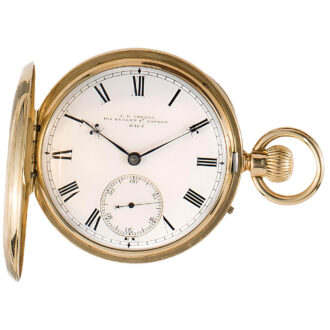
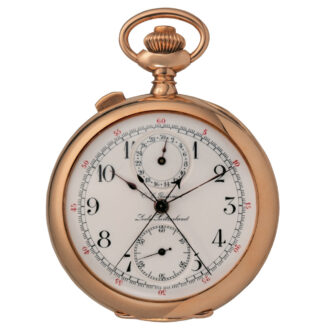
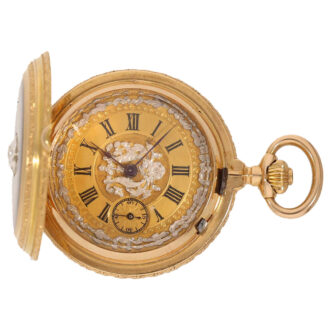
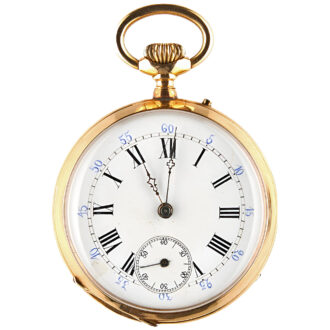
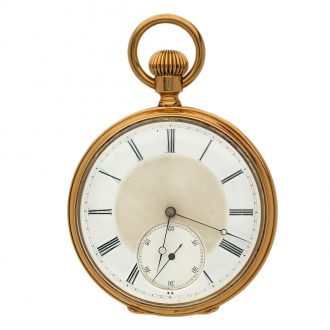
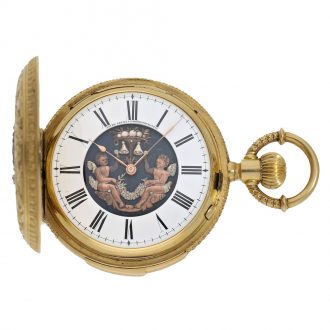
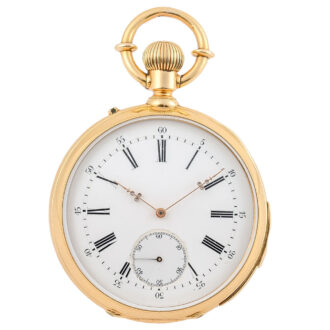
Large Swiss 18K gold open faced pocket chronometer Circa 1880
- Kenmerk
- FF0026
- Diameter
- 52 mm
- Estimate
- € 4.500 - 9.000
- Price sold
- € 6.650
Chronometer watch with an architectural scene
–
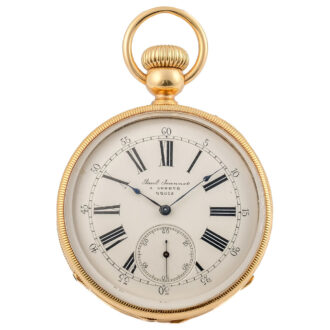
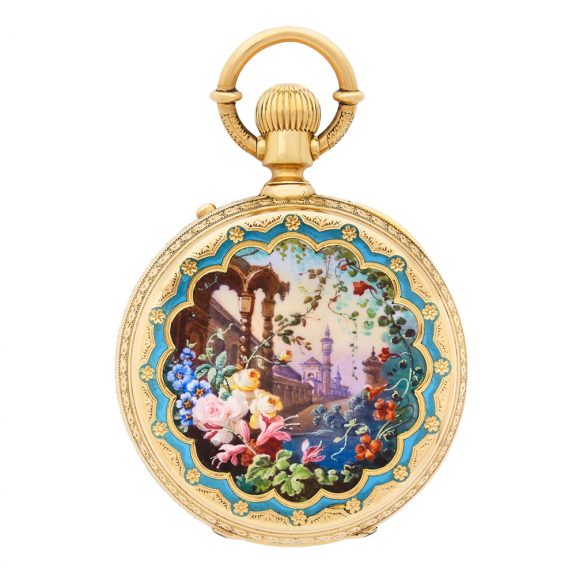
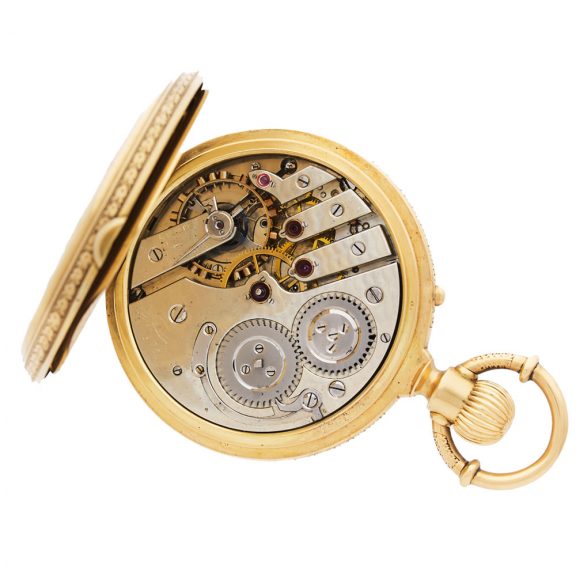
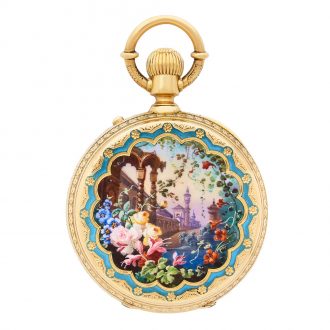
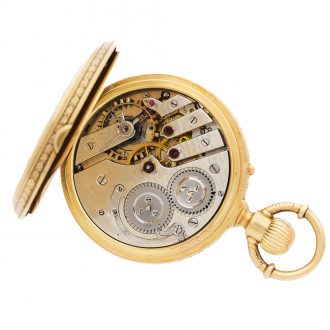
A Swiss chronometer watch in 18 carat gold with enamel on the back depicting an architectural scene in the style of the Ottoman Empire, circa 1880. Nickel plate movement with crown winding, chronometer type, rubies surrounded by three screwed chatons , chronometer detent escapement, balance spring, advance / delay adjustment index, signed.
–
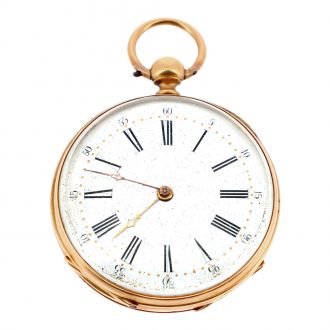
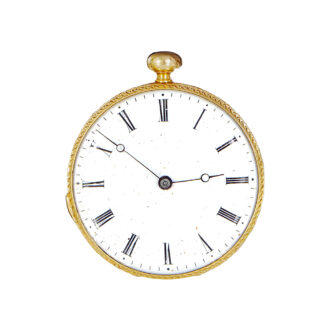
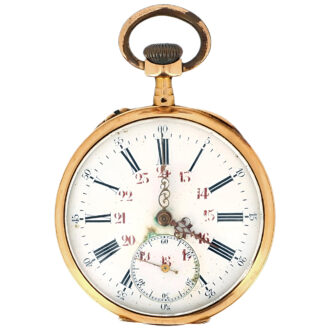
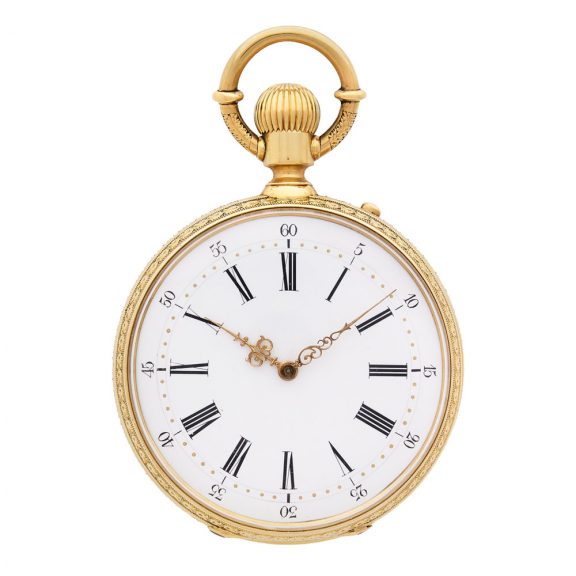
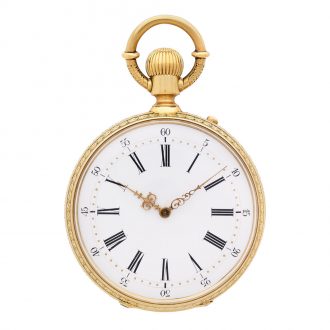
White enamel dial with Roman numerals for the hours and Arabic numerals for the minutes, decorative stylized gilt hands and outer minute track, unsigned.
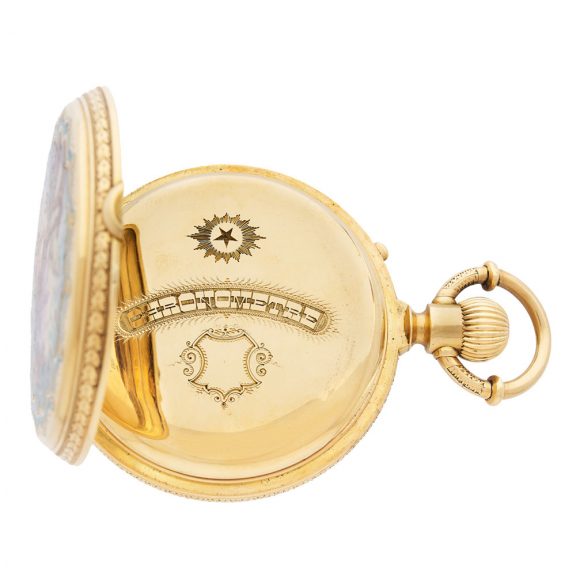
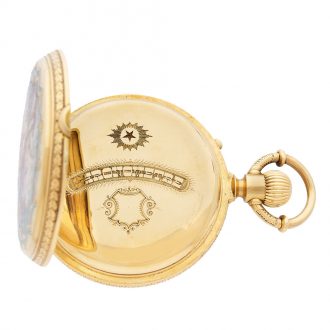
Round case, the border decorated with stylized motifs, the back with painted enamel decorated with a typical decoration for the Ottoman market with an architectural view of a palace in perspective revealing a minaret, the interior numbered the gold cuvette marked chronometer with a star surrounded by sunbeams in the upper part and below a blank cartouche.
–
Diameter 52 mm
–
Weight. 140.5 gr.
–
Signed: No name
–
The architectural symbolism of the minaret in the watch made for the Ottoman Empire
In the watches made for the Ottoman Empire, the architectural symbolism of minarets played both an aesthetic and cultural role, inspired by Islamic traditions and Ottoman identity. Here are some aspects of this symbolism and its integration into watches.
The minaret: a spiritual and cultural symbol
The minaret, in Islamic architecture, is a tower adjacent to a mosque, used for the call to prayer.
It symbolizes: The connection between the earthly and the divine, rising towards the sky.
The presence of Islam in public space.
A key element of Ottoman architecture, with slender and graceful forms.
In the context of watches, the minaret becomes a cultural reference, signalling the Ottoman influence in the decorative arts.
Integration of Minarets Motifs in Watches
Watches intended for the Ottoman Empire, often made in Switzerland, like our example with a very fine movement, incorporated minaret motifs or architectural references, as they were specially designed to please Ottoman tastes.
These motifs appeared using painted enamel motifs on the back of the case, notably in views of the Bosphorus, or simply architectural decorations with the representation of the minaret.
The engravings on the cases, such as our example are always on the case band with arabesque motifs typical of watches from the end of the 19th century.
Symbolism in the context of Ottoman watches
Spirituality and temporality: In the Ottoman Empire, time was closely linked to religious life, notably to the regulation of the five daily prayers. Watches were often designed with time indications adapted to the Ottoman time system, linked to the solar cycles.
Heritage and prestige: Watches decorated with minarets or Ottoman architectural motifs represented a fusion of Western technology and Eastern aesthetics, showcasing the prestige of the Empire.
Imperial identity: The use of minarets in watch motifs reflected Ottoman pride and served to assert Islamic cultural identity in imported luxury items.
Example of artistic collaboration
Swiss watchmakers, particularly La Chaux-de-Fonds-based houses such as Courvoisier and other renowned manufacturers, worked closely with Ottoman artists to adapt their designs to local sensibilities.
These watches, often given as diplomatic gifts or used in imperial court circles, illustrated a dialogue between Europe and the Orient, with minarets as a symbolic bridge.
In short, the minarets in the Ottoman Empire watches were much more than a simple ornament: they were a tribute to a deeply spiritual and architectural culture, while embodying the elegance and craftsmanship of their time.
Share this page: