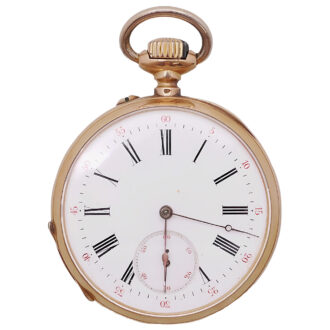
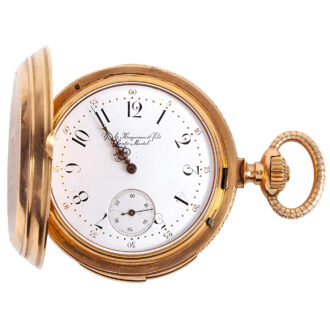
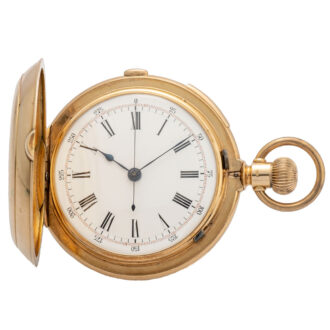
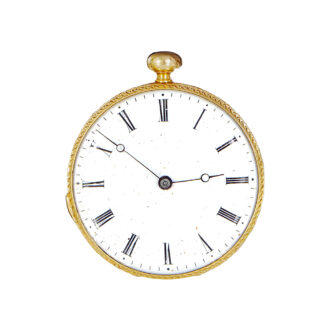
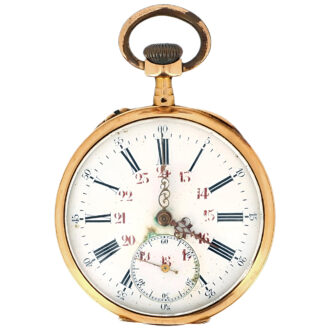
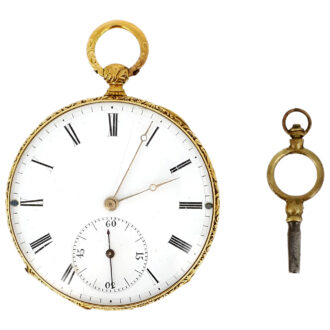
Swiss 18K rose gold hunting cased chronometer Circa 1890
- Kenmerk
- SB0925
- Diameter
- 59 mm
- Estimate
- € 30.000 - 55.000
- Price sold
- -
Rose gold chronometer by Girard-Perregaux
–
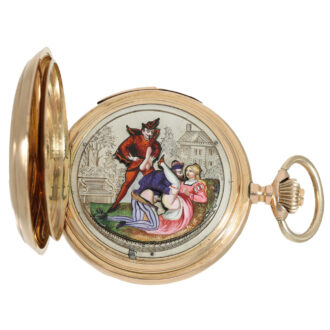
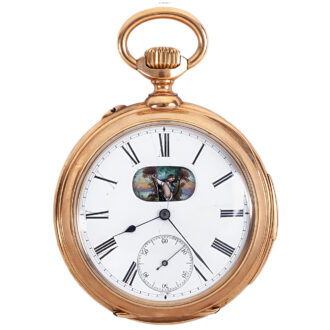
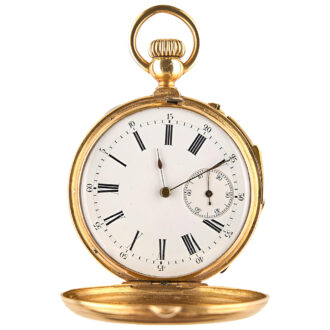
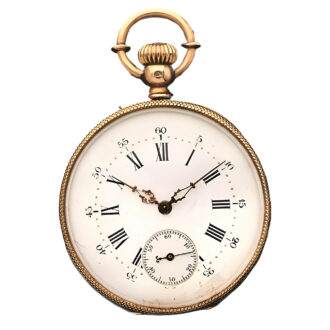
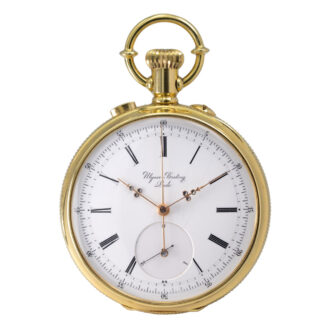
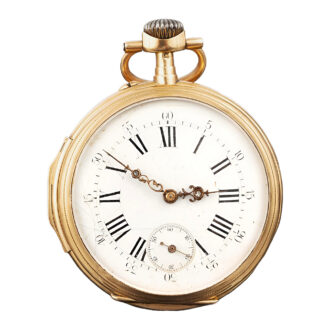
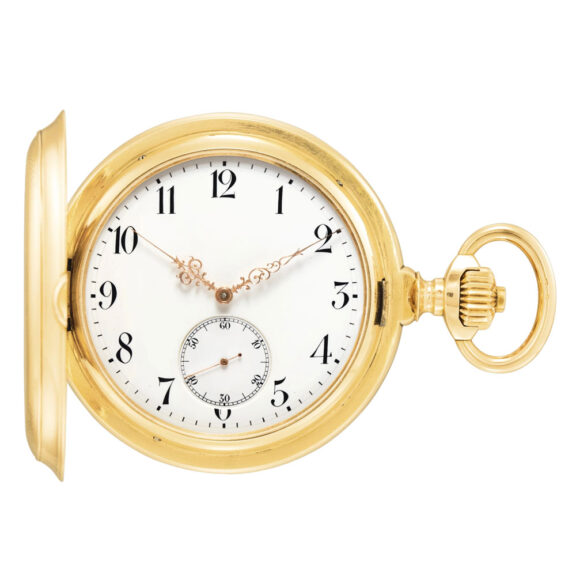
A Swiss 18 carat rose gold hunting cased pocket chronometer, circa 1890. Movement with patented three-bridge spring detent escapement and balance wheel. White enamel dial with Roman hours and outer minute divisions, subsidiary seconds at 6 and Louis XV hands. Heavy plain case, the initials of the name of the original owner on the cover. Movement and cuvette signed and numbered, case numbered.
–
Diameter: 59 mm
–
Signed: Girard-Perregaux
–
It was in 1856 that Girard-Perregaux was born. The marriage of Constant Girard and Marie Perregaux formed this famous Swiss watchmaker whom is today associated with quality and excellence. This piece pays tribute to Girard-Perregaux and two particular complications. The first, the three bridge tourbillon is now part of the firms genetic code and this particular complication is associated immediately with the brand. The tourbillon, or rotating escapement carriage was patented by A.L. Breguet in 1801. The purpose of the tourbillon is to eliminate errors in the balance by revolving the escapement continuously to produce a uniform average rate. The second, the spring detent escapement is to increase accuracy. In a lever escapement, the escape wheel teeth and palette fork generate a lot of friction between them. The detent was designed to eliminate the palette fork and alter the balance wheel so that it will only interact the escapement once a second when changing direction. It is the detent that changes the direction of the balance wheel. Instead of a lever escapement that connects multiple times per second, the detent escapement only connects once per second, subsequently the friction of the parts were reduced.
–
The three-bridge configuration was patented by Girard-Perregaux in 1884 and is still the most iconic feature of the brand today.
Signed: Girard-Perregaux
Share this page: