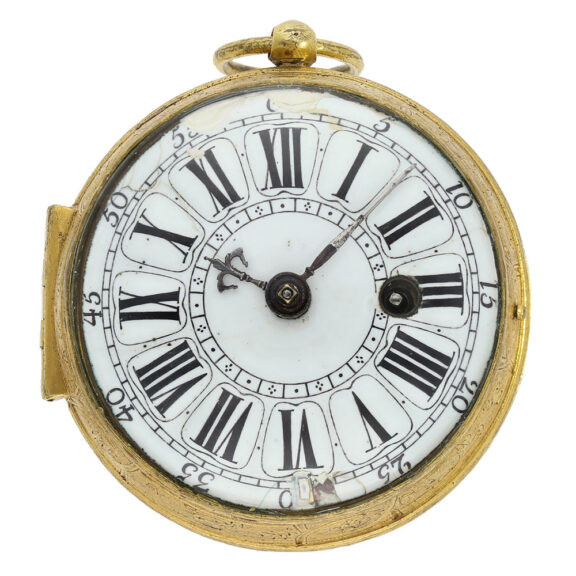
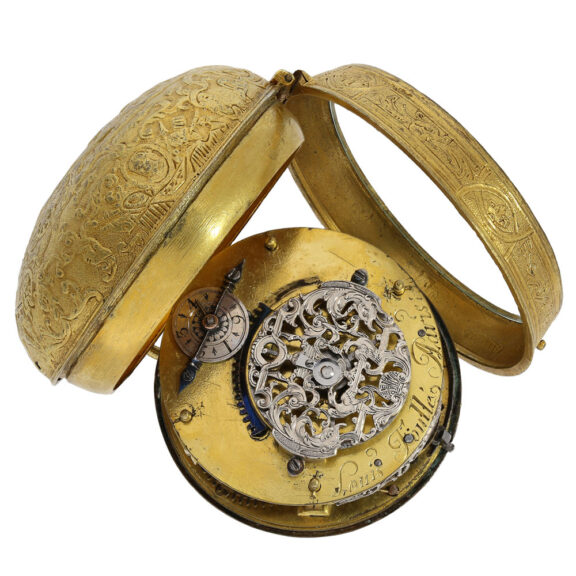
Rare French oignon watch with relief case Circa 1710
- Kenmerk
- HC0454
- Diameter
- 60 mm
- Estimate
- € 2.000 - 4.000
- Price sold
- € 2.400
Pocket watch with silver factory decoration on movement
–
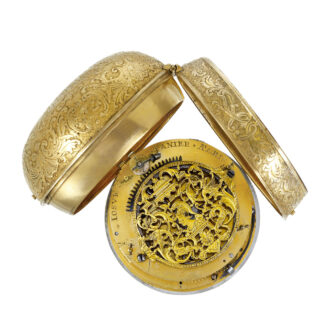
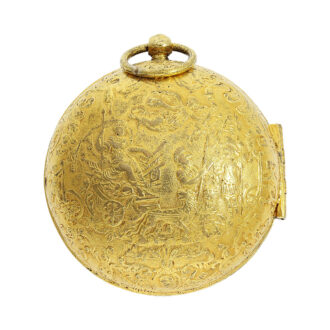
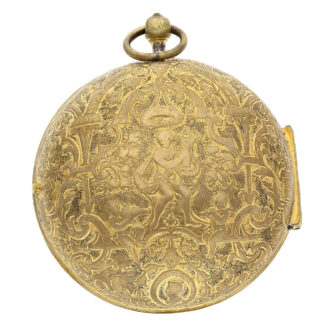
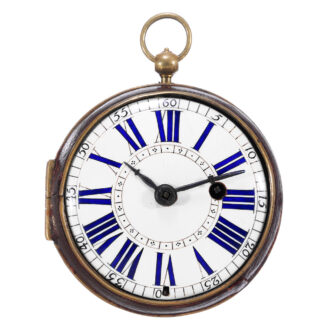
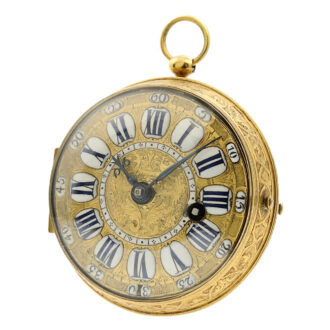
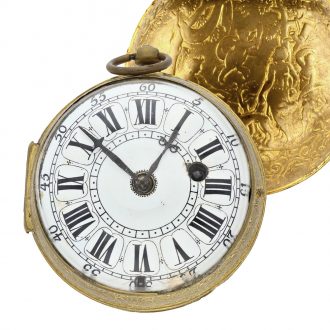
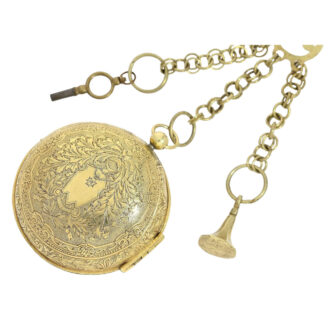
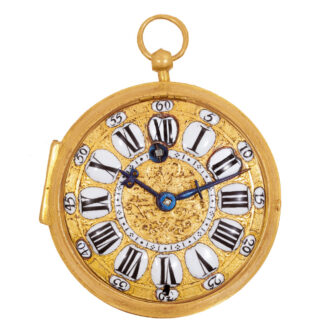
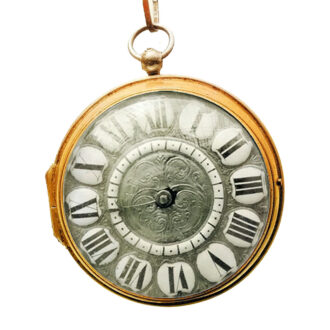
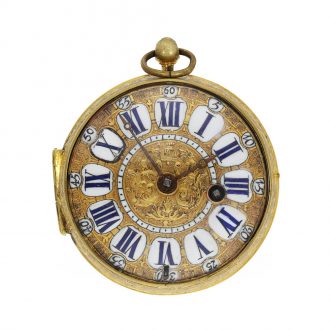
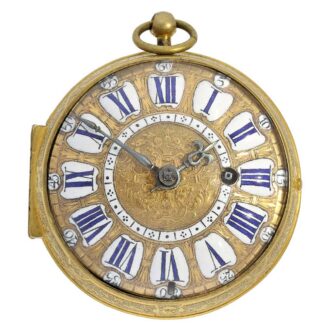
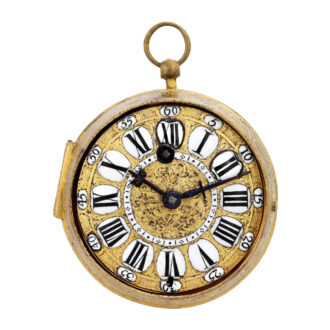
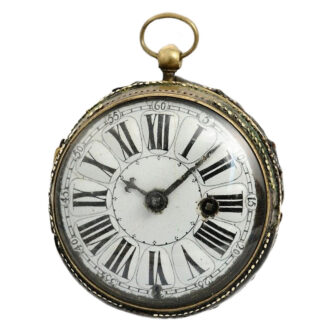
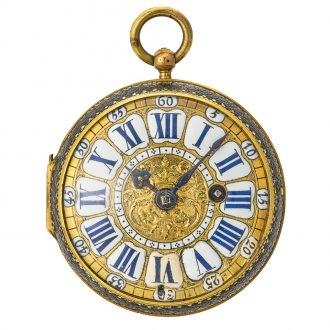
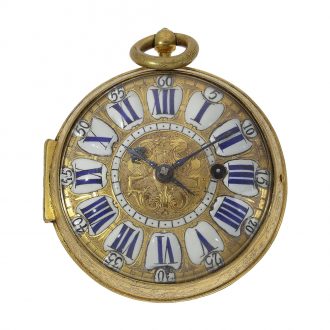
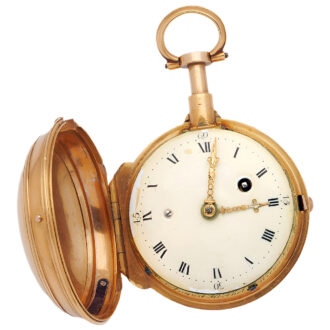
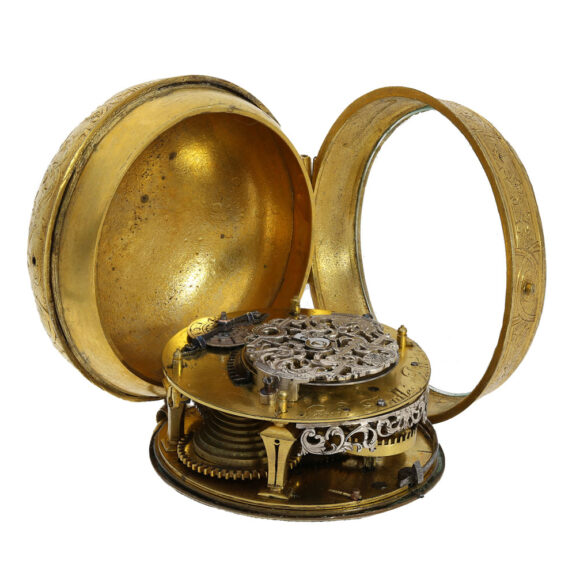
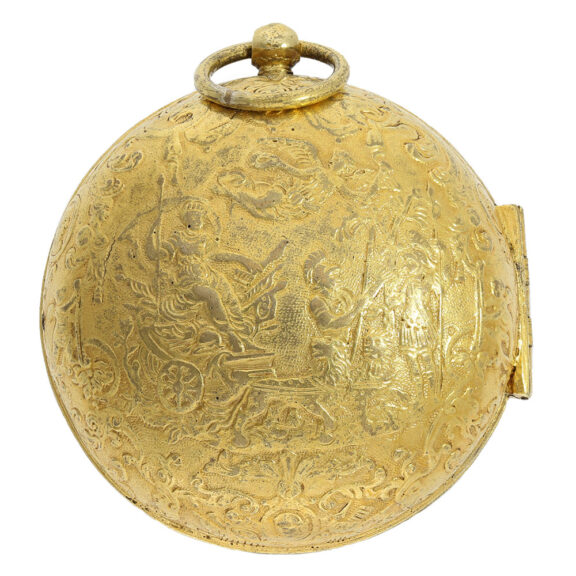
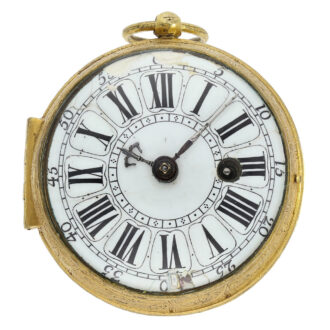
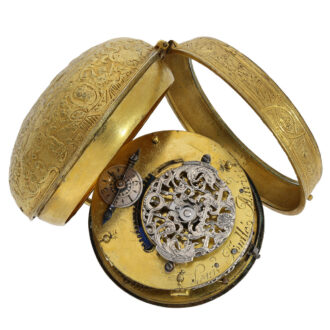
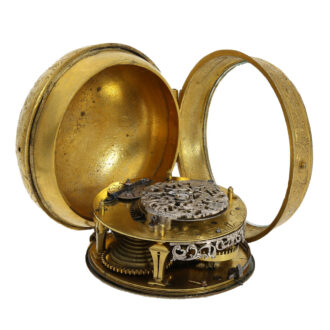
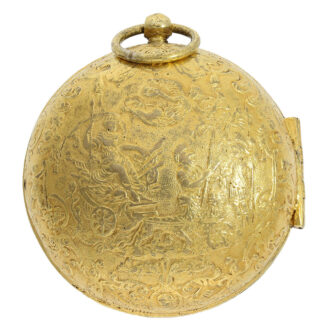
A rare oignon pocket watch with relief case and silver factory decoration, made by Louis Foulé in Paris, France, circa 1710. The fire gilt open faced case of the watch is adorned with high relief, depicting a mythological scene with a chariot on the back. The edge of the case is decorated with representations of various mythical creatures, portraits, and masks. The white enamel dial has Roman numerals for the hours and an outer ring with Arabic numerals for the minutes and its iron hands are beautifully crafted, adding to the elegance of the piece. The movement of the watch features an early spindle escapement with an unusual movement decoration made of silver.
Movement signed.
–
Diameter: 60 mm
–
Weight: 163 g
–
Signed: Louis Foullé Paris
–
Louis Foullé was a notable watchmaker in 18th century Paris, known for his exquisite and innovative designs. His work had a significant impact on the development of watchmaking in Paris. Foullé was known for his exceptional skills in crafting high quality watches, and he is credited with introducing several innovations to the field.
One of Foullé’s most significant contributions to watchmaking was the development of the cylinder escapement. This mechanism replaced the earlier verge escapement and made watches more accurate and reliable. Foullé’s cylinder escapement was widely adopted by other watchmakers in Paris and became the standard for watchmaking throughout Europe. Foullé was also known for his expertise in creating enamel dials for watches. He used a technique called champlevé enamel, which involved carving a design into a metal dial and then filling the cavities with enamel. This technique was highly prized and helped to establish Paris as a centre of excellence for watchmaking.
Some of his most notable watch designs include:
- The “Montre à tact” or “touch watch”, which was designed for blind people to tell time by touch.
- The “Montre à quatre temps” or “four time watch”, which displayed four different time zones on a single watch face.
- The “Montre à equation” or “equation watch”, which displayed the difference between mean time and solar time.
- The “Montre à repetition” or “repeating watch”, which chimed the time at the press of a button.
Signed: Louis Foullé Paris
Share this page: