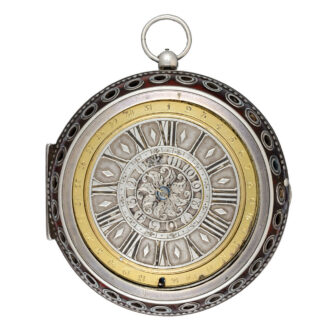
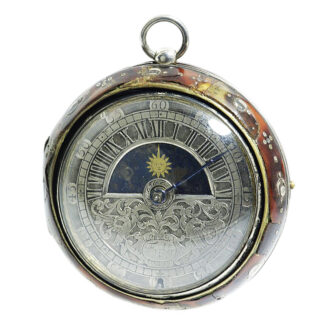
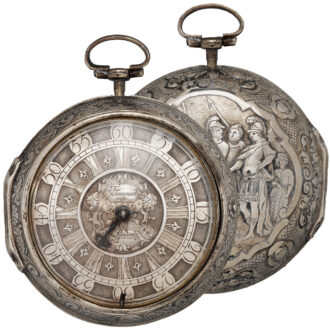
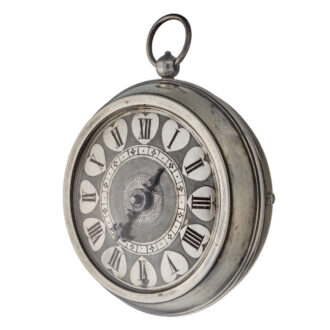
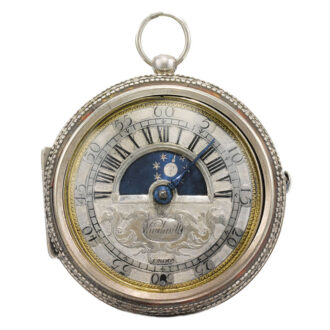
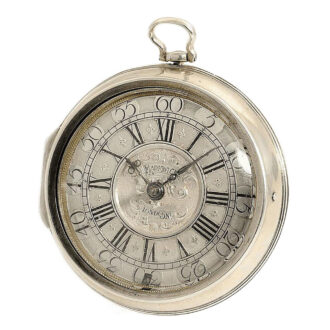
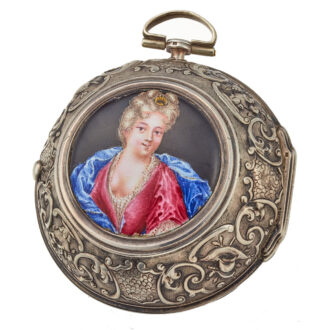
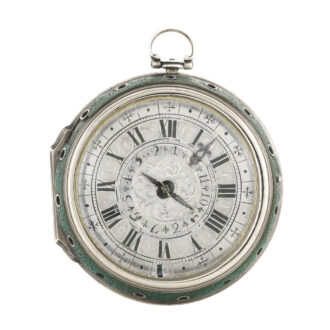
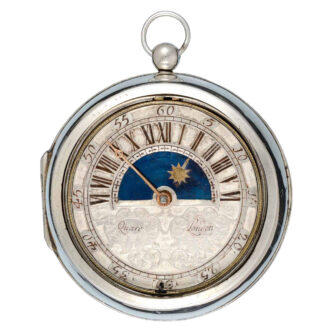
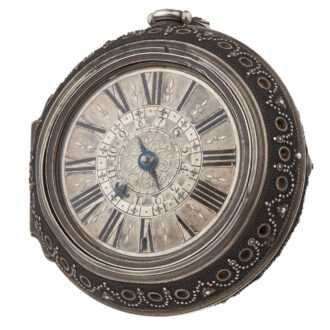
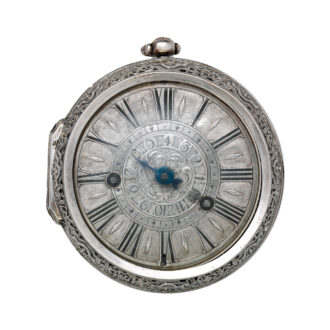
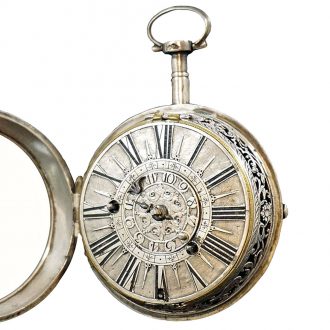
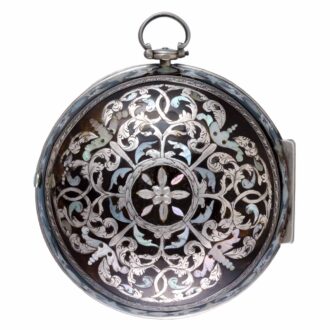
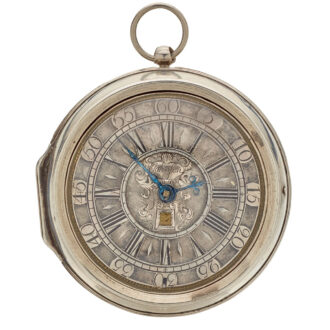
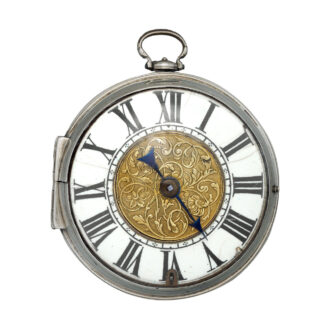
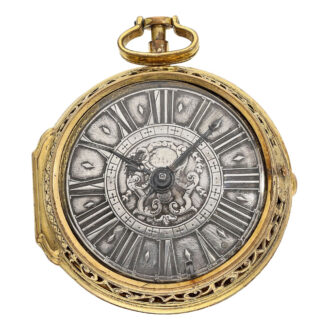
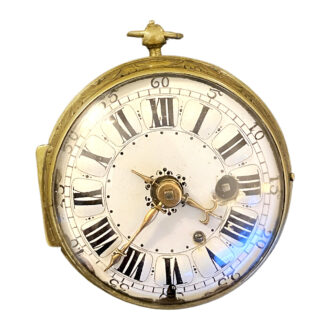
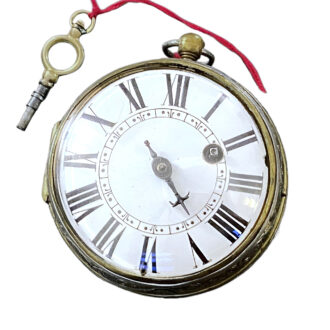
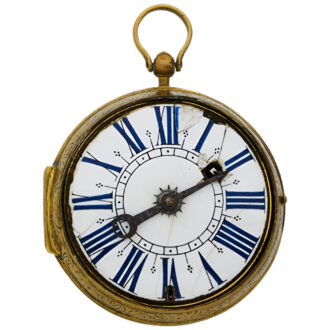
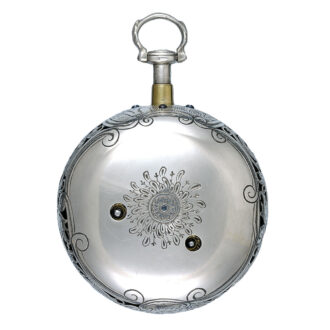
Striking and repeating pair cased silvered verge Circa 1695
- Kenmerk
- PA0011
- Diameter
- 56 mm
- Estimate
- € 10.000 - 15.000
- Price sold
- € 12.600
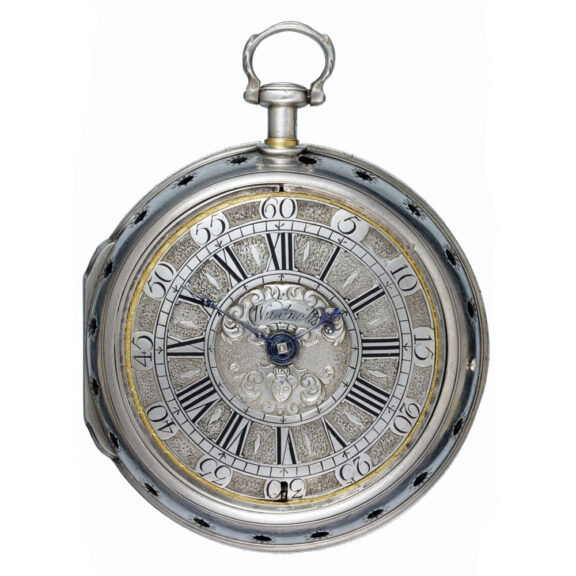
Rack striking verge pocket watch by Windmills
–
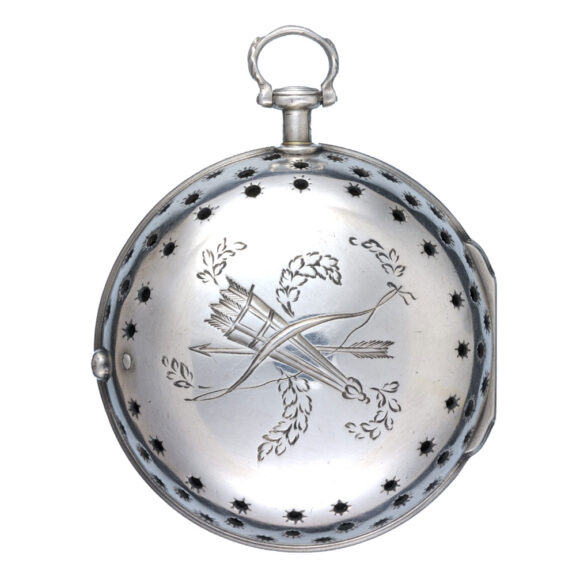
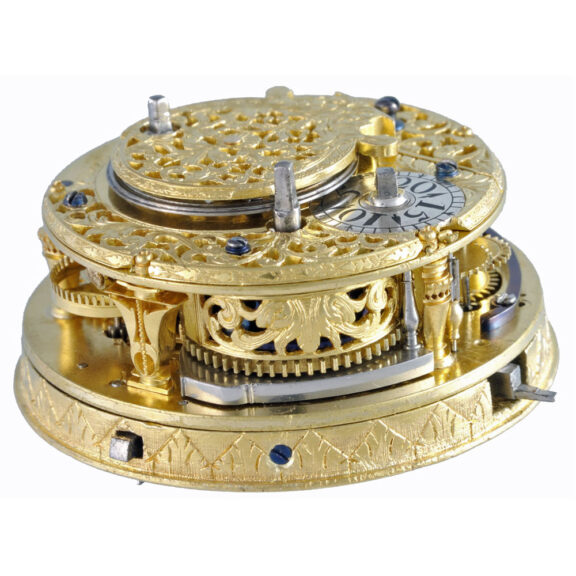
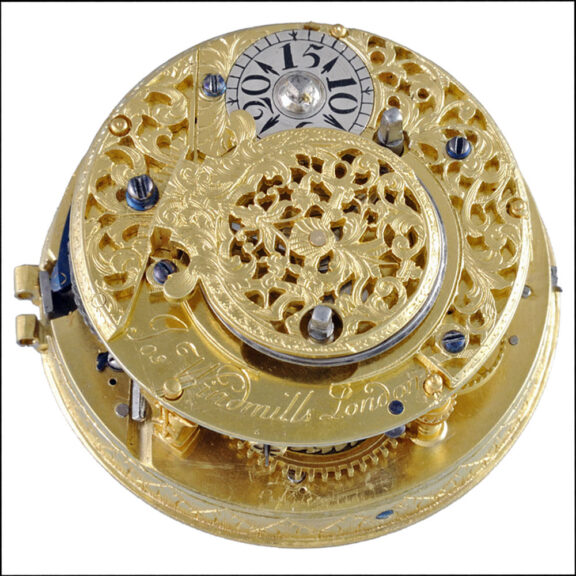
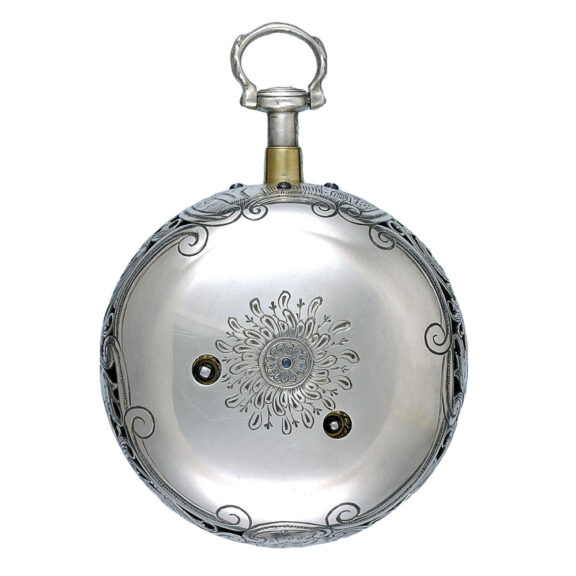
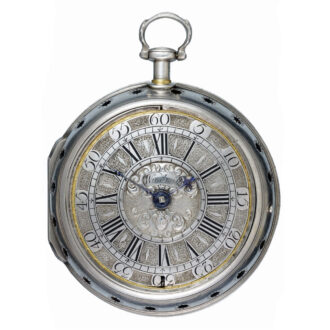
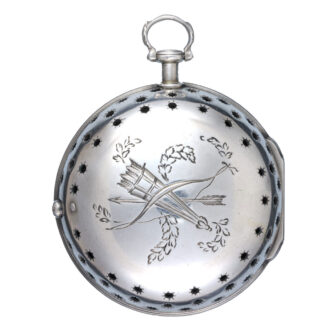
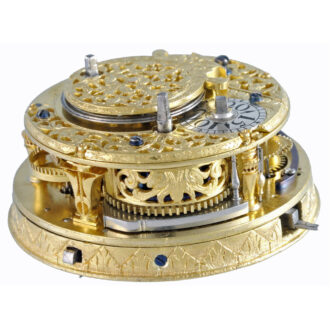
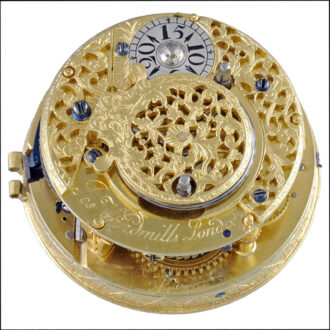
An English striking and repeating verge by Windmills in silvered pair cases circa 1695. Full plate fire gilt movement with two tulip pillars and three decorative turned pillars. Fusee and chain with worm and wheel barrel setup between the plates. Pierced and engraved cock with pierced and engraved foot. Steel balance, silver regulator disc. Pierced and engraved resting barrel for the strike. Push pendant and hour repeating and striking on a bell in the case. Signed silver champlevé dial with Roman and Arabic numerals, fine blue steel beetle and poker hands. Pierced and engraved silvered inner case, split bezel, push pendant to release the strike train. Strike silent lever in the bezel. The purpose made silvered outer case simply pierced with a series of holes.
–
Diameter: 56 mm
–
Signed: Jos Windmills London
–
An early example of rack striking with very rare use of a mechanism that ensures the correct hour is stuck when the repeat pendant is used. It seems Windmills wished to keep this secret by only allowing access to the under dial work to someone who knew how to remove the dial. The deep dial plate is slid onto three pegs fixed to the front plate of the movement. These were originally secured by pins under the dial which could only be removed by releasing the dial which was fixed by four bayonet feet. This necessitated unscrewing the case latch pin before rotating the dial to be able to lift it. At some time a watchmaker has sympathetically altered the watch by removing the bayonet feet and replacing them with conventional ones and fixed the dial plate with three small blue steel screws. Joseph Windmills, free of the Clockmakers Company 1671, Master 1702 – 1723. Entered into partnership with his son in 1700 after which the signature used was changed.
–
Diameter: 56 mm
–
Signed: Jos Windmills London
–
An early example of rack striking with very rare use of a mechanism that ensures the correct hour is stuck when the repeat pendant is used. It seems Windmills wished to keep this secret by only allowing access to the under dial work to someone who knew how to remove the dial. The deep dial plate is slid onto three pegs fixed to the front plate of the movement. These were originally secured by pins under the dial which could only be removed by releasing the dial which was fixed by four bayonet feet. This necessitated unscrewing the case latch pin before rotating the dial to be able to lift it. At some time a watchmaker has sympathetically altered the watch by removing the bayonet feet and replacing them with conventional ones and fixed the dial plate with three small blue steel screws. Joseph Windmills, free of the Clockmakers Company 1671, Master 1702 – 1723. Entered into partnership with his son in 1700 after which the signature used was changed.
Signed: Jos Windmills London
Share this page: