Swedish chronometer with power reserve indicator Circa 1898
- Kenmerk
- AD8564
- Diameter
- 63 mm
- Estimate
- € Array - Array
- Price sold
- € 8.700
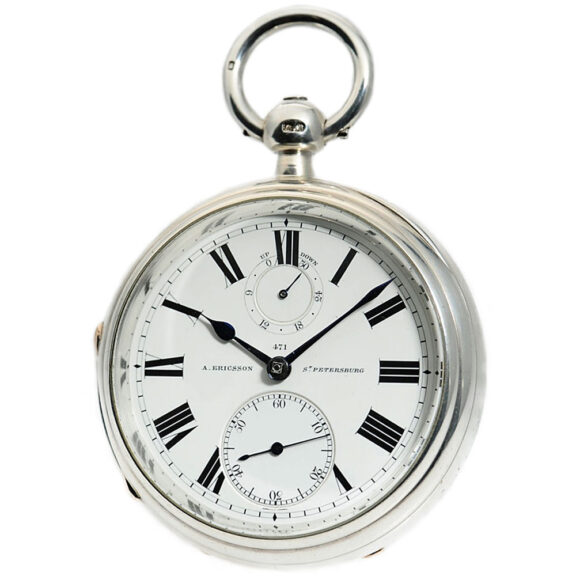
Heavy silver deck chronometer by August Ericsson
–
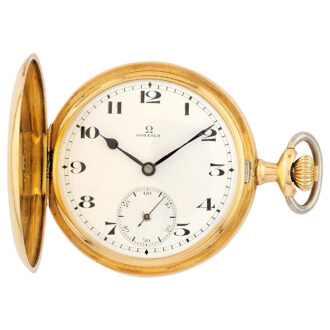
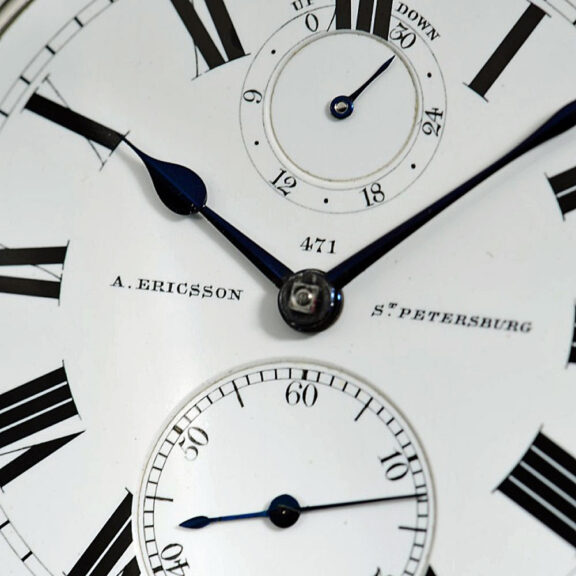
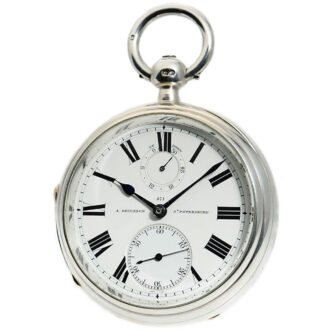
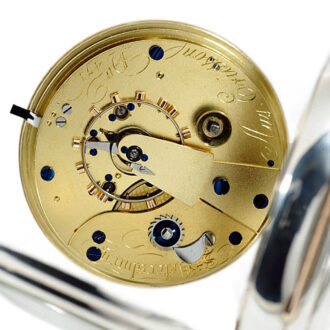
A very fine Swedish deck chronometer with a 30-hour power reserve indicator and extra heavy case from F. Thoms, circa 1898.
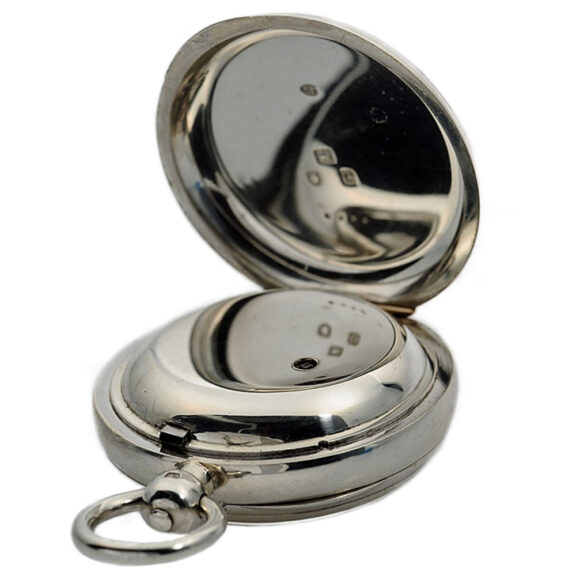
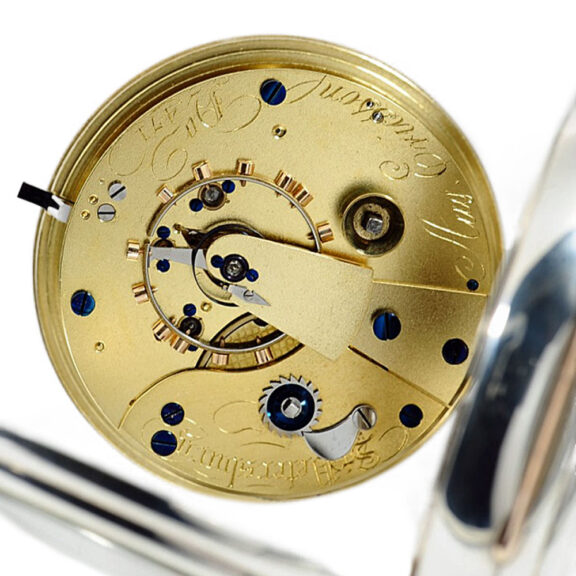
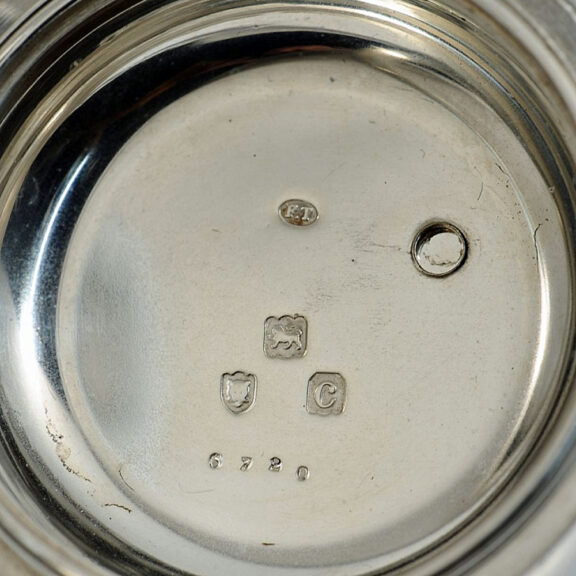
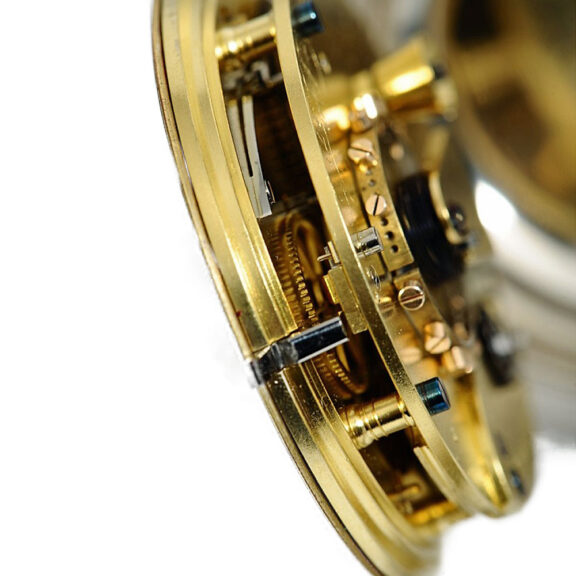
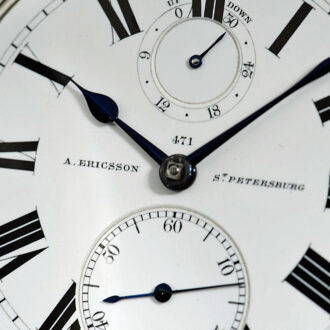
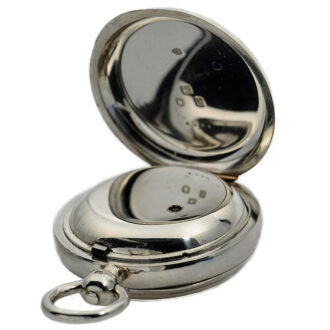
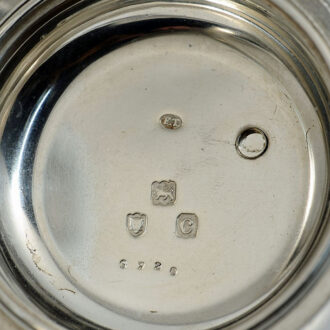
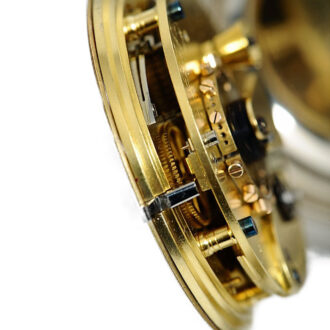
Silver, polished, tiered case with gold hinges. Signed white enamel dial with radial Roman hours, auxiliary seconds and blued spade hands. Signed and numbered, frosted gilt full plate movement, ébauche (draft version) by Victor Kullberg, chain and fusee, case maker’s punch mark FT for Frederick Thoms, spring detent escapement according to Thomas Earnshaw, heavy gold screw chronometer balance, free-sprung blued helical balance spring and chatoned diamond endstone on balance.
–
Diameter: 63 mm
–
Weight: 242 g
–
Signed: A. Ericsson St. Petersburg
–
August Ericsson was a well-reputed Swedish watchmaker and retailer having his business in St. Petersburg, starting in 1865. He used, only top-of-the-line movements like Ulysse Nardin, IWC, Longines and even Victor Kullberg in his pocket watches and deck chronometers. Delivered watches to the Csar and his family and the Russian Navy. He died in 1915.
–
(Jacob) Victor Kullberg was born on August 13, 1824, in Visby on the island of Gotland, Sweden. He was the son of Johan Kullberg (1800-1876) and Hedvig Christina Ahlström (1801-1840) and was the eldest son from a family with six sons, three of whom died shortly after birth. From 1840, Kullberg completed an apprenticeship as a watchmaker with the local watch and chronometer maker Victor Söderberg. His further professional training was carried out by the most famous watchmaker in Scandinavia, Louis Urban Jürgensen in Copenhagen. At the age of 27, he travelled to the World Exhibition in London in 1851, where he made contact with other chronometer makers. He then opened his own factory at 105 Liverpool Road in 1856 where marine chronometers and precision pocket watches were made. Characteristic of his marine chronometers is the chain and worm drive in the reversed fusee (crossed chain) arrangement, a chain guide for the worm proposed by the French watchmaker Julien Le Roy. This design significantly reduces the pressure on the journals of the worm shaft compared to the version with a non-crossing chain. Kullberg also created pocket watches with a chronometer escapement, a crown winding system designed by him and a toothed barrel. His chronometers were characterized by very well-thought-out constructions and neat craftsmanship.
–
Frederick Thoms was a watchcase maker. He established his business in 1881 or 1883 at 200, Goswell Road, Clerkenwell. In 1889 Thoms acquired the business of Thickbroom and moved to his address 41, Spencer Street also in Clerkenwell. In 1897 he added the making of pendants to his business. In 1908 he moved again, this time to 25, Spencer Street, where he stayed until his death in 1930.
Signed: A. Ericsson, St. Petersburg
Share this page: