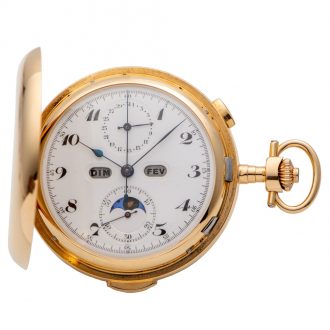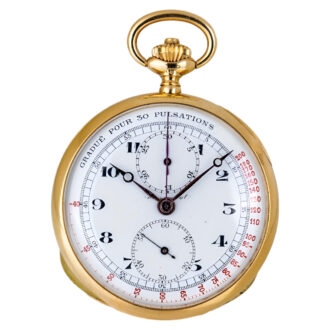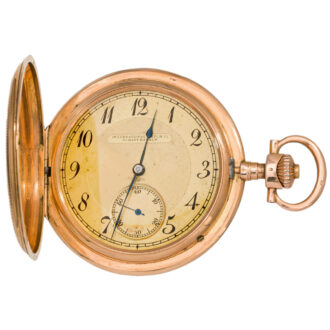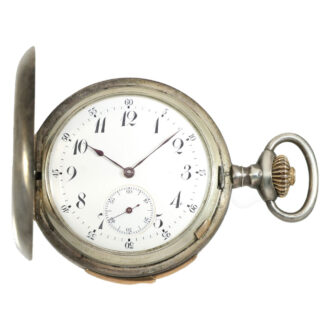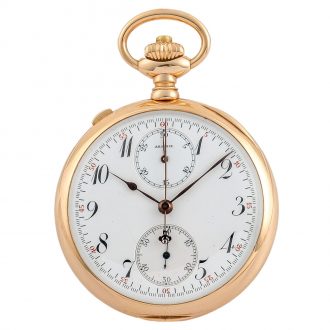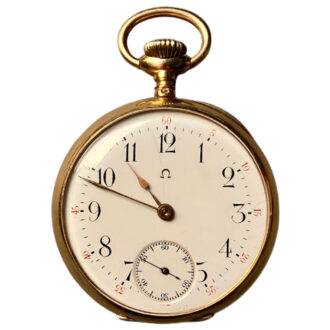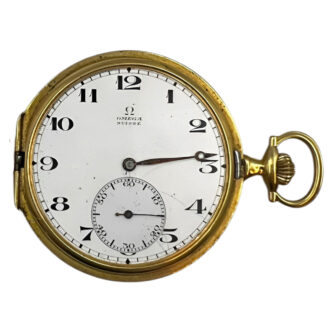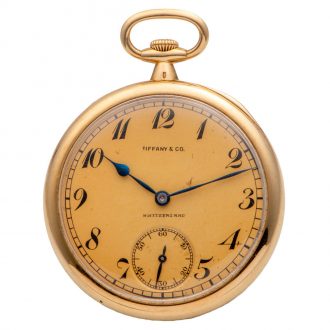
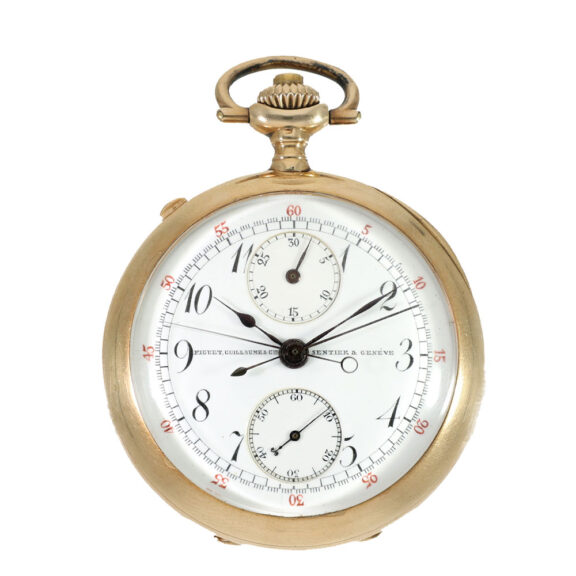
Swiss 14 carat gold high quality rattrapante chronograph Circa 1915
- Kenmerk
- HC2255
- Diameter
- 47 mm
- Estimate
- € 2.500 - 4.500
- Price sold
- € 3.100
High quality rattrapante chronograph
–
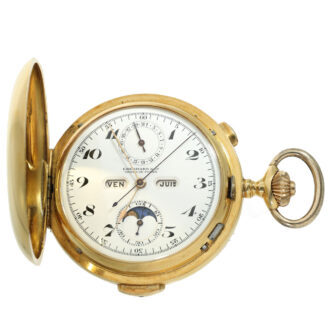
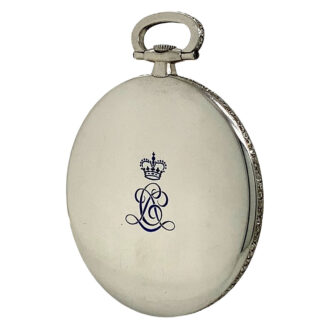
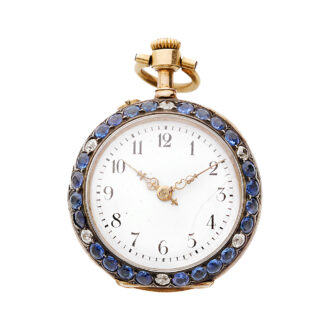
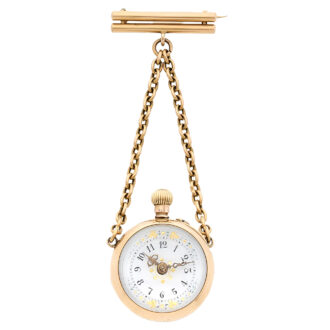
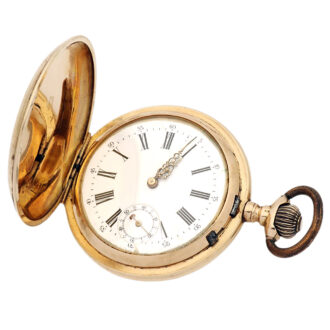
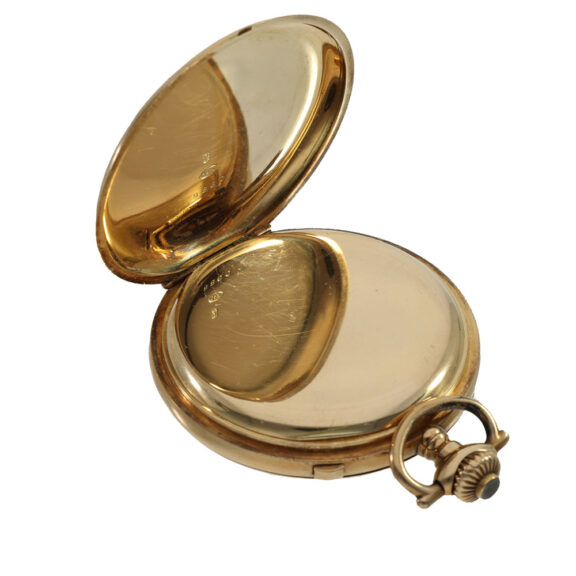
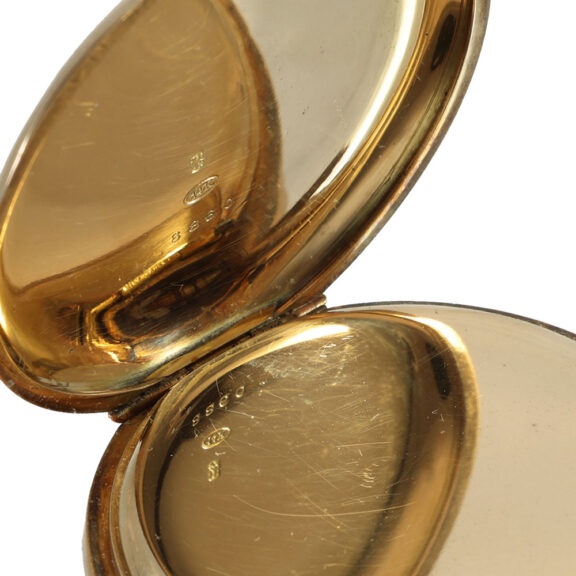
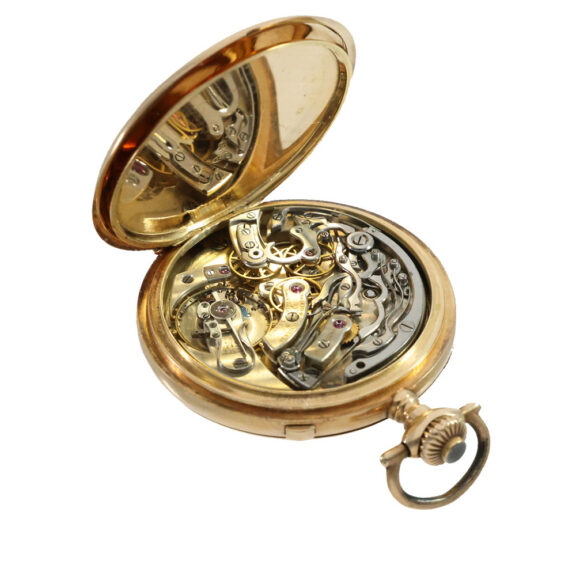
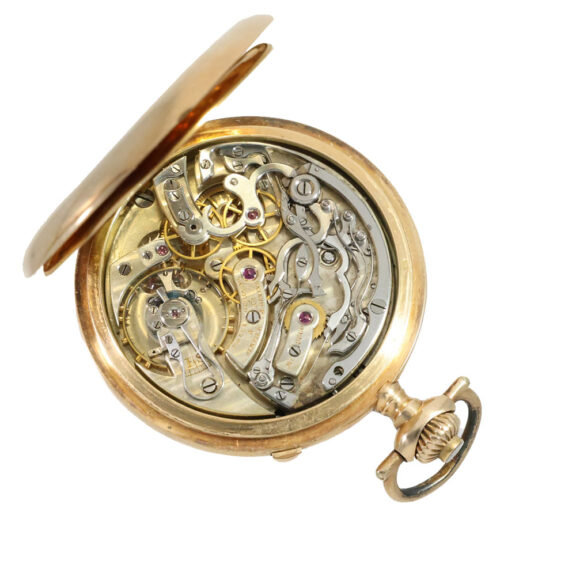
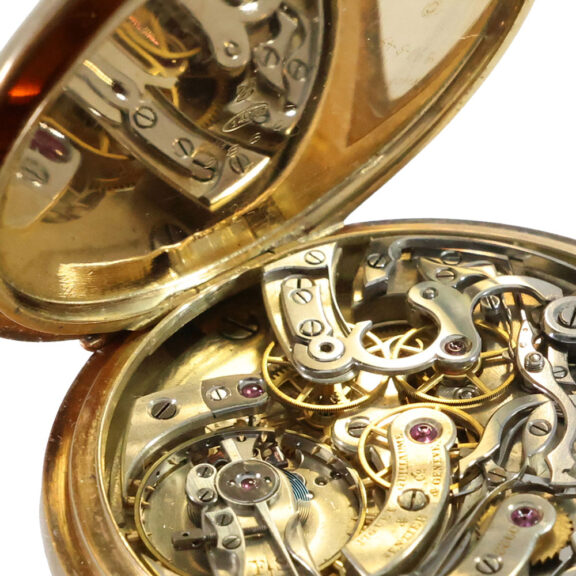
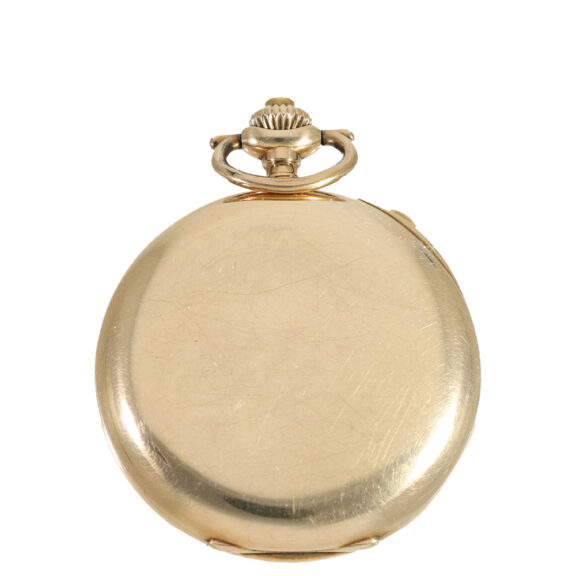
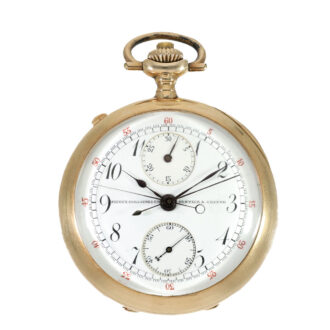
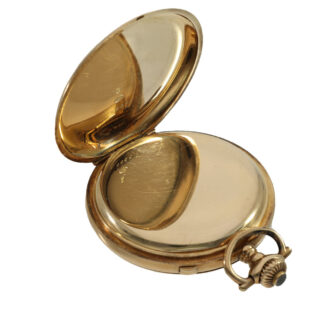
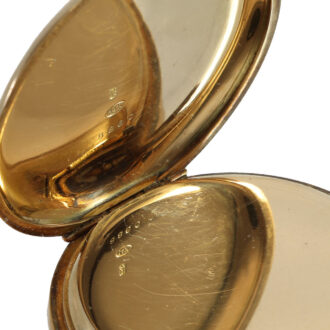
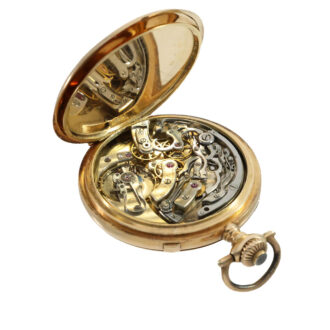
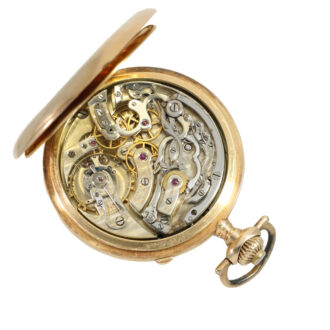
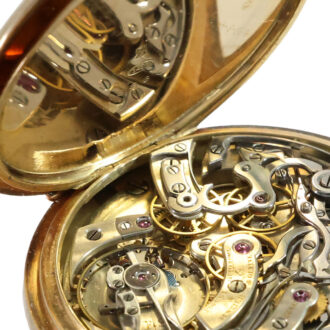
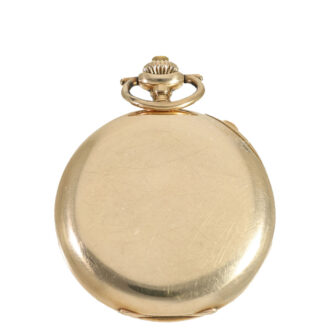
A high quality rattrapante chronograph pocket watch, made by Piguet, Guillaume et Cie. in Geneva, Switzerland, circa 1915. This watch features a polished 14 carat gold savonette (full hunter) case with a plain, smooth back lid, alongside a matching gold plated inner cuvette stamped with case hallmarks and serial number inscriptions. The watch features a white enamel dial detailed with Arabic numerals, an outer minute and split seconds track with red five minute markers, a 30 minute register at 12 o’clock, a constant seconds sub dial at 6 o’clock and signature blued steel spade hands paired with a central chronograph hand. The watch contains a highly complex split seconds anchor chronograph movement which is decorated with Geneva Striping and features a bi metallic compensation balance, a swan neck regulator and a traditional lever escapement.
The dial and movement are signed and the case and movement bear matching numbers.
–
Diameter: 47 mm
–
Weight: 79 g
–
Signed: Piguet, Guillaume & Cie Sentier & Genève
–
Piguet, Guillaume et Cie.
The company was founded in the late 1880s (around 1888) by the master watchmaker William-Alfred Piguet. In French speaking Switzerland, the name “William” translates to “Guillaume,” which explains the company name Piguet, Guillaume & Cie.
The critical timeline of their operation includes the following notable milestones:
- 1885 (The Split): Founder William-Alfred Piguet branched off from his brother Victorin’s workshop (Victorin Piguet Frères) to begin operating independently under the name Piguet Guillaume.
- Late 1880’s (Formal Incorporation): By at least 1888, the firm was formally established and structured as Piguet, Guillaume & Cie, establishing their dual footprint in both Le Sentier and Geneva.
- 1892-1893 (International Fame): The company reached its peak renown during this era. In 1892, William-Alfred successfully filed Swiss patents for highly advanced split second mechanisms. In 1893, they represented the pinnacle of Swiss watchmaking by showcasing their ultra complicated repeaters at the World’s Columbian Exposition in Chicago.
- 1900-1910 (The Golden Era): The majority of surviving Piguet, Guillaume & Cie high grade pocket watches found in the market today date squarely to this decade.
- 1917 (The End of Production): The company effectively ceased operations following the death of its founder, William-Alfred Piguet, in 1917.
Signed: Piguet, Guillaume & Cie Sentier & Genève
Share this page: