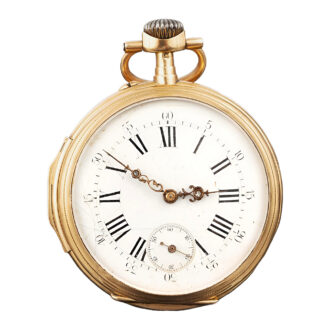
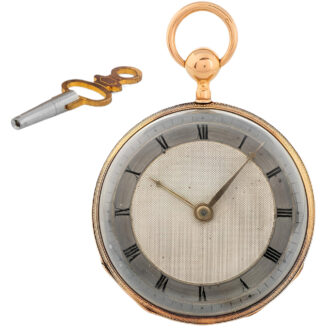
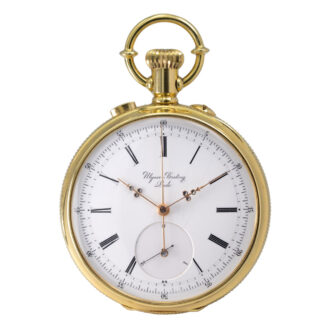
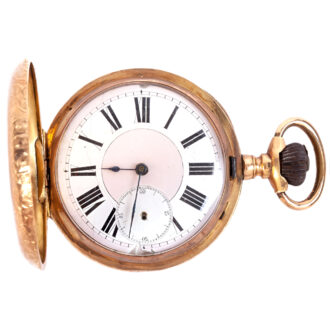
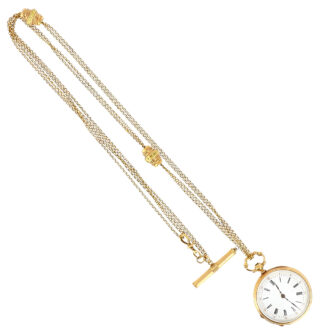
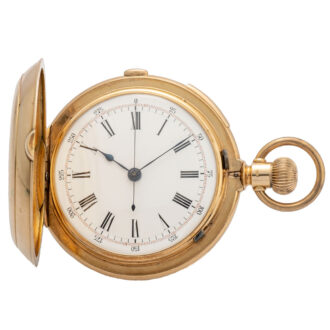
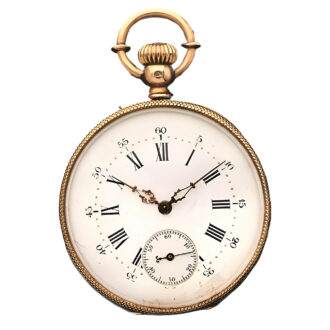
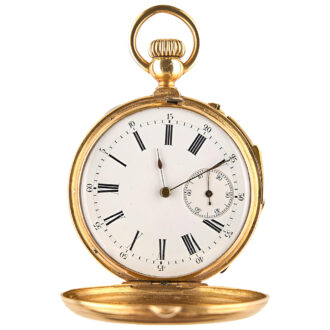
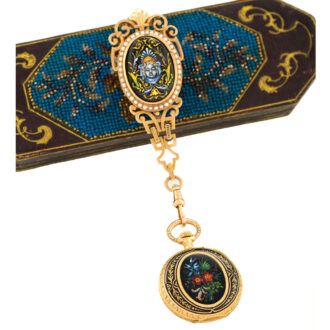
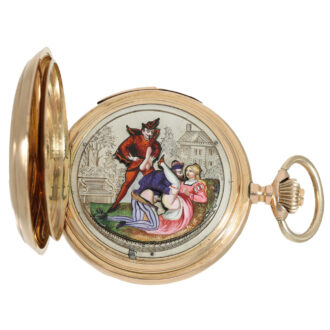
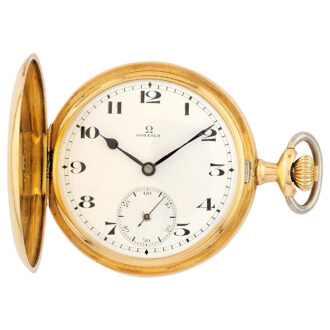
Swiss 14 carat gold hunter case watch with chain Circa 1890
- Kenmerk
- HC1675
- Diameter
- 54 mm
- Estimate
- € 3.000 - 5.000
- Price sold
- € 2.250
Pocket watch with anker chronometer escapement
–
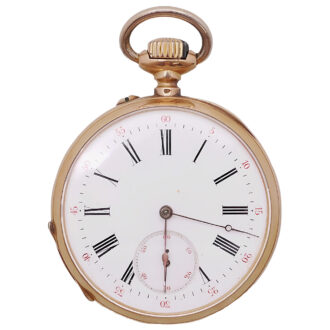
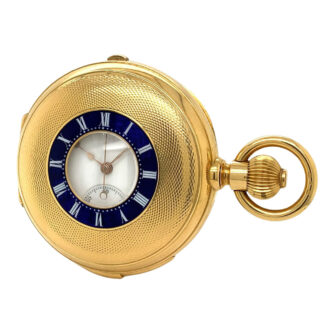
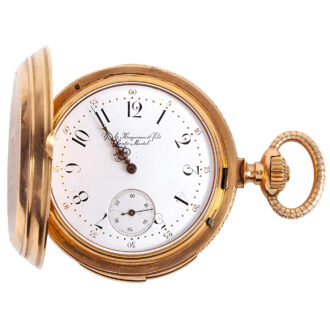
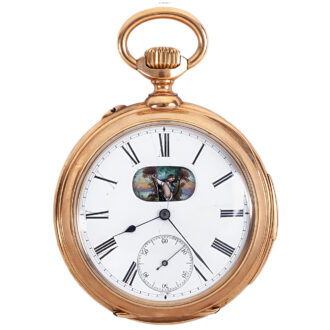
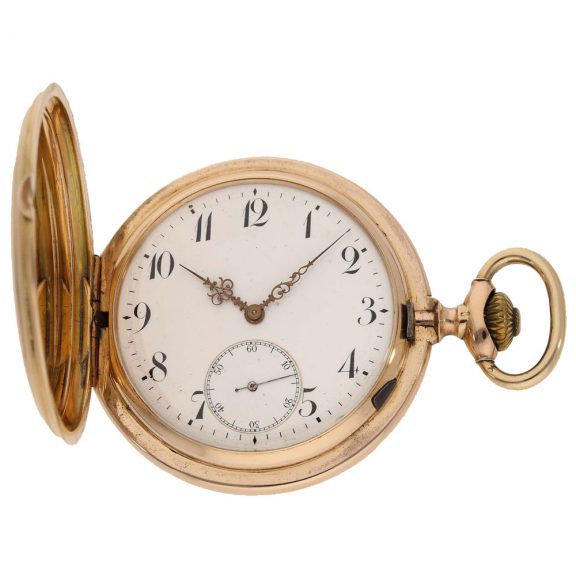
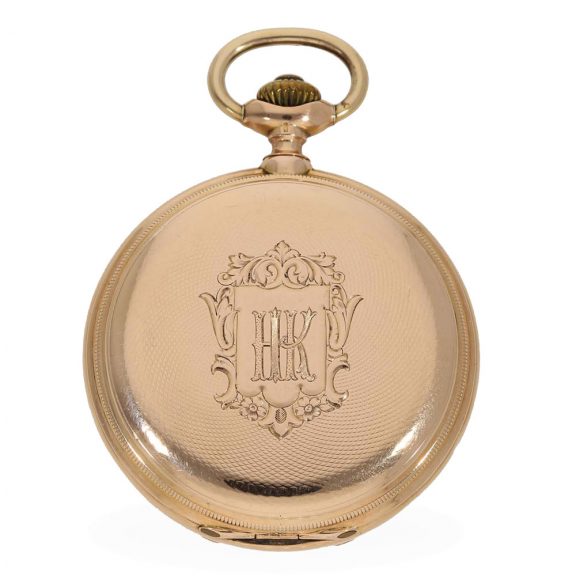
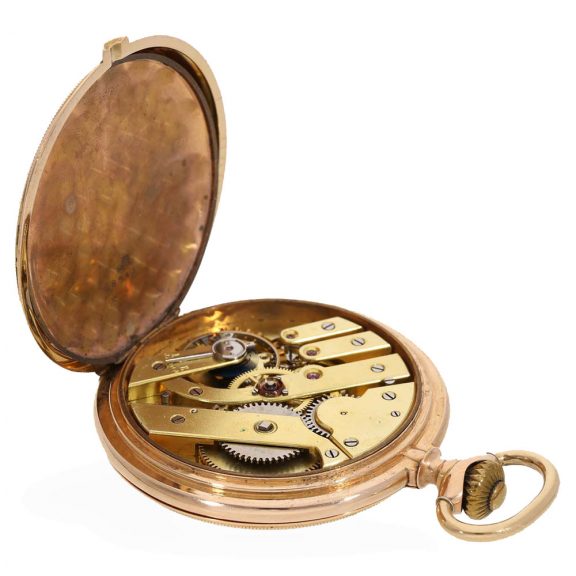
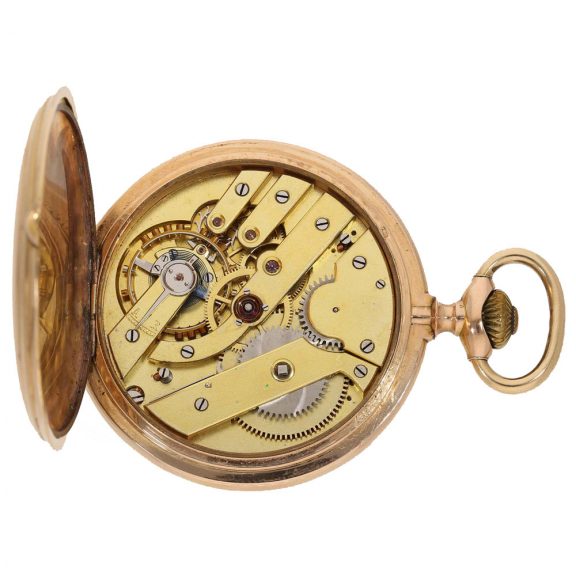
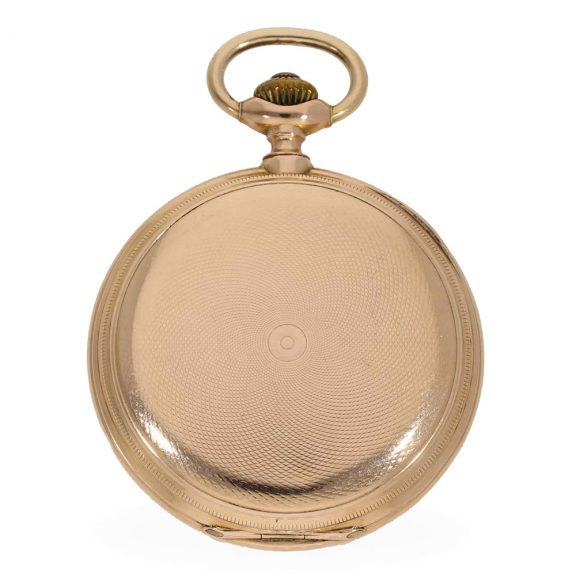
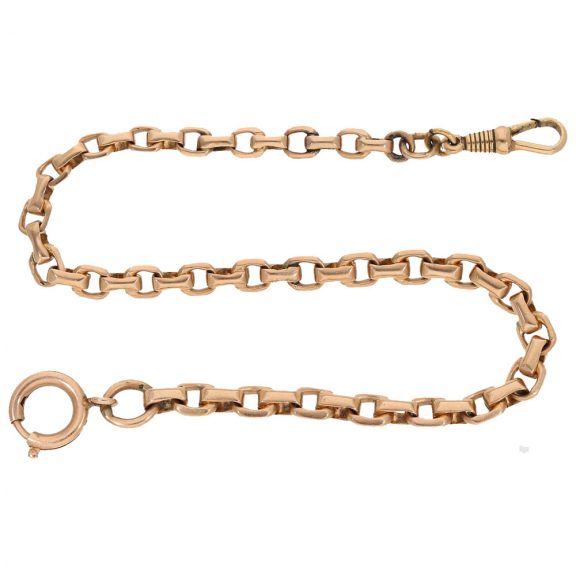
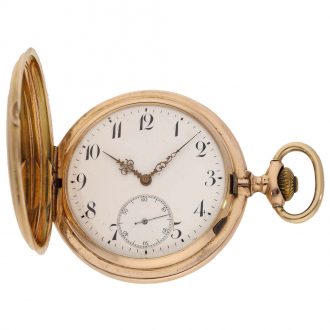
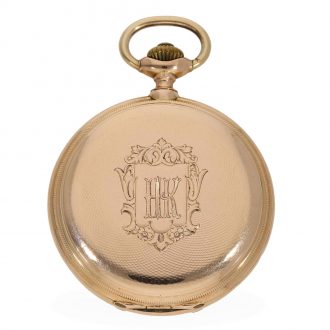
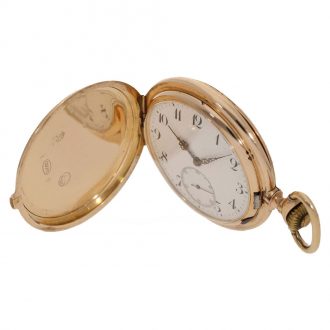
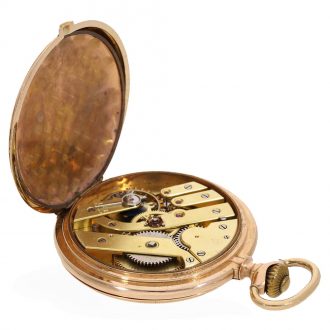
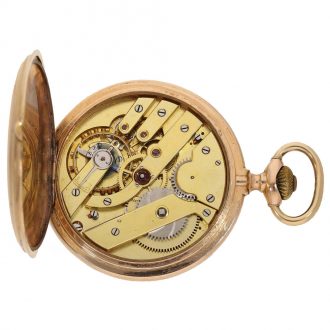
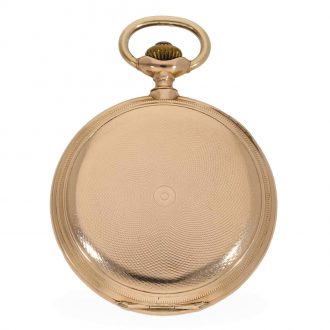
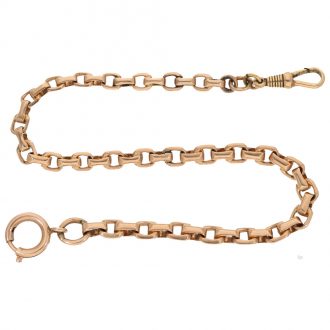
A gold full hunter cased watch with high quality chain, which is crafted from 14 carat gold, made by Girard-Perregaux in la Chaux-de-Fonds, Switzerland, circa 1890. This watch features a water drop shaped case crafted from 14 carat gold, which is numbered, engine turned on both sides and has a spring lid with a monogram in the center. The white enamel dial has Arabic hour numerals, a subsidiary seconds dial at 6 o’clock and gold hands. The movement features an exquisite anker chronometer escapement and a large chronometer balance.
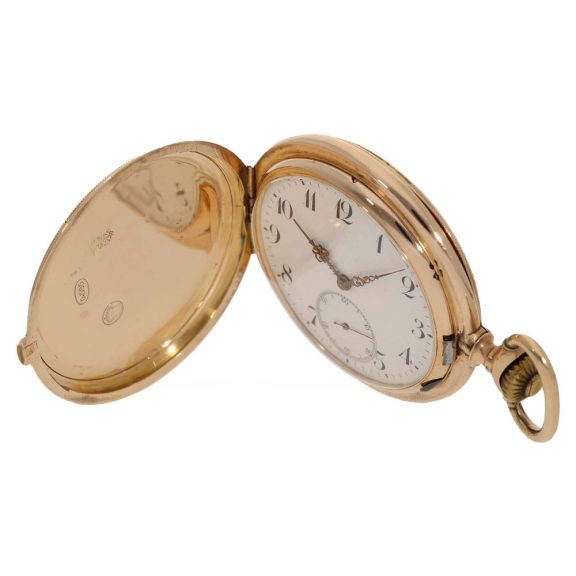
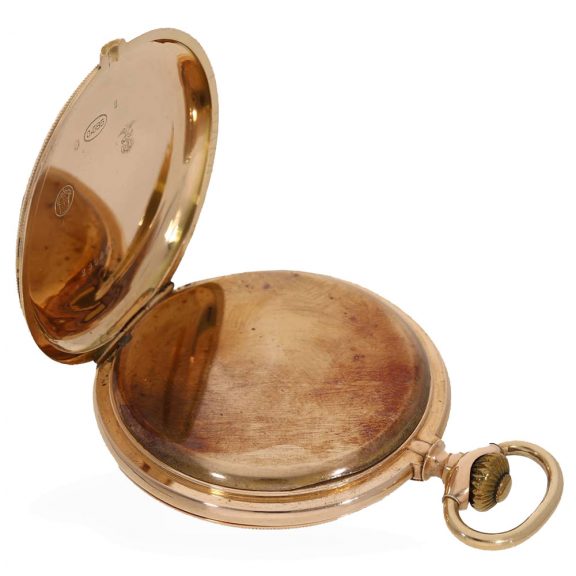
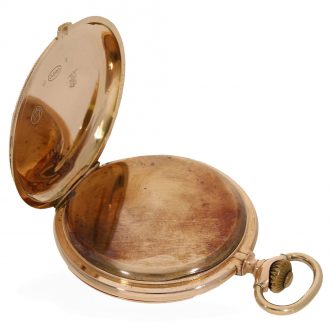
The case is signed.
–
Diameter: 53,5 mm
–
Length: 250 mm (chain)
–
Weight: 101 gr. (watch)
16 gr. (chain)
–
Signed: Girard-Perregaux
–
Girard-Perregaux
Girard-Perregaux’s history began in 1791 with the founding of Jean-François Bautte’s watchmaking company. The brand as it exists today was formed in 1856 when watchmaker Constant Girard married Marie Perregaux and combined their surnames. The company grew internationally, and in 1906, it fully integrated with the Bautte company, expanding its legacy.
–
Early history and formation
1791: Jean-François Bautte begins a watchmaking business in Geneva.
1852: Constant Girard founds his own company, Girard & Cie, in La Chaux-de-Fonds.
1854: Constant Girard marries Marie Perregaux, whose family was also prominent in watchmaking.
1856: The Girard-Perregaux Manufacture is officially established by the couple, combining their names.
–
Growth and technical innovation
The new company achieved international success, partly thanks to the Perregaux family’s network in places like Japan and South America.
Around 1860: Constant Girard develops a pocket watch with a tourbillon, which was later recognized with a first class award from the Neuchâtel Observatory.
1880: Girard-Perregaux produces its first major series of wristwatches for the German navy, a significant event as pocket watches were still the norm.
1889: The “Three Bridges” design, with its signature arrow tipped bridges, is patented and wins a gold medal at the Paris Universal Exhibition.
–
Further development
1906: Girard-Perregaux fully merges with the Bautte company, incorporating its legacy and workshops into the brand’s structure.
1992: The Italian entrepreneur Luigi Macaluso takes over management, initiating a new era for the company, which includes collaborations with Ferrari and the development of modern collections.
The brand continued to innovate, introducing high-frequency movements in the 1960s and pioneering quartz movements in the 1970’s.
–
Recent updates and status
Girard-Perregaux still exists and continues to operate as an independent, high end “manufacture”, meaning it produces its own movements and watches. The company, which dates back to 1791, regained its independence in 2022 after a management buyout.
Independent ownership: In 2022, the French luxury group Kering sold its 100% stake in Girard-Perregaux and Ulysse Nardin to the management of the brands, led by CEO Patrick Pruniaux.
Continued production: Despite this change in ownership, the company has remained in continuous operation and is still a highly regarded player in the luxury watch market.
New releases: Girard-Perregaux continues to innovate with new timepiece releases, such as the Laureato Fifty in 2025, which features a new in-house movement.
High end focus: The brand continues to focus on haute horlogerie (fine watchmaking) and its iconic collections, including the Laureato, Vintage 1945, and the Tourbillon with Three Gold Bridges
Signed: Girard-Perregaux
Share this page: