Swiss carillon repeater with jacquemarts and automaton Circa 1870
- Kenmerk
- AD9337
- Diameter
- 57 mm
- Estimate
- € 35.000 - 60.000
- Price sold
- € 49.800
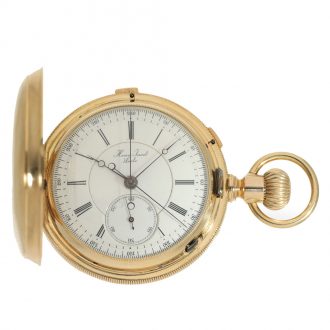
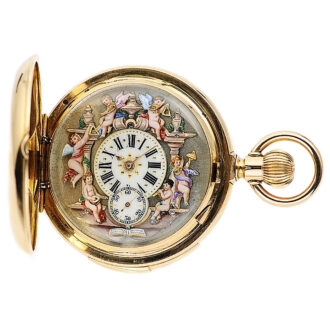
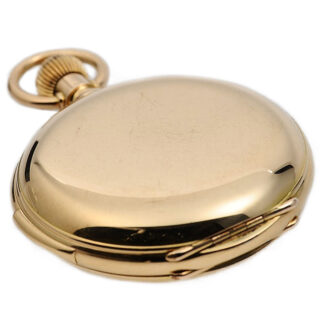
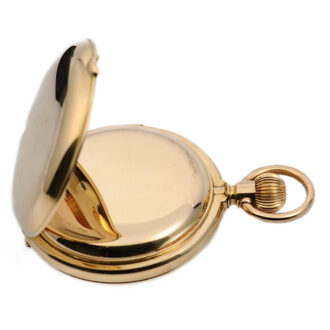
Heavy gold hunting cased pocket watch by Henri Grandjean & Cie.
–
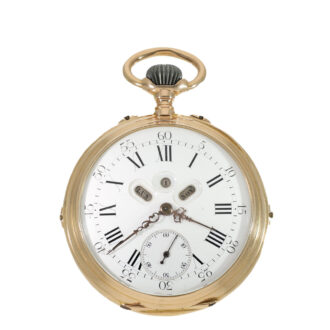
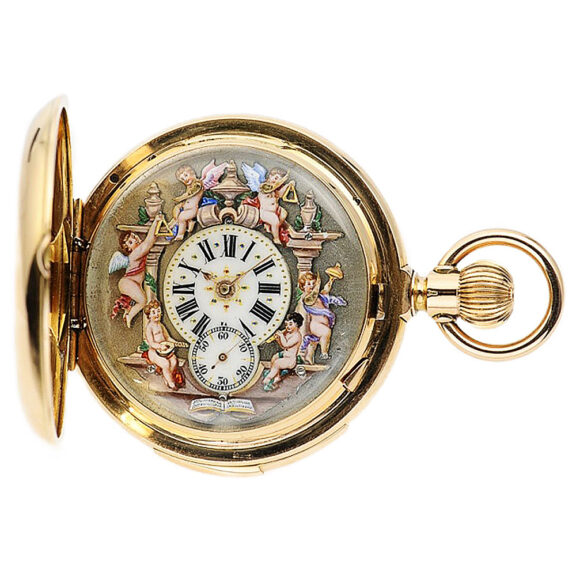
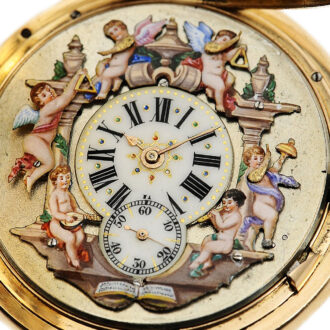
An extraordinary and heavy Swiss minute repeating hunting cased pocket watch Carillon, with 3 jacquemarts and automaton, circa 1810.
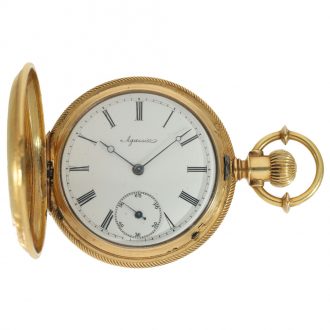
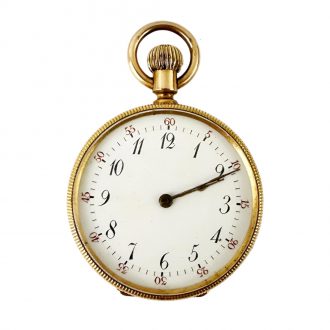
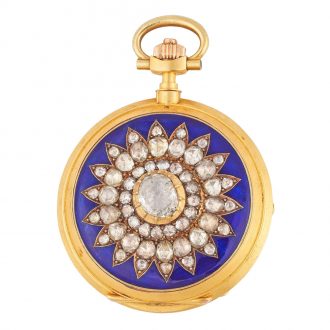
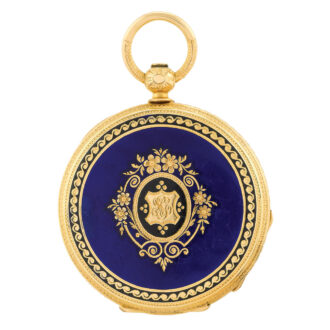
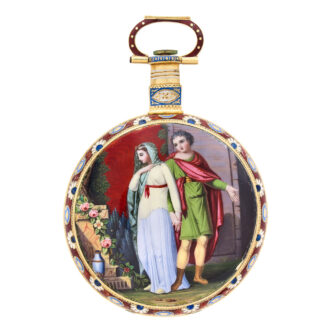
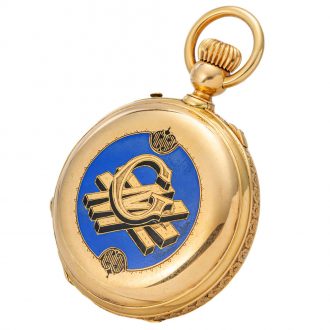
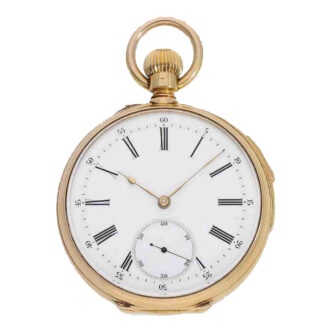
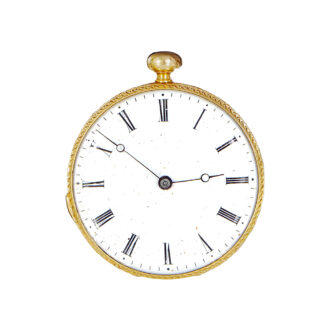
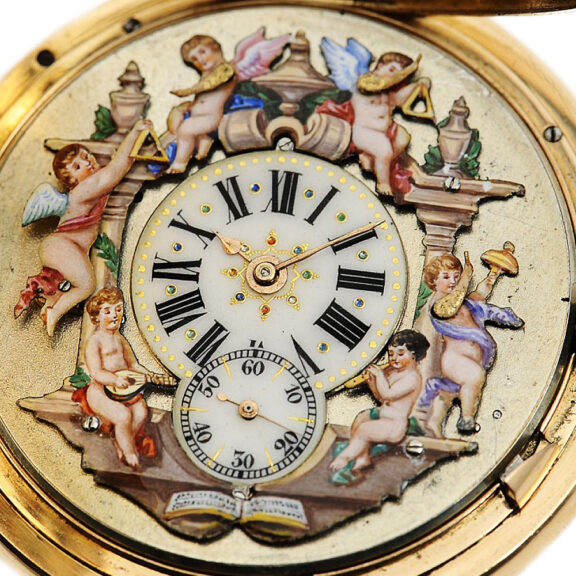
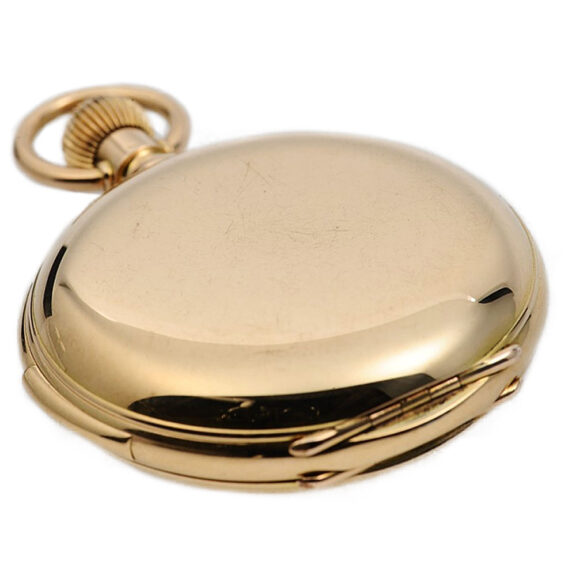
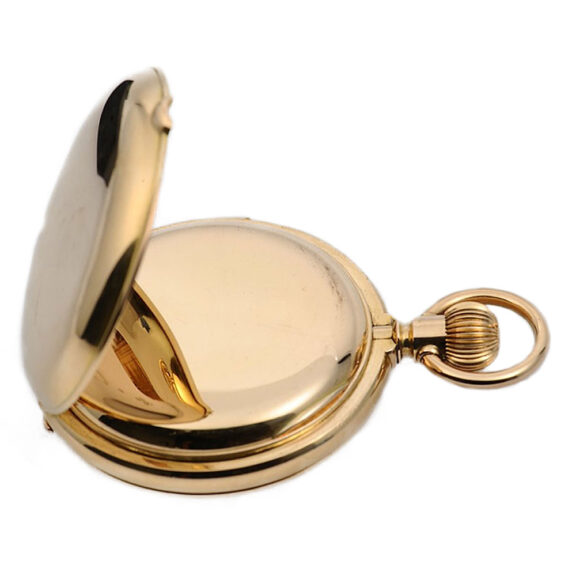
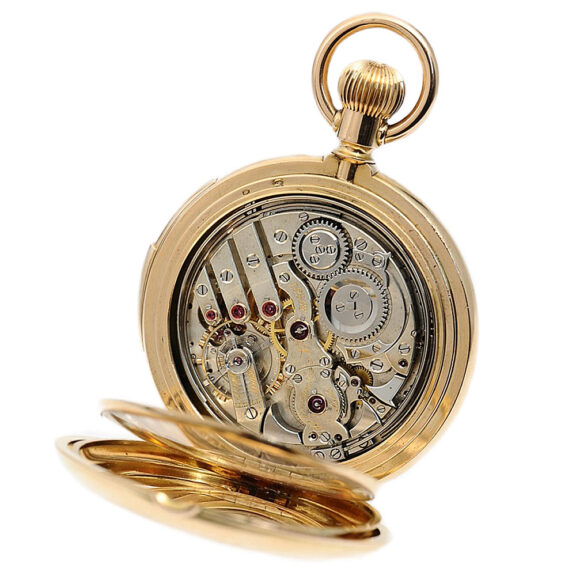
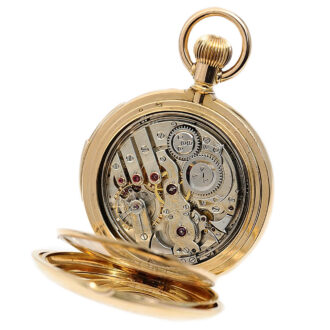
18-Carat gold, polished, à goutte case, gold dome, and glazed movement. Frosted gilt dial, central small enamel hour chapter dial with radial Roman numerals with gold inlays and coloured stones, a small subsidiary dial for auxiliary seconds below, spade gold hands. Screwed-on putti playing music before a triumphal arch, polychrome enamelling: on the left a putto with a triangle in his hand moving up and down a column; a second putto strikes the hour on the triangle. To the right a putto strikes the quarter-hour on his triangle, below is another putto striking the minute on a bell. Bridge movement, rhodium-plated, Geneva Stripes decoration, signed, three hammers / three gongs, screwed gold chatons, gold screw compensation balance, and counterpoised lever.
–
Diameter: 57 mm
–
Weight: 168 g
–
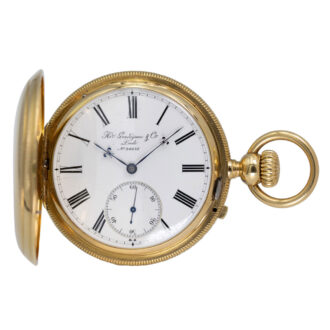
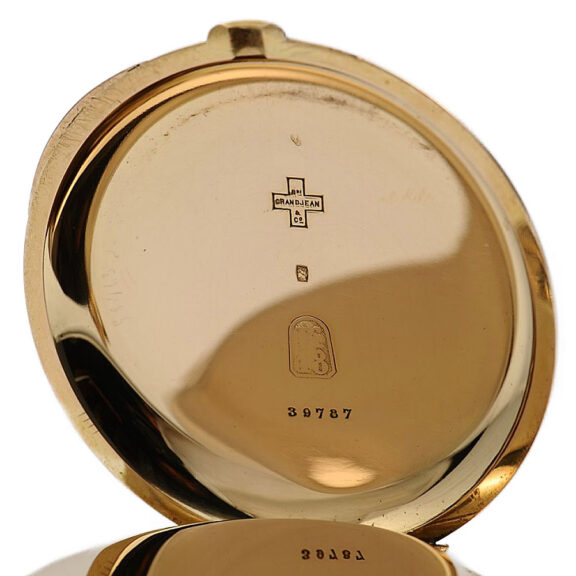
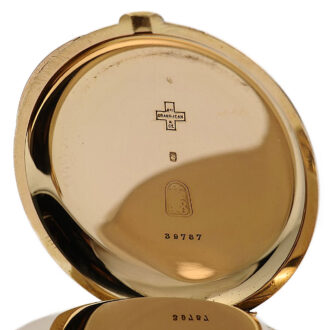
Signed: Henri Grandjean & Cie., Le Locle
–
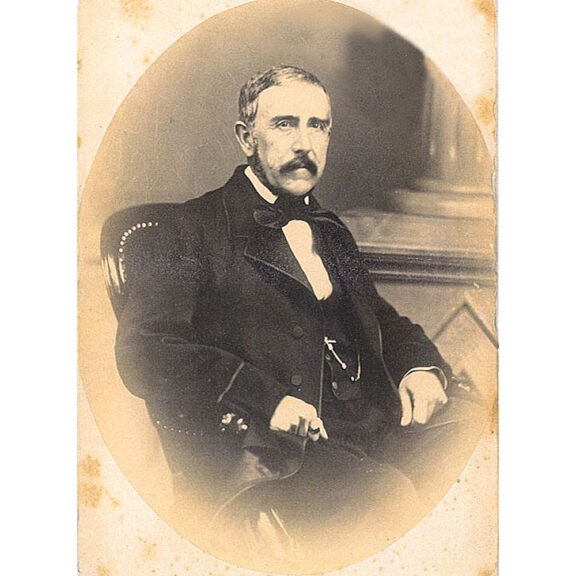
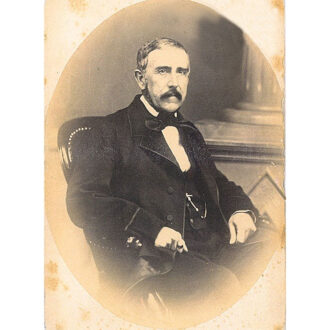
Henri Grandjean (1803-1879) Swiss chronometer maker.
Henri Grandjean was born in Le Locle on December 14, 1803. From 1824 until 1830 he was assigned the task of organizing the South American branches of his father’s company; in 1830 his brother Henri Gustave emigrated to Peru and was from then on in charge of these businesses. Henri Grandjean trained as a watchmaker in his home town. Around 1830 his factory “Henri Grandjean & Cie.” began to build ship’s chronometers that were modelled on the English chronometers. His business partner was Edouard Thévenaz; together with Louis Jean Richard and Ulysse Nardin Grandjean was the originator of the Swiss marine chronometer production. In 1831 Grandjean married Elise Montandon, the daughter of Isaac Pierre. He was granted permission to open watchmaking schools and founded the observatory at Neuchâtel. Later Grandjean went into politics and became representative and prefect of the city of Le Locle. In La-Chaux-de-Fonds he worked for the establishment of the Quartier-Neuf, which was finally built in 1855; he intended to eliminate real estate speculation and to create low-priced housing for working-class families. A street in Le Locle was named after him – the Rue Henri-Grandjean. Henri Grandjean died on March 21, 1879 in Le Locle.
Signed: Henri Grandjean & Cie., Le Locle
Share this page: