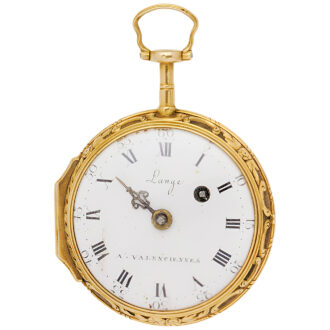
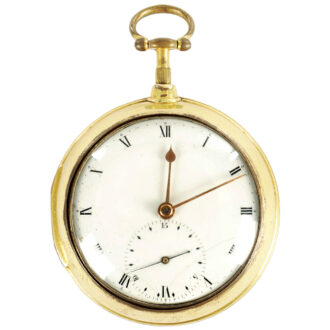
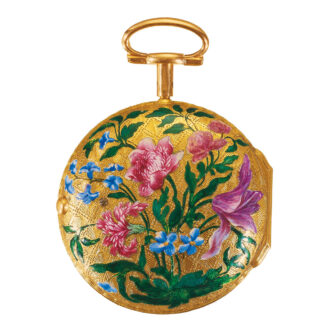
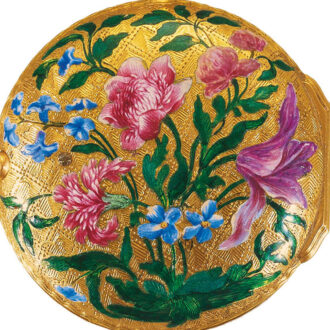
English 20K gold and enamel cylinder pocket watch Circa 1750
- Kenmerk
- TA1082
- Diameter
- 45 mm
- Estimate
- € 5.500 - 10.000
- Price sold
- € 6.100
Gold and enamel open faced watch
–
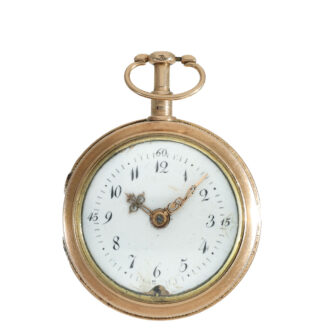
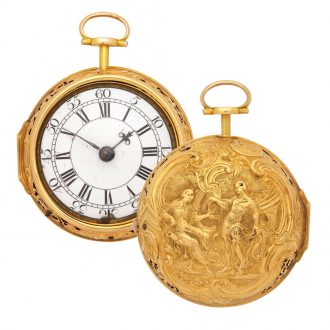
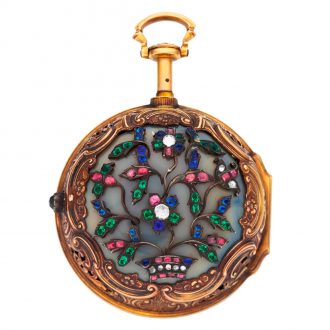
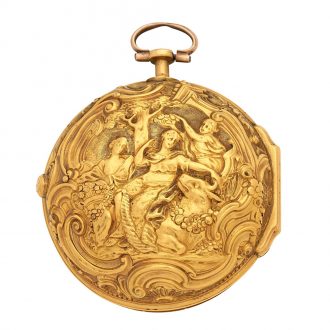
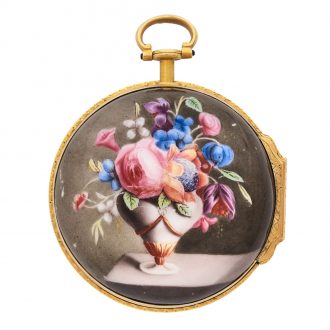
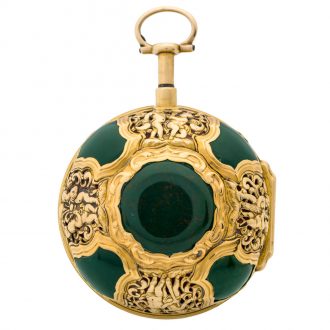
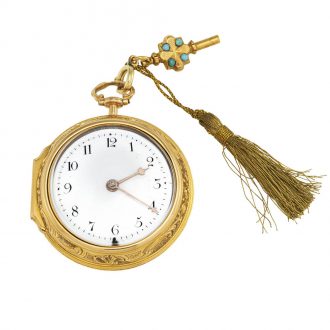
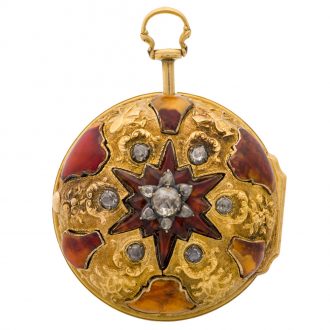
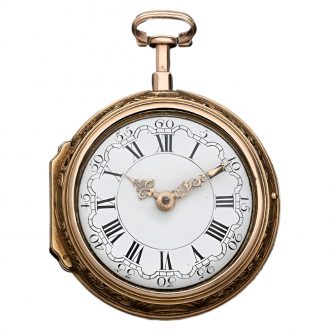
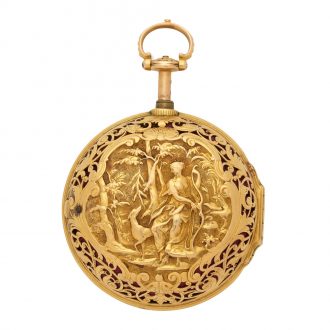
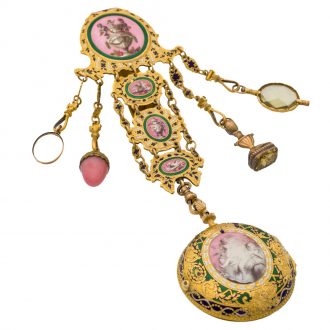
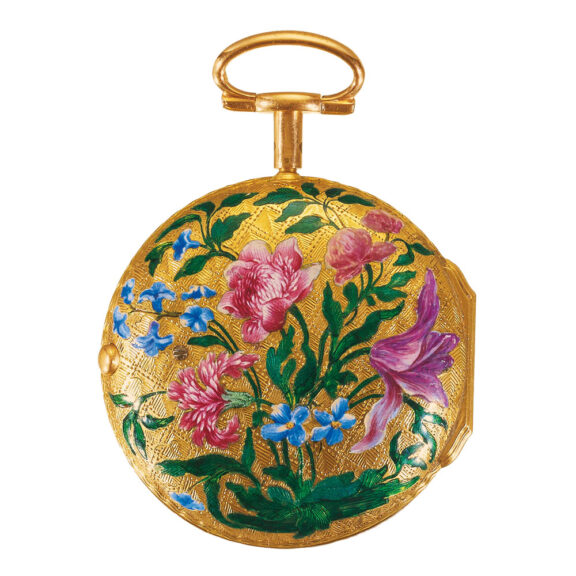
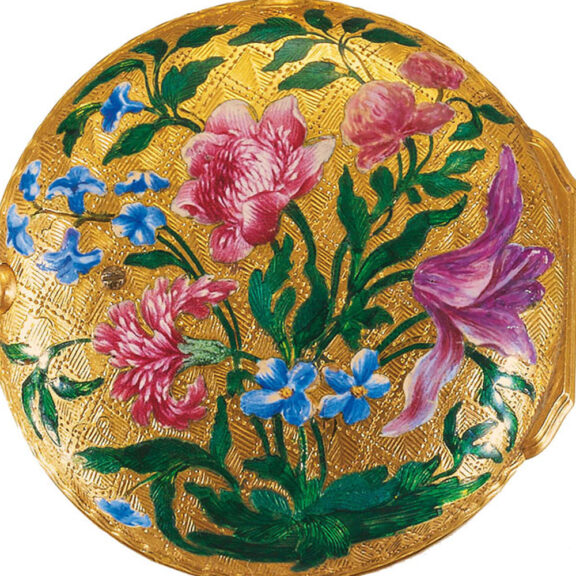
A very fine English 20K gold and enamel pocket watch, circa 1750. The Flowers by Richard Baskerville. Louis XV case, the back finely decorated with painted on enamel and champlevé flowers and foliage on a hatched chased ground, the bezel decorated en suite.
–
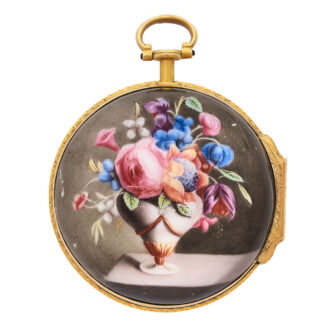
A very fine English 20K gold and enamel pocket watch, circa 1750. The Flowers by Richard Baskerville. Louis XV case, the back finely decorated with painted on enamel and champlevé flowers and foliage on a hatched chased ground, the bezel decorated en suite.
–
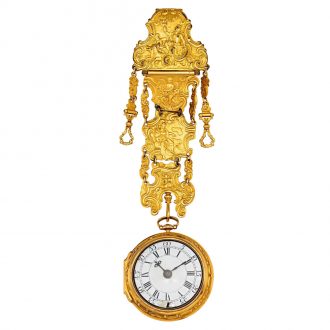
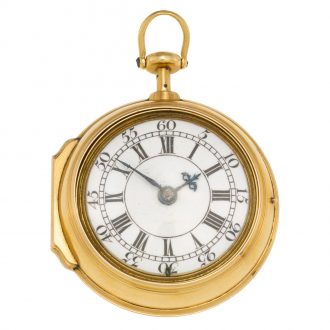
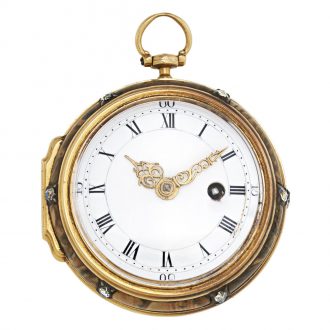
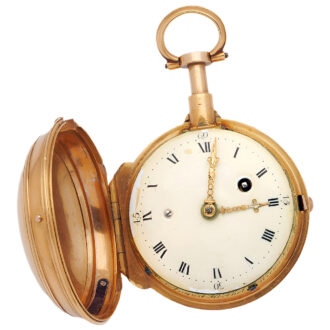
White enamel dial, radial Roman numerals, outer minute track with Arabic five-minute numerals, winding aperture between 3 and 4 o’clock, gold Louis hands. Hinged, frosted gilt full-plate movement with turned pillars, fusee and chain, cylinder escapement, three-arm steel balance with flat balance spring, pierced and chased balance cock with diamond endstone, silvered regulation dial. Movement signed.
–
–
Diameter: 45 mm
–
Signed: Richard Baskerville London
–
Richard Baskerville apprenticed in 1741 and was free of the Clockmakers Company from 1749 to 1772. A clock by him is in Bruges Cathedral. The case, dial and hands of the present watch were made in France around 1750. Very shortly after it was made, the watch must have been brought to England, where it was fitted with a movement by Richard Baskerville. Continental watches having fine cases were often fitted with movements by English makers. Usually, these English movements, as in this piece, have cylinder escapements, which were seen as an improvement on the standard verge movement.
–
Signed: Richard Baskerville London
–
Richard Baskerville apprenticed in 1741 and was free of the Clockmakers Company from 1749 to 1772. A clock by him is in Bruges Cathedral. The case, dial and hands of the present watch were made in France around 1750. Very shortly after it was made, the watch must have been brought to England, where it was fitted with a movement by Richard Baskerville. Continental watches having fine cases were often fitted with movements by English makers. Usually, these English movements, as in this piece, have cylinder escapements, which were seen as an improvement on the standard verge movement.
Signed: Richard Baskerville London
Share this page: