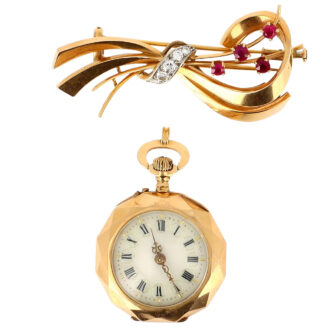
English 18K gold quarter repeating duplex pocket watch Circa 1863
- Kenmerk
- TA5095
- Diameter
- 49 mm
- Estimate
- € 4.250 - 7.500
- Price sold
- € 2.750
Gold key winding hunter
–
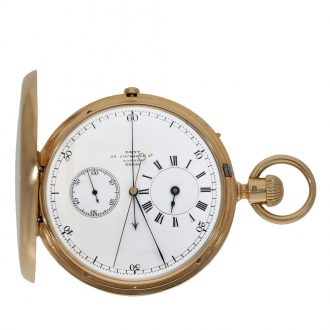
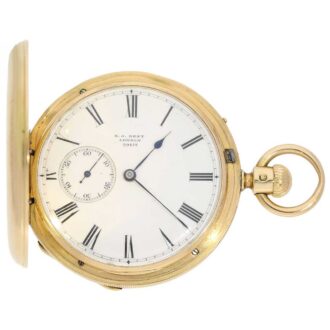
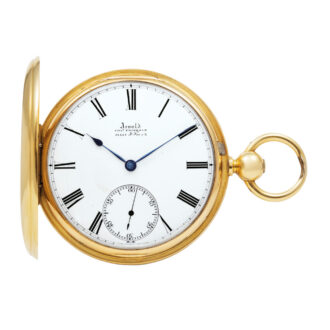
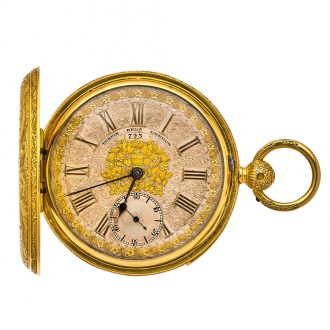
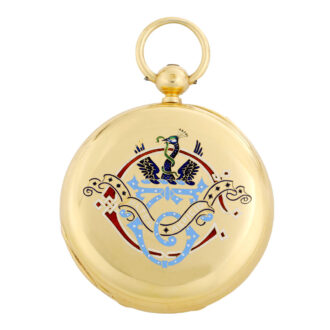
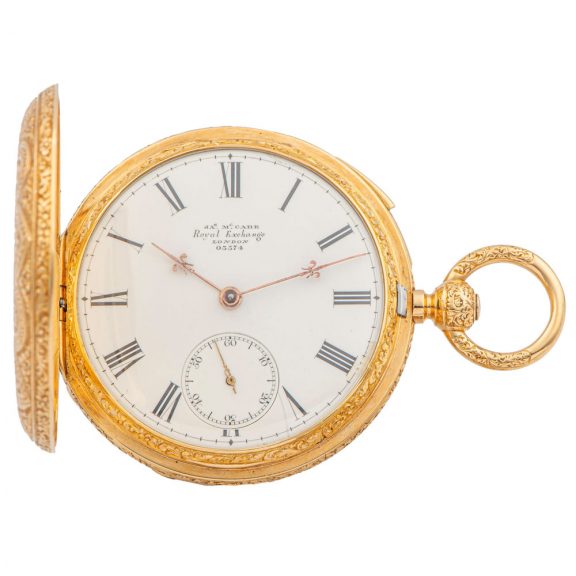
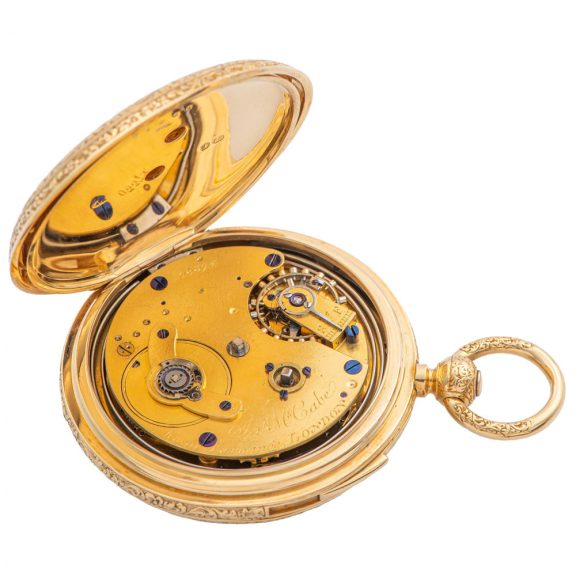
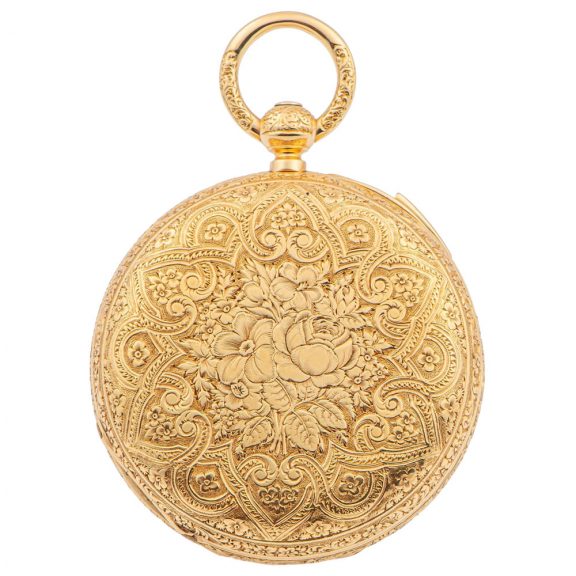
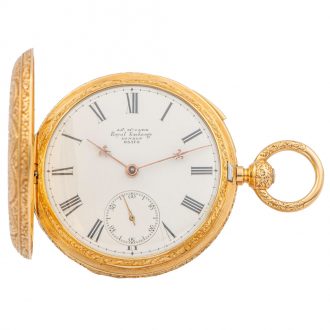
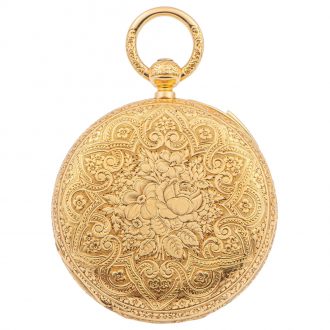
An English 18 carat yellow gold quarter repeating pocket watch made by James McCabe, London, circa 1863. The cover and caseback are florally engraved with stylised foliage and geometric patterns. The case is made by Alfred Stram, London, with a London letter date for 1863. This hunting cased pocket watch has one horological complication: Quarter repeater by two hammers on two steel gongs, activated by the slide at 2 o’clock.
–
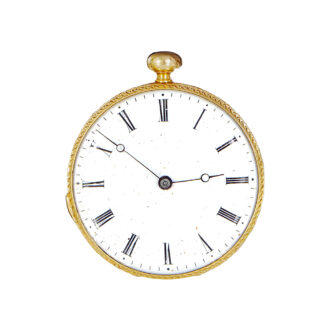
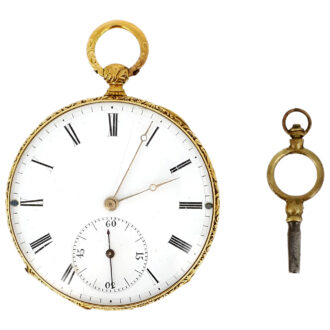
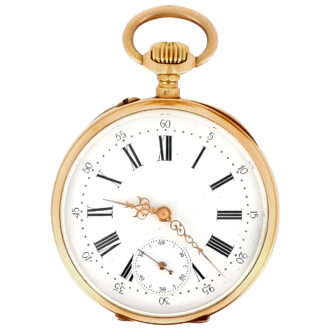
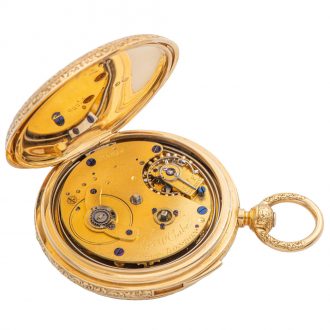
A white enamel dial with radial Roman numerals, outer minute track, subsidiary seconds at 6 and yellow gold Fleur de Lys hands. A gilt brass, ¾ plate movement, fusee and chain, duplex escapement, cut bimetallic compensated balance with gold poising screws and blued steel flat hairspring, diamond end stone, polished steel index regulator, repeater work on the main plate, under the dial. The dial, case and movement are signed.
–
Diameter: 49 mm
–
Weight: 123 g
–
Signed: James McCabe, London (Royal Exchange)
–
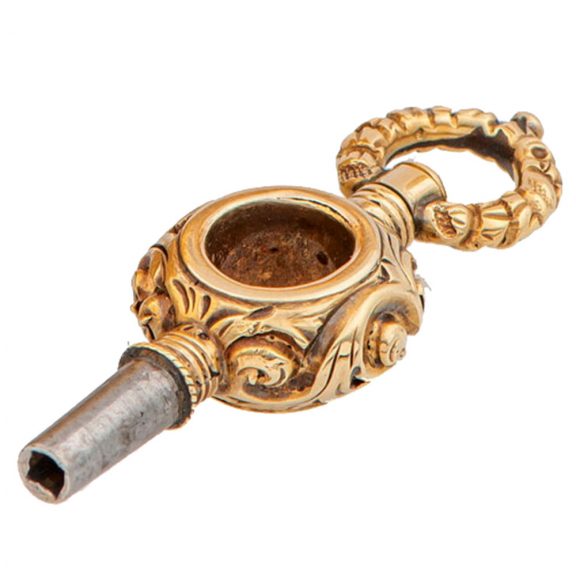
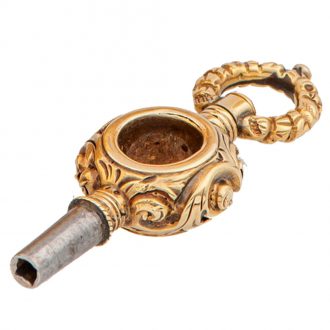
Accompanied by winding and hand setting a gold key.
–
McCabe: This long lived firm had a very high reputation for watches and clocks, concentrating particularly on the Indian market, where an agency was maintained. The founder of the firm was James McCabe, one of three horologist sons of the watch- and clockmaker William McCabe of Lisburn in Ireland, who moved to London in the third quarter of the 18th century. In 1778, he was located at 11 Bell’s Buildings, Fleet Street; in 1783, at 34 King Street, Cheapside; in 1788, at 8 King Street; and in 1804, at 97 Cornhill, Royal Exchange. In April 1781, he was admitted an honorary freeman of the Clockmaker’s Company, being summoned to take up the livery in 1787.
–
Although McCabe used a wide variety of escapements, he is particularly associated with the improvement of the duplex escapement. On his death in 1811, he was Senior Warden of the Company. He was succeeded in business by his son, also named James, who, for reasons unknown, had been apprenticed to the Edinburgh makers Reid & Auld and was not free of the Clockmaker’s Company of London until 1822. The business continued at 97 and 99 Cornhill until 1838, when the Royal Exchange was destroyed by fire, and thereafter continued at 32 Cornhill. Subsequently, the business was continued by McCabe’s nephew, Robert Jeremy McCabe, who closed the business when he retired in 1883.
Signed: James McCabe, London (Royal Exchange)
Share this page: