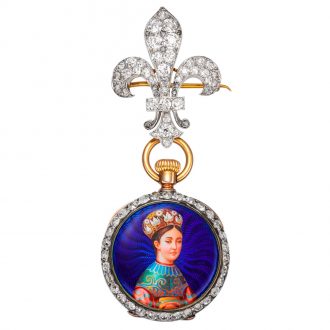
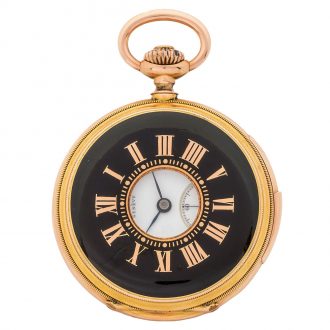
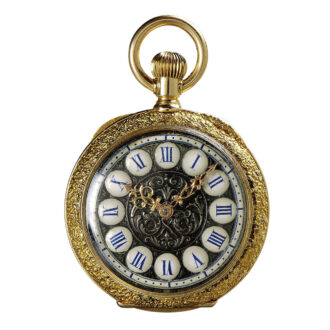
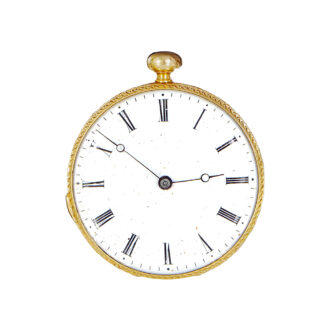
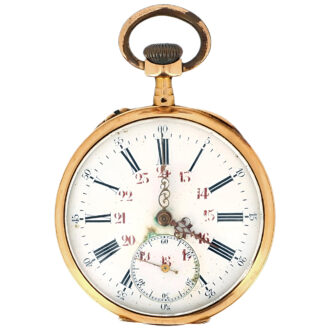
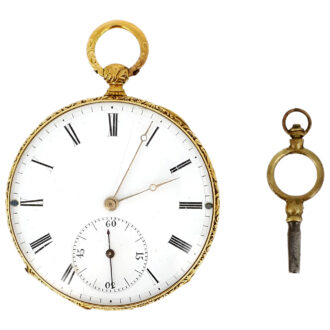
Swiss gold and enamel quarter repeating ladies’ watch Circa 1888
- Kenmerk
- AS2089
- Diameter
- 35 mm
- Estimate
- € 3.750 - 7.000
- Price sold
- € 2.100
Gold and enamel keyless lever watch
–
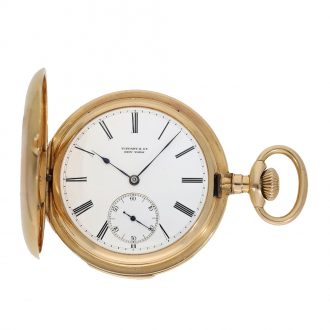
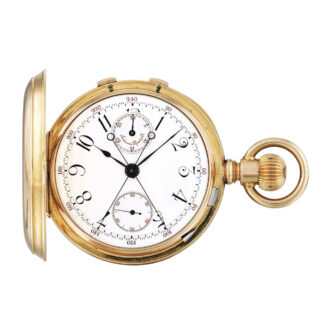
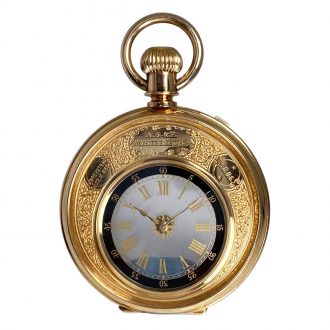
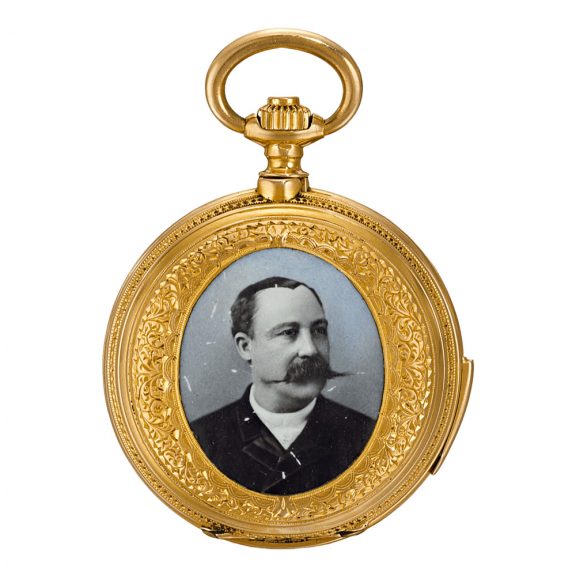
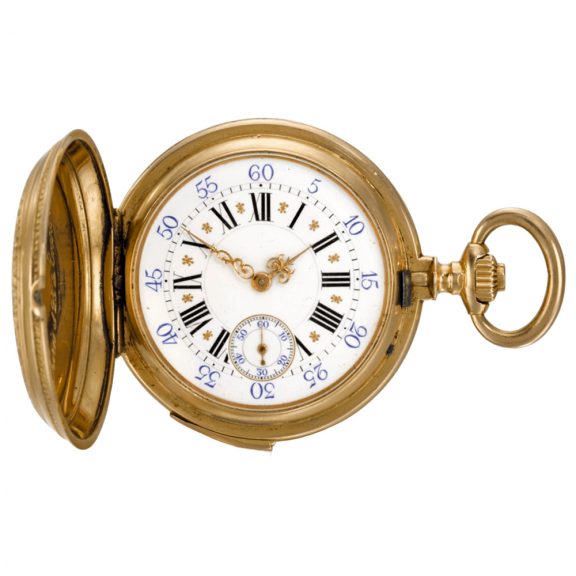
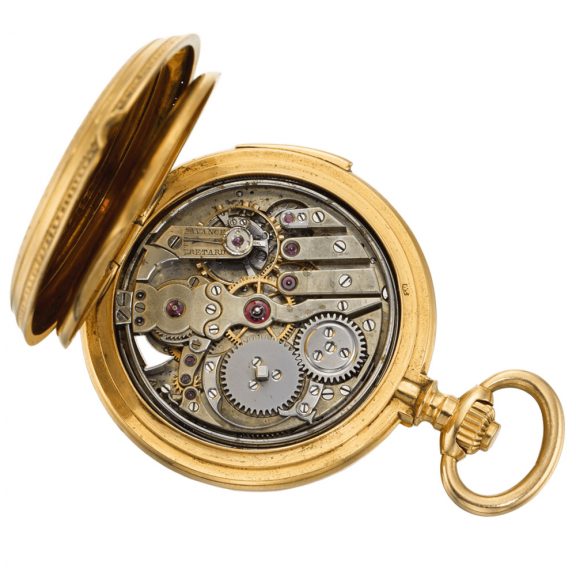
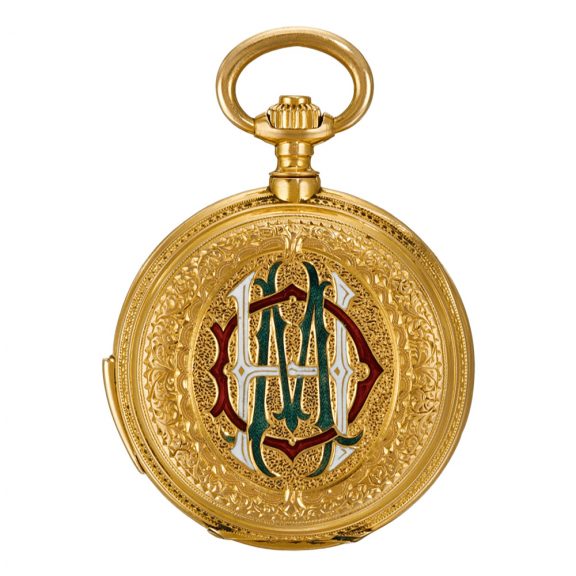
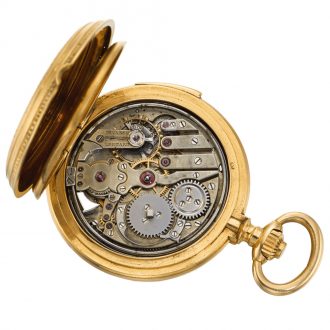
A Swiss 18 carat gold and enamel hunting cased quarter repeating keyless lever pocket watch made by B. Haas Jeune & Co. in Geneva and Paris, circa 1888. The damascened nickel movement featuring a lever escapement is jewelled to the center, has a bimetallic compensation balance and two polished steel hammers repeating on coiled gongs.
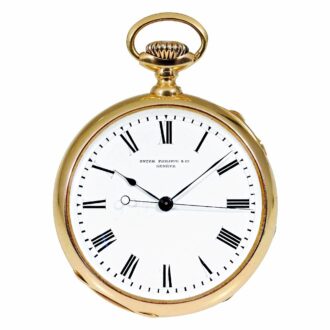
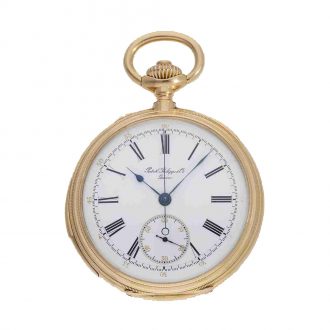
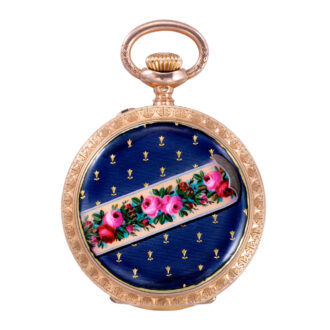
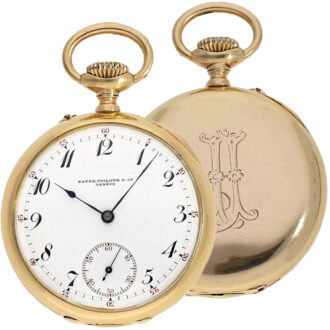
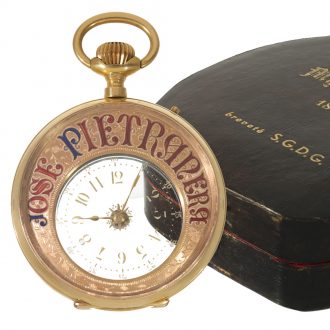
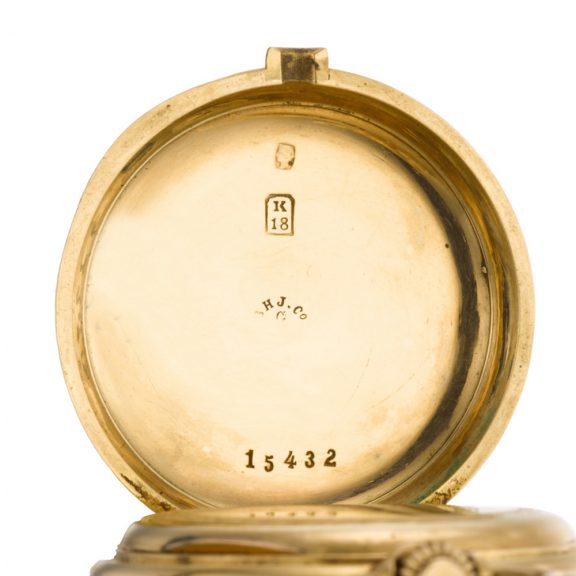
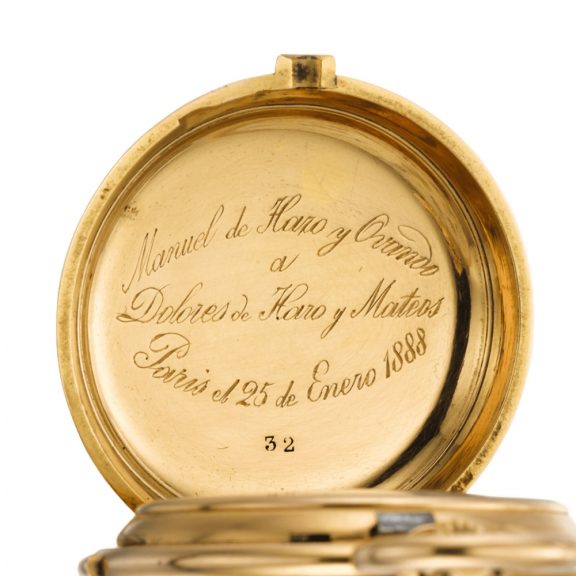
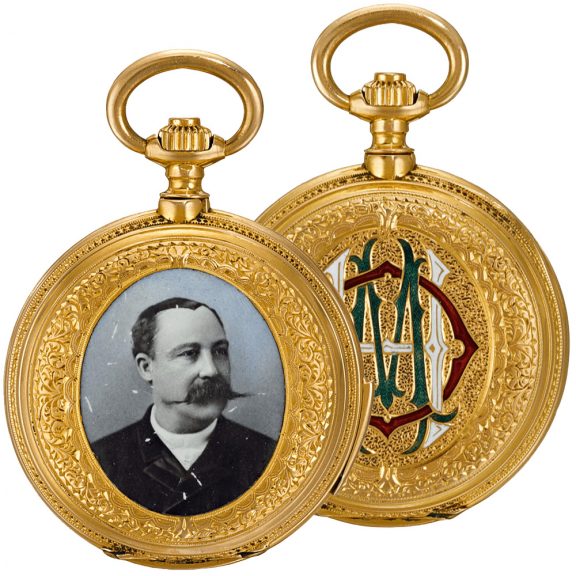
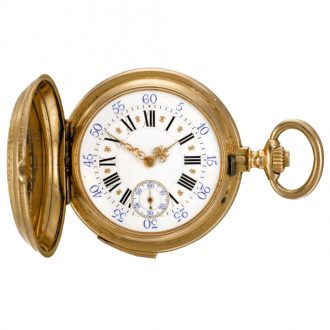
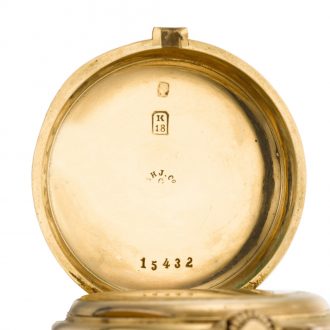
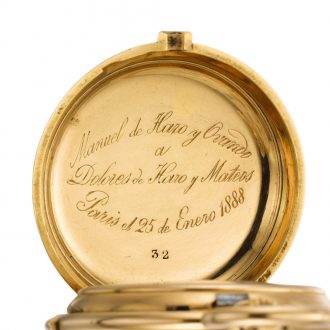
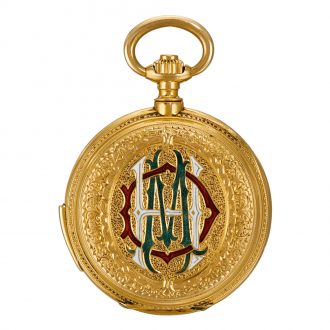
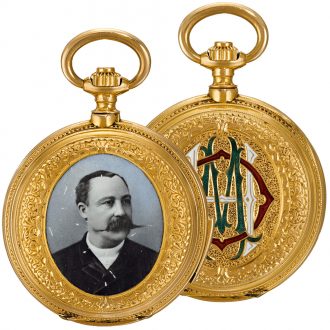
The white enamel dial displays black Roman hours with alternating gold painted half hour markers, an outer minute ring with blue Arabic five minute numerals, sunken subsidiary seconds at 6 o’clock and gold hands. The case showcases the enamelled photographic portrait of a gentleman surrounded by stylized chased and engraved scrolling foliage. The back is decorated to match and centred by the monogram DHM in white and red opaque, and translucent green enamel. The inside lid is engraved Manuel de Haro y Orando a Dolores de Haro y Mateos Paris el 25 de Enero 1888. The gold cuvette is engraved with the technical details and signed Maison B. Haas Jeune Genève-Paris. The back cover and cuvette with matching numbers, the front cover is signed and numbered, and the case is further stamped BHJ & Co., G.
–
Diameter: 34.5 mm
–
Signed: Maison B. Haas Jeune Genève-Paris
–
The movement is running and the hands are adjusting. The repeater is functioning but currently very sluggish and slow. The dial is in good overall condition. The case has several scratches on the enamel portrait panel and some small indentations on the band. The repeating slide is slightly ajar, with the tip appearing to have broken off, leaving it slightly jagged.
–
The development of enamel photography coincided with the evolution of various photographic methods in the 19th century. The technique of firing photographs onto enamel has been practiced since around 1850. French inventor Nicéphore Niépce was the first to produce permanent images from a camera on metal plates in 1822. The process of permanently firing images onto enamel or porcelain was introduced by French photographers Bulot and Cattin, who patented it in 1854.
––
English Patent No. 3945 was awarded to Benjamin Haas on December 2nd, 1873, for the development of a new and unusual form of winding that utilised the energy generated when the front cover of a watch was closed. Haas improved the original system and equipped his watch with a 36 hour power reserve (by closing the lid twelve times). He replaced the flying barrel with an additional wheel, enabling a three hour wind by simply closing the lid. Haas also invented a safety device that disengaged the mechanism when fully wound, preventing damage to the lid.
Signed: Maison B. Haas Jeune Genève-Paris
Share this page: