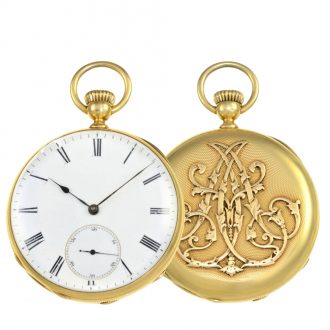
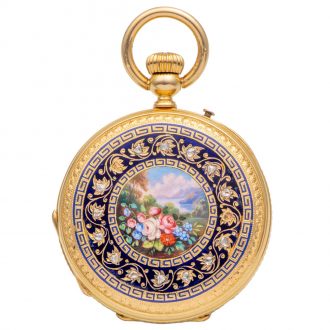
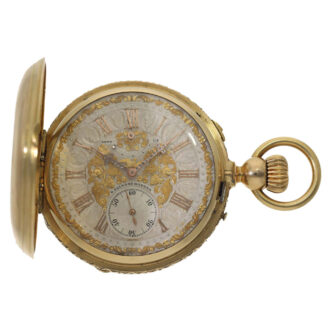
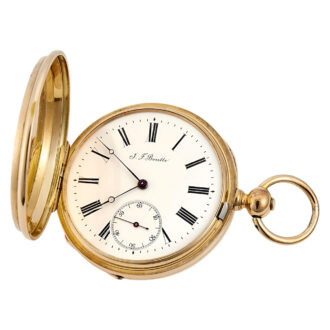
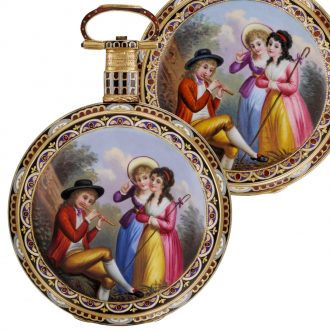
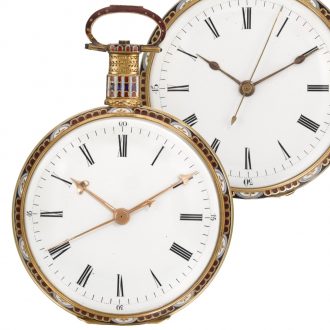
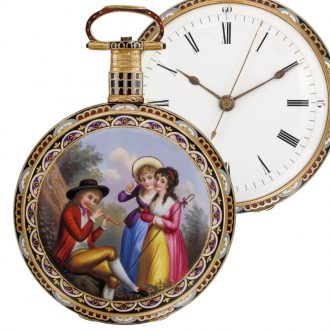
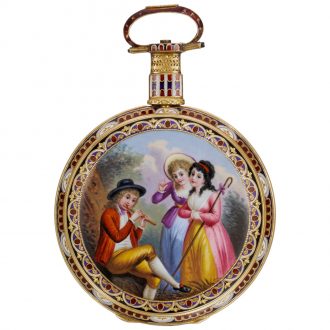
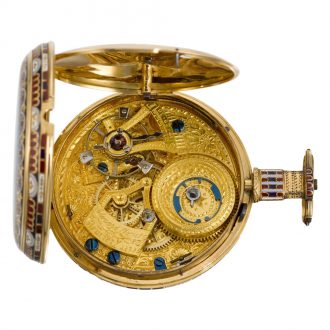
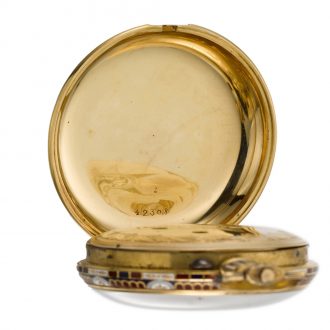
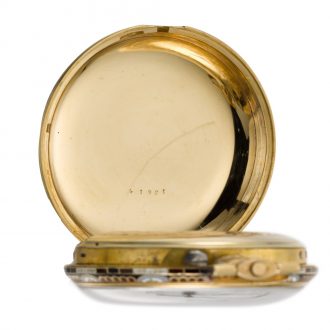
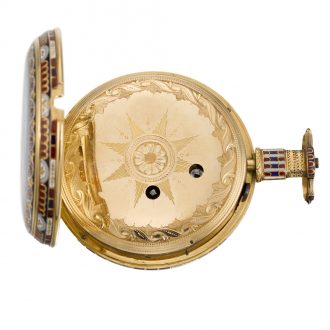
Swiss pair of duplex watches for the Chinese market Circa 1865
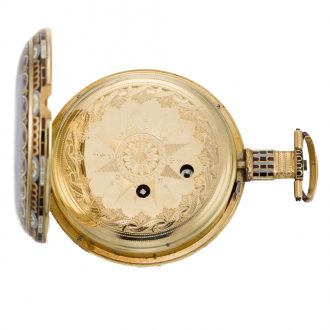
- Kenmerk
- AS1988
- Diameter
- 59 mm
- Estimate
- € 80.000 - 160.000
- Price sold
- € 97.500
Gold and enamel pocket watches by Edouard Juvet
–
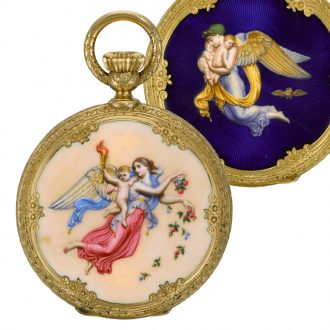
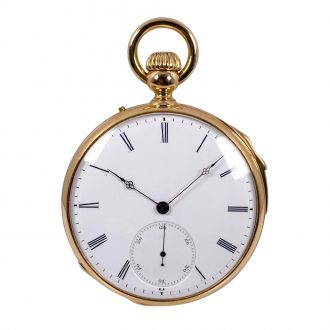
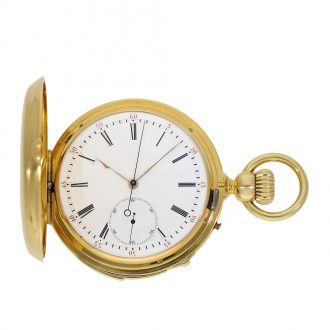
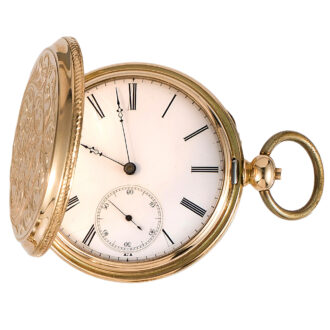
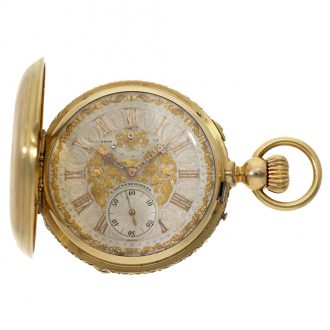
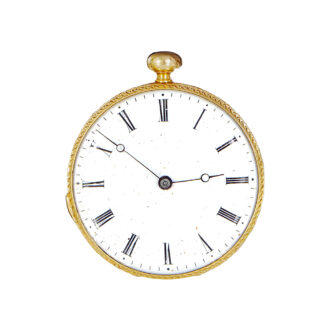
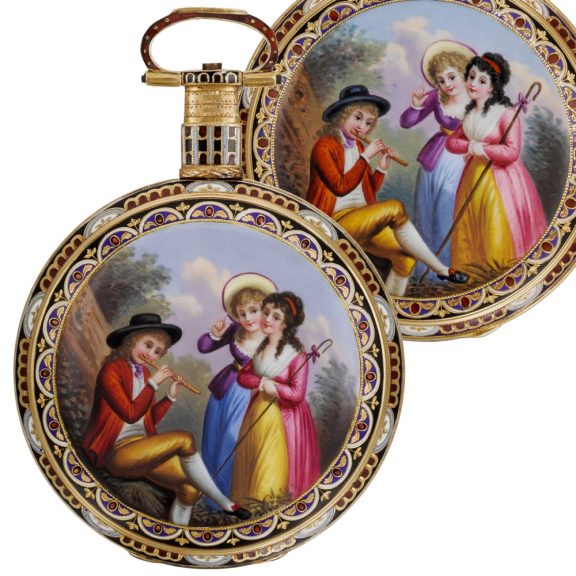
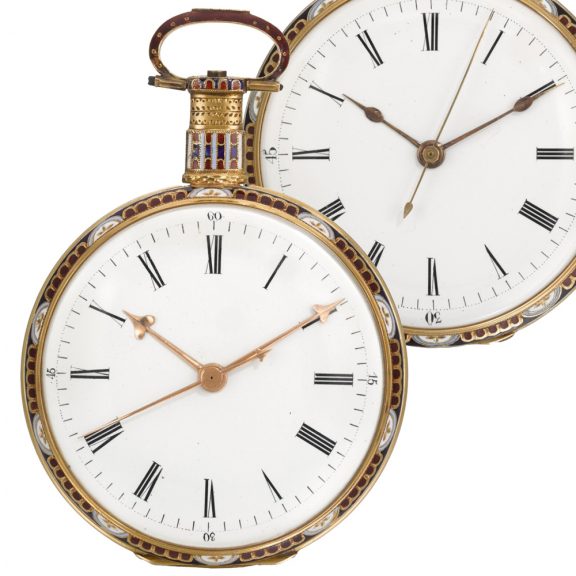
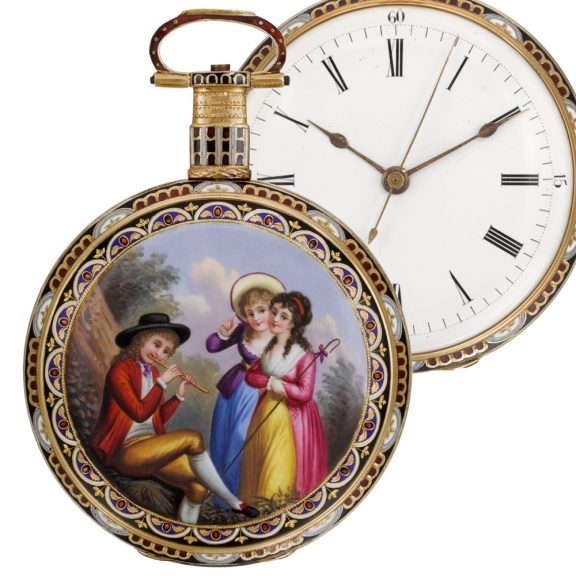
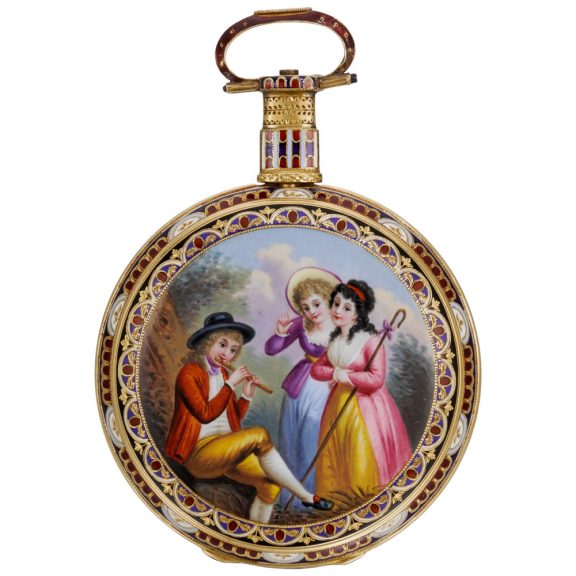
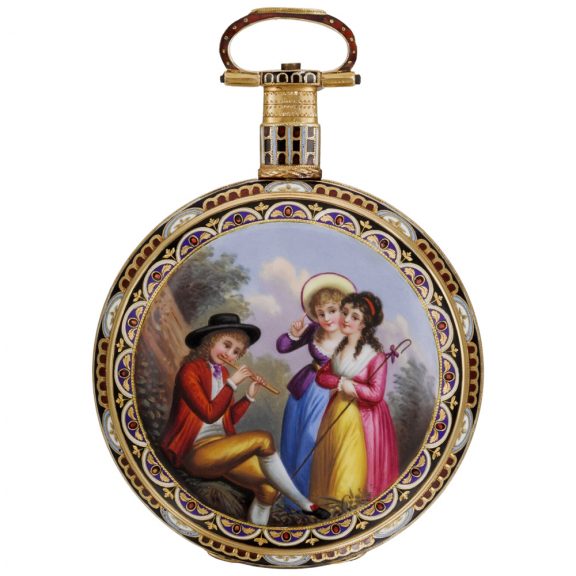
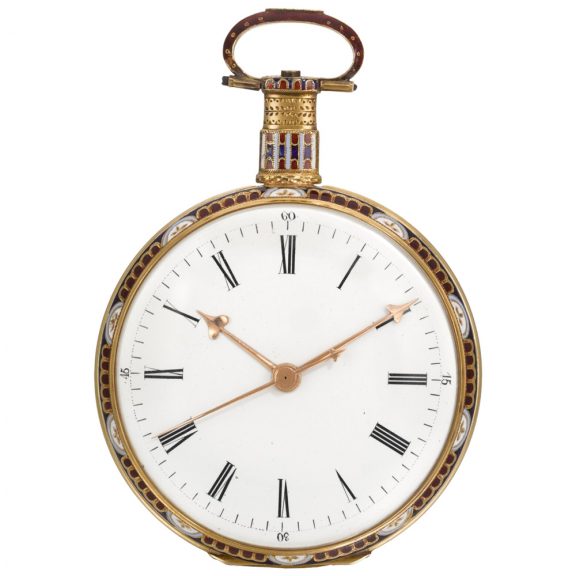
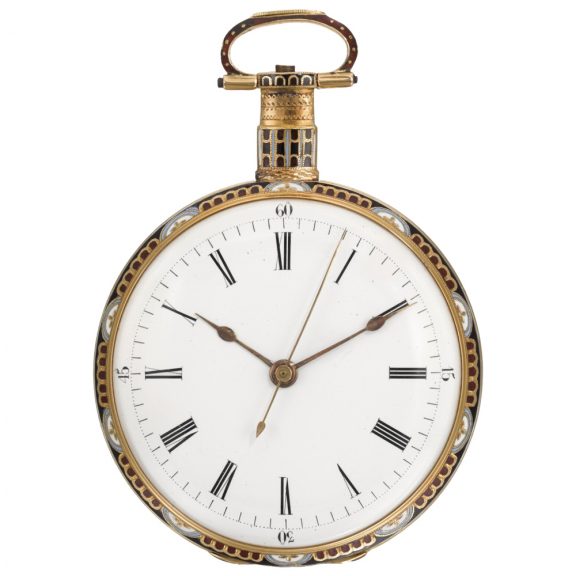
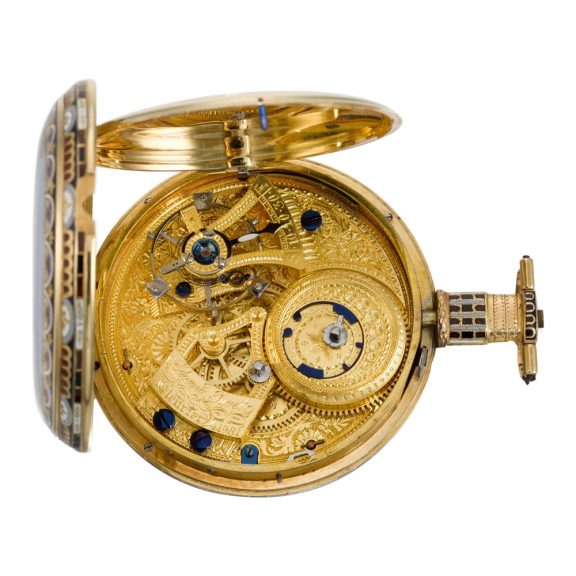
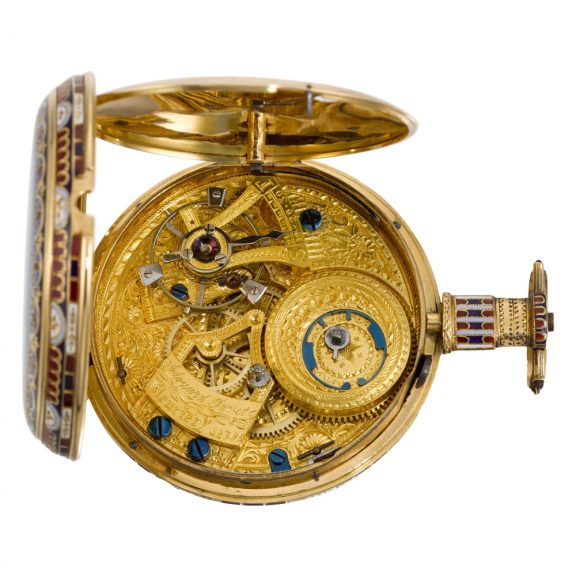
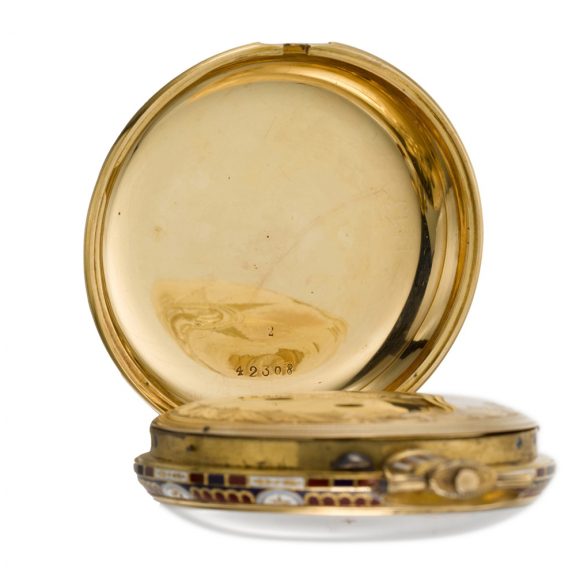
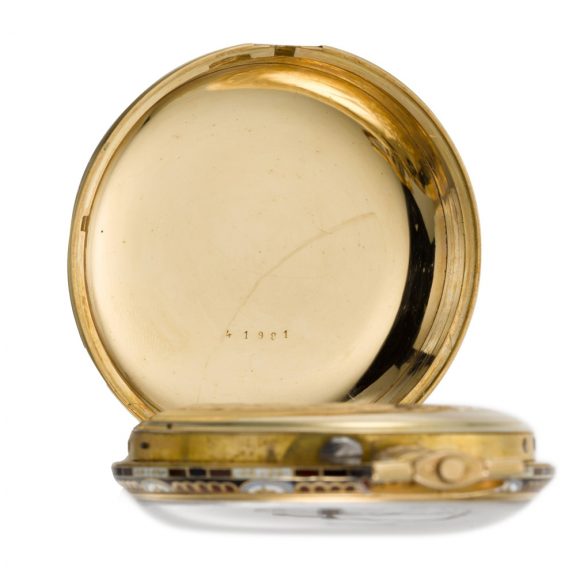
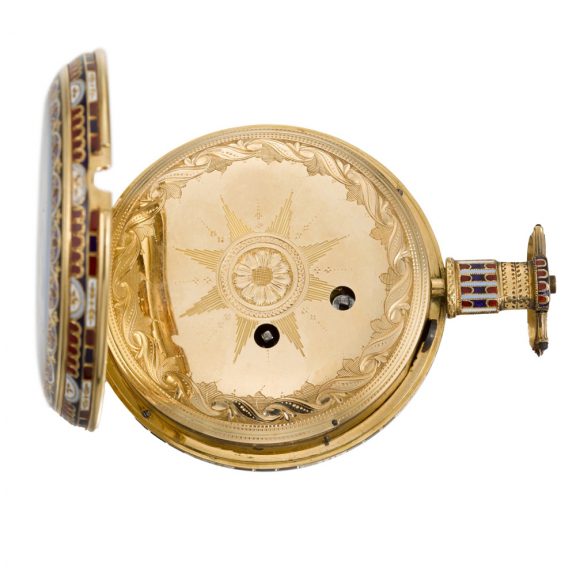
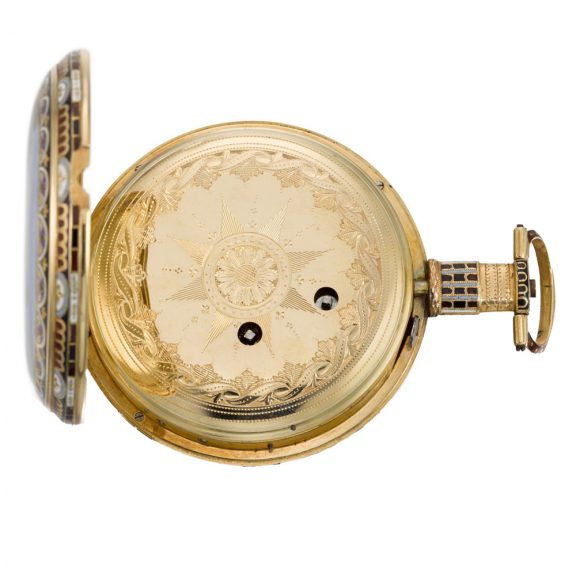
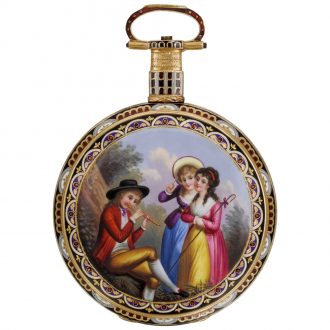
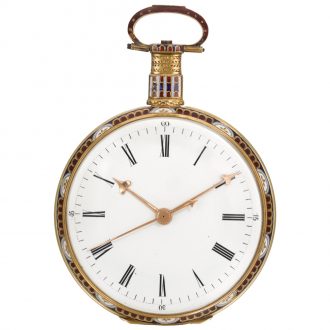
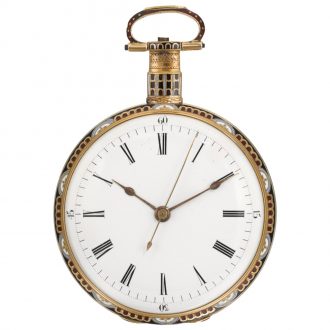
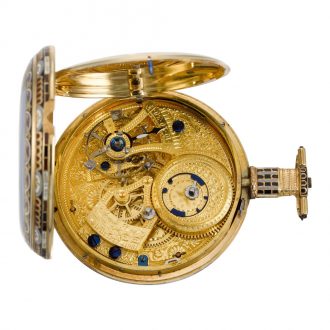
A Swiss matched pair of fine gold and enamel open faced duplex watches, made for the Chinese market, circa 1865. The movements of these watches feature gilded, intricately engraved Chinese calibres with duplex escapements and diamond end stones, signed by Edouard Juvet. They have white enamel dials with Roman numerals and an outer track for minutes and seconds marked with Arabic numerals at fifteen-minute/second intervals, along with centre seconds. The gold cases are adorned with polychrome enamel panels depicting a shepherd playing a flute for two young maids, champlevé enamel decoration on the bezels and pendants, and engraved decorations on the gold cuvettes. A later associated fitted presentation case accompanies them.
–
Diameters: 59 mm & 58.5 mm
–
Signed: Edouard Juvet, Fleurier
–
Watch 42: The movement operates briefly before stopping. The dial is in good condition. The minute and second hands are overlapping and stuck. The case features an enamel scene with surface scratches and minor chips in the champlevé decoration. Watch 41: The movement is not running. The dial is in good condition. The case and its enamel scene, as well as the decoration, are in good condition.
–
Romanticised depictions of the countryside were a popular theme for the enamel panels on watches made for the Chinese market. These pastoral scenes were likely inspired by artists such as William Hamilton (1751-1801), whose series ‘Morning’, ‘Noon’, ‘Evening’, and ‘Night’ may have influenced the design of the enamel panels on these two watches. A nearly identical watch was once part of the renowned collection of Samuel N. Tonkin. This watch, numbered 41972, was sold at Sotheby & Co., New York, on November 13, 1967, as lot 45, and was just nine numbers before the lowest numbered watch in this pair. Another pair of similar watches can be found at the Musée L.U.Ceum, Traces du Temps, at the Chopard Manufacture S.A. in Fleurier, Switzerland. These watches are also described and illustrated in Didier, M. & Tellier, A.’s publication, The Mirror of Seduction, Prestigious Pairs of Chinese Watches, Patek Philippe Museum, 2010, pages 132-133. Approximately eight watches by Juvet are known to feature the same country scene as the present pair. In all these examples, the figures face the same direction. While watches with different scenes but identical styles exist, this genre was also produced in mirrored pairs. As the demand for decorative enamel watches grew in the Chinese market during the late 19th century, it is speculated that the popularity of this scene led to its production in a single format for efficiency.
–
Édouard Juvet (1820-1883) established himself as a watchmaker in Buttes in 1842, quickly relocating his workshop to Fleurier in 1844. According to Édouard’s letters, examined by A. Chapuis for his book La Montre Chinoise, Juvet began watch production in 1856. A year later, Édouard’s nephew, Louis Juvet, went to China to organise sales for the company but tragically died in an accident. His brother Charles, who replaced him in Shanghai, also died in China. Fritz Laidrich, who worked for the Juvets in Fleurier, travelled to China to work for the company, joined later by Édouard’s son, Ami-Louis, who also died there. In August 1871, Ami-Louis’s brother Léo (1848-1891) went to China to continue the family business. Édouard passed away in February 1883, and his son Léo succeeded him. By the time of Édouard’s death, the Juvet firm had significantly expanded and thrived. In Shanghai, they were rivalled only by the Bovets, with whom they maintained cordial relations, and their success led to the opening of additional branches in Tientsin and Saigon.
Signed: Edouard Juvet, Fleurier
Share this page: