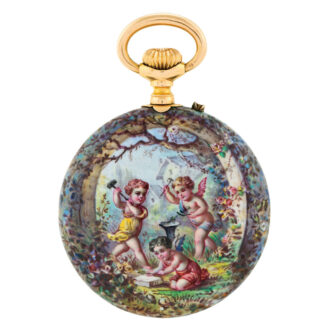
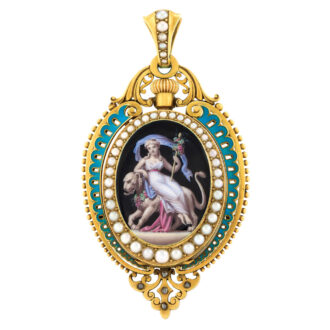
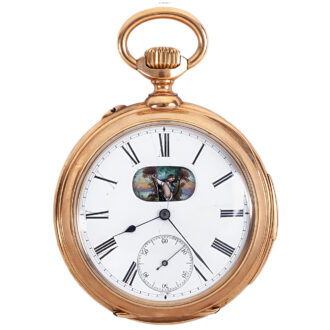
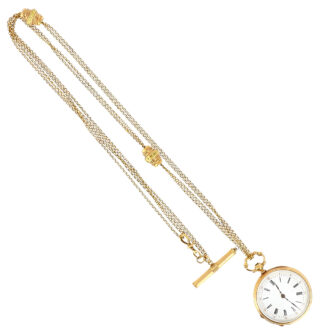
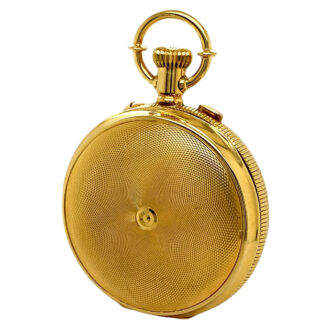
Swiss 18K gold jumping seconds precision watch Circa 1890
- Kenmerk
- DB1038
- Diameter
- 53 mm
- Estimate
- € 5.000 - 9.000
- Price sold
- € 4.400
Gold chronometer with center seconds
–
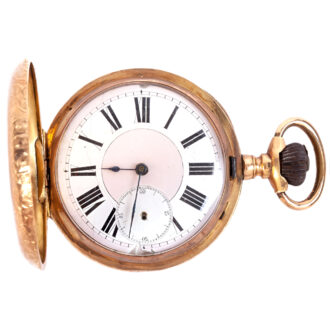
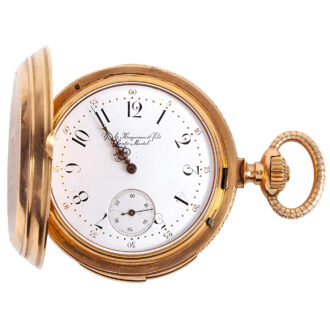
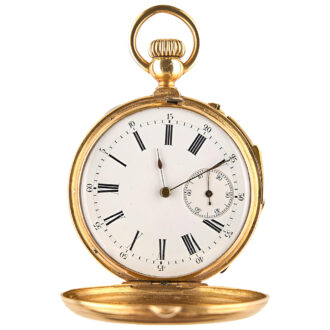
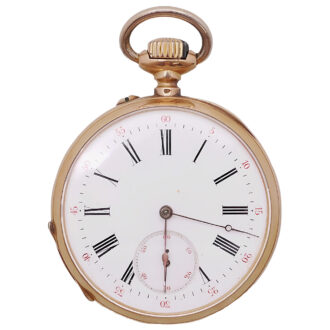
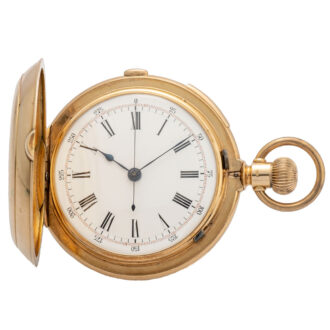
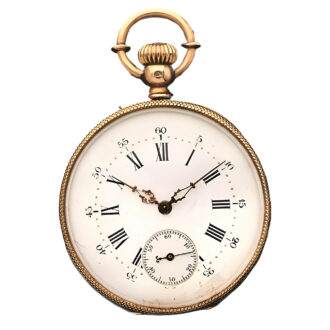
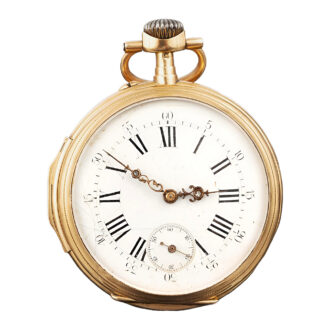
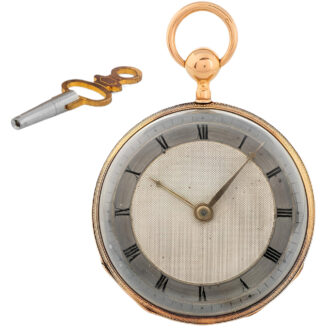
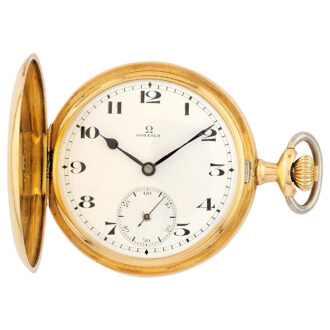
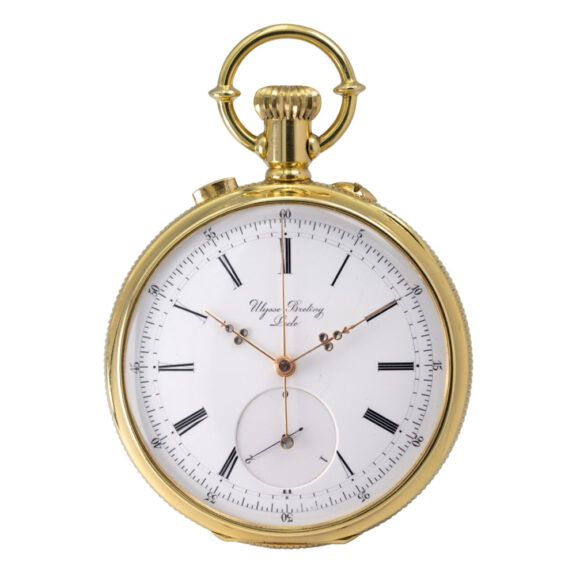
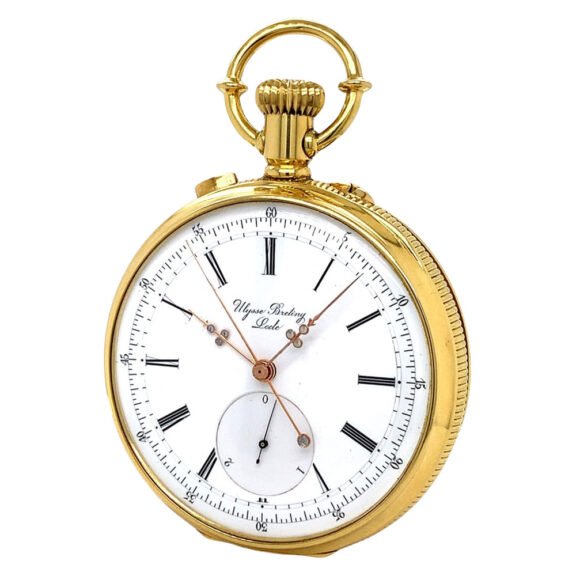
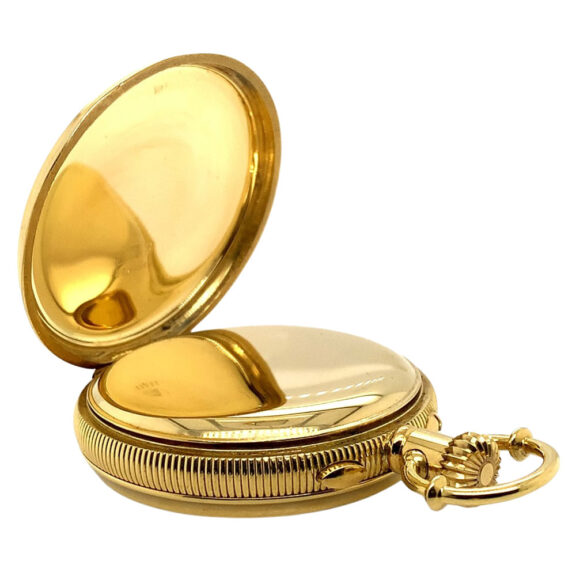
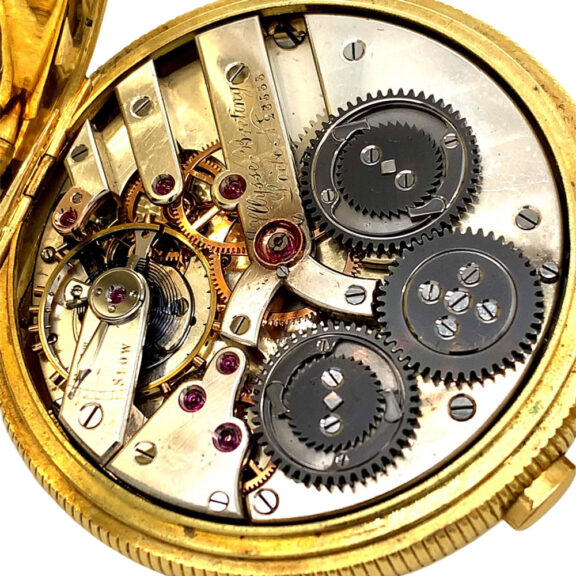
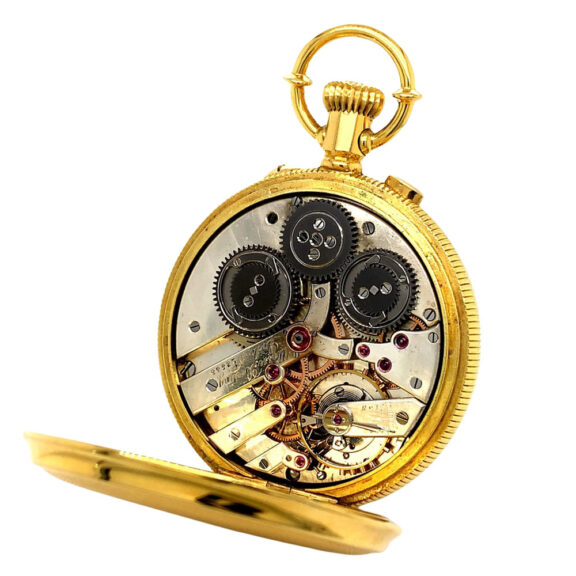
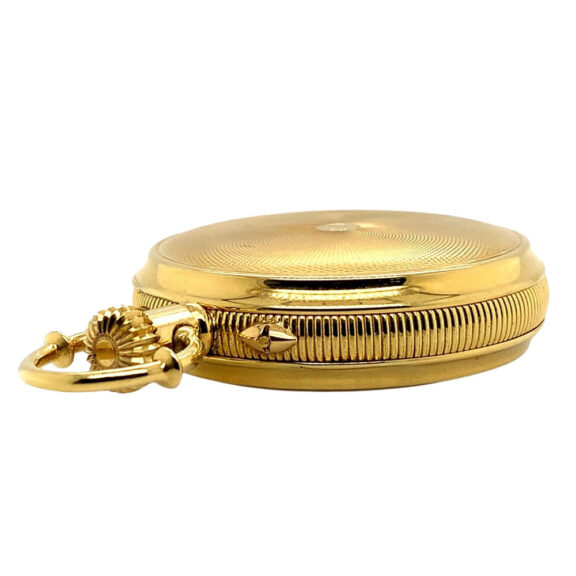
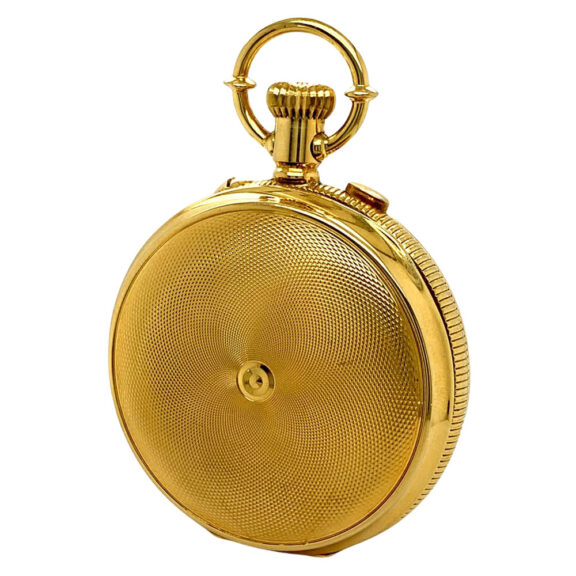
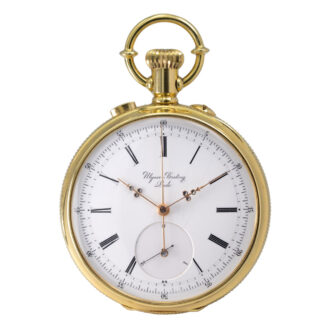
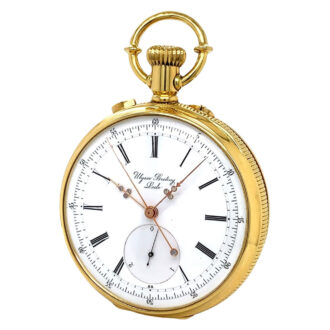
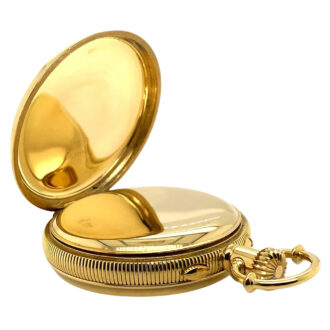
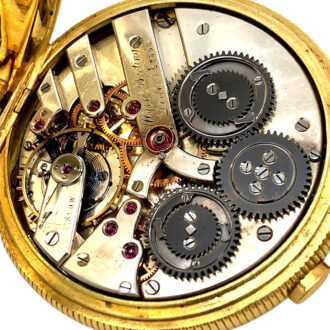
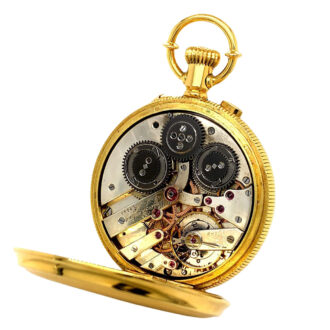
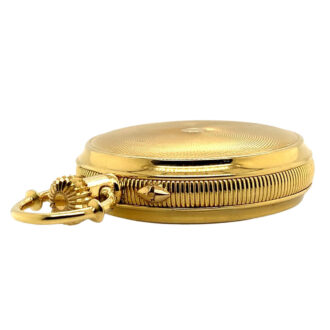
An extremely rare Swiss 18 carat gold open faced center seconds precision pocket watch with stoppable jumping seconds made by Ulysse Breting in Le Locle, circa 1890. The bridge movement with a pivoted detent rocker chronometer escapement, two barrels with ratchets and a screw compensation balance. White enamel dial with Roman hours, an outer minute track, outermost fifth of a second divisions with Arabic five minute numerals, sunk subsidiary dial for the jumping seconds at 6 o’clock and fine stone set hands. The later engine turned case with a reeded band. Dial and movement signed, case and movement with matching numbers.
–
Diameter: 53 mm
–
Weight: 143 g
–
Signed: Ulysse Breting Locle
–
Ulysse Breting (1812-1891) from Le Locle is believed to have worked with his brother Jules.
–
In 1860, the company won a gold medal at the World Exhibition in Besançon and achieved fourth place at the Neuchâtel Observatory in 1875 for a pocket chronometer with a rocker.
–
Between 1875 and 1883, it became Ginnel & Ottone Frères, but Ulysse Breting was still submitting pocket chronometers with rocker switches under his name in Neuchâtel in 1882.
–
Seconde foudroyante dates from at least the 1870s and was developed for the precise timing of sporting events, especially horse racing. ‘Foudre’ is French for ‘lightning’, which is the preferred name in English, along with jumping seconds. Seconde foudroyante is a hand which completes one full revolution per second. Most watches feature a seconds hand which rotates for one minute. A foudroyante hand, in contrast, has a period of one second. Watches equipped with such a hand typically also feature a conventional seconds hand. The foudroyante hand can be central or in a subdial and can be used for timekeeping or as part of a chronograph. On a chronograph, a hand that makes one rotation every second, pauses four, five or even eight times to indicate quarters, fifths or eighths of a second.
Signed: Ulysse Breting Locle
Share this page: