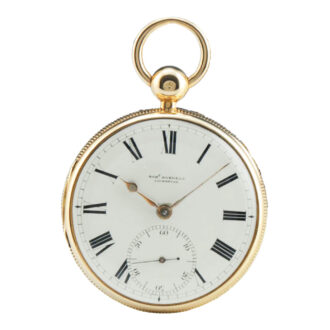
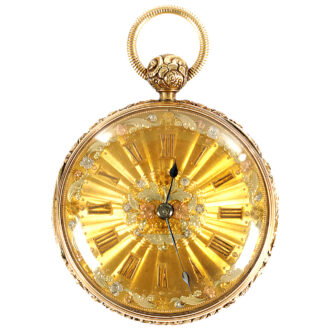
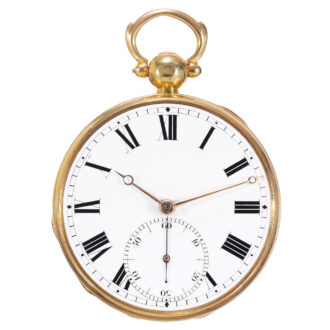
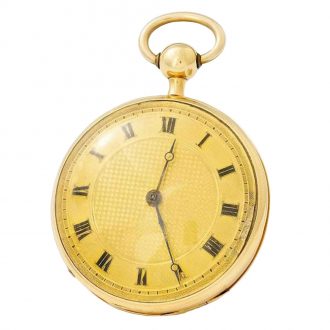
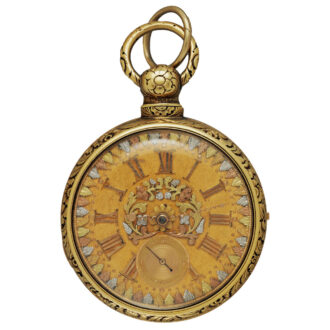
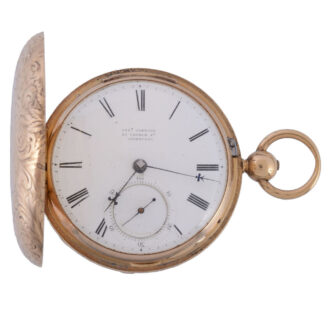
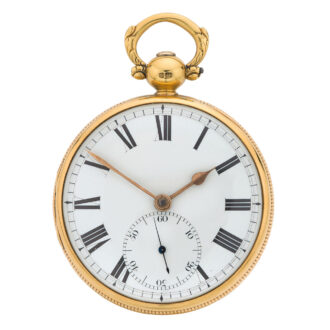
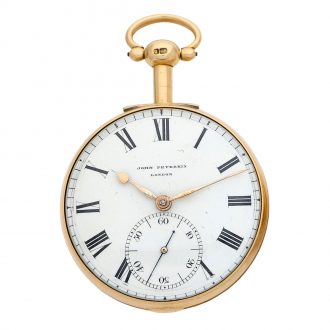
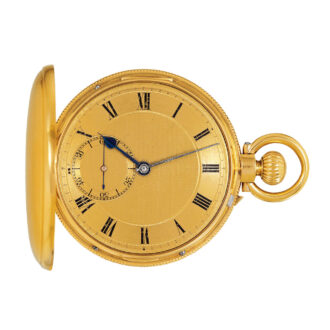
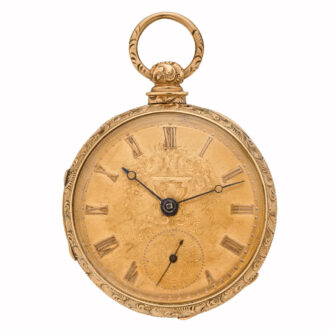
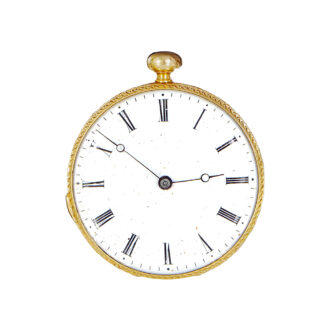
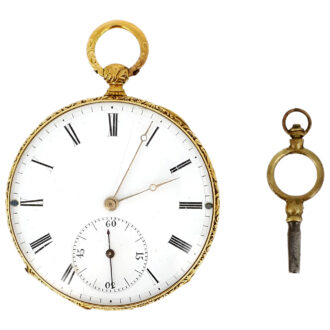
English 18 Carat gold pocket watch with two time zones Circa 1825
- Kenmerk
- HC0852
- Diameter
- 51 mm
- Estimate
- € 3.000 - 6.000
- Price sold
- € 3.950
Fine lépine with seconde morte
–
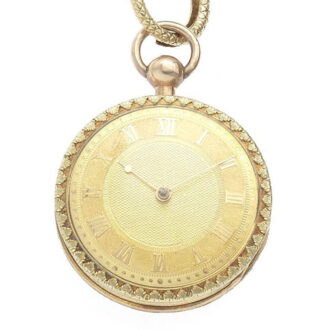
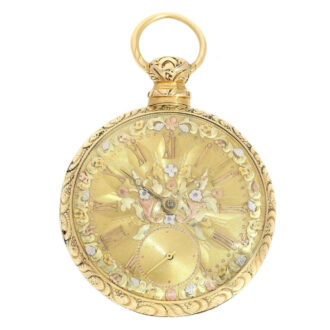
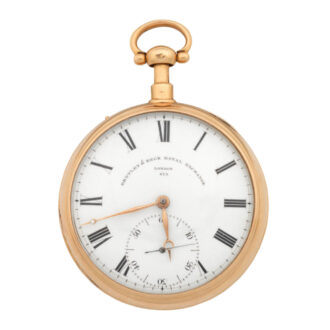
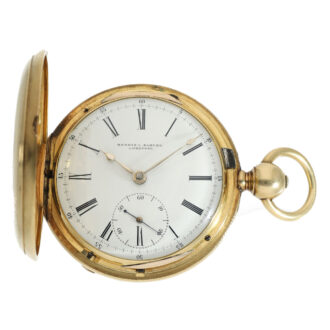
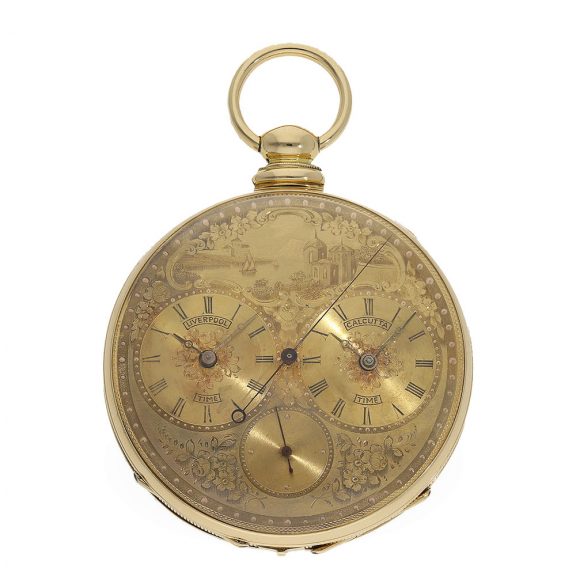
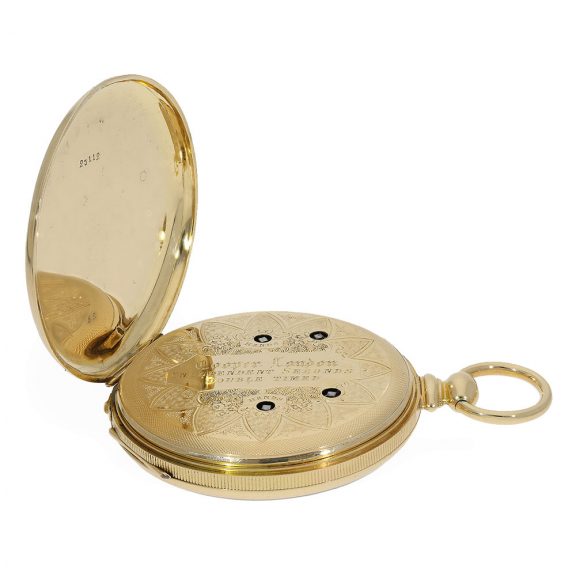
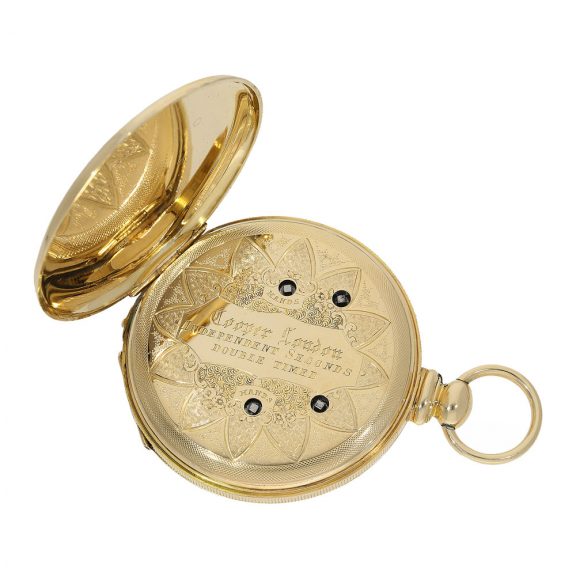
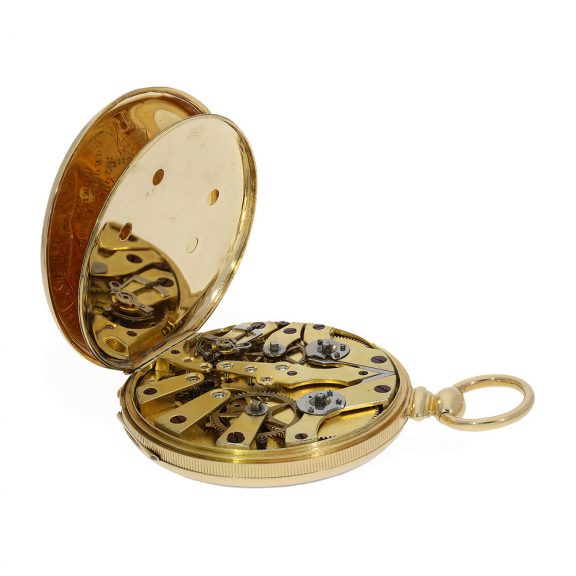
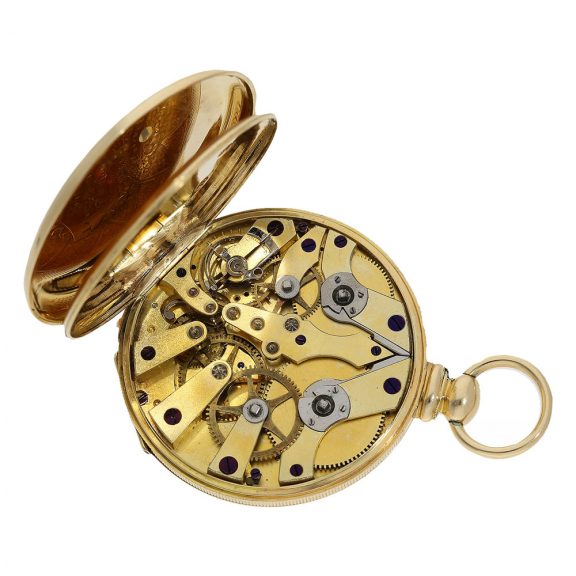
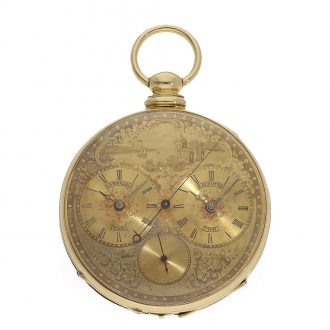
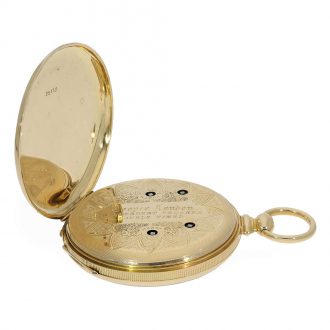
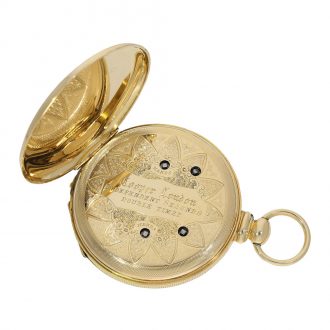
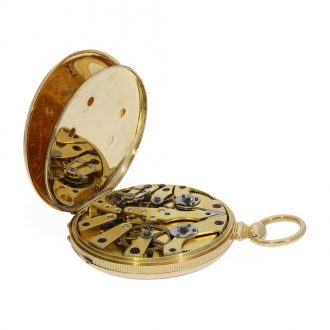
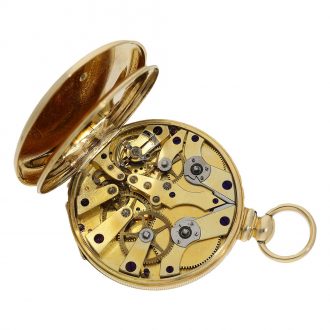
A very fine lépine with two time zones and seconde morte, made by Cooper in London, England, circa 1825. The numbered open faced exceptional quality case of this watch was crafted from 18 Carat gold has a coined band, a fine engraving on the back, representing a scene of people at a court, the representation of a painter drawing a portrait and a magnificent engine turned cuvette. The, also of exceptional quality solid gold dial has an engravement representing a mountain lake, two time zones dials inscribed Liverpool Time and Calcutta Time, a subsidiary dial with independent jumping seconds and the original hands. The movement has an exquisite lever escapement with temperature compensation, sapphire jewels and two barrels. Cuvette signed.
–
Diameter: 51 mm
–
Weight: 85 g
–
Signed: Cooper London
–
The very fine English watch was made around 1825 for the Indian market and impresses with its quality and condition.
–
Cooper
was a notable pocket watchmaker who operated in London around 1825. He was known for making high quality timepieces. The early 19th century was a significant period for watchmaking in London, with many skilled artisans contributing to the craft. employed several key innovations and techniques in his pocket watch designs. Some of these included:
Precision Engineering: Cooper focused on enhancing the accuracy of timekeeping through meticulous craftsmanship and attention to detail in the movement design.
Use of High Quality Materials: He often used durable materials such as brass and silver, which contributed to the longevity and aesthetic appeal of his watches.
Complications: Cooper might have incorporated complications, such as date mechanisms or chronographs, which added functionality beyond simple timekeeping.
Decorative Techniques: His watches often featured intricate engravings and decorative elements, showcasing the artistry involved in watchmaking.
Lever Escapement: The adoption of the lever escapement, which improved the reliability and accuracy of pocket watches, was common among skilled watchmakers of the era.
Quality Control: Emphasizing quality control in his workshop ensured that each piece met high standards before reaching customers.
These innovations helped establish a reputation for quality and precision in Cooper’s timepieces.
Signed: Cooper London
Share this page: