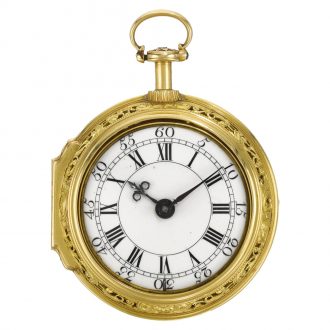
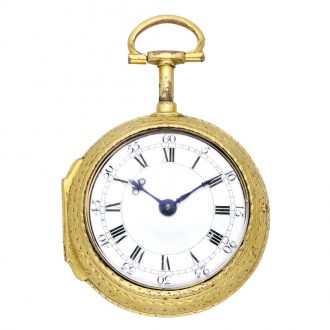
English gold quarter repeating Repoussé watch Circa 1760
- Kenmerk
- AD4305
- Diameter
- 49 mm
- Estimate
- € 3.500 - 6.000
- Price sold
- € 3.400
Gold open faced pocket watch by Benjamin Sidey
–
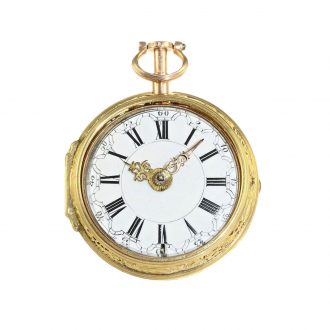
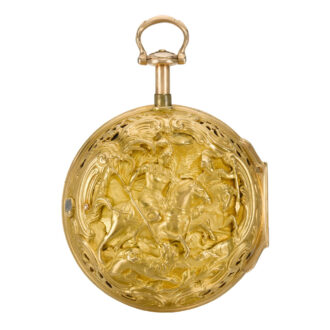
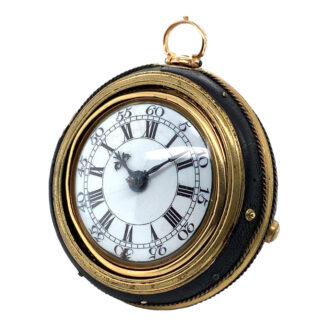
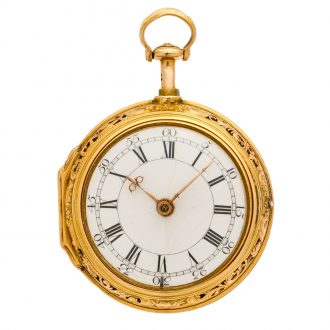
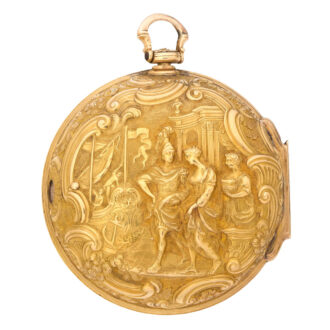
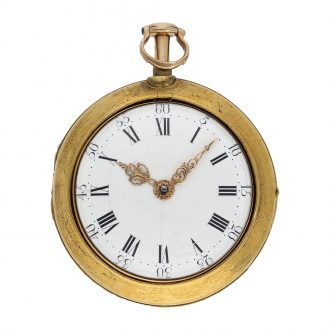
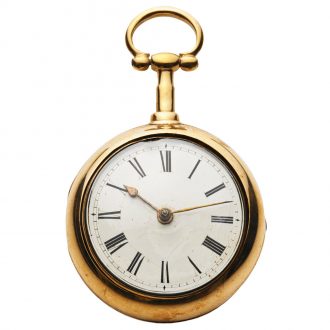
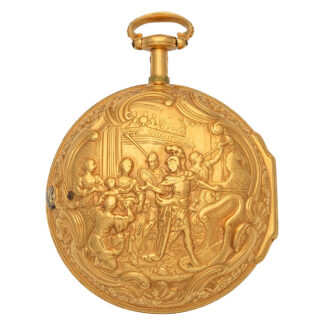
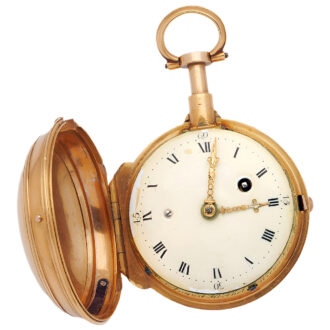
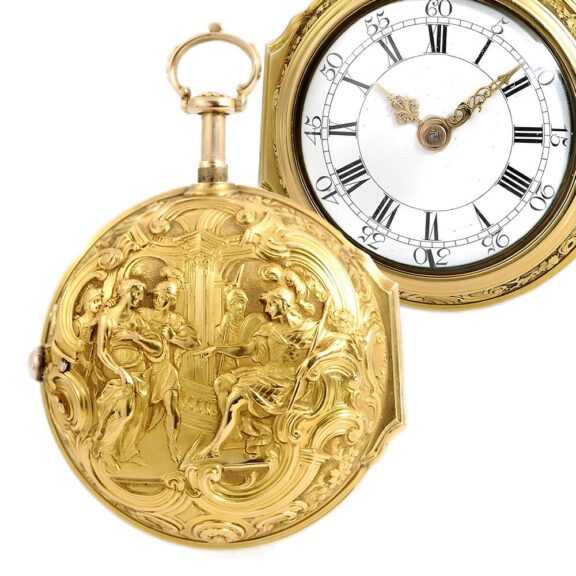
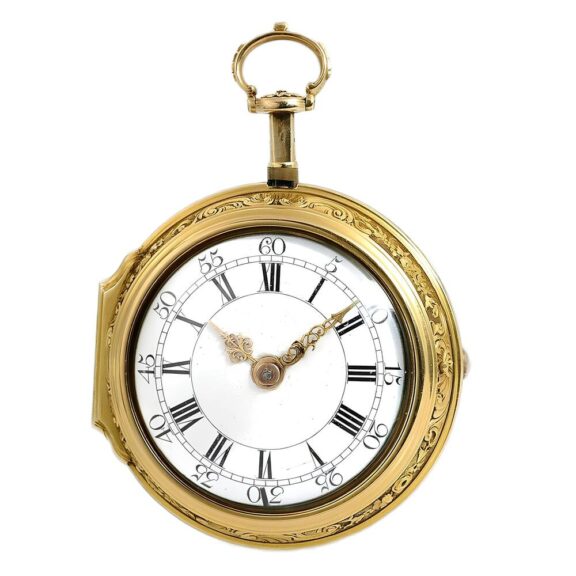
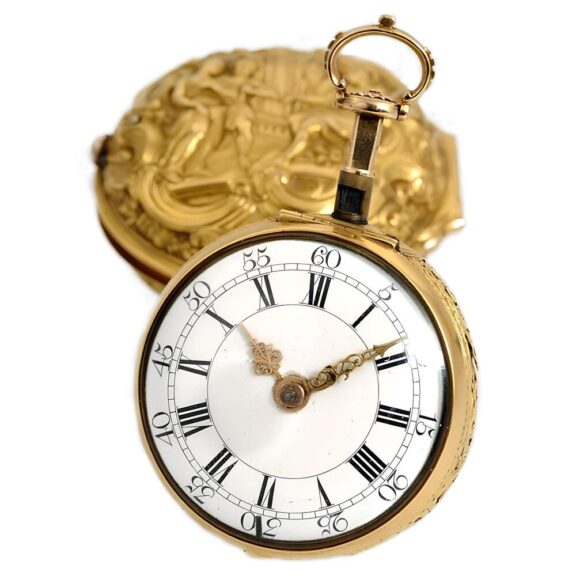
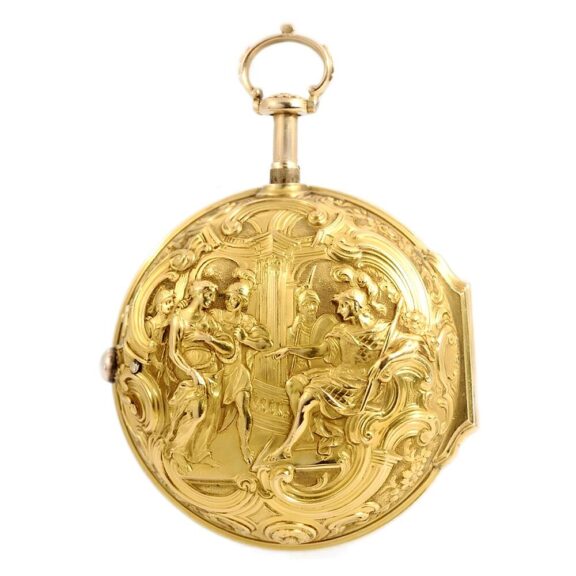
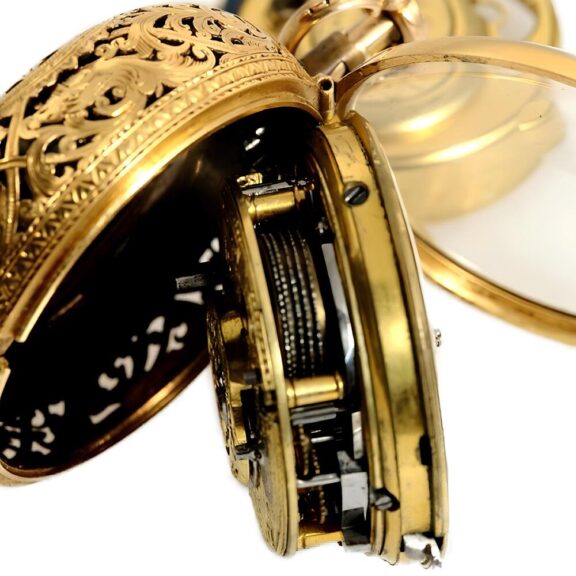
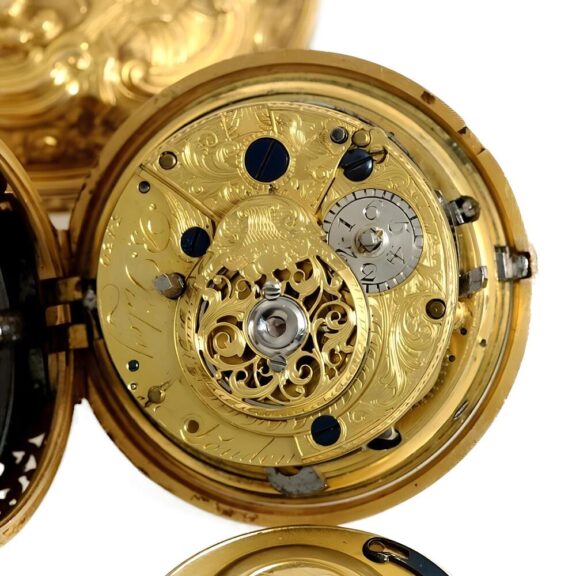
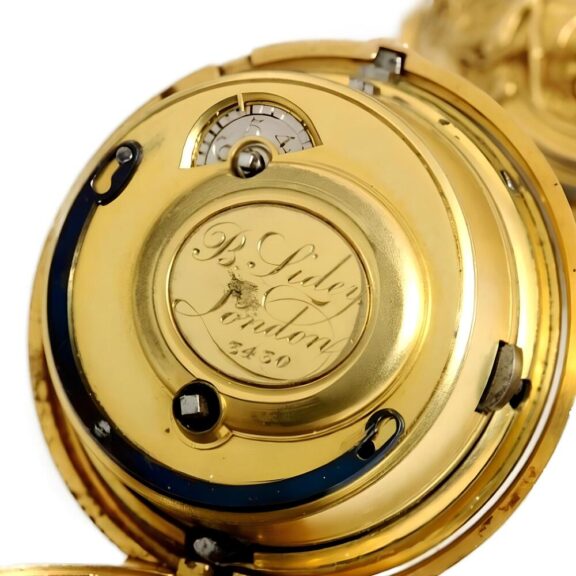
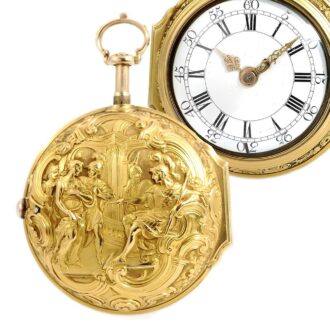
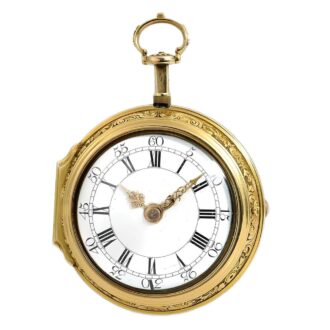
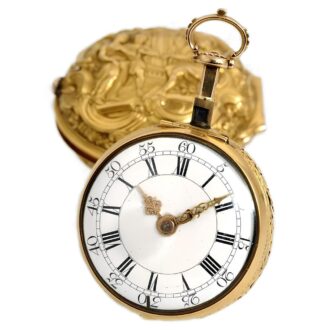
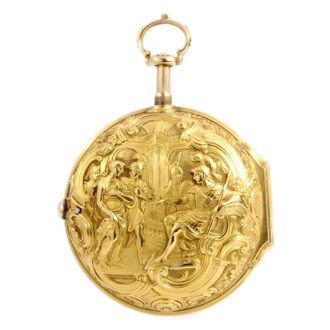
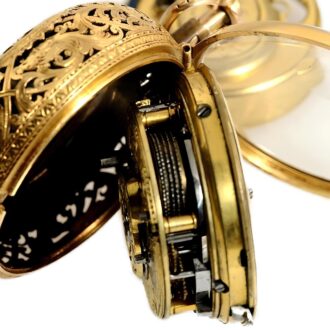
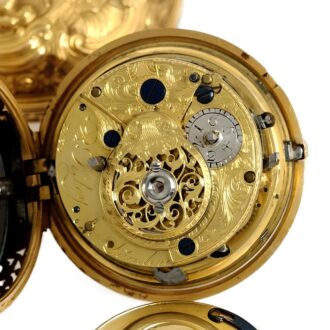
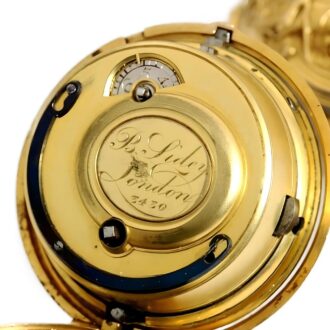
A decorative English double-cased quarter repeating Repoussé pocket watch, Timoclea before Alexander the Great, circa 1760. The timepiece consists of two cases: an outer case made of gold with a repoussé scene depicting Timoclea before Alexander the Great and a large lateral hinge. The outer case bears the case maker’s punch mark JB. The inner case is also gold and features pierced edges adorned with engraved flowers, birds, and mascarons. It is signed and numbered with a gilt dust cover and has a pusher for repetition via the pendant. The timepiece has an enamel dial with radial Roman hours, Arabic minutes, and Louis XVI hands. The movement is a full plate, keywind mechanism with a fire-gilt finish and applied florally engraved decorations. It includes a chain/fusee, baluster-shaped movement pillars, two hammers, an English lever escapement, and a three-arm steel balance. The balance cock is finely engraved and pierced with a diamond endstone.
–
Diameter: 49 mm
–
Weight: 125 g
–
Signed: Benjamin Sidey, London
–
“Timocleia of Thebes Timocleia of Thebes” is a woman mentioned by Plutarch in his life of Alexander. According to Plutarch, when the forces of Alexander the Great seized Thebes during Alexander’s Balkan campaign of 336 BC, Thracian forces pillaged the city, and the captain of the Thracian forces raped Timocleia. After raping her, the captain asked if she knew of any hidden money. She told him that she did, led him into her garden, and told him money was hidden in her well. When the Thracian captain stooped to look into the well, Timoclea pushed him into the well and then hurled heavy stones into the well until the captain was dead. Timocleia was seized by the Thracian soldiers and brought before Alexander the Great. She comported with dignity and told Alexander that her brother had fought at the Battle of Chaeronea with Alexander’s father, Philip II of Macedon, “for the liberty of Greece.” Alexander was so impressed with Timocleia that he ordered her released, and she was not punished for killing the Thracian captain.
Signed: Benjamin Sidey, London
Share this page: